Judaism vs Christianity: Key Differences and Shared Roots
A respectful comparison of Judaism and Christianity — two faiths that share roots but diverge profoundly on God, Messiah, salvation, afterlife, and the meaning of scripture.

The Short Answer
Judaism and Christianity share deep roots — Christianity emerged from within Judaism in the first century CE — but they diverge on nearly every major theological question. The nature of God, the identity of the Messiah, the path to salvation, the role of law, the meaning of scripture, the concept of sin, and the emphasis on afterlife versus this-worldly living all differ fundamentally between these two great traditions.
This is not a ranking or a competition. Both traditions have shaped civilizations, inspired billions, and grappled with humanity’s deepest questions. Understanding the differences with honesty and respect illuminates both faiths.
God: One vs. Three-in-One
The most fundamental difference is the nature of God.
Judaism insists on absolute, uncompromising monotheism. The Shema — Judaism’s central declaration of faith — proclaims: “Hear, O Israel, the Lord our God, the Lord is One.” God is indivisible, incorporeal, and utterly unique. Attributing divinity to any human being, image, or force is considered avodah zarah (idolatry) — the gravest sin in Judaism.
Christianity teaches the Trinity — that God exists as three persons: Father, Son, and Holy Spirit. These are not three gods but one God in three persons. The Son (Jesus) is fully divine and fully human.
From the Jewish perspective, the Trinity — however carefully theologians explain it — introduces division into the Godhead and attributes divinity to a human being. Both of these are incompatible with Jewish theology. This is not a minor disagreement. It is the bedrock issue.
The Messiah Question
Judaism and Christianity have fundamentally different understandings of the Messiah:
In Judaism: The Messiah (Mashiach) is a future human king — a descendant of King David — who will rebuild the Temple in Jerusalem, gather the Jewish exiles, bring world peace, and establish universal knowledge of God. These are concrete, observable events that have not yet occurred. The Messiah is not divine.
In Christianity: Jesus of Nazareth is the Messiah (Christ), the Son of God, and the savior of humanity. He accomplished spiritual salvation through his death and resurrection, and will return in a Second Coming to complete the Messianic mission.
Judaism does not accept this framework. The Hebrew Bible does not describe a Messiah who comes, dies, and returns. The Messianic prophecies describe events that should happen within a single lifetime. Since world peace, the ingathering of exiles, and the rebuilding of the Temple did not occur during or after Jesus’s life, Judaism considers the Messianic prophecies unfulfilled. For a deeper exploration, see our article on what Jews believe about Jesus.
Scripture: Torah vs. Bible
Both traditions revere the Hebrew Bible, but they approach it very differently:
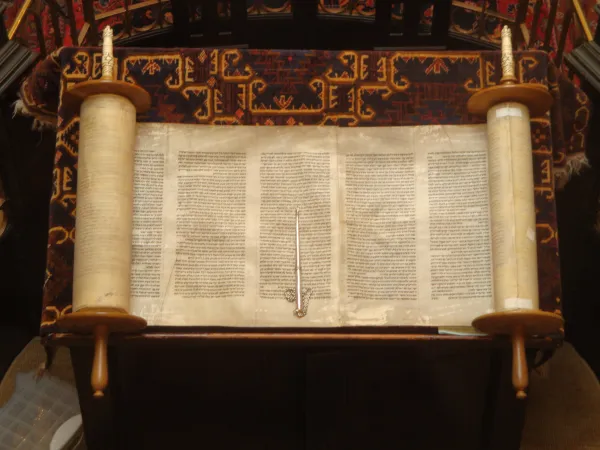
Judaism centers on the Tanakh (Hebrew Bible) — Torah (Five Books of Moses), Nevi’im (Prophets), and Ketuvim (Writings). But the Torah is not self-interpreting. Judaism relies heavily on the Oral Torah — rabbinic interpretation preserved in the Talmud, Midrash, and later legal codes. These texts are not supplementary; they are essential.
Christianity includes the Hebrew Bible (called the Old Testament) plus the New Testament — the Gospels, Acts, Epistles, and Revelation. The New Testament is considered the fulfillment and completion of the Old. Many Christians read the Hebrew Bible through the lens of the New Testament, finding prophecies of Jesus in passages that Jewish readers interpret very differently.
The ordering of books differs too. The Christian Old Testament ends with Malachi’s prophecy of a coming messenger — leading naturally to the New Testament. The Jewish Tanakh ends with Chronicles, calling on the exiles to return to Jerusalem. Same texts, different architecture, different message.
Sin and Salvation
Christianity teaches original sin — that all humanity inherited a fallen nature from Adam and Eve’s disobedience. Salvation from this condition requires God’s grace, typically understood through faith in Jesus Christ.
Judaism rejects original sin entirely. Humans are born with both a yetzer ha-tov (good inclination) and a yetzer ha-ra (evil inclination), and they have the free will to choose between them. When a person sins, the path back is teshuvah (repentance) — a direct process between the individual and God, requiring no intermediary, no sacrifice, and no savior. On Yom Kippur, Jews fast and pray for forgiveness, confident that sincere repentance is sufficient.
This difference has enormous practical implications. Judaism does not teach that humanity is fundamentally broken and in need of rescue. It teaches that humans are capable of good and evil, and that the 613 commandments provide a framework for choosing good.
Afterlife and This-Worldly Focus
Christianity places significant emphasis on the afterlife — heaven as the reward for the faithful, hell as the consequence of sin or rejection of God’s grace. The promise of eternal life through Jesus is central to Christian theology.
Judaism has concepts of afterlife (Olam Ha-Ba, Gan Eden, Gehinnom), but they are remarkably underdeveloped compared to Christianity. The Torah says almost nothing about the afterlife. Judaism’s overwhelming emphasis is on this world — how to live justly, follow the commandments, repair the world, and treat other people. The Talmud says: “One hour of good deeds in this world is worth more than all the life of the World to Come.”
Clergy and Prayer
Judaism has rabbis — teachers and legal authorities — but no priests with sacramental power (the ancient priesthood ended with the Temple’s destruction). Rabbis cannot forgive sins, grant absolution, or mediate between humans and God. Every Jew has direct access to God through prayer.
Christianity (in Catholic and Orthodox traditions) has ordained clergy — priests and bishops — who administer sacraments (baptism, communion, confession) that are understood as channels of divine grace.
Jewish prayer is communal but does not require a rabbi. Any knowledgeable Jew can lead services. There are no sacraments — no communion, no baptism, no confession to a clergyman. The relationship between a Jew and God is direct and unmediated.
Holidays and Practice
The calendars are entirely different. Jewish holidays — Shabbat, Passover, Rosh Hashanah, Yom Kippur, Sukkot — follow the Hebrew calendar and commemorate events in Jewish history. Christian holidays — Christmas, Easter, Lent — follow different calendars and center on the life of Jesus.
Daily practice differs too. Observant Jews follow halakha (Jewish law), which governs diet (kashrut), dress, prayer times, business ethics, and Shabbat observance in minute detail. Christianity generally does not have an equivalent comprehensive legal system governing daily life.
A Complex History
The relationship between Judaism and Christianity carries deep historical weight. For centuries, Jews in Christian Europe faced persecution, forced conversions, pogroms, and eventually the Holocaust — which drew on centuries of Christian antisemitism. This history makes honest interfaith dialogue both more difficult and more necessary.
Modern interfaith relations have improved dramatically. The Catholic Church’s Nostra Aetate (1965) repudiated the charge of Jewish collective guilt for Jesus’s death. Many Protestant denominations have issued similar statements. Today, Jewish and Christian leaders study together, serve communities together, and work toward shared moral goals.
The healthiest interfaith relationships are built on honest acknowledgment of differences — not on pretending the differences don’t exist. Judaism and Christianity are not the same religion with different packaging. They are distinct traditions that share roots, diverge on fundamentals, and can respect each other precisely because they understand where they differ.
Frequently Asked Questions
What is the main difference between Judaism and Christianity?
The most fundamental difference is the nature of God. Judaism insists on absolute monotheism — God is one and indivisible. Christianity teaches the Trinity — God as Father, Son, and Holy Spirit. Judaism also does not accept Jesus as the Messiah or as divine, which is the central claim of Christianity.
Do Jews and Christians read the same Bible?
Partially. The Hebrew Bible (Tanakh) corresponds roughly to the Christian Old Testament, though the books are ordered differently and some translations differ significantly. Christians add the New Testament, which Jews do not accept as scripture. Jews also rely on the Talmud and rabbinic literature for interpretation.
Can you be both Jewish and Christian?
Mainstream Judaism says no. Judaism and Christianity make incompatible theological claims — particularly about the nature of God, the divinity of Jesus, and the role of Torah law. Groups like 'Jews for Jesus' identify as both, but all major Jewish denominations consider this a form of Christianity, not Judaism.
Sources & Further Reading
- Sefaria — Jewish Texts ↗
- My Jewish Learning — Judaism and Christianity ↗
- Jewish Virtual Library — Judaism and Christianity ↗
- Encyclopaedia Judaica — Christianity
Related Articles
Do Jews Believe in Jesus? Understanding Jewish and Christian Perspectives
One of the most common questions about Judaism: What do Jews think about Jesus? A respectful exploration of Jewish theology, Messianic expectations, and the fundamental differences between Judaism and Christianity.
The Messiah in Judaism: Anointed King, Not Divine Savior
The Jewish Messiah is a human king from the line of David who will bring peace, rebuild the Temple, and gather the exiles — not a divine being who saves souls. The concept has inspired hope, spawned false claimants, and evolved across denominations.
What Do Jews Believe? Core Beliefs, Values, and the Spirit of Debate
Jewish belief centers on one God, Torah, ethical action, and humanity's role in repairing the world — but within that framework, debate and diversity of opinion are not just tolerated but sacred.