Judaism: Religion or Ethnicity? Understanding Jewish Peoplehood
Is Judaism a religion, an ethnicity, a culture, or a nationality? The answer is 'yes' — and understanding Jewish peoplehood means accepting that it doesn't fit into neat Western categories.
The Short Answer
Is Judaism a religion? Yes. Is it an ethnicity? Also yes. A culture? A civilization? A nationality? A people? Yes, yes, yes, and yes. Judaism is all of these things and none of them perfectly. It is a category that resists categories — a reality that drives census-takers, sociologists, and people filling out diversity forms slightly mad.
The best single word for what Judaism is might be peoplehood — the concept that Jews are a people (in Hebrew, Am Yisrael, the People of Israel) bound together by shared history, destiny, law, culture, and covenant with God. This peoplehood includes the deeply religious and the completely secular. It includes people who pray three times a day and people who have not entered a synagogue in years. It includes converts who chose Judaism and people born into it who never gave it a second thought.
Understanding this is the key to understanding almost everything else about Judaism.
Why Western Categories Don’t Work
The problem begins with the categories themselves. In the post-Enlightenment Western world, religion and ethnicity are supposed to be separate things. Your religion is what you believe — you can change it. Your ethnicity is what you are — you cannot change it (or so the theory goes).
Judaism refuses to cooperate with this distinction.
If Judaism is “just” a religion, then why are there atheist Jews? Why can someone who has never set foot in a synagogue, never read the Torah, and never observed a single commandment still be unambiguously Jewish? Albert Einstein, Sigmund Freud, and countless other secular Jews maintained strong Jewish identities with little or no religious practice.
If Judaism is “just” an ethnicity, then how do you explain conversion? People convert to Judaism every year — they study, undergo rituals, and emerge fully Jewish. The biblical Ruth, a Moabite convert, became an ancestor of King David. You cannot “convert” to being Irish or Japanese, but you can convert to being Jewish.
The answer is that Judaism predates these modern categories by thousands of years and simply does not fit them. It is a civilization — a word the 20th-century rabbi Mordecai Kaplan used to describe the totality of Jewish life: religion, culture, language, literature, ethics, history, law, art, food, music, humor, and a sense of shared destiny.
Matrilineal Descent and Conversion
Traditional Jewish law (halakha) defines who is a Jew through two paths:
Matrilineal descent: A person born to a Jewish mother is Jewish — regardless of the father’s identity, regardless of whether the person is raised Jewish, and regardless of personal belief. This is an ethnic/biological definition. A Jewish atheist born to a Jewish mother is as Jewish as the most devout rabbi.
Conversion: A person who undergoes a valid conversion — including study, commitment to observe the commandments, immersion in a mikveh (ritual bath), and (for men) circumcision — becomes fully Jewish. Converts are not “second-class” Jews. Jewish law forbids reminding a convert of their non-Jewish origins. This is a religious/volitional definition.
The coexistence of these two paths is precisely what makes Judaism uncategorizable. It is a people you can be born into (like an ethnicity) AND a community you can choose to join (like a religion).
Reform Judaism added a third path in 1983 by recognizing patrilineal descent — children of Jewish fathers (not just mothers) who are raised as Jews are considered Jewish. This remains controversial; Orthodox and Conservative authorities do not accept it.
Secular Jews: The Test Case
Perhaps nothing illustrates Jewish peoplehood better than the existence of secular Jews — people who identify strongly as Jewish while observing few or no religious practices.
The Pew Research Center’s 2020 survey of American Jews found that 27% of American Jews describe themselves as having no religion — they identify as Jewish on the basis of ancestry, culture, or ethnicity. These “Jews of no religion” celebrate Passover seders, eat Jewish foods, feel connected to Israel, tell Jewish jokes, and identify passionately as Jewish — without believing in God or following the commandments.
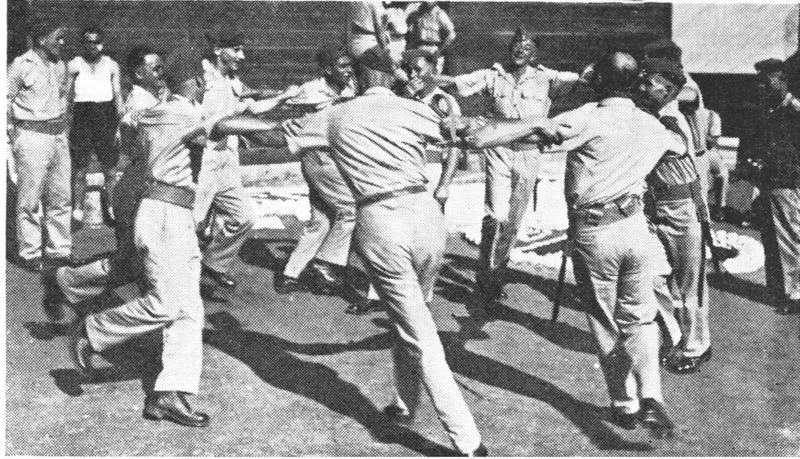
In Israel, the phenomenon is even more pronounced. The majority of Israeli Jews describe themselves as hiloni (secular). They serve in the army, speak Hebrew, celebrate Jewish holidays as national holidays, and consider themselves thoroughly Jewish — without being observant in any religious sense.
If Judaism were only a religion, these people would not be Jewish. But they are. Everyone agrees they are. This proves that Judaism is something more than — or at least different from — a religion in the Western sense.
DNA and the Genetics Question
Modern genetic studies have added a new dimension to the identity question. Research has shown that Jewish communities around the world — Ashkenazi, Sephardi, Mizrahi, and others — share significant genetic markers that trace back to ancient Middle Eastern populations.
This genetic evidence suggests that many (though not all) modern Jews descend from a common ancestral population — supporting the idea that Jewishness has an ethnic or biological dimension. However, Jewish identity has never been defined by DNA. Converts share no genetic markers with born Jews, yet they are fully Jewish. And some people with Jewish genetic ancestry may not be halachically Jewish (for example, those with a Jewish father but non-Jewish mother, in Orthodox reckoning).
The genetics confirm what Jews have always known: this is a people — a family, really — that has maintained a remarkable degree of continuity over thousands of years. But identity is ultimately defined by community, covenant, and commitment — not by chromosomes.
Am Yisrael: The People of Israel
The Hebrew phrase Am Yisrael (the People of Israel) captures what all the English categories miss. “Am” means “people” or “nation” — not in the modern political sense, but in the sense of a tribe, a family, a folk bound together by shared story and shared fate.
This is why Jews around the world feel connected to each other despite speaking different languages, living in different countries, and practicing (or not practicing) different levels of religious observance. It is why a secular Jew in Tel Aviv and an Orthodox Jew in Brooklyn and a Reform Jew in London and a Sephardic Jew in Istanbul all recognize each other as family — even when they disagree about almost everything.
The famous Jewish saying Kol Yisrael arevim zeh bazeh — “All of Israel is responsible for one another” — expresses this idea. It does not say “all religious Jews” or “all observant Jews.” It says all of Israel. The bond is broader than belief, deeper than practice, and older than any modern category.
Why It Matters
Understanding that Judaism is a peoplehood rather than simply a religion clarifies many things that otherwise seem confusing:
Why antisemitism targets secular Jews as much as religious ones. Why Jewish humor, food, and culture persist even without faith. Why Israel was founded as a homeland for a people, not as a theocracy. Why a Jew who converts to Christianity is still considered Jewish by many authorities (an apostate Jew, but a Jew nonetheless). Why Jewish identity can be passed from a completely secular mother to her children without a single prayer being uttered.
Judaism is not either/or. It is both/and. Religion and ethnicity. Faith and family. Belief and belonging. The sooner you stop trying to fit it into one category, the sooner you begin to understand it.
Frequently Asked Questions
Is Judaism a religion or an ethnicity?
It's both — and more. Judaism is best described as a 'peoplehood' or 'civilization' that encompasses religion, ethnicity, culture, history, and a sense of shared destiny. You can be an atheist Jew, a secular Jew, or a deeply religious Jew — all are recognized as Jewish.
Can you convert to Judaism if it's an ethnicity?
Yes. Conversion to Judaism has existed for thousands of years. When someone converts, they become fully Jewish — in every sense. The convert Ruth is an ancestor of King David in the Bible. This is one reason 'ethnicity' alone doesn't capture what Judaism is — it's a people you can join.
How is Jewish identity passed down?
Traditional Jewish law (halakha) defines a Jew as someone born to a Jewish mother (matrilineal descent) or who has undergone a valid conversion. Reform Judaism also recognizes patrilineal descent — children of a Jewish father raised as Jews. DNA studies show that many Jewish communities share genetic markers, but identity is ultimately defined by community, not chromosomes.
Sources & Further Reading
- My Jewish Learning — Who Is a Jew? ↗
- Jewish Virtual Library — Jewish Identity ↗
- Pew Research Center — Jewish Americans in 2020 ↗
- Encyclopaedia Judaica — Jewish Identity
Related Articles
Converting to Judaism: A Thoughtful Guide to Joining the Jewish People
Converting to Judaism is a serious, transformative journey involving study, mentorship, and ritual — welcomed by tradition yet approached with care across all denominations.
What Is Judaism? A Living Introduction to the World's Oldest Monotheistic Faith
Judaism is the world's oldest monotheistic religion, built on covenant, Torah, ethical living, and an unbroken chain of tradition stretching back four thousand years.
Who Is a Jew? Understanding Jewish Identity Across Denominations, Law, and History
Jewish identity is complex — shaped by matrilineal descent, denominational differences, ethnic diversity, secular belonging, and Israeli law in ways that defy simple answers.