Jewish Education: Schools & Study
From the ancient cheder to modern day schools, Daf Yomi to Birthright Israel — Jewish education spans a vast landscape of institutions and methods dedicated to lifelong learning.
The People of the Book
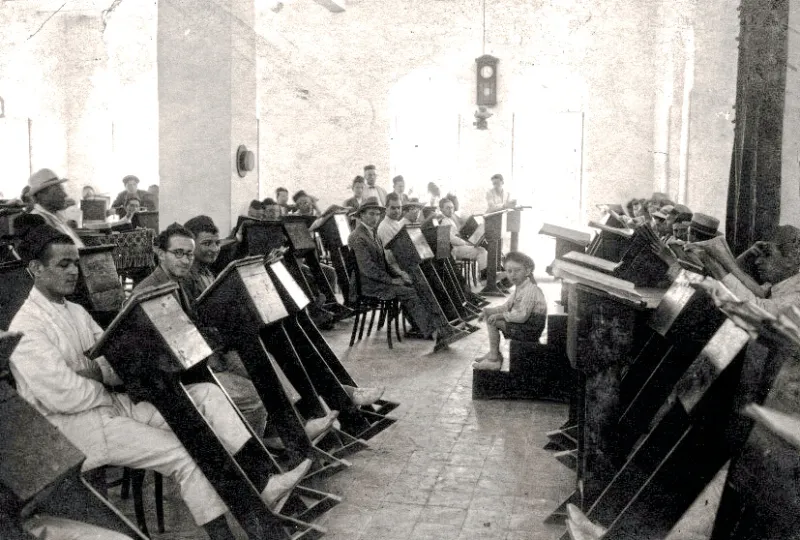
Jews are often called “the People of the Book” — a title that reflects not just reverence for the Torah but a civilizational obsession with study. In Judaism, learning is not preparation for life. Learning is life. The Talmud declares that the study of Torah is equal to all other commandments combined (Shabbat 127a), and the tradition has built a remarkable array of institutions to make that study possible.
From the youngest child sounding out Hebrew letters to the elderly scholar puzzling over a Talmudic passage at dawn, Jewish education spans lifetimes. Here is how it works.
The Cheder: Where It Begins
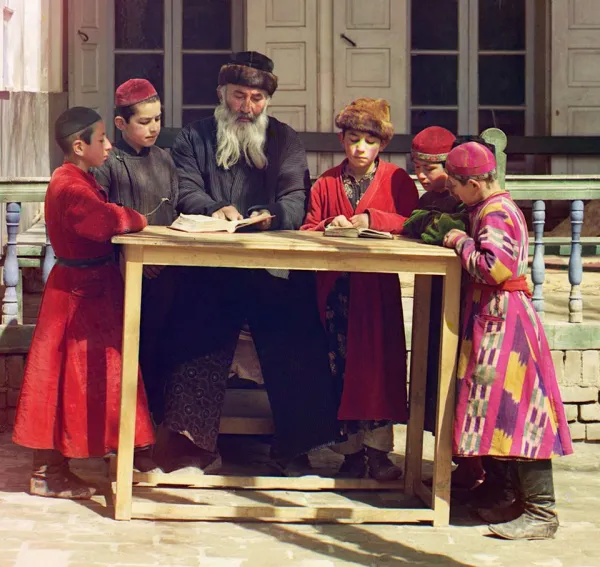
The cheder (literally “room”) was the traditional elementary school of Eastern European Jewry. Beginning as young as age three, boys would gather in a teacher’s (melamed) home to learn the Hebrew alphabet, basic prayers, and how to read the Torah.
The cheder was often a one-room affair — overcrowded, underfunded, and sometimes presided over by a teacher whose main qualification was that he had no other marketable skills. Memoirs from the shtetl era are full of complaints about cruel melamdim and airless rooms. Yet the cheder achieved something remarkable: it produced near-universal literacy among Jewish males at a time when most of the world’s population could not read.
The modern equivalent varies by community. In ultra-Orthodox communities, Talmud Torahs still function much like the old cheder, teaching boys Hebrew reading, prayers, Chumash (the Five Books of Moses), and Mishnah. In non-Orthodox communities, Hebrew school (also called religious school or Sunday school) meets a few times per week, typically after public school, teaching Hebrew, Jewish history, holidays, and preparation for bar/bat mitzvah.
The Yeshiva: Talmud and Beyond
The yeshiva is the crown jewel of traditional Jewish education. At its core, the yeshiva is devoted to the intensive study of Talmud — the vast, labyrinthine record of rabbinic discussion that is the foundation of Jewish law.
The yeshiva method is distinctive. Students typically study in pairs (chavruta), reading the Talmudic text aloud, debating its meaning, and working through commentaries. The sound of a yeshiva study hall — dozens of pairs arguing simultaneously, voices rising and falling — is unlike anything else in education. It is loud, passionate, and deeply collaborative.
Major yeshivot have shaped Jewish intellectual life for centuries:
- Volozhin Yeshiva (Lithuania, founded 1802): The first modern yeshiva, model for all that followed
- Mir Yeshiva: Survived the Holocaust by fleeing to Shanghai; now the world’s largest yeshiva, in Jerusalem
- Ponevezh (Bnei Brak, Israel): One of the premier Lithuanian-style yeshivot
- Yeshiva University (New York): Combines Talmud study with secular university education
Jewish Day Schools
Jewish day schools combine secular and Jewish education in a single institution. Students follow a full academic curriculum — math, science, English, history — alongside Jewish studies: Hebrew language, Torah, Jewish history, and (in Orthodox schools) Talmud.
The day school movement has grown dramatically since World War II. Today there are over 800 Jewish day schools in North America, serving students from pre-K through high school. They range from ultra-Orthodox schools where secular studies are minimal to pluralistic schools where Jewish identity is explored through multiple denominational lenses.
Day schools face a persistent challenge: cost. Tuition can rival that of private universities, creating enormous financial strain on families. The community has responded with scholarship programs, federation subsidies, and philanthropic initiatives, but affordability remains one of the most debated issues in Jewish communal life.
Supplementary and Informal Education
Not every Jewish family chooses day school. The majority of Jewish children in America attend public schools and receive their Jewish education through supplementary programs:
- Hebrew school / religious school: Typically meeting 2-3 times per week at a synagogue, focusing on Hebrew, holidays, Jewish values, and bar/bat mitzvah preparation
- Jewish summer camps: Institutions like Camp Ramah (Conservative), URJ camps (Reform), and dozens of independent camps provide immersive Jewish experiences. Research consistently shows that Jewish camp has one of the strongest impacts on adult Jewish identity
- Youth groups: BBYO, NCSY, USY, and NFTY provide social and educational programming for Jewish teens
- Israel programs: Gap-year programs in Israel, particularly popular among Orthodox youth, combine intensive study with Israeli cultural immersion
Daf Yomi: A Page a Day
One of the most remarkable Jewish educational phenomena is Daf Yomi — the practice of studying one page (daf) of the Babylonian Talmud every day, completing the entire work in a cycle of approximately 7 years and 5 months.
The idea was proposed by Rabbi Meir Shapiro of Lublin at the First World Congress of Agudath Israel in 1923. Shapiro’s vision was democratic: every Jew, regardless of scholarly ability, could participate in Talmud study. A businessman in Warsaw and a teacher in Jerusalem would be studying the same page on the same day.
The first cycle began on Rosh Hashanah 1923. The current cycle is the 14th. The celebration at the completion of each cycle — the Siyum HaShas — has grown into a massive event. The 13th Siyum in January 2020 filled MetLife Stadium in New Jersey with over 90,000 participants, with satellite events around the world.
Daf Yomi has been transformed by technology. Podcasts, apps, YouTube shiurim (lessons), and platforms like Sefaria make it possible to keep up with the daily page anywhere. The democratization Rabbi Shapiro envisioned has exceeded his wildest imagination.
Birthright Israel
In 1999, philanthropists Charles Bronfman and Michael Steinhardt launched an audacious experiment: offer every young Jewish adult in the world a free 10-day trip to Israel. The program, called Taglit-Birthright Israel, was based on a simple premise — that experiencing Israel firsthand would strengthen Jewish identity in ways that no classroom could match.
The results have been staggering. Over 800,000 young Jews from more than 68 countries have participated. Research by the Cohen Center at Brandeis University has shown that Birthright participants are significantly more likely to marry Jewish partners, raise Jewish children, feel connected to Israel, and engage with Jewish community.
Birthright has also attracted criticism. Some argue it presents a one-sided view of Israel. Others question whether a 10-day trip can create lasting identity. Palestinian solidarity activists have launched “birthwrong” counter-programs. The debate reflects broader tensions about Israel’s role in Jewish education and identity.
Adult Learning and the Digital Revolution
Jewish education has never been limited to the young. The tradition of adult learning — Torah study groups, Talmud classes, lecture series — is as old as the synagogue itself.
The digital age has supercharged adult Jewish learning:
- Sefaria: A free online library of Jewish texts with translations and interconnected commentary
- 929 Project: A program to study the entire Tanakh, five chapters per week
- Hadar: A non-denominational yeshiva offering intensive learning for adults
- PJ Library: Sends free Jewish children’s books to families monthly, reaching over 680,000 children
The pandemic accelerated the shift to online learning, making world-class Jewish education accessible to anyone with an internet connection. A Jew in rural Montana can now study Talmud with a scholar in Jerusalem in real time.
Learning as Worship
What makes Jewish education distinctive is not just its institutions but its underlying theology. In Judaism, study is not merely intellectual exercise — it is a form of worship. The rabbis taught that when two people sit and study Torah together, the Divine Presence (Shekhinah) dwells between them (Pirkei Avot 3:2).
This conviction — that learning is sacred, that ignorance is dangerous, that every person has the capacity and obligation to study — has shaped not just Jewish life but Jewish survival. Empires have risen and fallen. The cheder, the yeshiva, the chavruta, and the book have endured.
Frequently Asked Questions
What is a yeshiva?
A yeshiva is a Jewish educational institution focused on the study of traditional religious texts, primarily the Talmud. Yeshivot range from elementary schools to advanced academies where students may study full-time for years. The yeshiva is the backbone of traditional Jewish education and has been central to Jewish intellectual life for centuries.
What is Daf Yomi?
Daf Yomi ('daily page') is a program of studying one page of the Babylonian Talmud every day, completing the entire 2,711-page work in approximately seven and a half years. Created by Rabbi Meir Shapiro in 1923, Daf Yomi has become a worldwide phenomenon — hundreds of thousands of Jews study the same page on the same day, creating a global study community.
What is Birthright Israel?
Birthright Israel (Taglit) is a program that provides free 10-day trips to Israel for young Jewish adults aged 18-32 who have never been on an organized peer trip to Israel. Founded in 1999 by philanthropists Charles Bronfman and Michael Steinhardt, the program has sent over 800,000 young Jews to Israel, making it one of the largest Jewish educational initiatives in history.
Sources & Further Reading
Related Articles
Orthodox, Conservative, and Reform: Understanding Jewish Denominations
Judaism is not monolithic — it encompasses diverse movements from Ultra-Orthodox to Reform, each with its own approach to tradition, law, and modern life.
The Talmud: A Beginner's Guide to Jewish Oral Law
The Talmud is the vast ocean of Jewish thought — centuries of rabbinic debate on law, ethics, storytelling, and the meaning of life, all compiled into one extraordinary work.
The Torah: The Heart of Judaism
The Torah is more than a book — it is the living constitution of Jewish life, studied and debated for over three millennia.