Finding Your Jewish Community: A Practical Guide
Whether you are new to Judaism or just new to your neighborhood, this guide helps you find your Jewish community — from synagogues and JCCs to Hillels and online groups.
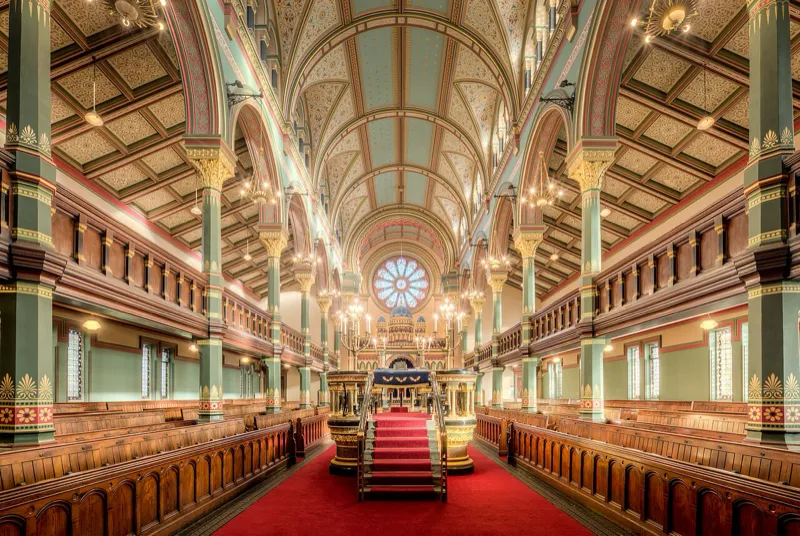
You Don’t Have to Do This Alone
Judaism is fundamentally communal. You cannot say Kaddish without a minyan (quorum of ten). You cannot have a proper Torah reading without a congregation. Even the most personal prayers are written in the plural — “forgive us,” “bless us,” “grant us peace.” The message is clear: Judaism is not a solo practice.
Whether you are newly Jewish, recently moved, returning to practice after years away, or simply curious, this guide will help you find your place.
Synagogues
The synagogue is the center of Jewish communal life. There are several types:
By Denomination
- Orthodox — traditional services in Hebrew, separate seating for men and women, strict halakhic observance
- Conservative — traditional but egalitarian, Hebrew-heavy services, halakhic flexibility
- Reform — egalitarian, English and Hebrew, emphasis on personal choice
- Reconstructionist — progressive, community-centered, Judaism as evolving civilization
- Independent/Unaffiliated — communities that don’t belong to a major denomination
What to Expect at Your First Visit
- See our guide: What to wear to synagogue
- See also: What is a synagogue service?
- How to choose a rabbi
Beyond the Synagogue
Jewish Community Centers (JCCs)
JCCs are open to everyone — Jewish and non-Jewish alike. They offer gyms, pools, arts programs, preschools, senior services, and cultural events. There are approximately 350 JCCs across North America.
Hillel (For College Students)
Hillel International operates on over 550 college campuses worldwide. If you are a Jewish college student — or a student curious about Judaism — Hillel is designed for you. Programs include Shabbat dinners, holiday celebrations, social events, and Israel engagement.
Chabad
The Chabad movement operates over 5,000 centers worldwide. Chabad is Orthodox but famously welcoming to Jews of all backgrounds and levels of observance. Chabad houses often provide Shabbat meals, holiday programs, and Jewish education with no strings attached.
Online Communities
For those without local access:
- Virtual Judaism — online services and communities
- Jewish podcasts — learning on the go
For Specific Populations
Interfaith Families
- Interfaith marriage — navigating two traditions
- Dating someone Jewish
- Many Reform and some Conservative synagogues have specific interfaith programming
Newcomers and Converts
Young Adults
Finding Your Fit
The most important thing is to show up. Visit different communities. Try different denominations. Attend a Shabbat dinner. Go to a JCC event. Sit in on a class. Jewish community is not something you find in a single visit — it is something you build over time, one connection at a time.
Frequently Asked Questions
How do I find a synagogue near me?
Start by searching online directories like the Union for Reform Judaism (URJ), United Synagogue of Conservative Judaism (USCJ), or Orthodox Union (OU) websites. You can also try JewishFinder.com or simply search 'synagogue near me.' Many synagogues welcome visitors — call ahead and let them know you're coming for the first time.
What is the difference between Reform, Conservative, and Orthodox?
Orthodox Judaism adheres strictly to traditional Jewish law (halakha). Conservative Judaism follows halakha but allows for evolution through historical analysis. Reform Judaism emphasizes personal autonomy and ethical principles over strict legal observance. Each offers a different balance between tradition and modernity.
Can I join a Jewish community if I'm not Jewish?
Absolutely. Most Jewish communities welcome non-Jewish visitors, interfaith families, and those exploring Judaism. JCCs are open to everyone. Many synagogues have programs specifically for interfaith couples. If you are interested in conversion, a rabbi can guide you through the process.
Sources & Further Reading
Related Articles
Chabad-Lubavitch: The Global Jewish Outreach Movement
From Crown Heights to Kathmandu, Chabad-Lubavitch has built the largest Jewish outreach network in the world — powered by the vision of one rabbi and an army of young emissaries.
Orthodox, Conservative, and Reform: Understanding Jewish Denominations
Judaism is not monolithic — it encompasses diverse movements from Ultra-Orthodox to Reform, each with its own approach to tradition, law, and modern life.
The Synagogue: House of Prayer, Study, and Assembly
More than just a place of worship — the synagogue is the heart of Jewish community life, combining prayer, learning, and social gathering under one roof.