Deuteronomy (Devarim): Moses's Farewell and Final Torah
Deuteronomy is Moses's farewell address to the Israelites — restating the law, proclaiming the Shema, urging them to 'choose life,' and dying within sight of the Promised Land he will never enter.
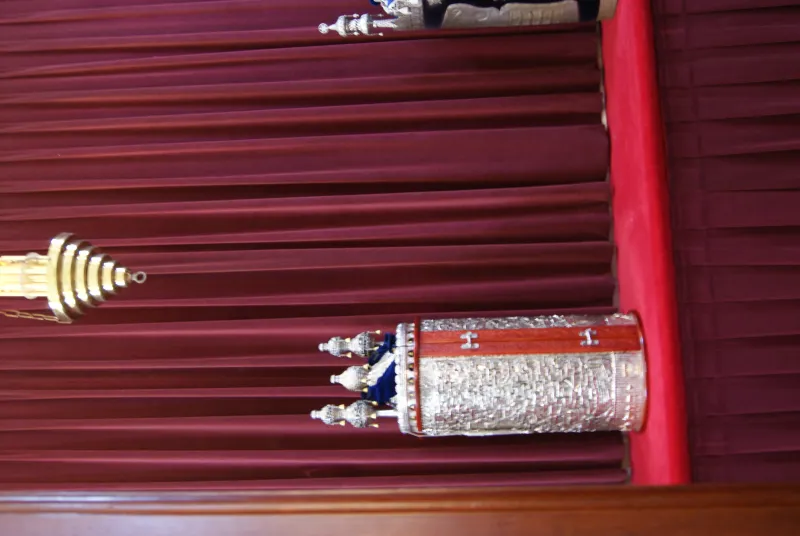
The Last Words of Moses
There is something unbearably moving about a farewell speech — especially when the speaker knows he is about to die and will never see the outcome of everything he has worked for. That is exactly what Deuteronomy is: Moses standing on the plains of Moab, looking across the Jordan River at a land he will never enter, pouring out his heart to a people he has led for forty years.
The Hebrew name, Devarim (“Words”), is appropriately simple. The English name, Deuteronomy, comes from Greek and means “second law” — a nod to the fact that Moses restates and elaborates much of the legislation already given in Exodus and Leviticus. But calling it a “second law” undersells what is actually happening. This is not a dry legal recap. It is a passionate plea from an aging leader who loves his people, fears for their future, and wants to arm them with the wisdom and conviction they will need to survive without him.
Structure: Three Speeches and a Song
Deuteronomy is organized around Moses’s extended addresses:
First Speech (Chapters 1-4): A historical review. Moses retells the story of the wilderness years — the spies’ failure, the rebellions, the battles — urging the new generation to learn from their parents’ mistakes.
Second Speech (Chapters 5-28): The legal core of the book. Moses restates the Ten Commandments, delivers the Shema, and lays out a comprehensive law code covering worship, justice, warfare, family, and social welfare. This section concludes with the dramatic blessings and curses ceremony (chapters 27-28).
Third Speech (Chapters 29-30): A covenant renewal. Moses calls on the people to recommit to God, culminating in the famous choice: “I have set before you life and death, blessing and curse — choose life!”
Final Chapters (31-34): Moses commissions Joshua, writes down the Torah, teaches a prophetic song, blesses the tribes, and dies.
The Shema: Judaism’s Central Prayer
Deuteronomy 6:4-9 contains the most important words in Jewish liturgy:
Shema Yisrael, Adonai Eloheinu, Adonai Echad. “Hear, O Israel, the Lord our God, the Lord is One.”
What follows is the instruction to love God “with all your heart, with all your soul, and with all your might” — and to teach these words to your children, speak of them at home and on the road, bind them on your hand and between your eyes, and inscribe them on your doorposts.
These verses are the source of two of Judaism’s most visible ritual objects: tefillin (phylacteries bound on the arm and head) and the mezuzah (a parchment scroll affixed to doorframes). They are recited twice daily in prayer, taught to children as their first sacred words, and traditionally spoken on one’s deathbed. If Judaism has a creed, this is it.
The Law Code (Chapters 12-26)
The legal section of Deuteronomy covers an enormous range of topics, always with a distinctive emphasis on compassion and social justice:
Centralized worship: Sacrifices may only be offered at the place God chooses (later understood as Jerusalem), eliminating local shrines and unifying worship.
Justice system: “Justice, justice shall you pursue” (16:20) — one of the Torah’s most quoted commands. Judges must be impartial. Bribery is forbidden. Two witnesses are required for capital cases.
Protection of the vulnerable: Do not oppress the stranger — “for you were strangers in Egypt.” Pay a worker’s wages the same day. Leave sheaves in the field for the poor, the orphan, and the widow. Every seven years, release debts.
Warfare laws: Even in war, there are limits. Offer peace before besieging a city. Do not destroy fruit trees during a siege (the origin of the environmental principle bal tashchit — do not needlessly destroy).
Family and society: Laws of marriage, divorce, inheritance, lost property, building safety codes (parapets on roofs), and the obligation to help your neighbor’s fallen donkey even if you dislike him.
Blessings and Curses (Chapters 27-28)
In one of the Torah’s most dramatic scenes, Moses instructs the people to gather at Mount Gerizim and Mount Ebal when they enter the land. Six tribes will stand on each mountain. Blessings will be proclaimed from one, curses from the other. The message is stark: obedience to God’s commands leads to prosperity and security; disobedience leads to famine, plague, defeat, and exile.
The curses in chapter 28 are among the most harrowing passages in all of Scripture — graphic descriptions of siege, starvation, and exile that Jewish readers across centuries have found eerily prophetic. The passage is read in synagogue in a hushed, rapid undertone.
”Choose Life” (Chapter 30)
After the terrifying curses, Moses offers hope. Even if Israel sins and is scattered, return is possible: “The Lord your God will bring you back from captivity, and have compassion on you, and gather you again from all the peoples where He scattered you” (30:3-4).
Then comes the verse that may be the single most powerful sentence in the Torah: “I have set before you today life and death, blessing and curse. Choose life, so that you and your descendants may live” (30:19). It is not a prediction; it is a plea. Moses knows his people’s weaknesses. He has watched them fail again and again. And still he believes they can choose rightly.
The Death of Moses (Chapter 34)
The Torah’s final chapter is devastating in its restraint. Moses climbs Mount Nebo. God shows him the entire Promised Land — Gilead, Naphtali, Ephraim, Judah, the Negev, Jericho. “This is the land I swore to Abraham, Isaac, and Jacob,” God says. “I have let you see it with your eyes, but you shall not cross over there.”
Moses dies. He is 120 years old, and “his eye was not dim nor his natural force abated.” God buries him — the only person in the Bible buried by God — in a valley in Moab, and “no one knows his burial place to this day.”
The book ends with a tribute: “Never again did there arise in Israel a prophet like Moses, whom the Lord knew face to face.”
Why Deuteronomy Matters
Deuteronomy is the Torah’s emotional climax. It takes the laws scattered through the previous books and weaves them into a passionate argument for a just society. Its emphasis on social welfare, judicial fairness, compassion for the stranger, and education of children has shaped not only Jewish law but Western legal tradition.
And its central drama — a leader who gives everything, accomplishes the impossible, but does not get to see the final result — resonates with anyone who has ever worked toward a goal they knew they would not live to see completed. Moses dies looking at the Promised Land. The rest is up to his people.
Frequently Asked Questions
What is the Book of Deuteronomy about?
Deuteronomy (Devarim in Hebrew) is the fifth and final book of the Torah. It consists primarily of Moses's farewell speeches to the Israelites on the plains of Moab, just before they enter the Promised Land. He restates the law, reminds them of their history, pleads for their faithfulness, and dies on Mount Nebo.
What is the Shema and where does it come from?
The Shema ('Hear, O Israel, the Lord our God, the Lord is One') comes from Deuteronomy 6:4. It is the central declaration of Jewish faith, recited morning and evening, taught to children as their first prayer, and traditionally the last words spoken before death.
Why couldn't Moses enter the Promised Land?
God decreed that Moses would not enter the Promised Land because of an incident at Meribah (Numbers 20) where he struck a rock instead of speaking to it as commanded. Deuteronomy 34 describes Moses viewing the land from Mount Nebo before his death — a deeply poignant moment showing that even the greatest prophet was subject to divine judgment.
Sources & Further Reading
Related Articles
The Shema: Judaism's Most Essential Prayer
Six Hebrew words — 'Hear, O Israel, the Lord our God, the Lord is One' — form the bedrock of Jewish faith, recited morning and evening, in joy and on the deathbed.
The Ten Commandments: Foundation of Moral Law
Given at Mount Sinai and inscribed on two stone tablets, the Ten Commandments form the moral bedrock of Judaism — and have shaped ethical thinking across civilizations.
The Torah: The Heart of Judaism
The Torah is more than a book — it is the living constitution of Jewish life, studied and debated for over three millennia.