Jewish Emancipation: The Promise and Price of Equality
The Jewish emancipation — the gradual granting of civil rights to European Jews beginning with the French Revolution — transformed Jewish life forever, opening unprecedented opportunities while raising agonizing questions about identity and belonging.
The Door Opens
For nearly two thousand years, Jews in Europe lived as outsiders — tolerated at best, persecuted at worst, always subject to the whims of rulers and the moods of mobs. Then, in the span of a single century, the doors of European society swung open. The transformation was so profound that it reshaped every dimension of Jewish life: religion, culture, politics, language, dress, education, and self-understanding.
Jewish emancipation — the process by which European Jews gained civil and political rights equal to those of their Christian neighbors — began with the French Revolution and spread, unevenly and often haltingly, across Europe over the next hundred years. It was, by any measure, one of the most consequential developments in Jewish history since the destruction of the Temple.
But emancipation was never simple. It came with conditions, provoked backlash, and raised questions that Jews are still debating today: What does it mean to be both Jewish and a citizen of a modern state? How much should Jews change to fit into the broader society? And is equality, when offered on someone else’s terms, truly freedom?
France: The First Emancipation
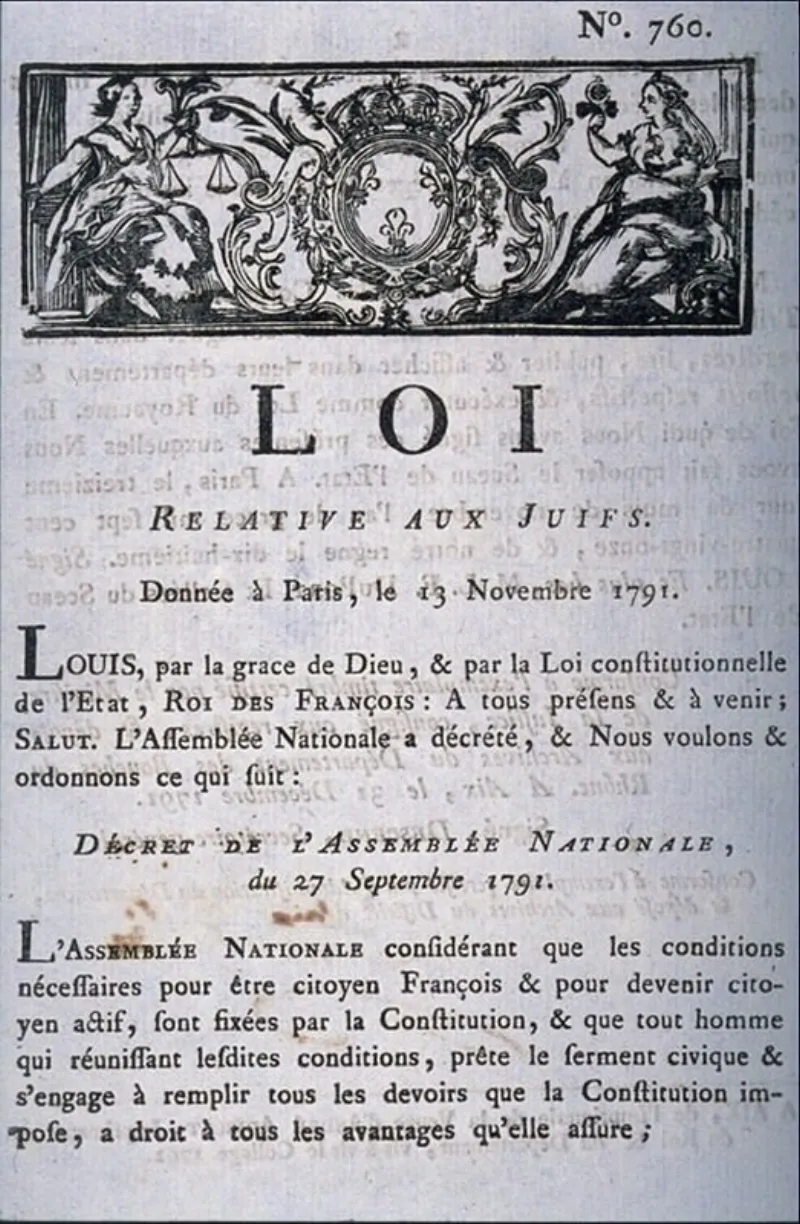
The story begins in revolutionary France. On September 27, 1791, the National Assembly voted to grant full citizenship to all Jews residing in France. The debate that preceded the vote laid bare the tensions that would define emancipation everywhere.
Count Stanislas de Clermont-Tonnerre’s famous formulation captured the essential bargain: “To the Jews as individuals, everything; to the Jews as a nation, nothing.” In other words, France would accept Jews as individual French citizens — but not as a distinct people with collective rights. The price of equality was the surrender of communal autonomy.
This was a revolutionary deal. For centuries, Jewish communities had governed themselves through their own courts, schools, and institutions. Now the state was saying: you can have full rights, but you must give up your separate governance. You can worship as you choose, but in the public square, you are French — nothing more, nothing less.
Napoleon’s Grand Sanhedrin
Napoleon Bonaparte spread emancipation across his empire — but he also wanted guarantees. In 1806, he convened an Assembly of Jewish Notables and posed twelve questions designed to test whether Jewish law was compatible with French citizenship. Could Jews serve in the military? Did they consider France their homeland? Would they accept French civil law over Jewish religious law?
In 1807, he went further, convening a “Grand Sanhedrin” — a deliberate echo of the ancient Jewish high court — to formalize the answers. The Jewish delegates affirmed, unanimously, that French civil law took precedence over Jewish law in matters of state, that Jews considered France their homeland, and that they were willing to serve in its armies.
The Sanhedrin was a watershed. It established the template for Jewish integration into modern states: religion would become a private matter, Jewish communal autonomy would be subordinated to the state, and Jews would prove their worthiness as citizens by demonstrating loyalty, productivity, and cultural adaptation.
The Spread of Emancipation
Over the next century, emancipation spread across Europe — but the path was neither straight nor smooth.
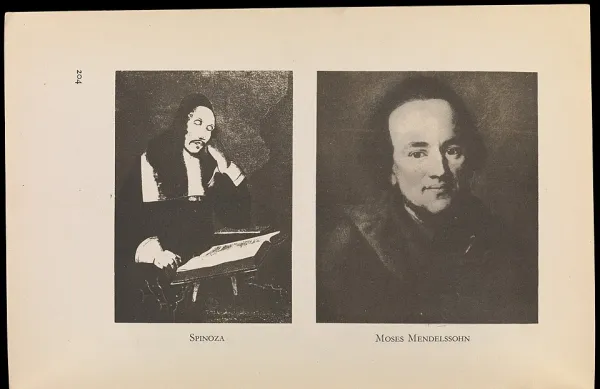
Germany moved in fits and starts. The Haskalah (Jewish Enlightenment) had prepared the intellectual ground, with Moses Mendelssohn arguing that Judaism and modern culture were compatible. But German emancipation was repeatedly granted and revoked. Full civil equality came only with German unification in 1871 — and even then, social discrimination persisted. Jews could be citizens but not officers; professors but not department chairs; successful but never fully accepted.
Austria-Hungary granted emancipation in 1867, opening the floodgates for Jewish entry into Viennese cultural and intellectual life. Within a generation, Jews were disproportionately represented in medicine, law, journalism, and the arts.
Britain moved gradually: Jews were admitted to Parliament in 1858, to universities in the 1870s, and achieved full legal equality by the end of the century.
Italy granted emancipation in stages, with full rights coming with Italian unification in 1870 and the abolition of the Roman ghetto.
Russia was the great exception. The tsarist empire never fully emancipated its vast Jewish population. The Pale of Settlement — the region where Jews were required to live — remained in force until the 1917 revolution. Pogroms, military conscription quotas, and educational restrictions defined Russian Jewish life, driving millions to emigrate to America.
What Emancipation Changed
The transformation was breathtaking. Within two generations, Jews went from medieval restrictions to extraordinary achievement in every field:
- In science: Albert Einstein, Niels Bohr, and dozens of Nobel laureates.
- In music: Felix Mendelssohn, Gustav Mahler, Arnold Schoenberg.
- In literature: Heinrich Heine, Franz Kafka, Marcel Proust.
- In politics: Benjamin Disraeli, Leon Blum, Rosa Luxemburg.
- In philosophy: Karl Marx, Sigmund Freud, Henri Bergson.
The religious landscape was equally transformed. Reform Judaism emerged in early nineteenth-century Germany as a direct response to emancipation. If Jews were now citizens, reformers argued, their worship should reflect modern sensibilities: shorter services, organ music, sermons in the vernacular, and an emphasis on ethics rather than ritual law. The Conservative and Modern Orthodox movements emerged in reaction, each seeking its own balance between tradition and modernity.
The Backlash
Emancipation did not end antisemitism — in some ways, it intensified it. As Jews entered European society and achieved visible success, new forms of hatred emerged. The old religious anti-Judaism (“Jews rejected Christ”) was supplemented by modern racial antisemitism (“Jews are a biologically inferior race”) and economic conspiracy theories (“Jews control the banks and the press”).
The Dreyfus Affair in France, the rise of antisemitic political parties in Austria and Germany, and the pogroms in Russia all demonstrated that legal equality did not guarantee social acceptance. The promise of emancipation — that if Jews became modern, educated, patriotic citizens, they would be accepted — proved to be, in many cases, a lie.
This bitter realization drove three very different responses:
- Zionism: If Europe would never truly accept Jews, they must build their own state. Theodor Herzl, shaken by the Dreyfus Affair, launched the Zionist movement in 1897.
- Socialism: If the problem was the class structure of capitalist society, Jews should join the universal struggle for workers’ rights. The Jewish Labor Bund and various socialist movements attracted millions of Jewish adherents.
- Deeper assimilation: If the problem was that Jews had not fully integrated, the solution was to try harder — to become indistinguishable from their neighbors.
The Question That Remains
The emancipation era posed a question that has never been fully answered: Can Jews be equal citizens of a non-Jewish state while maintaining a distinct collective identity? Clermont-Tonnerre said no — individual rights, yes; national identity, no. Many Jews accepted this bargain eagerly. Others rejected it as a form of spiritual suicide.
The Holocaust delivered the most devastating commentary on the emancipation experiment. The Jews of Germany had been the most integrated, the most assimilated, the most devoted to the proposition that a Jew could be fully German. And Germany repaid that devotion with genocide.
Yet emancipation was not a failure. It opened doors that had been closed for millennia. It produced an outpouring of Jewish creativity and achievement that enriched Western civilization immeasurably. And the questions it raised — about identity, belonging, tradition, and modernity — remain at the center of Jewish life today, from the synagogues of New York to the universities of Tel Aviv.
The door that opened in 1791 has never fully closed. But neither has it opened as wide as the revolutionaries promised. The story of Jewish emancipation is, finally, a story about the gap between the ideal of equality and the reality of difference — a gap that every generation must navigate anew.
Frequently Asked Questions
When did Jewish emancipation begin?
The formal process began on September 27, 1791, when the French National Assembly granted full citizenship to the Jews of France. This was the first time a modern European nation had declared Jews to be equal citizens. The process spread unevenly across Europe over the next century.
What was Napoleon's Sanhedrin?
In 1807, Napoleon convened an Assembly of Jewish Notables and then a 'Grand Sanhedrin' — echoing the ancient Jewish high court — to clarify whether Jewish law was compatible with French citizenship. Jewish leaders affirmed that civil law took precedence over religious law in matters of state. The Sanhedrin legitimized emancipation but also established the principle that Jewish communal autonomy would be subordinated to the state.
What is the relationship between emancipation and Reform Judaism?
Reform Judaism emerged partly as a response to emancipation. As Jews gained citizenship and entered modern society, some sought to modernize worship and adapt Jewish law to contemporary life. The Reform movement, born in early 19th-century Germany, shortened services, introduced organ music and vernacular sermons, and emphasized ethics over ritual — all in pursuit of harmonizing Jewish identity with modern citizenship.
Sources & Further Reading
Related Articles
Orthodox, Conservative, and Reform: Understanding Jewish Denominations
Judaism is not monolithic — it encompasses diverse movements from Ultra-Orthodox to Reform, each with its own approach to tradition, law, and modern life.
Haskalah: The Jewish Enlightenment That Changed Everything
The Haskalah — the Jewish Enlightenment of the 18th and 19th centuries — transformed Jewish life, sparking debates about tradition, modernity, and identity that continue to this day.
Jews of France: From Revolution to the Present
From medieval persecution to revolutionary emancipation, from the Dreyfus Affair to Vichy collaboration, and from North African immigration to modern challenges — French Jewry's story mirrors the tensions of modernity itself.