Jewish Art Through the Ages
Jewish art has navigated the tension between the Second Commandment's prohibition on graven images and the human desire for beauty — from ancient mosaics to Chagall's soaring canvases.
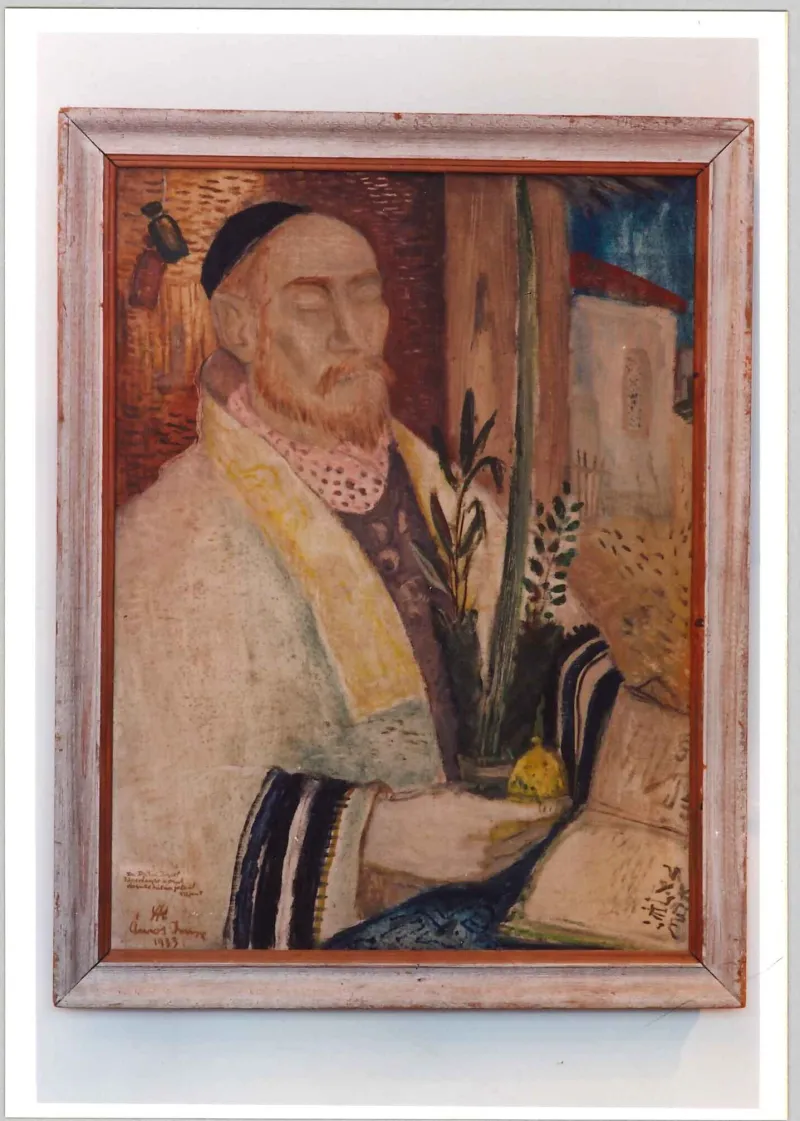
The Beautiful Contradiction
Judaism has a problem with images. The Second Commandment is unambiguous: “You shall not make for yourself a graven image, or any likeness of anything that is in heaven above, or that is in the earth beneath, or that is in the water under the earth. You shall not bow down to them or serve them” (Exodus 20:4-5).
And yet — Jews have made art for as long as there have been Jews. Beautiful, intricate, sometimes breathtaking art. The contradiction between the commandment and the artistic impulse has generated a creative tension that has defined Jewish visual culture for three thousand years.
The key to understanding this contradiction lies in the commandment’s purpose. The prohibition is against making images for worship — against idolatry, not against beauty. Most Jewish authorities throughout history have understood this distinction, allowing and even encouraging decorative art, ceremonial objects, and visual expression that enhances religious life rather than substituting for God.
Ancient Jewish Art
The popular image of ancient Judaism as iconoclastic — hostile to all images — is simply wrong. Archaeological evidence reveals a rich visual tradition:
The Dura-Europos Synagogue (Syria, 3rd century CE) is perhaps the most stunning example. Its walls are covered with elaborate frescoes depicting biblical scenes — Moses at the burning bush, the crossing of the Red Sea, Ezekiel’s vision of dry bones — painted with skill and vivid color. These are not abstract symbols but full narrative illustrations with human figures.
Synagogue mosaics across Israel from the Byzantine period (4th-7th centuries) feature zodiac wheels, biblical scenes, and — surprisingly — depictions of the sun god Helios. The Beth Alpha synagogue in the Jezreel Valley has a famous mosaic featuring a zodiac surrounded by the four seasons, with the Ark of the Covenant above.
The Arch of Titus in Rome (81 CE), though a Roman monument, preserves in relief the most famous image in Jewish art: Roman soldiers carrying the menorah and other Temple vessels in triumph after destroying Jerusalem. This image of looted sacred objects became a symbol of Jewish exile and loss.
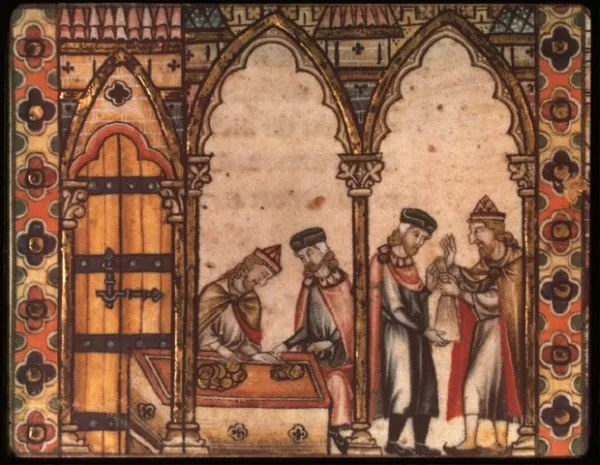
Illuminated Manuscripts
The medieval period produced some of the most exquisite Jewish art in the form of illuminated manuscripts — hand-written texts adorned with decorations, illustrations, and gold leaf.
The Haggadah — the text read at the Passover seder — was a particularly popular subject for illumination. The Golden Haggadah (Barcelona, c. 1320) features full-page miniatures of biblical scenes painted in gold and jewel tones. The Bird’s Head Haggadah (Germany, c. 1300) is remarkable for depicting human figures with the heads of birds — possibly a solution to discomfort with representing human faces.
The Sarajevo Haggadah (Barcelona, c. 1350), which survived the Inquisition, two world wars, and the Bosnian War, is one of the most precious illuminated manuscripts in the world. Its survival is itself a remarkable story — hidden by a Muslim librarian during World War II, it was rescued again during the siege of Sarajevo in the 1990s.
Other illuminated texts include marriage contracts (ketubot), which were often lavishly decorated, and Esther scrolls (megillot), featuring illustrations of the Purim story.
Ceremonial Art
Where Jewish artistic creativity most consistently flourished was in ceremonial objects — the ritual items used in worship and home observance:
- Torah ornaments: Crowns (keter), breastplates (tas), pointers (yad), and finials (rimonim) — often crafted in silver with intricate filigree
- Hanukkah menorahs: From simple bronze lamps to elaborate multi-tiered candelabra, the menorah has been one of the most creatively diverse objects in Jewish art
- Kiddush cups: Wine cups for Shabbat and holiday blessings, ranging from simple silver goblets to ornate creations
- Spice boxes (besamim): Used for the Havdalah ceremony at the end of Shabbat, often designed as intricate towers, flowers, or animals
- Seder plates: Ceremonial plates for the Passover seder, designed to hold the symbolic foods
- Mezuzah cases: Decorative containers for the doorpost scroll
These objects allowed Jewish artists to channel their creativity into forms that served religious life. The tradition of hiddur mitzvah — beautifying the commandment — provided religious sanction for artistic expression. If you are commanded to light Shabbat candles, why not light them in beautiful candlesticks? If you must drink wine on Kiddush, why not drink from a cup that elevates the experience?
Marc Chagall and Modern Jewish Art
No discussion of Jewish art is complete without Marc Chagall (1887-1985), the Vitebsk-born painter whose dreamlike canvases became the most recognizable visual expression of Jewish life in the 20th century.
Chagall grew up in a Hasidic family in the Pale of Settlement. His childhood — the wooden houses, the fiddler, the rabbi with the Torah scroll, the goats and chickens, the Shabbat candles — became the raw material of a lifetime of painting. In Chagall’s world, figures float through the air, lovers embrace above village rooftops, fiddlers play on roofs, and the boundaries between dream and reality dissolve.
His Jewish works include:
- The White Crucifixion (1938): A controversial masterpiece depicting Jesus on the cross surrounded by scenes of Jewish persecution — a Jewish artist reclaiming Jesus as a symbol of Jewish suffering
- The Twelve Tribes windows at Hadassah Medical Center in Jerusalem (1962): Twelve luminous stained glass windows representing the tribes of Israel
- Bible Message paintings: A series of seventeen monumental canvases illustrating biblical narratives, now housed in the Musée National Marc Chagall in Nice
Other significant modern Jewish artists include Amedeo Modigliani (portraits with elongated faces reflecting both Italian and Sephardic aesthetics), Mark Rothko (abstract expressionist canvases that some critics read as modern meditations on the sublime), Louise Nevelson (monumental sculptural assemblages), and R.B. Kitaj (who explicitly addressed Jewish themes and identity).
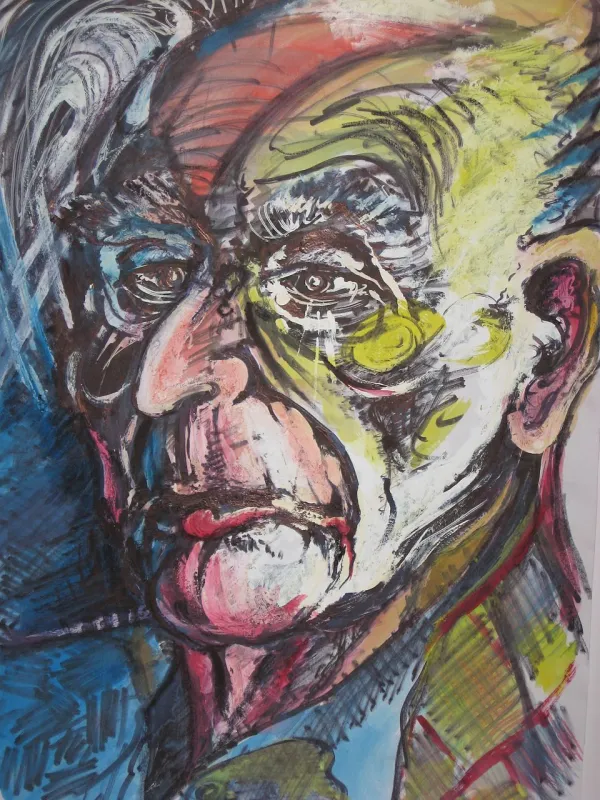
The Bezalel School
In 1906, Lithuanian-born sculptor Boris Schatz founded the Bezalel School of Arts and Crafts in Jerusalem — named after Bezalel ben Uri, the biblical artisan whom God appointed to build the Tabernacle (Exodus 31:1-5). The choice of name was deliberate: Bezalel was called by God and “filled with the spirit of God, in wisdom, in understanding, and in knowledge, and in all manner of workmanship.” Art, in this framing, is a divine calling.
Schatz’s vision was to create a distinctly Jewish art — one that drew on Middle Eastern aesthetics, biblical themes, and Zionist ideology rather than simply imitating European models. The early Bezalel style blended Art Nouveau with Oriental motifs, creating a visual language for the emerging Jewish national project.
Today, the Bezalel Academy of Arts and Design is Israel’s premier art institution, producing graduates who work across fine art, industrial design, architecture, and visual communication. Israeli art has become a significant force in the global art world, represented in major museums and galleries worldwide.
The Image Question Today
The ancient tension between Judaism and visual representation has largely resolved in practice — Jews create and consume art freely across all media. But the philosophical question endures: What is the relationship between the visible and the invisible, the material and the spiritual, the image and the imageless God?
Jewish art, at its best, holds this tension productively. It creates beauty while acknowledging that ultimate beauty is beyond representation. It makes the invisible partially visible while respecting the mystery of what cannot be seen. The Second Commandment, far from killing Jewish art, gave it a distinctive character — an art always aware of its own limits, always pointing beyond itself toward something that can be experienced but never fully depicted.
Frequently Asked Questions
Does Judaism prohibit art?
No — though this is a common misconception. The Second Commandment prohibits making 'graven images' for the purpose of worship (idolatry), not all visual art. Throughout history, Jews have created magnificent art — synagogue mosaics, illuminated manuscripts, ceremonial objects, and fine art. The prohibition was interpreted differently in different periods and communities, but Judaism has a rich artistic tradition spanning thousands of years.
Who was Marc Chagall?
Marc Chagall (1887-1985) was a Russian-French Jewish artist considered one of the most significant painters of the 20th century. Born in Vitebsk, Belarus, his dreamlike works featuring floating figures, fiddlers on roofs, and Jewish village scenes drew deeply on his Hasidic upbringing. His stained glass windows at Hadassah Medical Center in Jerusalem and the United Nations building are among the most recognized works of Jewish art.
What is the Bezalel Academy?
The Bezalel Academy of Arts and Design, founded in Jerusalem in 1906 by Boris Schatz, is Israel's premier art school. Named after Bezalel ben Uri — the biblical artisan God appointed to build the Tabernacle — the academy was founded to create a distinctly Jewish artistic tradition. It played a crucial role in developing Israeli visual culture and continues to be one of the world's leading art schools.
Sources & Further Reading
Related Articles
The Synagogue: House of Prayer, Study, and Assembly
More than just a place of worship — the synagogue is the heart of Jewish community life, combining prayer, learning, and social gathering under one roof.
The Ten Commandments: Foundation of Moral Law
Given at Mount Sinai and inscribed on two stone tablets, the Ten Commandments form the moral bedrock of Judaism — and have shaped ethical thinking across civilizations.
What Is Judaism? A Living Introduction to the World's Oldest Monotheistic Faith
Judaism is the world's oldest monotheistic religion, built on covenant, Torah, ethical living, and an unbroken chain of tradition stretching back four thousand years.