Gloria Steinem: A Life of Feminist Activism
Gloria Steinem became the face of American feminism through Ms. Magazine, tireless activism, and a gift for translating rage into change — guided by her Jewish father's free spirit.
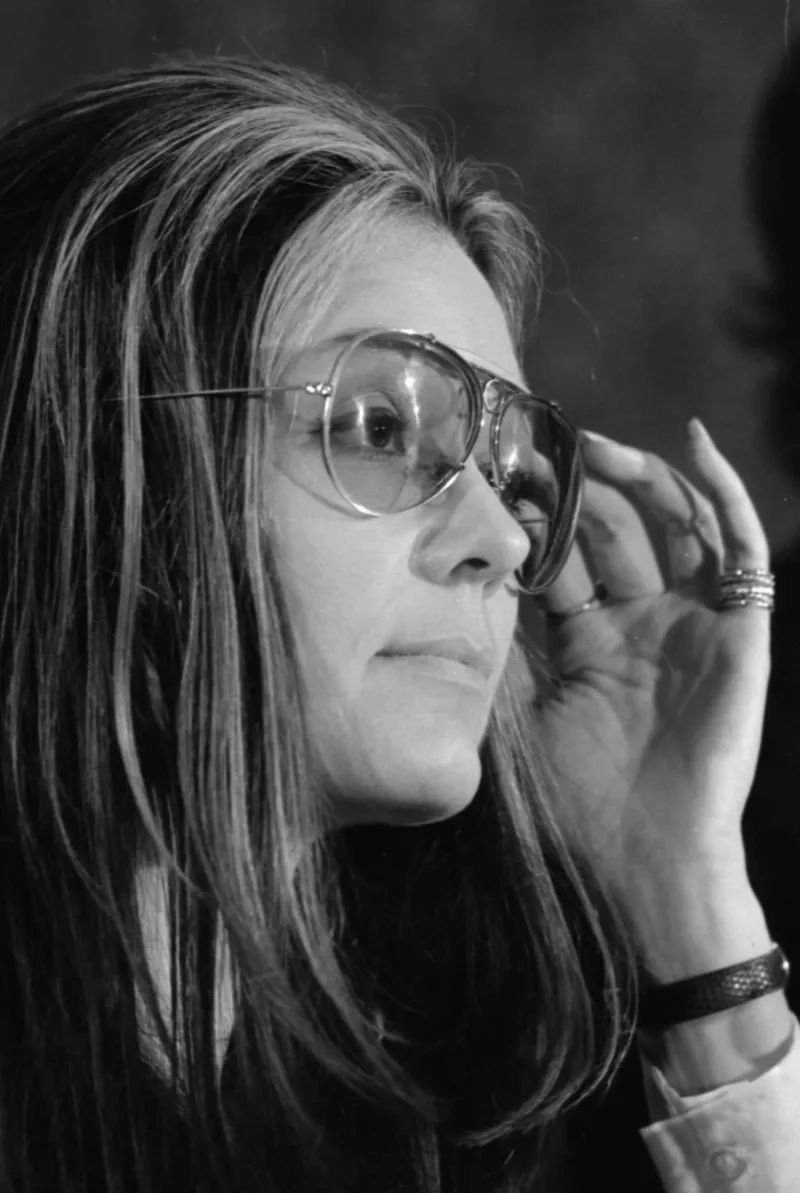
The Woman Who Wouldn’t Be Quiet
In 1963, Gloria Steinem went undercover as a Playboy Bunny. She stuffed her costume, served drinks, and endured the leering comments of club members. Then she wrote about it. The resulting article — published in Show magazine — exposed the exploitative working conditions at Hugh Hefner’s clubs and launched Steinem’s career as a journalist willing to put herself on the line.
It was a template she would follow for the next six decades: go where the story is, tell the truth about what you see, and refuse to be silenced. From Ms. Magazine to the Women’s March, Gloria Steinem became the most recognizable face of American feminism — a woman whose Jewish heritage, difficult childhood, and extraordinary courage combined to create one of the most important activists of the twentieth century.
A Complicated Childhood
Gloria Marie Steinem was born on March 25, 1934, in Toledo, Ohio. Her father, Leo Steinem, was a charming, restless Jewish man — an antiques dealer, resort operator, and dreamer who couldn’t stay in one place. His mother, Pauline Perlmutter Steinem, had been a prominent suffragist and one of the first Jewish women to hold national office. The activist gene ran in the family.
Gloria’s mother, Ruth Nuneviller, was not Jewish but suffered from severe depression and anxiety that went largely untreated. When Gloria’s parents divorced in 1944, ten-year-old Gloria became her mother’s caretaker — cooking, cleaning, and managing the household while Ruth lay in bed, incapacitated.
This experience — of watching a brilliant woman destroyed by a system that offered her no support — shaped Steinem’s feminism more than any book or theory. “My mother was a talented woman who was told she could only be a wife and mother,” Steinem has said. “The damage that did to her was the damage the system was doing to millions of women.”
Journalism and Activism
After studying at Smith College (the same school Betty Friedan had attended two decades earlier) and spending two years in India, Steinem became a freelance journalist in New York. Her Playboy Bunny piece was followed by increasingly political reporting on civil rights, anti-war activism, and the emerging feminist movement.
In 1969, Steinem attended a hearing on abortion rights organized by the feminist group Redstockings. It was a turning point. “I had an abortion when I was in my twenties,” she later said, “and I had never told anyone. Hearing other women speak openly about their experiences changed my life.” She began writing and speaking about feminism with an urgency and eloquence that quickly made her the movement’s most visible spokesperson.
Ms. Magazine
In 1971, Steinem co-founded Ms. magazine with Dorothy Pitman Hughes and other feminists. The first issue — featuring Wonder Woman on the cover — sold out all 300,000 copies in eight days. Ms. was revolutionary: it was the first mainstream publication to cover domestic violence, sexual harassment, pay equity, and reproductive rights as front-page issues.
The magazine’s success reflected Steinem’s ability to communicate feminist ideas to ordinary women — not as abstract theory but as practical reality. Her gift was making the personal political: every woman’s individual struggle with discrimination was part of a larger systemic problem.
Jewish Roots
Steinem’s Jewish heritage, while not central to her public identity, influenced her activism in important ways. Her grandmother Pauline Perlmutter Steinem — a Jewish suffragist — provided a model of women’s activism rooted in Jewish social justice traditions. The Jewish commitment to tikkun olam — repairing the world — runs through Steinem’s work like a thread.
“I grew up knowing that my father’s family had been Jewish,” she has said, “and that my grandmother had been a feminist before I knew the word.” The connection between Jewish ethical tradition and feminist activism is not coincidental: both are rooted in the conviction that the world as it is, is not the world as it should be, and that human beings have a responsibility to close that gap.
Legacy
At ninety, Gloria Steinem remains active — writing, speaking, organizing, and mentoring a new generation of feminists. Her influence is difficult to overstate. She helped transform feminism from a radical movement into a mainstream one, changed the way Americans think about gender, and proved that one voice, if it refuses to be quiet, can change the world.
“The truth will set you free,” she has said, quoting scripture. “But first it will piss you off.” It is a very Jewish sentiment — the prophetic tradition of speaking uncomfortable truths, of naming injustice even when naming it makes you unpopular. Gloria Steinem has been doing it for sixty years. She has no plans to stop.
Frequently Asked Questions
Is Gloria Steinem Jewish?
Steinem's father, Leo Steinem, was Jewish — the son of German-Jewish immigrants. Her paternal grandmother, Pauline Perlmutter Steinem, was a prominent suffragist and the first woman elected to the National Education Association board. Gloria was not raised religiously but has acknowledged her Jewish heritage as an influence on her activism.
What was Ms. Magazine?
Ms. Magazine was a feminist publication co-founded by Gloria Steinem in 1971. It became the first national magazine to feature stories on domestic violence, sexual harassment, and gender pay gaps. The premiere issue, featuring Wonder Woman on the cover, sold out all 300,000 copies in eight days. Ms. helped mainstream feminist ideas for millions of American women.
Did Gloria Steinem say 'a woman needs a man like a fish needs a bicycle'?
While widely attributed to Steinem, the phrase was originally coined by Australian activist Irina Dunn in 1970. Steinem popularized it in the United States and has always credited Dunn as the originator. The quote became one of the most famous slogans of the feminist movement.
Key Terms
Sources & Further Reading
Related Articles
Betty Friedan: The Jewish Woman Who Launched a Revolution
Betty Friedan's The Feminine Mystique ignited the second wave of feminism, transforming the lives of millions of women — driven by a Jewish tradition of questioning the status quo.
Jewish Feminism: A History
From the Talmudic sage Beruriah to Sally Priesand's historic ordination, Jewish feminism has transformed religious life — reshaping prayer, leadership, and the fight for women's rights within halakha.
Women Rabbis: From Regina Jonas to Today's Leaders
The story of women in the rabbinate — from Regina Jonas, murdered in the Holocaust, to Sally Priesand, Sandy Eisenberg Sasso, Amy Eilberg, and today's Orthodox Maharats.