The Dead Sea Scrolls: Ancient Texts That Changed History
The story of the Dead Sea Scrolls — from their accidental discovery by a Bedouin shepherd in 1947 to what they reveal about ancient Judaism, biblical texts, and a mysterious sect at Qumran.
A Shepherd, a Cave, and the Find of a Century
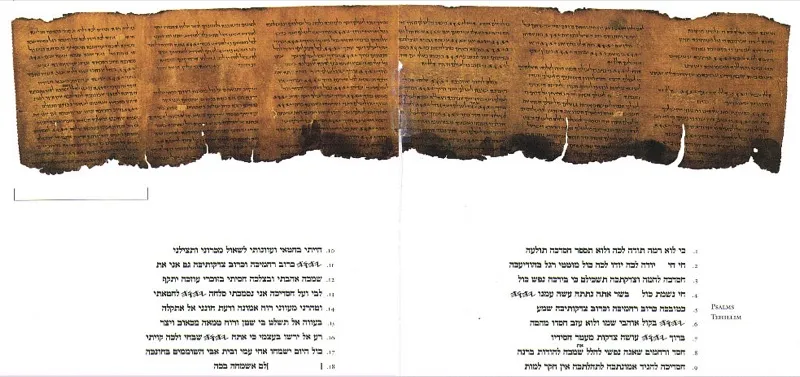
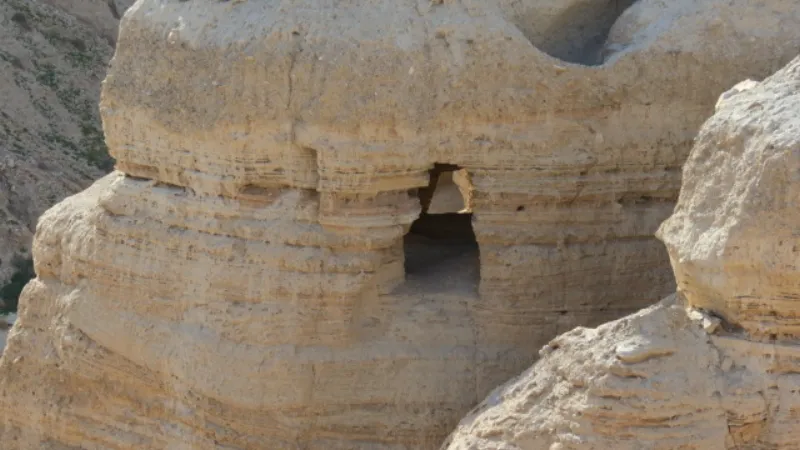
In the spring of 1947, a Bedouin shepherd named Muhammed edh-Dhib was searching for a lost goat among the cliffs above the northwestern shore of the Dead Sea. Tossing a stone into a cave opening, he heard something shatter — the sound of breaking pottery. When he climbed in, he found tall clay jars containing leather scrolls wrapped in linen.
He had no idea what he had found. Neither, initially, did anyone else. The scrolls passed through the hands of antiquities dealers, were examined by scholars at the American School of Oriental Research in Jerusalem, and eventually made their way to Hebrew University. When their age was confirmed — they were over two thousand years old — the scholarly world erupted.
The Dead Sea Scrolls would prove to be the most important archaeological discovery of the 20th century — a window into ancient Judaism that transformed our understanding of biblical texts, Jewish diversity, and the world from which both rabbinic Judaism and Christianity emerged.
What Was Found
Between 1947 and 1956, archaeologists and Bedouin searchers explored eleven caves near the ruins of Qumran, a settlement on a plateau overlooking the Dead Sea. They recovered approximately 900 manuscripts — some nearly complete, most in fragments, some reduced to scraps the size of a fingernail. The documents were written primarily in Hebrew, with some in Aramaic and a few in Greek.
The scrolls fall into three main categories:
Biblical Manuscripts
Every book of the Hebrew Bible is represented among the scrolls except for the Book of Esther. The most spectacular find was the Great Isaiah Scroll — a complete copy of the Book of Isaiah that is over a thousand years older than the previously oldest known Hebrew manuscript of that book. Its text is remarkably close to the version used in synagogues today, demonstrating the extraordinary accuracy of Jewish scribal traditions over centuries.
At the same time, the scrolls revealed that biblical texts were not yet fully standardized in this period. Some manuscripts show textual variants — different word choices, additional passages, alternative arrangements — suggesting that the Torah and other biblical books existed in slightly different versions simultaneously.
Sectarian Documents
The most intriguing texts are those produced by the community itself. These include:
- The Community Rule (Manual of Discipline) — describing the beliefs, rituals, and organizational structure of the sect
- The War Scroll — detailing an apocalyptic battle between the “Sons of Light” and the “Sons of Darkness”
- The Temple Scroll — presenting an idealized vision of Temple worship that differed from established practice in Jerusalem
- Pesharim (commentaries) — interpreting biblical prophecies as referring to the community’s own history and expectations
Other Texts
The collection also includes prayers, hymns, wisdom literature, legal texts, and a remarkable document called the Copper Scroll — a list of hidden treasure (possibly the Temple treasury) engraved on sheets of copper. Whether the treasure was real or imaginary remains debated.
The Qumran Community
Who lived at Qumran and produced (or at least collected) the scrolls? The dominant scholarly theory identifies them as Essenes — a Jewish sect described by the ancient historians Josephus, Philo of Alexandria, and Pliny the Elder.
According to these ancient sources and the scrolls themselves, the community:
- Rejected the Temple priesthood in Jerusalem, which they considered corrupt and illegitimate
- Lived communally, sharing property, eating together, and maintaining strict purity laws
- Practiced ritual immersion extensively — the numerous ritual baths (mikvaot) found at Qumran confirm this
- Followed a solar calendar rather than the lunar calendar used in the Temple, meaning their holidays fell on different dates
- Awaited an apocalyptic war in which God would destroy the wicked and vindicate the righteous
- Were led by a figure called the “Teacher of Righteousness” — a charismatic priest who had broken with the Jerusalem establishment
The community likely existed from roughly the 2nd century BCE until 68 CE, when the Romans destroyed the settlement during the Jewish revolt. Before the destruction, the inhabitants apparently hid their scrolls in the surrounding caves — preserving them for nearly two thousand years.
Why They Matter
The Dead Sea Scrolls transformed multiple fields of scholarship. Here is why they matter:
For Understanding the Bible
Before the scrolls, the oldest known complete Hebrew manuscript of the Bible was the Aleppo Codex (c. 920 CE) and the Leningrad Codex (c. 1009 CE). The Dead Sea Scrolls pushed the textual evidence back by roughly a thousand years. The remarkable agreement between the scrolls and later manuscripts vindicated the accuracy of Jewish scribal tradition — copyists had preserved the text with astonishing fidelity over a millennium.
But the scrolls also revealed diversity. Some manuscripts of books like Samuel and Jeremiah differ significantly from the later standard text, suggesting that multiple versions of biblical books circulated simultaneously in the Second Temple period. The process of standardizing the biblical text was more gradual and complex than previously assumed.
For Understanding Ancient Judaism
Perhaps the scrolls’ most profound impact was revealing how diverse Judaism was before the destruction of the Temple in 70 CE. We knew from Josephus that Pharisees, Sadducees, and Essenes existed. The scrolls showed just how different their beliefs and practices could be. The Qumran community had its own calendar, its own legal interpretations, its own messianic expectations, and its own fierce conviction that everyone else was wrong.
This diversity matters because it challenges the assumption that there was a single, unified “Judaism” in the ancient world. What we call Judaism today — rabbinic Judaism, based on the Mishnah and Talmud — emerged after 70 CE as one surviving strand of a much wider tapestry. The scrolls give us a glimpse of the roads not taken.
For Understanding Early Christianity
The scrolls predate or are contemporary with the emergence of Christianity, and some of their themes — messianic expectation, apocalyptic thinking, communal living, ritual immersion — overlap with early Christian ideas. This does not mean Jesus was an Essene (a popular but unsubstantiated claim), but it does mean that Christianity emerged from a Jewish world that was far richer and more varied than later Christian tradition acknowledged.
The Controversy
The Dead Sea Scrolls were plagued by controversy for decades. A small team of scholars controlled access to unpublished fragments, and progress was agonizingly slow. Conspiracy theories flourished — were the Vatican or Israeli authorities suppressing scrolls that would undermine Christianity or Judaism? The answer was no, but the secrecy fueled suspicion.
In 1991, the monopoly was broken when the Huntington Library in California opened its photographic archive of the scrolls to all scholars. The complete publication of the scrolls, finally achieved in the early 2000s, confirmed that there were no hidden bombshells — just an extraordinarily rich library that illuminated a pivotal period in human history.
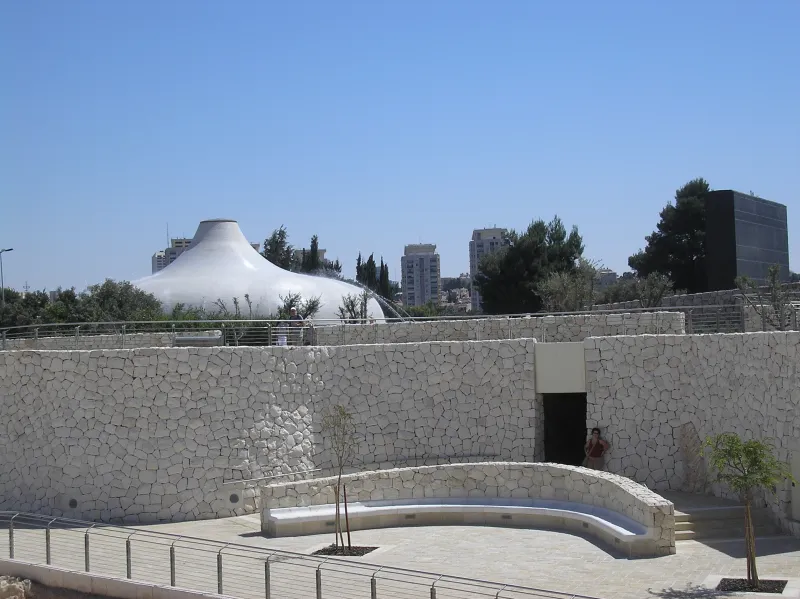
Today, the scrolls are housed primarily in the Shrine of the Book at the Israel Museum in Jerusalem — a building whose iconic white dome and black basalt wall symbolize the scrolls’ central theme of the struggle between light and darkness.
A Living Legacy
The Dead Sea Scrolls remind us that the Judaism we know today is the product of a long, complex evolution. The men of Qumran — whoever they were — preserved texts that their opponents might have destroyed. Their library, hidden in desperation as Roman legions approached, survived two millennia in the dry desert air and emerged to reshape our understanding of the ancient world.
Every time a Torah scroll is read in a synagogue, the congregation is hearing words that the Dead Sea Scrolls confirm were spoken in essentially the same form over two thousand years ago. The continuity is remarkable. The diversity that surrounded it is humbling. Both are part of the story.
“The voice of one crying in the wilderness: prepare the way of the Lord.” — Isaiah 40:3, found in the Great Isaiah Scroll and used by the Qumran community as their founding text
Frequently Asked Questions
What are the Dead Sea Scrolls?
The Dead Sea Scrolls are a collection of approximately 900 manuscripts discovered between 1947 and 1956 in caves near Qumran on the northwestern shore of the Dead Sea. They date from roughly the 3rd century BCE to the 1st century CE and include the oldest known copies of Hebrew Bible texts, sectarian religious documents, legal texts, prayers, and commentaries. They are considered the greatest archaeological discovery of the 20th century.
Who wrote the Dead Sea Scrolls?
Most scholars believe the scrolls were produced by or collected by the Essenes, a Jewish sect described by ancient historians Josephus, Philo, and Pliny the Elder. The Essenes were a separatist community that rejected the Temple priesthood in Jerusalem and lived an ascetic, communal life. However, some scholars argue the scrolls represent a broader library from multiple Jewish groups.
Why are the Dead Sea Scrolls important?
The scrolls pushed our oldest Hebrew Bible manuscripts back by roughly 1,000 years. They showed that the biblical text was remarkably well preserved over centuries, while also revealing textual variations and alternative versions. They illuminated the diversity of Jewish belief and practice in the Second Temple period, showing that Judaism before 70 CE was far more varied than previously understood.
Sources & Further Reading
- Israel Antiquities Authority — Dead Sea Scrolls ↗
- Jewish Virtual Library — Dead Sea Scrolls ↗
- Biblical Archaeology Review ↗
- Lawrence Schiffman, Reclaiming the Dead Sea Scrolls
Related Articles
Ancient Israel: From Abraham to the Kingdoms
The foundational story of the Jewish people — from the call of Abraham through the united monarchy of David and Solomon.
The Talmud: A Beginner's Guide to Jewish Oral Law
The Talmud is the vast ocean of Jewish thought — centuries of rabbinic debate on law, ethics, storytelling, and the meaning of life, all compiled into one extraordinary work.
The Torah: The Heart of Judaism
The Torah is more than a book — it is the living constitution of Jewish life, studied and debated for over three millennia.