King David and King Solomon: Israel's Golden Age
The story of David the shepherd who became king, established Jerusalem as the capital, and his son Solomon who built the First Temple — the golden age of ancient Israel.

From Shepherd to King
There is a hill in Bethlehem — small, stony, unremarkable — where tradition says a boy once watched his father’s sheep. He was the youngest of eight brothers, overlooked by everyone, including his own family. When the prophet Samuel came looking for Israel’s next king, Jesse the Bethlehemite lined up his sons from tallest to shortest. David was not even invited to the audition. He was out with the flock.
Samuel looked at the tall, impressive older brothers and waited for God to speak. The answer kept coming back: not this one. Finally, someone remembered the youngest boy, still smelling of sheep and grass. They brought him in, and God said: this is the one.
It is one of the most beloved stories in the Hebrew Bible, and it contains a message that runs through all of Jewish scripture: God does not see as humans see. Humans look at outward appearances. God looks at the heart (1 Samuel 16:7).
David’s rise from shepherd to king is the great success story of ancient Israel — and one of the most complex character studies in all of literature.
The Young Warrior
Before David wore a crown, he carried a sling. The story of David and Goliath is probably the most famous underdog tale ever told. The Philistine giant — over nine feet tall in the traditional telling — challenged the Israelites to single combat. King Saul’s warriors were terrified. David, a teenager bringing cheese to his brothers at the front lines, volunteered.
He refused Saul’s armor (it did not fit) and walked toward the giant with five smooth stones and a shepherd’s sling. One stone was enough. Goliath fell, and David became a national hero overnight.
What followed was a long, complicated, sometimes agonizing path to the throne. King Saul, initially grateful, grew jealous and paranoid. David spent years as a fugitive, hiding in caves and wilderness, gathering a band of outcasts and misfits around him. He had opportunities to kill Saul and chose not to — a restraint that Jewish tradition holds up as one of his greatest virtues.
When Saul died in battle against the Philistines, David was anointed king — first over the southern tribe of Judah, and eventually over all twelve tribes of Israel.
Jerusalem: The Eternal Capital
David’s most consequential political decision was choosing Jerusalem as his capital. It was a masterstroke. Jerusalem sat on the border between the northern and southern tribes, belonging to neither — a neutral site that could unite the kingdom. David conquered the Jebusite city, renamed it the City of David, and brought the Ark of the Covenant there with great ceremony.
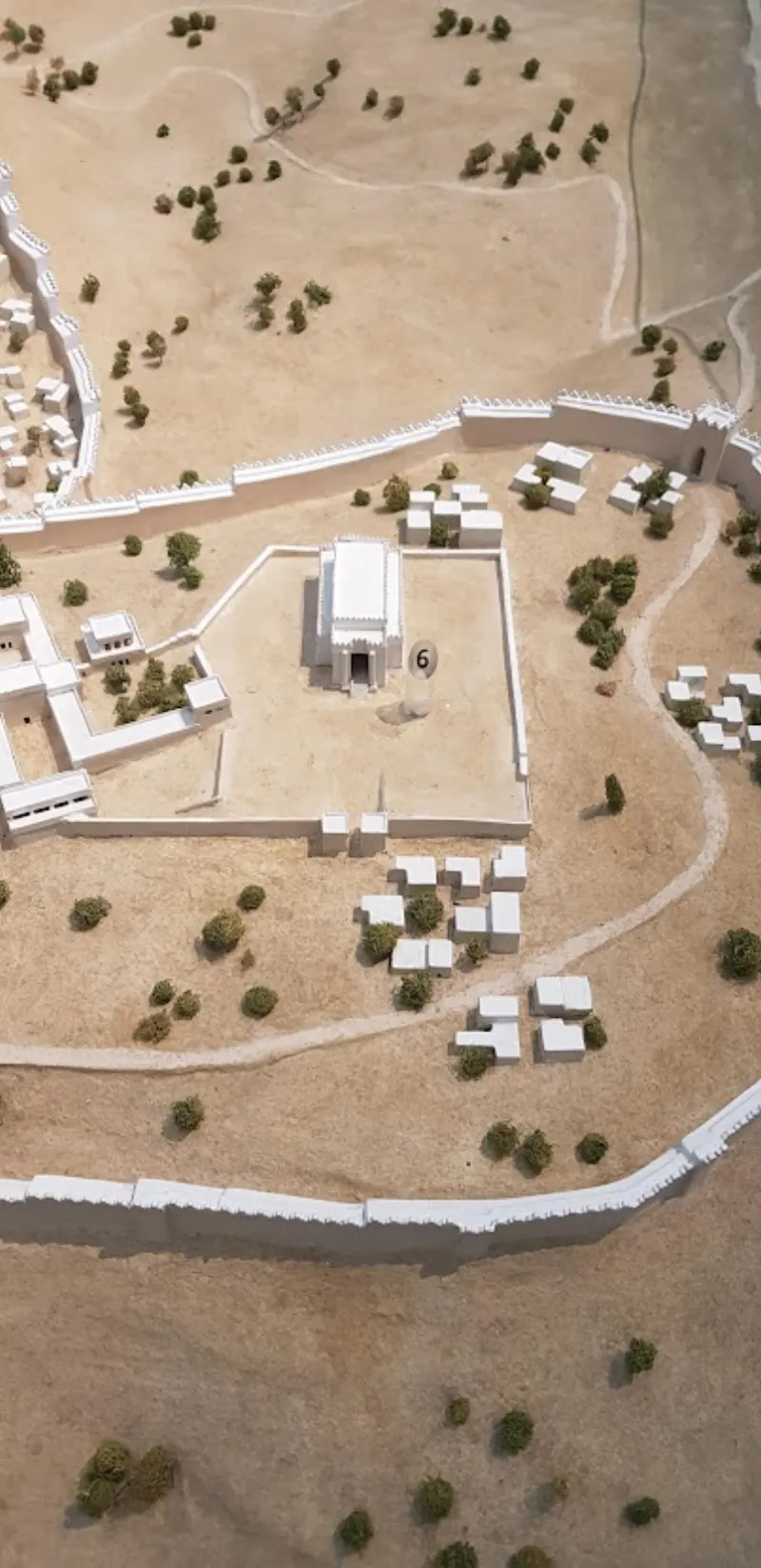
The day the Ark entered Jerusalem, David danced before it with such abandon that his wife Michal was embarrassed. It is one of the most human moments in the Bible — the king of Israel, leaping and spinning in the streets, overcome by joy. When Michal criticized him, David replied: “I will become even more undignified than this” (2 Samuel 6:22).
David wanted to build a permanent house for God — a Temple to replace the portable Tabernacle. But God, speaking through the prophet Nathan, said no. David was a man of war; his hands had shed too much blood. The Temple would be built by his son. Instead, God made David a different promise: his dynasty would endure forever. This covenant — the promise of an eternal Davidic line — became the foundation of Jewish messianic hope.
The Psalms: A Soul Laid Bare
Jewish tradition attributes many of the 150 Psalms to David, and whether he composed all of them or not, the Psalms feel like David. They are raw, contradictory, passionate, and honest in ways that religious poetry rarely manages.
David’s psalms cry out in anguish (“My God, my God, why have You forsaken me?” — Psalm 22) and explode with praise (“The heavens declare the glory of God” — Psalm 19). They beg for mercy after terrible sins and proclaim trust in the darkest valleys. They are, collectively, one of the great achievements of human literature — a complete emotional vocabulary for speaking to God.
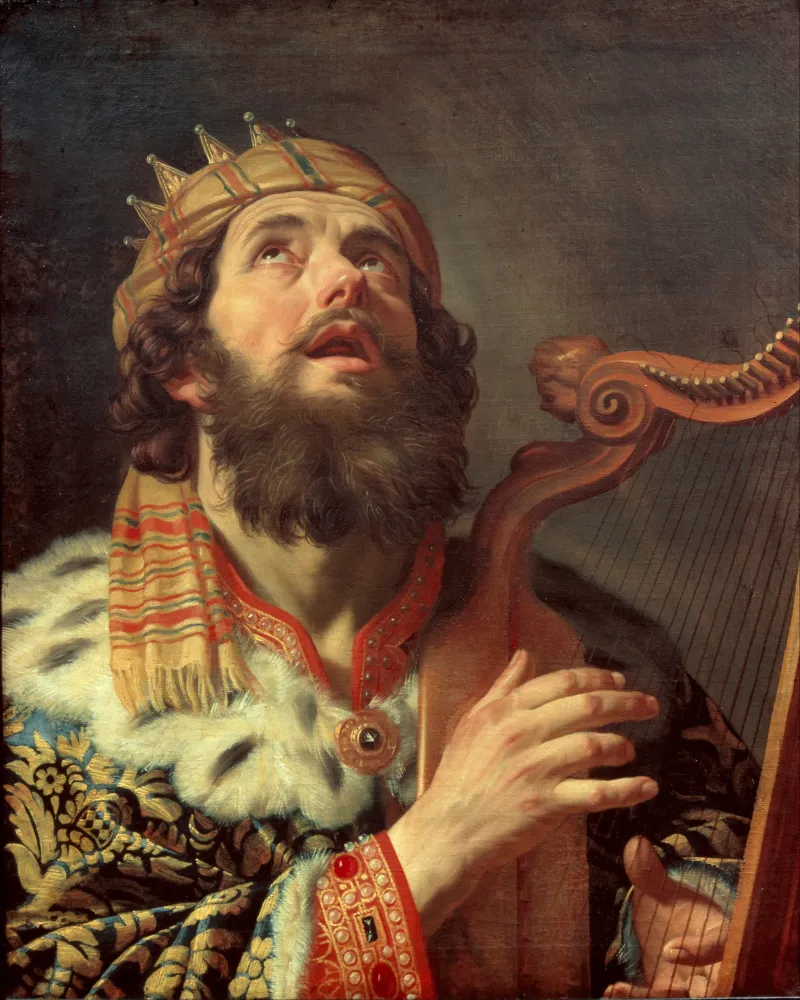
Generations of Jews have turned to the Psalms in every circumstance — in grief, in gratitude, in fear, in celebration. They are recited at funerals and weddings, in hospitals and synagogues, by rabbis and by people who have never set foot in a synagogue. David gave the Jewish people a language for talking to God that has never been surpassed.
David’s Flaws
The Bible does not sanitize its heroes, and David is no exception. At the height of his power, David committed adultery with Bathsheba, the wife of Uriah the Hittite, and then arranged for Uriah to be killed in battle. The prophet Nathan confronted David with a parable about a rich man who stole a poor man’s only lamb — and when David, outraged, demanded justice, Nathan said: “You are the man” (2 Samuel 12:7).
David’s response was immediate and total: “I have sinned against the Lord.” No excuses, no deflection. The Talmud holds up David’s repentance as a model — not because what he did was forgivable, but because he faced it completely. Psalm 51, traditionally attributed to David after this episode, is one of the most searing confessions ever written.
The consequences were devastating. The child born of the affair died. David’s family unraveled — his son Amnon committed rape, his son Absalom led a rebellion that nearly destroyed the kingdom. David spent his later years dealing with the wreckage of his own failures.
Solomon: Wisdom and Splendor
David died around 970 BCE and was succeeded by his son Solomon, born to Bathsheba. Solomon’s reign represents the apex of Israelite power and prosperity — the golden age that later generations would look back on with longing.
God appeared to Solomon in a dream and offered him anything he wished. Solomon asked for wisdom — “an understanding heart to judge Your people, to discern between good and evil” (1 Kings 3:9). Pleased by the request, God granted Solomon not only wisdom but also wealth and honor beyond any king of his era.
Solomon’s wisdom became legendary. The most famous example is the case of two women who both claimed the same baby. Solomon proposed cutting the child in half. The real mother immediately surrendered her claim to save the child, revealing herself — and Solomon’s judgment became a byword for penetrating insight.
The First Temple
Solomon’s crowning achievement was the construction of the First Temple in Jerusalem — the permanent dwelling place for God’s presence that David had dreamed of but was not permitted to build. The project took seven years and employed tens of thousands of workers. Cedar wood came from Lebanon, gold from Ophir, and the finest craftsmen from across the region.
The Temple was not simply a building. It was the center of Israelite religious life — the place where sacrifices were offered, where the High Priest entered the Holy of Holies on Yom Kippur, where the nation gathered for pilgrimage festivals. The Ark of the Covenant, containing the tablets of the Ten Commandments, rested in the innermost chamber.
When Solomon dedicated the Temple, he offered a prayer of remarkable theological sophistication: “But will God indeed dwell on the earth? Even the heavens and the highest heavens cannot contain You, how much less this house that I have built!” (1 Kings 8:27). The man who built God’s house understood that no house could contain God.
The Kingdom’s Decline
Solomon’s reign, for all its glory, carried the seeds of its own destruction. His massive building projects required heavy taxation and forced labor. He married hundreds of foreign wives — political alliances that brought foreign worship into Jerusalem. The Torah had warned against exactly this, and tradition sees Solomon’s later years as a cautionary tale about wisdom corrupted by excess.
When Solomon died around 930 BCE, the kingdom split in two. The northern tribes, chafing under heavy burdens, broke away to form the Kingdom of Israel. Solomon’s son Rehoboam retained only the southern Kingdom of Judah. The golden age was over.
The northern kingdom would be conquered by Assyria in 722 BCE and its ten tribes scattered — the “Ten Lost Tribes” of Jewish legend. The southern kingdom would endure until 586 BCE, when Babylon destroyed Solomon’s Temple and sent the Jews into exile.
Legacy
David and Solomon cast long shadows across Jewish history. David established Jerusalem as the eternal capital and gave Jews their songbook. Solomon built the Temple that became the center of the world. Together, they created a model of what Jewish sovereignty could look like — flawed, complicated, glorious, and brief.
The prophets promised that a descendant of David would one day restore the kingdom. This hope — the hope for a Messiah from the house of David — has sustained Jews through two thousand years of exile. Every Friday night, the Lecha Dodi hymn welcomes the Sabbath as a foretaste of that messianic age.
“The stone that the builders rejected has become the chief cornerstone.” — Psalm 118:22
The shepherd boy who was not even invited to Samuel’s audition became the greatest king Israel ever knew. His story says something about what God looks for in a leader — not perfection, but a heart that can break, repent, and sing.
Frequently Asked Questions
Did King David really exist?
Yes, most historians accept David as a historical figure. The Tel Dan Stele, discovered in 1993, is an Aramean inscription from the 9th century BCE that refers to the 'House of David,' confirming that a dynasty bearing his name ruled in Judah. The details of his reign as described in the Bible, however, are debated.
Why is David so important in Judaism?
David is considered the ideal king of Israel, the author of many Psalms, and the ancestor from whom the Messiah will descend. He established Jerusalem as the political and spiritual capital, and his dynasty is the lens through which Jewish tradition views future redemption. Despite his serious flaws, tradition remembers him as a man after God's own heart.
What happened to Solomon's Temple?
Solomon's Temple (the First Temple) stood in Jerusalem for approximately 370 years before being destroyed by the Babylonian king Nebuchadnezzar II in 586 BCE. The Babylonians exiled much of the Jewish population to Babylon. A Second Temple was later built on the same site, eventually expanded by Herod the Great, and destroyed by the Romans in 70 CE.
Sources & Further Reading
Related Articles
Ancient Israel: From Abraham to the Kingdoms
The foundational story of the Jewish people — from the call of Abraham through the united monarchy of David and Solomon.
Jerusalem: 3,000 Years of Faith, Conflict, and Hope
For three millennia, Jerusalem has been the spiritual heart of the Jewish people — and a city sacred to three faiths. Its story is one of devotion, destruction, and enduring hope.
The Torah: The Heart of Judaism
The Torah is more than a book — it is the living constitution of Jewish life, studied and debated for over three millennia.