Cholent: The Original Shabbat Slow-Cooker Stew
Beef, beans, barley, and potatoes — simmered overnight from Friday to Saturday. Cholent is the original slow-cooked dish, born from the prohibition against cooking on Shabbat.
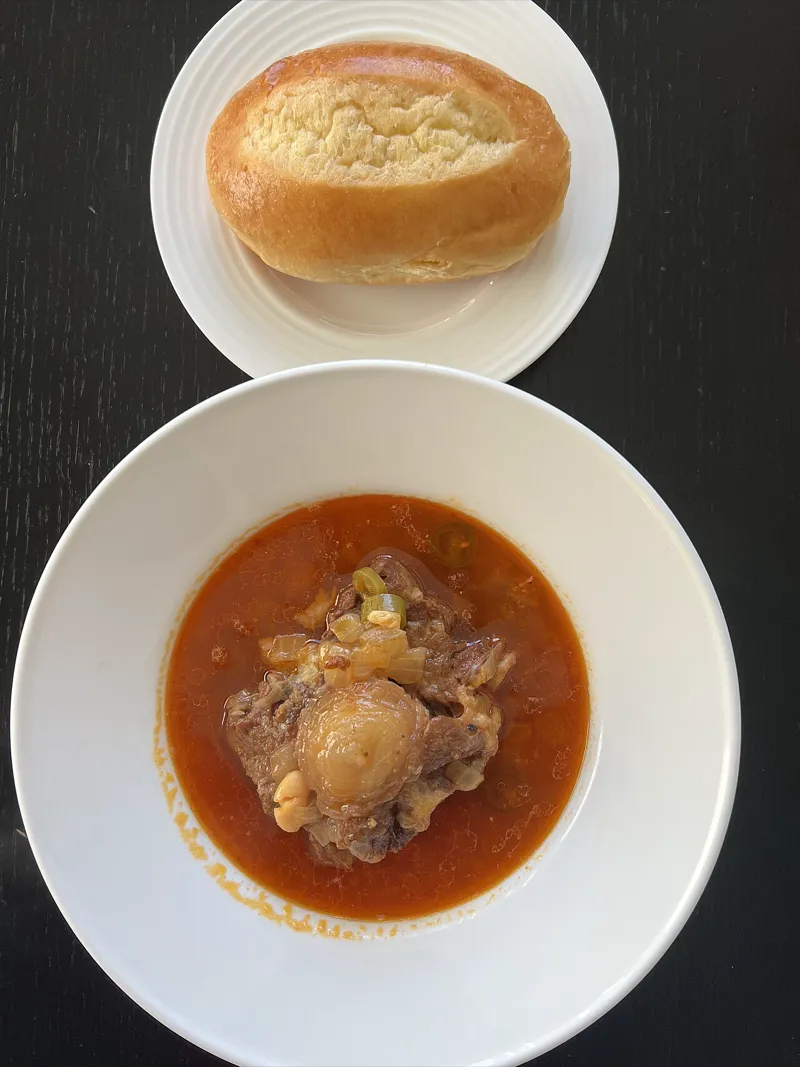
Saturday Afternoon, Every Week
There is a moment on Saturday afternoon in traditional Jewish homes around the world that has repeated itself for centuries. The family returns from synagogue. The table is set. Someone lifts the lid of the pot — the pot that has been cooking since Friday afternoon, untouched, unwatched, doing its work in the dark — and a wave of aroma fills the room. Rich, deep, beefy, with undertones of caramelized onion and soft beans. This is cholent, and it is the most ancient comfort food in the Jewish kitchen.
Cholent exists because of Shabbat. Jewish law prohibits cooking on the day of rest, but it permits food to continue cooking if it was started before sundown on Friday. Some time in the Middle Ages — likely in France or Germany — Jewish cooks figured out that if you assembled a pot of tough meat, dried beans, grains, and potatoes, sealed it, and left it to cook at a very low temperature all night, you would have a magnificent stew ready for Saturday lunch.
The word “cholent” likely derives from the Old French chaud-lent (slow-hot), though some trace it to the Hebrew she-lan (that rested). Whatever the etymology, the concept is universal across Jewish communities: put it in the pot, forget about it, and let time do the cooking.
The Classic Ashkenazi Recipe
Yield: 8–10 hearty servings Prep time: 20 minutes (Thursday night or Friday morning) Cook time: 12–18 hours on low
Ingredients
- 2 lbs beef chuck or brisket, cut into large chunks
- 1 cup dried kidney beans or white beans, soaked overnight
- ½ cup pearl barley
- 4 large potatoes, peeled and halved (or left whole for smaller ones)
- 2 large onions, quartered
- 6 cloves garlic, smashed
- 2 tablespoons paprika
- 1 teaspoon black pepper
- 2 teaspoons kosher salt
- 2 tablespoons vegetable oil or schmaltz
- Water or beef broth to cover
Instructions
1. Layer the pot. In a large Dutch oven or slow cooker, place the soaked and drained beans and barley on the bottom. Add the onions and garlic. Nestle the meat chunks on top. Season with paprika, salt, and pepper. Tuck the potatoes around and on top of the meat. Drizzle with oil or schmaltz.
2. Add liquid. Pour in water or broth until everything is just covered — about 6 cups. Do not overfill; the beans and barley will absorb liquid and swell.
3. Bring to a boil. If using a Dutch oven, bring to a boil on the stovetop, then reduce to the lowest possible heat, cover tightly with foil and the lid, and place in a 200°F (95°C) oven. If using a slow cooker, set to low.
4. Cook overnight. Leave it alone for 12–18 hours. Do not open the lid. Do not stir. Do not check. The hardest part of making cholent is the waiting.
5. Serve. On Saturday afternoon, remove the lid. The meat should be falling apart, the potatoes creamy, the beans and barley melted into a thick, rich sauce. Serve in deep bowls. Cholent does not photograph well. It does not need to. It tastes better than it looks.
Sephardi Dafina (Hamin)
The Sephardi equivalent of cholent, called dafina (from the Arabic for “buried” or “covered”) or hamin (Hebrew for “hot”), uses different ingredients but the same overnight method.
Key differences: Replace barley with whole wheat berries or chickpeas. Add whole eggs in their shells (they turn brown and creamy after overnight cooking — called huevos haminados). Use cumin, turmeric, and cinnamon instead of paprika. Add a whole head of garlic. Some versions include a cloth-wrapped ball of ground meat, breadcrumbs, and spices called a koucla or boulette that steams inside the pot.
Moroccan Skhina
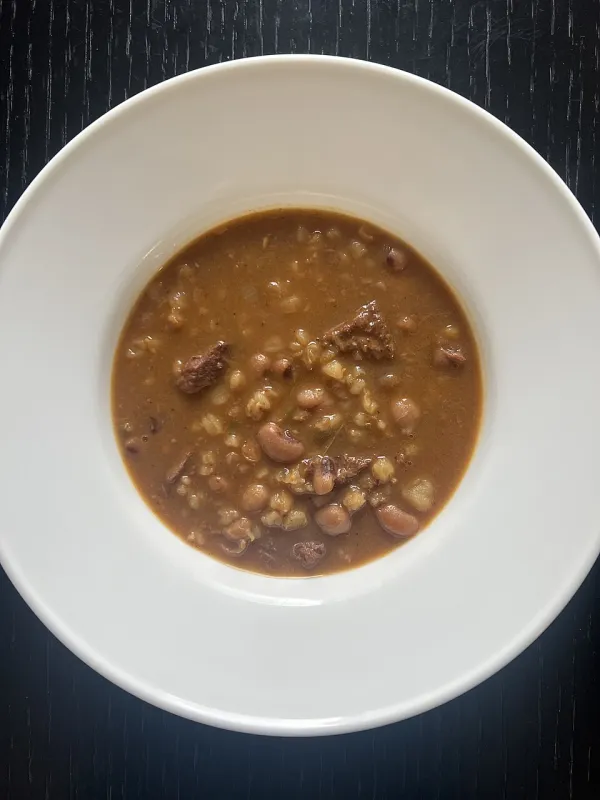
Moroccan Jews make their own version called skhina (also spelled s’hina), which includes chickpeas, sweet potatoes, dates, and a generous amount of warming spices: cinnamon, nutmeg, ginger, and saffron. The sweetness of the dates against the savory meat creates a flavor profile that is distinctly North African and utterly addictive.
Thursday Night Prep
Many families prepare cholent on Thursday night so it is ready to go on Friday. Soak beans Thursday night. Brown the meat and assemble the pot Friday morning. Start cooking by early Friday afternoon at the latest, giving the cholent at least 16 hours of cooking time.
The kishke addition: Some Ashkenazi families add kishke (stuffed derma) — a tube of seasoned flour, onions, and fat wrapped in parchment and nestled into the cholent. It absorbs the flavors of the stew and becomes a rich, savory dumpling.
Cholent is not elegant food. It is not pretty food. It is Shabbat food — the kind that feeds you body and soul, that tastes like centuries of tradition, that makes Saturday afternoon feel like the holiest, most comfortable moment of the week. Which, according to Jewish tradition, is exactly what it is.
Frequently Asked Questions
Why is cholent cooked overnight?
Jewish law prohibits cooking on Shabbat, but allows food to continue cooking if it was started before Shabbat begins on Friday evening. Cholent was the ingenious solution: a stew assembled on Friday afternoon, placed on a low fire or in a slow oven, and left to cook all night. By Saturday lunch, the long, slow heat has transformed tough ingredients into something magnificent.
Can you make cholent in a slow cooker?
Absolutely, and most people today do. Set it on low Friday afternoon and it will be perfect for Saturday lunch. A slow cooker (Crock-Pot) is essentially the modern version of the buried oven or communal bakehouse that Jews used for centuries. Cook on low for 12-16 hours. Do not open the lid to check — trust the process.
What does cholent taste like?
Cholent has a deep, rich, almost caramelized flavor that comes from the overnight cooking. The beans and barley break down and thicken the broth, the potatoes become creamy, and the meat falls apart. There is a distinctive 'cholent taste' — a combination of long-cooked meat, caramelized onions, and beans — that is unlike any other stew. You will recognize it once you taste it.
Sources & Further Reading
- My Jewish Learning — What is Cholent? ↗
- Gil Marks, Encyclopedia of Jewish Food
- Claudia Roden, The Book of Jewish Food
Related Articles
Kashrut: The Jewish Dietary Laws
More than just 'no pork' — kashrut is a comprehensive system that transforms eating into a sacred act.
Sephardic Cuisine: The Mediterranean Flavors of Jewish Cooking
Spiced, vibrant, and sun-drenched — Sephardic cuisine draws from the kitchens of Spain, Turkey, Morocco, and the Middle East, creating a Jewish food tradition that rivals any in the world.
Shabbat Foods: A Culinary Journey Through the Day of Rest
From Friday night chicken soup to Saturday afternoon cholent — discover the beloved dishes that make Shabbat the most delicious day of the week.