Why Jewish Women Cover Their Hair: History, Meaning, and Modern Practice
In many Jewish communities, married women cover their hair as an expression of modesty and spiritual identity — but the practice varies enormously across denominations and cultures.

It Starts at the Wedding
The moment a Jewish bride walks under the chuppah, something shifts — not just in her marital status, but, in many communities, in what she will wear on her head for the rest of her life. In Orthodox Judaism, married women cover their hair. Unmarried women do not. The hair covering is not about shame or oppression (though that is how it sometimes reads from the outside) — it is about marking a transition, a private identity shared with a spouse, and a daily act of spiritual intention.
But here is the complicated part: the practice varies enormously. Some women cover every strand with a tightly wrapped scarf. Others wear a wig that looks better than their natural hair. Some wear a small hat perched fashionably on their head. And millions of Jewish women — across Conservative, Reform, and secular communities — do not cover their hair at all.
So where does this come from, and why does it still matter?
The Sources
The primary biblical source is Numbers 5:18, which describes the sotah ritual — a procedure for a woman suspected of adultery. The priest “uncovers” or “loosens” the woman’s hair as part of the process. The Talmud (Ketubot 72a) reasons backward: if uncovering her hair is a form of humiliation, then covering it must be the normal, expected state for a married woman.
The Talmud further distinguishes between dat Moshe (the law of Moses) and dat Yehudit (the custom of Jewish women). Going out with a completely uncovered head violates dat Moshe — biblical-level law. Going out with a loose, minimal covering (like a courtyard scarf) violates dat Yehudit — a strong communal norm. The Talmud treats both seriously, listing hair uncovering as potential grounds for divorce without payment of the marriage contract.
The Shulchan Aruch (Even HaEzer 115:4) codifies this as law: a married woman must not go out with her head uncovered.
What Does “Covered” Mean?
This is where it gets interesting. The sources do not specify exactly how much hair must be covered or with what. This ambiguity has produced a remarkable range of practice:
- Strict covering: Every strand concealed, often with a double covering (hat over a tichel, for example). Common in Satmar and some Sephardic communities.
- Sheitel (wig): Covers all hair but may look entirely natural. Dominant in Chabad, Litvish, and many mainstream Orthodox communities.
- Partial covering: A hat, beret, or wide headband that covers most but not all hair. Common among Modern Orthodox women.
- Hair covering only in synagogue or for prayer: Some Conservative women adopt this approach.
The Options

Tichel (Scarf/Mitpachat)
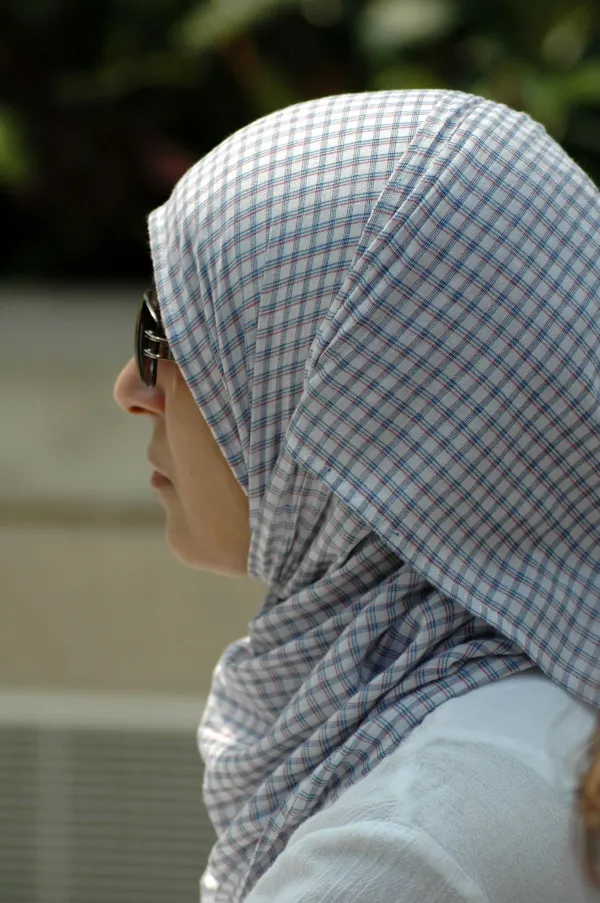
A cloth scarf wrapped around the head in various styles. Once associated primarily with older or very religious women, the tichel has experienced a major fashion revival. Online communities share elaborate wrapping tutorials, and companies produce luxury tichels in every color and pattern imaginable. Popular among religious Zionist women in Israel and women who want a clearly identifiable religious look.
Sheitel (Wig)
The sheitel is the most controversial and most popular option in many Haredi communities. High-quality human-hair sheitels can cost $2,000 to $5,000 and are virtually indistinguishable from natural hair. The Lubavitcher Rebbe was a strong advocate for sheitels, arguing that women are more likely to cover consistently if they feel attractive. Critics — including some significant Sephardic authorities like Rabbi Ovadia Yosef — have argued that a beautiful wig defeats the purpose of modesty.
Hat or Beret
A simpler option that covers the crown of the head. Common among Modern Orthodox women, especially in professional settings. Some women combine a hat with a fall (a partial wig that covers the back).
Snood
A crocheted or fabric pouch that gathers the hair at the back of the head. Practical, affordable, and common for around-the-house wear. Some women wear snoods daily; others use them only at home.
Why Does It Matter?
The reasons women give for covering their hair are as varied as the coverings themselves:
Sacred privacy. Many women describe their hair as something intimate — beautiful, personal, and reserved for their spouse and family. Covering it is not about hiding something ugly but about protecting something precious.
Identity marker. A head covering immediately identifies a woman as Jewish and married. For some women, this visibility is empowering — a public declaration of who they are.
Spiritual discipline. Like keeping kosher or observing Shabbat, covering one’s hair is a daily practice that requires intentionality. It transforms getting dressed in the morning into a spiritual act.
Community belonging. In tight-knit Orthodox communities, the specific style of hair covering signals which community you belong to. It is a form of social language.
Denominational Differences
- Haredi/Ultra-Orthodox: Hair covering is universal and non-negotiable for married women. The specific style depends on the community — sheitels in Litvish and Chabad, tichels in some Hasidic groups, full coverage in Satmar.
- Modern Orthodox: Most married women cover their hair in some form, though the extent varies. A hat or headband at synagogue is minimum; many cover more consistently.
- Conservative: Not generally required. Some women cover their hair during prayer or synagogue attendance. The movement’s Committee on Jewish Law and Standards has not issued a binding ruling requiring daily covering.
- Reform/Reconstructionist: Hair covering is not practiced as a religious obligation, though individual women may choose to adopt elements of the practice for personal spiritual reasons.
The Modern Conversation
Hair covering remains one of the most discussed topics in Orthodox women’s communities. Social media has transformed the landscape — Instagram accounts dedicated to tichel wrapping have hundreds of thousands of followers, and the “covering hair beautifully” movement has turned what was once seen as a burden into a form of creative expression.
At the same time, some women struggle with the practice. Newly married women sometimes feel a loss of identity. Women going through divorce face questions about whether and when to stop covering. Women who leave Orthodox communities describe uncovering their hair as one of the most emotionally charged transitions.
The practice also raises real questions about autonomy, gender, and religious authority. Who decides what modesty means? Is a law rooted in ancient assumptions about women’s bodies still relevant? Can a practice be both patriarchal in origin and personally empowering?
There are no simple answers. What is clear is that Jewish women have been navigating these questions for millennia — and the conversation is as alive and complex today as it has ever been.
Summing Up
Jewish hair covering is not a monolithic practice but a spectrum — from complete concealment to a small hat to nothing at all. It is rooted in Talmudic law, shaped by centuries of cultural development, and continually reinterpreted by each generation of women. Whether a woman wraps an elaborate tichel, wears a high-end sheitel, pins on a hat, or leaves her hair uncovered entirely, she is making a choice within a tradition that has always contained multitudes.
Frequently Asked Questions
Do all Jewish women cover their hair?
No. Hair covering is primarily observed by married women in Orthodox communities. Most Conservative and Reform women do not cover their hair daily, though some may wear a head covering during prayer. Even within Orthodoxy, the style and strictness vary — some women cover every strand, while others wear a hat that covers most but not all hair.
What is the difference between a tichel, sheitel, and snood?
A tichel is a cloth scarf wrapped around the head, popular among religious Zionist and some Hasidic women. A sheitel is a wig — often indistinguishable from natural hair — favored by many Hasidic and Litvish women. A snood is a crocheted or fabric pouch that gathers the hair at the back. Hats, berets, and headbands are also common. The choice is largely cultural and personal.
Why do some women wear wigs that look like real hair — doesn't that defeat the purpose?
This is one of the great debates in Jewish law. Some rabbis, including the Lubavitcher Rebbe, encouraged sheitels because they make it easier for women to comply with the law while feeling confident. Others argue that a wig that looks better than natural hair misses the point of modesty. There is no single answer — it depends on the community and rabbinic authority one follows.
Test Your Knowledge
Think you know this topic? Try our quiz!
Take the Jewish Clothing & Symbols Quiz →Sources & Further Reading
Related Articles
Orthodox, Conservative, and Reform: Understanding Jewish Denominations
Judaism is not monolithic — it encompasses diverse movements from Ultra-Orthodox to Reform, each with its own approach to tradition, law, and modern life.
Jewish Lifecycle: From Birth to Death
Judaism marks every stage of life with sacred rituals — from the brit milah eight days after birth to the traditions of mourning and remembrance.
The Mezuzah: What's Inside, How to Hang It, and Why It Matters
A small scroll on the doorpost, containing the most important words in Judaism. The mezuzah marks every Jewish home as sacred space — and the rules for writing, placing, and caring for it are as precise as they are meaningful.