Why Do Jews Rest on Saturday? Understanding Shabbat
Jews rest on Saturday because the Torah commands it — Shabbat is a weekly gift of rest, reflection, and freedom that stretches from Friday sunset to Saturday nightfall.
The Short Answer
Jews rest on Saturday because the Torah commands it — twice, in fact. First in Genesis, where God creates the world in six days and rests on the seventh. Then in the Ten Commandments, where God instructs the Israelites to “remember the Sabbath day and keep it holy.” The Hebrew word Shabbat comes from the root meaning “to cease” or “to rest,” and that is exactly what observant Jews do every week, from Friday sunset to Saturday nightfall.
But calling Shabbat a “day of rest” barely scratches the surface. Ask Jews who observe it, and they will tell you something that sounds paradoxical: Shabbat, with all its restrictions, is the freest day of the week.
Two Reasons, One Commandment
The Ten Commandments appear twice in the Torah — in Exodus 20 and Deuteronomy 5 — and the Shabbat commandment differs slightly in each version.
In Exodus, the reason is Creation: “For in six days the Lord made the heavens and the earth, the sea and all that is in them, and He rested on the seventh day.” By resting on Shabbat, Jews imitate God — participating in the rhythm of creation and rest that is built into the fabric of the universe.
In Deuteronomy, the reason is freedom: “Remember that you were a slave in the land of Egypt, and the Lord your God brought you out from there.” Shabbat is a weekly reminder that Jews are no longer slaves. Slaves cannot rest. Free people can. Every Shabbat is a declaration of liberation.
The rabbis noticed that the Torah gives both reasons, and they drew an important conclusion: Shabbat operates on two levels simultaneously. It is cosmic — connected to the creation of the universe itself. And it is personal — connected to the lived experience of every Jewish family. You rest because God rested, and you rest because you are free.
From Sunset to Stars
Shabbat does not begin at midnight or at dawn. It begins at sunset on Friday evening and ends when three stars are visible in the Saturday night sky — roughly 25 hours later. This follows the Torah’s pattern: “And there was evening and there was morning, one day” (Genesis 1:5). In Judaism, the day begins at night.
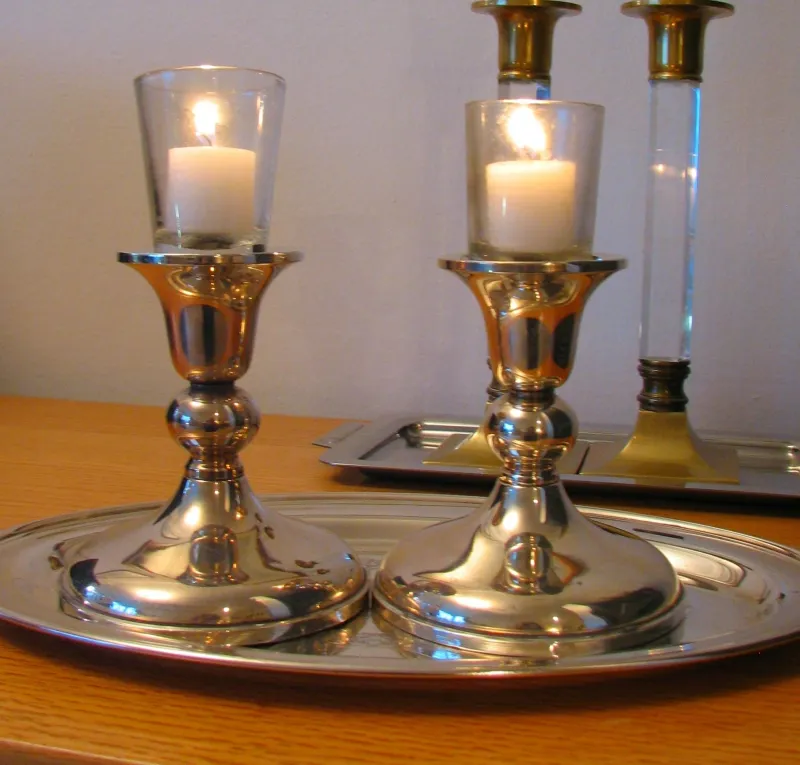
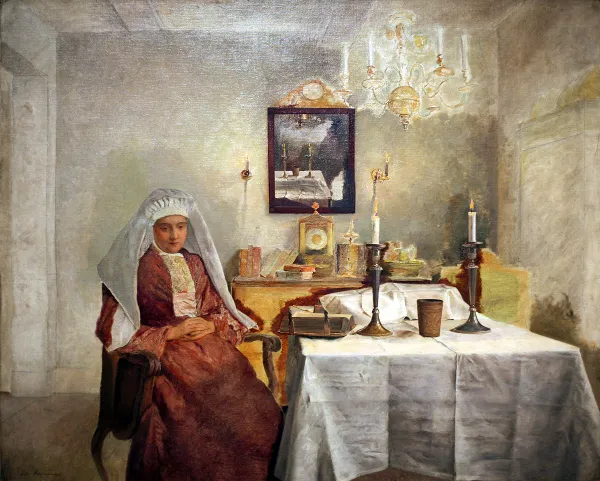
The transition into Shabbat is marked by candle lighting, traditionally performed by the woman of the household, eighteen minutes before sunset. Two candles are lit (some families light more), blessings are recited, and the ordinary week — with its noise, stress, and rushing — formally ends.
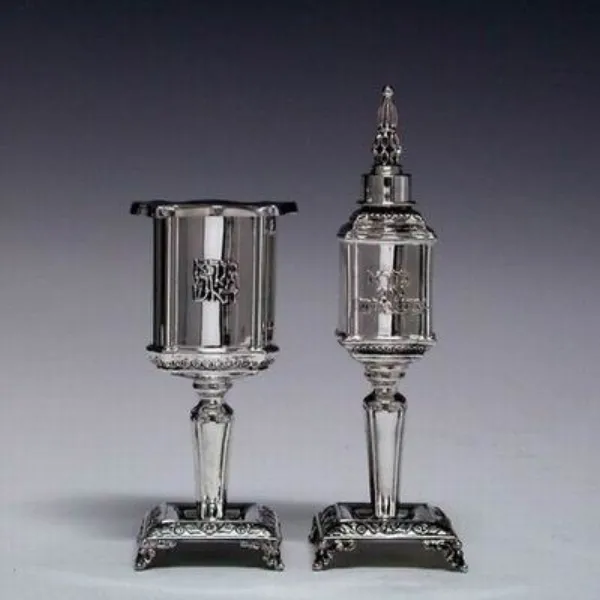
Friday night typically includes a family dinner with kiddush (sanctification over wine), challah (braided bread), songs, and conversation. Saturday morning brings synagogue services, Torah reading, and a leisurely lunch. The day ends with Havdalah — a ceremony using wine, spices, and a braided candle that marks the separation between the sacred time of Shabbat and the ordinary time of the new week.
The 39 Melakhot
The Torah says to rest but does not define what “rest” means. That task fell to the rabbis of the Mishnah and Talmud, who identified 39 categories of creative labor (melakhot) that are forbidden on Shabbat.
These 39 categories are derived from the types of work used to build the Mishkan (Tabernacle) in the wilderness. They include:
- Plowing, sowing, reaping, threshing — agricultural work
- Spinning, weaving, sewing, tearing — textile work
- Writing, erasing — recording
- Building, demolishing — construction
- Kindling and extinguishing fire — energy creation
- Carrying in the public domain — transport
In the modern world, these categories extend through rabbinic interpretation to activities the ancient rabbis could not have imagined. Driving a car involves combustion (kindling fire). Flipping a light switch completes an electrical circuit. Using a phone involves writing (digital text), building (completing circuits), and potentially kindling. Cooking is explicitly forbidden.
The result is that a traditionally observant Shabbat looks radically different from any other day. No phones. No television. No driving. No cooking (food is prepared before Shabbat). No shopping, no email, no social media. For 25 hours, the digital world goes silent.
How Different Denominations Observe
The spectrum of Shabbat observance across Jewish denominations is enormous:
Orthodox Jews observe the 39 melakhot and their extensions strictly. They walk to synagogue, prepare food in advance, use timers for lights and heat, and spend the day in prayer, study, family, and rest. Some communities use an eruv — a symbolic boundary that permits carrying within a defined area.
Conservative Jews traditionally observe Shabbat but with some flexibility. The Conservative movement’s Committee on Jewish Law and Standards famously permitted driving to synagogue on Shabbat (if walking is impossible), a ruling that Orthodox authorities rejected.
Reform Jews view Shabbat observance as personally meaningful rather than legally binding. Many Reform Jews light candles, attend Friday night services, and create Shabbat rituals that work for their families, without strict adherence to the 39 melakhot.
Secular Jews may mark Shabbat with a Friday night dinner, candle lighting, or simply an awareness that this evening is different — without formal religious observance.
Shabbat as Gift, Not Burden
Outsiders sometimes look at Shabbat restrictions and see deprivation. No phone? No driving? No television? How is that restful?
But talk to people who observe Shabbat seriously and you hear a different story. The restrictions create a container — a protected space where the relentless demands of modern life cannot enter. No one can email you. No news cycle can intrude. No deadline can reach you. For 25 hours, you are genuinely, radically present with the people in front of you.
The Talmud calls Shabbat a “taste of the World to Come” — a preview of the ultimate peace and wholeness that Judaism envisions. The medieval poet Yehuda Halevi called it “the choicest of days.” And the modern Hebrew essayist Ahad Ha’am wrote one of the most quoted lines in Jewish literature: “More than the Jews have kept Shabbat, Shabbat has kept the Jews.”
That last line captures something essential. Through centuries of exile, persecution, and displacement, Shabbat gave Jewish families a weekly anchor — a reliable rhythm of beauty, rest, and togetherness that no oppressor could take away. You might lose your home, your business, your country. But every Friday at sunset, Shabbat came. It always came.
A Revolutionary Idea
It is easy to forget how radical Shabbat was when it first appeared. In the ancient world, rest was a privilege of the wealthy. Slaves, servants, and laborers worked every day. The Torah’s insistence that everyone rests on the seventh day — including servants, animals, and even the stranger living among you — was a social revolution.
The Shabbat commandment may be the first labor law in human history. It declared that human beings are not machines. That productivity is not the highest value. That even God — all-powerful, unlimited — chose to stop.
In a culture that often measures human worth by output and productivity, Shabbat whispers a countercultural truth: you are more than what you produce. One day a week, you are allowed to simply be.
Frequently Asked Questions
Why Saturday and not Sunday?
The Jewish day of rest is the seventh day of the week, corresponding to Saturday. This comes from Genesis, where God rested on the seventh day after Creation. Sunday as a day of worship is a Christian practice that developed later, originally to distinguish the new faith from Judaism.
What can't Jews do on Shabbat?
Traditional Jewish law identifies 39 categories of 'creative labor' (melakhot) forbidden on Shabbat, derived from the work used to build the Tabernacle. These include writing, cooking, lighting fire, building, sewing, and — by modern extension — driving, using electricity, and using phones. The specific restrictions vary by denomination.
When does Shabbat start and end?
Shabbat begins at sunset on Friday evening and ends after nightfall on Saturday — when three stars are visible in the sky, typically about 25 hours later. The Jewish day follows the biblical pattern of 'there was evening and there was morning,' beginning each day at sunset.
Test Your Knowledge
Think you know this topic? Try our quiz!
Take the Jewish Holidays: Advanced Quiz →Sources & Further Reading
Related Articles
Shabbat: The Weekly Day of Rest
Every week, Jewish life pauses for 25 hours of rest, reflection, and togetherness — discover the beauty of Shabbat.
The Ten Commandments: Foundation of Moral Law
Given at Mount Sinai and inscribed on two stone tablets, the Ten Commandments form the moral bedrock of Judaism — and have shaped ethical thinking across civilizations.
The Torah: The Heart of Judaism
The Torah is more than a book — it is the living constitution of Jewish life, studied and debated for over three millennia.