Rosh Hashanah Cards: The Beautiful Tradition of L'Shanah Tovah
From 19th-century German lithographs to WhatsApp messages, the tradition of sending Rosh Hashanah greetings connects Jews across distance and time with wishes for a sweet new year.
The Sweetest Mail
Every year, in the weeks before Rosh Hashanah, a particular kind of card begins appearing in Jewish mailboxes. These are not birthday cards or holiday cards in the generic sense. They are shanah tovah cards — Jewish New Year greetings sent to family, friends, and community members with wishes for a good and sweet year ahead.
The tradition is relatively modern — barely two centuries old — but it carries the weight of something much deeper: the human need to reach across distance and say, “I am thinking of you. I hope the year ahead is kind to you. You matter to me.”
In an age of texts, emails, and WhatsApp voice notes, the Rosh Hashanah card persists. And the old ones — the vintage cards from the 19th and early 20th centuries — have become collectible art objects, windows into a world of Jewish visual culture that is as beautiful as it is vanishing.
A Brief History
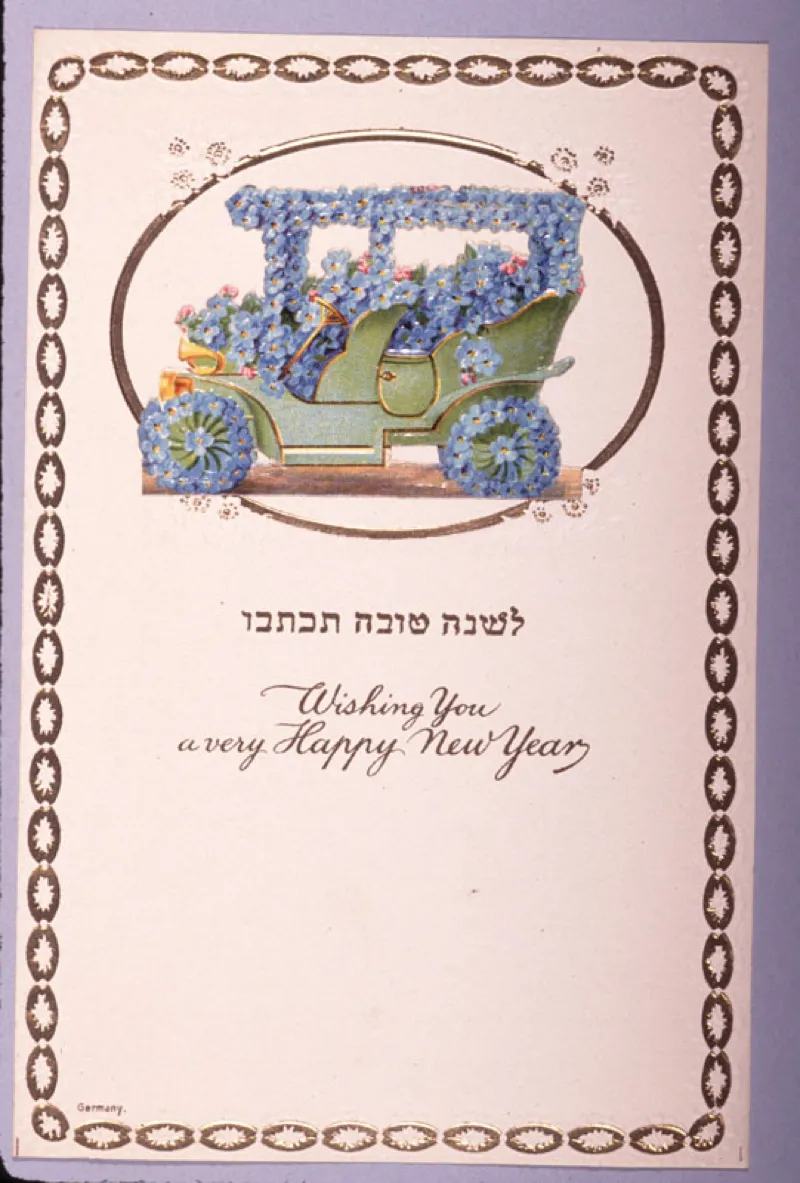
The custom of sending written Rosh Hashanah greetings began in 14th-century Germany, where Jews would add new year wishes to the end of letters written in the weeks before the holiday. The formula “L’Shanah Tovah Tikatevu” — “May you be inscribed for a good year” — appears in Jewish correspondence from this period.
The transition from personal letters to printed cards came in the mid-19th century, paralleling the broader Victorian-era greeting card industry. German and Central European Jews, who were integrating into wider society while maintaining their traditions, embraced the greeting card format. Early Rosh Hashanah cards were printed lithographs, often hand-colored, featuring traditional Jewish symbols.
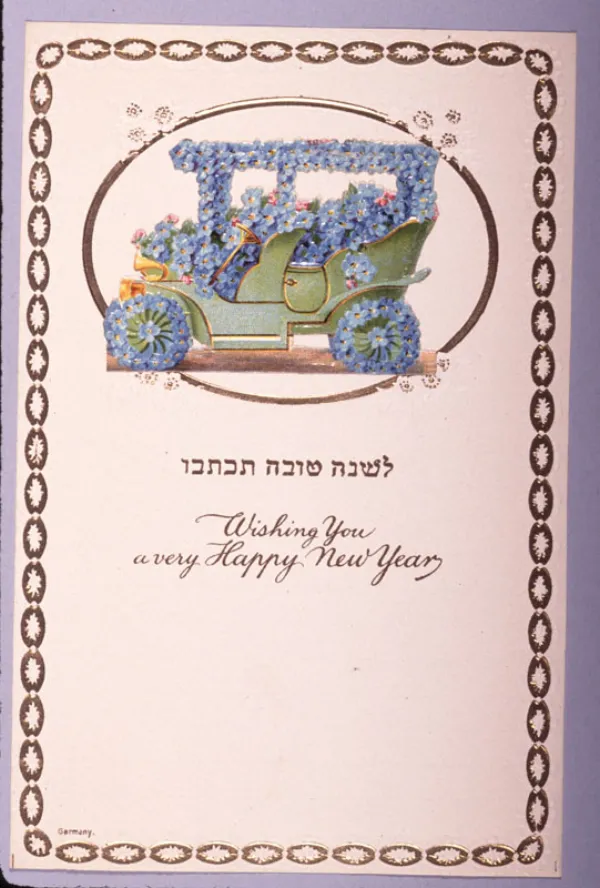
By the early 1900s, Rosh Hashanah cards had become an industry. Publishers in Germany, Poland, Russia, the United States, and Palestine produced thousands of designs. The cards reflected the communities that made them:
- Eastern European cards often featured shtetl scenes, bearded rabbis, and nostalgic imagery of Jewish village life
- American cards blended Jewish symbols with patriotic imagery — Stars of David alongside American flags, reflecting the immigrant community’s dual identity
- Zionist cards featured images of the Land of Israel — orange groves, pioneers, the Western Wall — promoting the dream of a Jewish homeland
- Art Nouveau and Art Deco cards brought high style to Jewish greetings, with flowing lines, bold colors, and modernist compositions
The Art of the Cards
Vintage Rosh Hashanah cards are collected today as objects of Jewish folk art and cultural history. Common motifs include:
The shofar — The ram’s horn blown on Rosh Hashanah, symbolizing the call to repentance and the coronation of God as King.
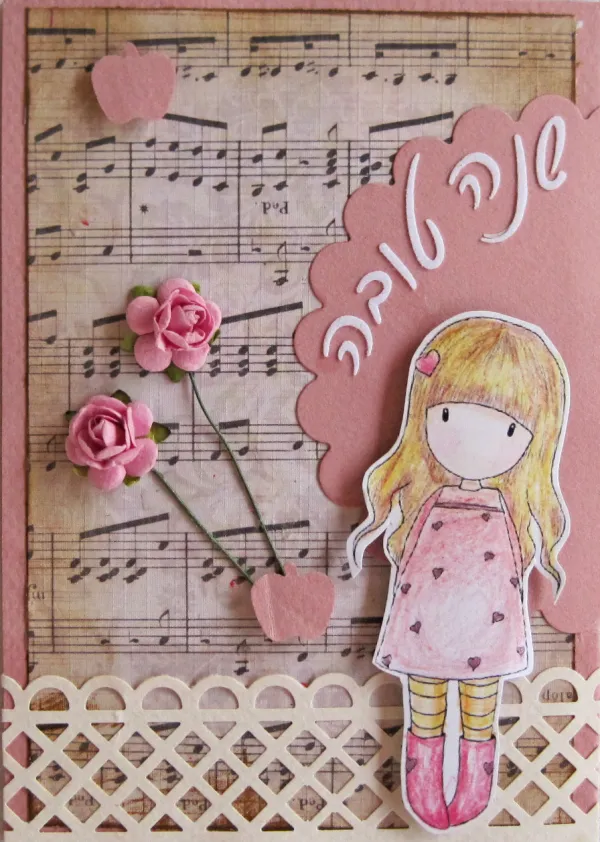
Honey and apples — Dipped together on Rosh Hashanah for a sweet new year, these images are probably the most recognizable Rosh Hashanah symbols.
The Book of Life — An open book, often with angels inscribing names, reflecting the belief that God records each person’s fate for the coming year.
Stars of David — The universal symbol of Jewish identity.
Children and families — Wholesome, idealized scenes of Jewish family life gathered around the holiday table.
Pastoral landscapes — Fields, rivers, and peaceful countryside, expressing hopes for tranquility and abundance.
Some cards were sentimental to the point of kitsch. Others were genuinely artistic. All of them served the same purpose: connecting Jews to each other at a moment when the tradition asks them to take stock of their lives and their relationships.
What to Write
The traditional greetings, from most common to most elaborate:
“Shanah Tovah” — “A good year.” Simple, universal, always appropriate.
“L’Shanah Tovah” — “For a good year.” Slightly more formal.
“L’Shanah Tovah Tikatevu” — “May you be inscribed for a good year.” The classic formula, referring to inscription in the Book of Life.
“L’Shanah Tovah Tikatevu V’Tichatemu” — “May you be inscribed AND sealed for a good year.” The fullest version, covering both the inscription (Rosh Hashanah) and the sealing (Yom Kippur).
“Shanah Tovah U’Metukah” — “A good and sweet year.” Adding sweetness — which is, after all, the whole point.
For a more personal touch, you might add:
- A specific wish for the recipient (health, success, peace)
- A reflection on the past year and what you hope for the next
- A note of gratitude for the relationship
- A favorite quote or teaching about renewal
The Digital Age
The Rosh Hashanah card has survived every technological revolution so far, adapting to each new medium:
E-cards emerged in the late 1990s and early 2000s, offering animated designs, music, and the convenience of instant delivery. Sites like 123Greetings, Jacquie Lawson, and specialized Jewish card platforms offer extensive collections.
WhatsApp and text messages have become the dominant medium for Rosh Hashanah greetings in many communities, especially in Israel. The days before Rosh Hashanah see an avalanche of shanah tovah messages — some heartfelt, some mass-forwarded, some featuring increasingly elaborate GIFs and videos.
Social media posts — a public shanah tovah on Facebook, Instagram, or other platforms — serve as the modern equivalent of the mass-printed card, reaching everyone in your network at once.
And yet, the physical card persists. There is something about receiving a piece of paper in the mail — with handwriting on it, with a stamp on the envelope, with the evidence that someone took the time — that a text message cannot replicate. Many families continue to send printed cards, often with a family photo, maintaining a tradition that connects them to the German Jews who first added new year wishes to the ends of their letters seven hundred years ago.
Collecting Vintage Cards
Vintage Rosh Hashanah cards have become collectible items, sought by museums, private collectors, and institutions documenting Jewish visual culture. The National Library of Israel in Jerusalem holds one of the world’s largest collections, with thousands of cards spanning the late 19th through mid-20th centuries.
These cards are valued not only for their artistic merit but for what they reveal about the communities that produced them. A card from a Warsaw publisher in 1910 tells us something about Polish Jewish life. A card produced in Palestine in the 1930s tells us something about the Zionist movement. A card designed by a Holocaust survivor in a displaced persons camp tells us something about the resilience of hope.
Prices range from a few dollars for common designs to hundreds for rare or historically significant pieces. Online auction sites, Jewish antiquarian dealers, and estate sales are the primary markets.
The Purpose Beneath the Paper
The tradition of sending Rosh Hashanah cards is, at its heart, an exercise in the most important work of the Jewish calendar: the work of repair. The month before Rosh Hashanah is a time of teshuvah — repentance, return, reconciliation. Sending a card to someone you care about — or to someone you have been out of touch with, or to someone you have wronged — is a small act of reconnection.
It says: I remember you. I value you. I hope the year is good to you.
In a tradition that counts relationships as among life’s greatest gifts, that is not a small thing at all. It is, in fact, exactly the right way to start a new year.
Frequently Asked Questions
What does L'Shanah Tovah mean?
L'Shanah Tovah (לשנה טובה) means 'For a good year.' The full greeting is 'L'Shanah Tovah Tikatevu V'Tichatemu' — 'May you be inscribed and sealed for a good year,' referring to the Jewish belief that God writes each person's fate for the coming year in the Book of Life during the period between Rosh Hashanah and Yom Kippur.
When should you send Rosh Hashanah cards?
Rosh Hashanah cards should ideally arrive before the holiday begins. Since Rosh Hashanah falls in September or early October (the exact date varies according to the Jewish calendar), cards are typically sent in late August or early September. The greeting period extends from before Rosh Hashanah through Yom Kippur (ten days later). After Yom Kippur, the traditional greeting changes to 'G'mar chatimah tovah' (may you be sealed for good).
Can non-Jews send Rosh Hashanah cards?
Absolutely. Sending a Rosh Hashanah card to Jewish friends, colleagues, or neighbors is a thoughtful and appreciated gesture. A simple 'Wishing you a happy and sweet new year' or 'L'Shanah Tovah' is perfect. You don't need to be Jewish or know Hebrew — the gesture of acknowledgment and warmth is what matters.
Test Your Knowledge
Think you know this topic? Try our quiz!
Take the Jewish Holidays: Advanced Quiz →Key Terms
Sources & Further Reading
Related Articles
Common Hebrew Words and Phrases Everyone Should Know
Whether you are visiting Israel, attending a synagogue, or just curious, these essential Hebrew words and phrases — from Shalom to Yalla — will open doors and earn smiles.
The Jewish Calendar: How an Ancient Lunar-Solar System Shapes Jewish Life
The Jewish calendar is a sophisticated lunar-solar system that has kept Jewish holidays, Shabbat, and lifecycle events anchored in their proper seasons for over two thousand years.
Rosh Hashanah: The Jewish New Year
The sound of the shofar marks the beginning of the Jewish New Year — a time of reflection, prayer, and hope for the year ahead.