The Jewish Morning Routine: From Modeh Ani to Shacharit
The traditional Jewish morning is a carefully choreographed sequence: wake up grateful, wash your hands, bless everything, wrap yourself in prayer, and start the day anchored in something larger.

Starting Right
There is a Jewish teaching that the way you begin your day determines the quality of everything that follows. This is not just motivational advice — it is a structural principle built into the architecture of Jewish daily life. The traditional Jewish morning is not a routine you stumble through on autopilot. It is a carefully sequenced series of actions, each one designed to pull you from the fog of sleep into full awareness — of your body, your blessings, your obligations, and your God.
The whole process can take less than an hour. By the time it is complete, you have said thank you, washed your hands, blessed the act of standing upright, wrapped yourself in sacred garments, and recited some of the most powerful prayers in the Jewish tradition. And you have not yet had coffee.
Step 1: Modeh Ani — Gratitude Before Anything
The moment you wake up — before your feet touch the floor, before you reach for your phone, before your first coherent thought — you say Modeh Ani:
“I give thanks before You, living and eternal King, for You have returned my soul to me with compassion — great is Your faithfulness.”
This five-second prayer resets your default setting from “groggy” to “grateful.” It frames the entire day as a gift rather than an obligation. You are alive. That is not nothing.
Step 2: Negel Vasser — Washing Away the Night
Without walking more than a few steps, you pour water over your hands from a cup kept by the bed — alternating right and left, three times each. This is negel vasser, the morning hand washing that removes the spiritual impurity believed to settle on the hands during sleep.
The practice feels ancient because it is. And there is something grounding about it — a physical action that pulls you out of the mental haze of waking and into the concrete reality of water on skin.

Step 3: The Morning Blessings (Birkhot HaShachar)
The fifteen morning blessings are one of the most beautiful sequences in Jewish liturgy. Originally, each blessing was recited at the moment of the corresponding action — you opened your eyes and blessed God for “opening the eyes of the blind,” you stood up and blessed God for “raising the bowed,” you got dressed and blessed God for “clothing the naked.” Today, the blessings are usually recited together, but their order still follows the natural progression of waking up.
The sequence includes blessings for:
- The rooster’s cry — “who gave the rooster understanding to distinguish between day and night” (the original alarm clock)
- Opening eyes — “who opens the eyes of the blind”
- Stretching — “who releases the bound”
- Standing up — “who raises the bowed”
- Getting dressed — “who clothes the naked”
- Walking — “who firms our steps”
- Putting on shoes — “who has provided me with all my needs”
- Girding oneself — “who girds Israel with strength”
- Covering the head — “who crowns Israel with glory”
- Having energy — “who gives strength to the weary”
There are also blessings for the distinction between day and night, for being made in God’s image, for personal identity, and for the removal of sleep from the eyes.
What is remarkable about these blessings is their subject matter. They do not thank God for extraordinary miracles. They thank God for the ordinary ones — the ones you would never notice if nobody told you to pay attention. You can see. Your legs work. You have clothes. These are not small things. The morning blessings insist that you notice them.
Step 4: Tzitzit — Wearing the Reminder
Observant Jewish men put on a tallit katan (small tallit) — a four-cornered undergarment with tzitzit (fringes) hanging from each corner. The fringes are a biblical commandment (Numbers 15:38-40): “Look at them and remember all the commandments of the Lord.”
The tzitzit function as a wearable reminder system. Every time you notice them — reaching for something, catching a glimpse of the fringes at your side — you are pulled back to an awareness of your obligations. It is low-tech, but it works.
Step 5: Torah Study
The Talmud teaches that a person should study Torah before going to work each day. This does not require hours — even a few minutes counts. Some people study a page of Talmud (following the Daf Yomi cycle, which completes the entire Talmud in seven and a half years). Others read a passage from the weekly Torah portion. Others study a section of Mishnah, a Psalm, or a passage from Maimonides.
The purpose is to orient the mind before the demands of the day take over. By beginning with sacred text, you establish that your day has a purpose beyond its tasks.
Step 6: Shacharit — The Morning Prayer Service
The centerpiece of the Jewish morning is shacharit — the morning prayer service. When prayed with a community (a minyan of ten adults), it is a full liturgical experience. When prayed alone, it is a private conversation with God.
Putting on Tallit and Tefillin
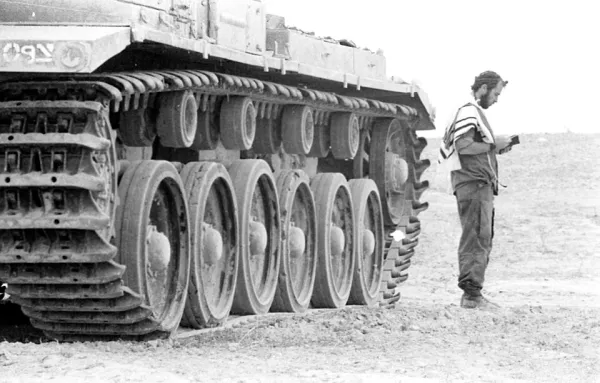
Before shacharit, men wrap themselves in a tallit (prayer shawl) and put on tefillin — small leather boxes containing scrolls of Torah verses, bound to the arm and head with leather straps.
The tefillin on the arm is placed opposite the heart. The tefillin on the head sits at the hairline. The straps are wrapped precisely — seven times around the arm, then around the hand in a pattern that spells one of God’s names. The physical act of binding yourself — literally tying sacred words to your body — is one of the most visceral experiences in Jewish practice.
The Structure of Shacharit
The service follows a fixed structure:
- Pesukei D’Zimra — “Verses of Praise”: a warm-up of psalms and hymns that build toward the main prayers. Think of it as spiritual stretching.
- The Shema and its Blessings — The central declaration of God’s unity, surrounded by blessings about creation, revelation, and redemption.
- The Amidah — The “standing prayer,” also called the Shemoneh Esrei (eighteen blessings). This is the heart of the service — recited silently, standing, facing Jerusalem. It includes praise, petition, and thanksgiving.
- Tachanun — Supplications for mercy (omitted on holidays and happy occasions).
- Torah Reading — On Mondays and Thursdays, a short Torah portion is read from the scroll.
- Closing prayers — Including Aleinu and, in many communities, Psalm of the Day.
The Purpose of Structure
To the uninitiated, the Jewish morning routine can seem overwhelming — too many steps, too many words, too much structure before the day has even begun. But for those who practice it, the structure is the point. It is scaffolding for the soul.
Without structure, gratitude is occasional. With the morning blessings, it is daily. Without structure, prayer is reactive — you pray when you are desperate. With shacharit, prayer is proactive — you pray because it is morning, because you are alive, because the day ahead deserves to be sanctified before it begins.
The Jewish morning routine does not make you perfect. It makes you intentional. And in a world of notifications, distractions, and endless demands on your attention, starting the day with intention may be the most radical act there is.
Frequently Asked Questions
What is the first thing a Jew says in the morning?
Modeh Ani ('I give thanks') — a short prayer of gratitude recited immediately upon waking, before getting out of bed and even before washing hands. It thanks God for returning the soul after sleep. Because it does not contain God's name, it can be said before any other preparation.
What are the 15 morning blessings?
The Birkhot HaShachar (morning blessings) are 15 blessings thanking God for basic daily gifts: giving the rooster understanding (to distinguish day from night), opening the eyes of the blind, clothing the naked, freeing the bound, raising the bowed, firming the earth upon the waters, providing for all needs, directing steps, girding Israel with strength, crowning Israel with glory, giving strength to the weary, removing sleep from the eyes, and three additional blessings. Originally said as each action was performed; today usually recited together in the synagogue.
How long does the Jewish morning routine take?
The full traditional morning routine — from Modeh Ani through shacharit — takes approximately 45 minutes to an hour for an individual and slightly longer with a minyan (prayer quorum). This includes hand washing, blessings, putting on tallit and tefillin, the Pesukei D'Zimra (verses of praise), the Shema and its blessings, and the Amidah. Many observant Jews wake early to complete the routine before work.
Test Your Knowledge
Think you know this topic? Try our quiz!
Take the Jewish Holidays: Advanced Quiz →Sources & Further Reading
Related Articles
Jewish Blessings (Brachot): Sanctifying Every Moment
Judaism has a blessing for everything — from bread to thunder, from waking up to seeing a rainbow. Learn about brachot, the system of blessings that turns daily life into sacred practice.
Modeh Ani: The First Words of the Jewish Day
Modeh Ani — 'I give thanks' — is the first prayer a Jew says upon waking, even before washing hands. Discover this short, powerful expression of gratitude, why it omits God's name, and how it shapes the Jewish approach to every new day.
Jewish Prayer: Connecting with the Divine
From the three daily prayer services to personal meditation, discover how Jewish prayer works and what it means.