How to Celebrate Hanukkah: A Complete Beginner's Guide
Everything you need to celebrate Hanukkah — buying a menorah, lighting candles in the right order, saying the blessings, playing dreidel, making latkes, and creating meaningful traditions for eight nights.
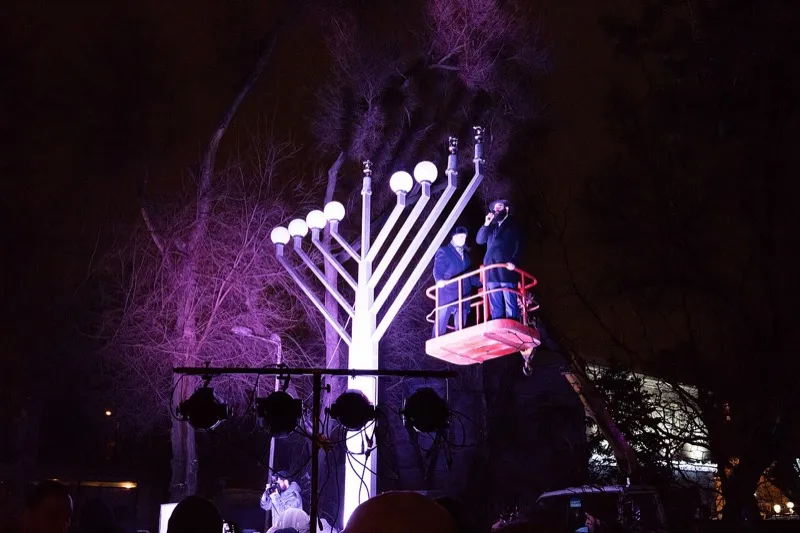
Eight Nights, One Flame at a Time
Hanukkah is one of the most accessible and joyful holidays on the Jewish calendar. You do not need a synagogue, you do not need to read Hebrew, and the core ritual — lighting candles — takes about five minutes. Yet those five minutes, repeated over eight nights, create something genuinely beautiful: a growing light in the darkest part of the year.
If you have never celebrated Hanukkah before, or if you celebrated as a child and want to do it properly as an adult, this guide covers everything you need.
Step 1: Get a Menorah (Hanukkiah)
You need a hanukkiah — a candelabrum with nine branches: eight at the same height for the eight nights, plus one (the shamash, or “servant” candle) set apart, usually higher or offset.
Options:
- Traditional brass or silver — classic, reusable, available at any Judaica store.
- Ceramic or artisan — handmade options range from simple to spectacular.
- Children’s craft menorah — a great project: use nuts, bolts, clay, or wood. The only requirement is nine candle holders.
- Oil menorah — uses olive oil and wicks instead of candles, closer to the original miracle. More traditional but messier.
Placement: The menorah should be placed where it can be seen from outside — traditionally in a window facing the street, or by the front door. The whole point of Hanukkah candles is pirsumei nissa — publicizing the miracle.
Step 2: Get Candles
You need 44 candles for all eight nights (plus shamash candles each night): 2 on the first night, 3 on the second, and so on up to 9 on the eighth night.
Standard Hanukkah candles are thin, colored, and burn for about 30 minutes. They are sold in boxes of 44 at grocery stores, Judaica shops, and online. You can also use olive oil with floating wicks for a more traditional approach.
Step 3: Light the Candles
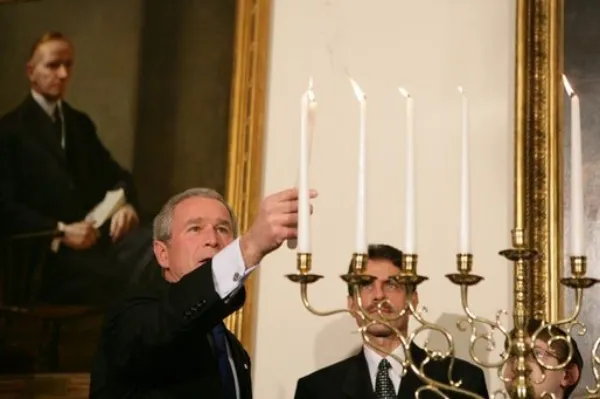
This is the part people find confusing. Here is the rule:
Place candles from RIGHT to LEFT (like Hebrew reading). On night one, place one candle on the far right. On night two, place two candles starting from the far right.
Light candles from LEFT to RIGHT. Always light the newest candle first. So on night three, you place three candles right to left, then light the leftmost (newest) candle first, moving right.
Always light the shamash first, then use it to light the other candles.
When to Light
Light the menorah after nightfall — about 25-30 minutes after sunset. On Friday evening, light the Hanukkah candles before Shabbat candles (since you cannot light fire on Shabbat). On Saturday night, light Hanukkah candles after Havdalah (the ceremony ending Shabbat).
The Blessings
Two blessings every night:
Blessing 1: Baruch atah Adonai, Eloheinu melech ha-olam, asher kid’shanu b’mitzvotav v’tzivanu l’hadlik ner shel Hanukkah. “Blessed are You, Lord our God, King of the universe, who has sanctified us with His commandments and commanded us to kindle the Hanukkah light.”
Blessing 2: Baruch atah Adonai, Eloheinu melech ha-olam, she-asah nisim la-avoteinu ba-yamim ha-heim ba-z’man ha-zeh. “Blessed are You, Lord our God, King of the universe, who performed miracles for our ancestors in those days, in this time.”
On the first night only, add a third blessing: Baruch atah Adonai, Eloheinu melech ha-olam, she-hecheyanu v’kiy’manu v’higiyanu la-z’man ha-zeh. “Blessed are You, Lord our God, King of the universe, who has kept us alive, sustained us, and brought us to this season.”
After lighting, many families sing “Hanerot Halalu” (We kindle these lights) and “Maoz Tzur” (Rock of Ages) — one of the most recognizable melodies in Jewish life.
Step 4: Enjoy the Light
The candles should burn for at least 30 minutes after nightfall. During this time, you are not supposed to use the candle light for practical purposes (that is what the shamash is for) — just enjoy them. Many families use this time for singing, games, and being together.
Step 5: Play Dreidel
The dreidel (sevivon in Hebrew) is a four-sided spinning top with a Hebrew letter on each side:
- Nun (נ) — “Nes” (miracle) — nothing happens
- Gimmel (ג) — “Gadol” (great) — take the whole pot
- Hey (ה) — “Hayah” (was) — take half the pot
- Shin (ש) — “Sham” (there) — put one in the pot
(In Israel, Shin is replaced with Pey for “Poh” — “here” — because the miracle happened here.)
How to play: Everyone starts with an equal number of tokens — traditionally gelt (chocolate coins), but nuts, raisins, or pennies work. Everyone puts one token in the center. Take turns spinning. Follow the letter. When the pot is empty, everyone contributes again. When someone runs out, they are out (or everyone shares — it is not exactly a cutthroat game).
Step 6: Eat Fried Foods
Hanukkah food is fried in oil, commemorating the miracle of the oil that lasted eight days. The two classics:
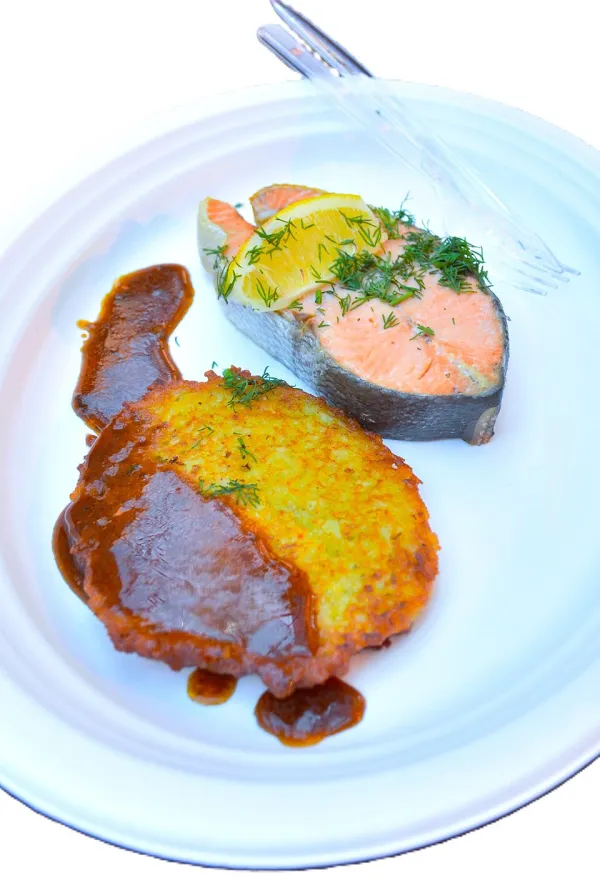
- Latkes — Potato pancakes, fried until golden, served with sour cream or applesauce. The great debate: sour cream or applesauce? The correct answer: both. See our latke recipe for details.
- Sufganiyot — Jelly-filled doughnuts, traditional in Israel and increasingly popular worldwide. Deep-fried, sugar-dusted, and dangerously addictive.
Other fried options: fried cheese (a Sephardic tradition), churros, fritters, and whatever else you can justify putting in hot oil.
Step 7: Gifts
Gift-giving on Hanukkah is a relatively modern addition, influenced partly by the holiday’s proximity to Christmas. Traditional Hanukkah gifts were modest — coins (gelt) given to children, which eventually became the chocolate gelt we know today.
Modern families handle gifts differently. Some give gifts all eight nights. Some give one larger gift and seven small ones. Some give charity donations on several nights. Some skip gifts entirely and focus on experiences — a different family activity each night.
There is no wrong approach. The candles, not the gifts, are the center of the holiday.
An Eight-Night Plan
If you want to make each night distinct:
- Night 1: Light candles with special intention. First-night blessings. Latkes for dinner.
- Night 2: Dreidel tournament. Chocolate gelt prizes.
- Night 3: Sufganiyot night — make (or buy) jelly doughnuts.
- Night 4: Charity night — each family member chooses a cause to support.
- Night 5: Story night — read the Hanukkah story together, discuss what “miracle” means.
- Night 6: Craft night — make decorations, paint a dreidel, create Hanukkah cards.
- Night 7: Music night — learn “Maoz Tzur” and other Hanukkah songs.
- Night 8: Full menorah, all eight candles blazing. Invite friends. Celebrate the light.
Summing Up
Hanukkah is a holiday about persistence — a small flame that, against all odds, kept burning. Celebrating it does not require expertise or elaborate preparation. A menorah, some candles, the blessings, and the willingness to pause for five minutes each evening and watch the light grow. That is all it takes. And by the eighth night, when all the candles are lit and the room glows, you will understand why this holiday has endured for over 2,000 years.
Frequently Asked Questions
What's the difference between a menorah and a hanukkiah?
Technically, a menorah has seven branches (like the one in the ancient Temple), while a hanukkiah has nine branches — eight for the eight nights plus one for the shamash (helper candle). In everyday speech, most people call the Hanukkah candelabrum a 'menorah,' and everyone knows what you mean. If you want to be precise, say 'hanukkiah.'
Can I use an electric menorah?
For display purposes, absolutely — electric menorahs are common in windows and as public decorations. However, most rabbinic authorities hold that the mitzvah of lighting Hanukkah candles requires an actual flame (candle or oil). If you want to fulfill the commandment, light real candles or oil. Use the electric one as a supplement, not a replacement.
What if I miss a night — do I need to catch up?
No. Each night is an independent mitzvah. If you miss Monday night, you do not light extra candles on Tuesday. Simply light the correct number for whichever night you are on. There is no penalty for missing a night, and you certainly should not feel that missing one night means the whole holiday is ruined.
Test Your Knowledge
Think you know this topic? Try our quiz!
Take the Jewish Holidays: Advanced Quiz →Sources & Further Reading
Related Articles
The Jewish Calendar: How an Ancient Lunar-Solar System Shapes Jewish Life
The Jewish calendar is a sophisticated lunar-solar system that has kept Jewish holidays, Shabbat, and lifecycle events anchored in their proper seasons for over two thousand years.
Classic Latkes Recipe: Crispy Hanukkah Potato Pancakes
Crispy on the outside, tender inside — master the art of perfect latkes with this traditional recipe, served with applesauce and sour cream for the ultimate Hanukkah treat.
Why Do Jews Celebrate Hanukkah?
Hanukkah commemorates the Maccabean victory over Greek oppressors in 164 BCE and the miracle of one day's oil lasting eight days in the rededicated Temple.