What Is the Torah About? A Summary for Beginners
The Torah — the five books of Moses — tells the story of creation, the patriarchs, slavery in Egypt, liberation, God's laws at Sinai, and the journey to the Promised Land. Here is the whole thing, book by book.
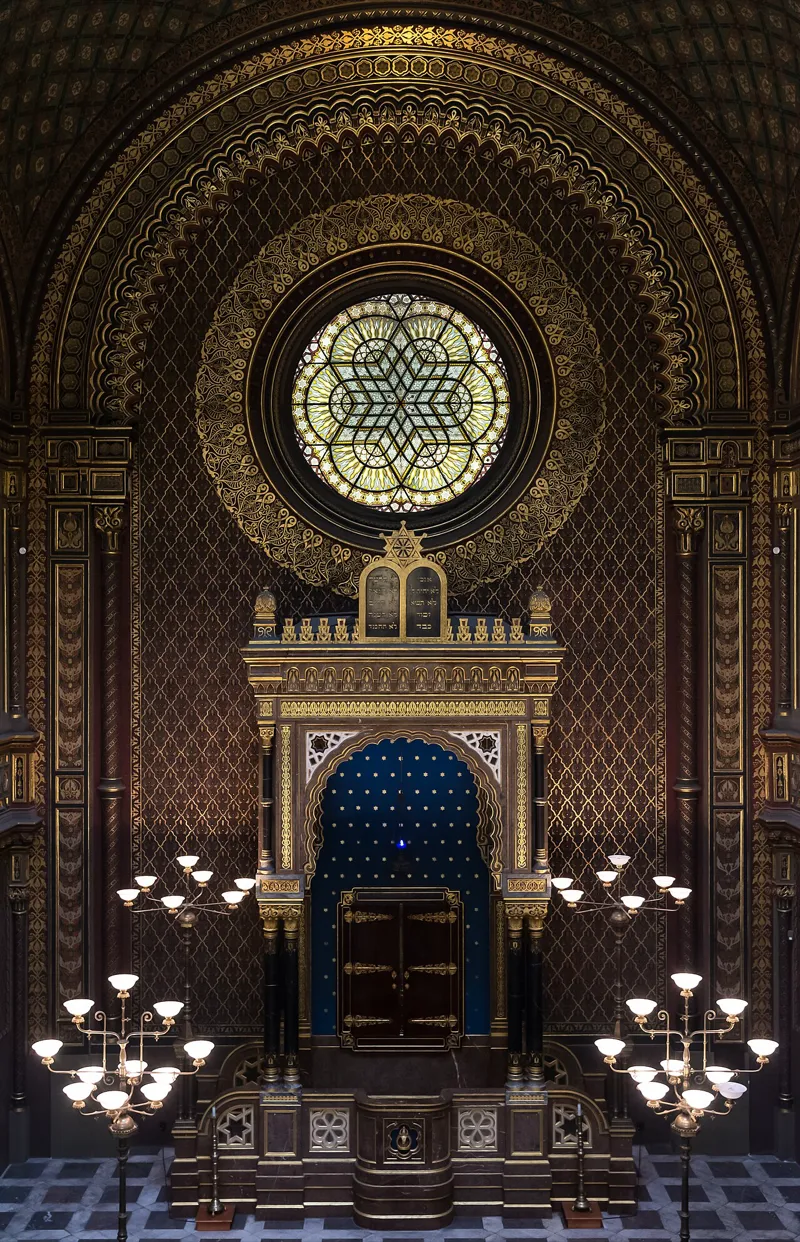
The Book That Built a Civilization
The Torah is the foundational text of Judaism — and one of the most influential documents in human history. These five books, traditionally attributed to Moses, tell the story of the world’s creation, the birth of the Jewish people, slavery and liberation, God’s laws, and the journey toward a promised land. Every major theme in Judaism — covenant, law, ethics, justice, community, redemption — traces back to the Torah.
But if you have never actually read it, the Torah can seem daunting. It is dense, ancient, and structured in ways that are unfamiliar to modern readers. So here is a book-by-book summary — what happens, what matters, and why it is still read every single week in synagogues around the world.
Book 1: Genesis (Bereishit) — “In the Beginning”
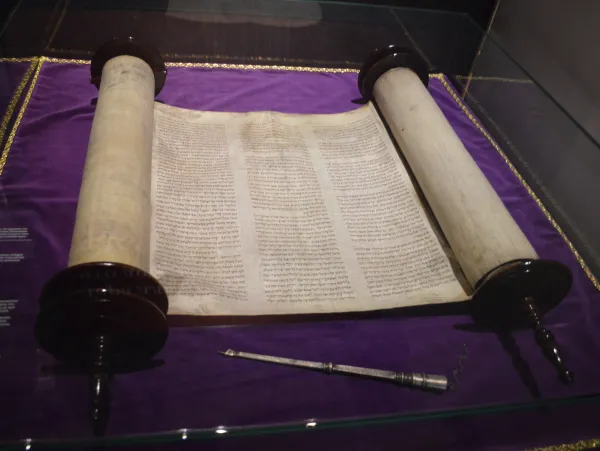
Genesis covers the most ground of any Torah book — from the creation of the universe to the death of Joseph in Egypt.
Creation (Chapters 1-2). God creates the world in six days and rests on the seventh (the origin of Shabbat). Light, sky, land, plants, animals, and finally humans — Adam and Eve — placed in the Garden of Eden.
The Fall and Early Humanity (Chapters 3-11). Adam and Eve eat the forbidden fruit and are expelled from Eden. Cain kills Abel. Humanity descends into violence. God sends a flood, saving only Noah, his family, and pairs of animals on an ark. After the flood, humanity tries to build the Tower of Babel; God scatters them across the earth with different languages.
Abraham (Chapters 12-25). The story narrows to one family. God calls Abraham (originally Abram) to leave his homeland and go to a new land. God makes a covenant with Abraham: “I will make of you a great nation.” Abraham and Sarah struggle with infertility until, miraculously, Isaac is born in their old age. God tests Abraham by commanding him to sacrifice Isaac — then stops him at the last moment.
Isaac and Jacob (Chapters 25-36). Isaac’s twin sons, Jacob and Esau, struggle from the womb. Jacob, the younger, obtains the birthright and blessing through deception. He flees, encounters God in a dream (the famous ladder), and wrestles with an angel — receiving the new name “Israel.” He has twelve sons by four women — these become the twelve tribes of Israel.
Joseph (Chapters 37-50). Joseph, Jacob’s favorite son, is sold into slavery by his jealous brothers. He rises to power in Egypt through his ability to interpret dreams, eventually becoming Pharaoh’s second-in-command. During a famine, his brothers come to Egypt for food, and Joseph reveals his identity. The family reunites, and Jacob’s entire clan — seventy people — settles in Egypt.
Genesis ends with the family in Egypt, setting the stage for everything that follows.
Book 2: Exodus (Shemot) — “Names”
Exodus is the dramatic heart of the Torah — slavery, plagues, liberation, and the giving of the law at Sinai.
Slavery (Chapters 1-6). Centuries have passed. The Israelites have multiplied in Egypt, and a new Pharaoh — who “did not know Joseph” — enslaves them. Moses is born, hidden in a basket on the Nile, rescued by Pharaoh’s daughter, and raised in the palace. As an adult, he kills an Egyptian taskmaster, flees to the desert, and encounters God in a burning bush. God commands him: “Let my people go.”
The Ten Plagues (Chapters 7-12). Pharaoh refuses. God sends ten plagues: blood, frogs, lice, wild beasts, pestilence, boils, hail, locusts, darkness, and the death of the firstborn. On the night of the final plague, the Israelites mark their doorposts with lamb’s blood so the angel of death “passes over” their homes — the origin of Passover.
The Exodus and the Sea (Chapters 13-15). Pharaoh lets them go, then changes his mind and pursues them. The sea splits, the Israelites cross on dry land, and the Egyptian army is drowned. Moses and the people sing a song of triumph.
Sinai (Chapters 19-24). Seven weeks after leaving Egypt, the Israelites arrive at Mount Sinai. In the most dramatic scene in the Torah — thunder, lightning, the mountain in smoke — God speaks the Ten Commandments directly to the people. Moses ascends the mountain to receive the full body of law.
The Golden Calf (Chapter 32). While Moses is on the mountain, the people lose faith and build a golden idol. Moses descends, smashes the tablets in anger, and intercedes with God to spare the people. New tablets are given.
The Tabernacle (Chapters 25-31, 35-40). God instructs Moses in exhaustive detail on building the Mishkan — the portable sanctuary that will house God’s presence as the people travel through the desert. The book ends with the Tabernacle completed and God’s glory filling it.
Book 3: Leviticus (Vayikra) — “And He Called”
Leviticus is the most challenging book for modern readers. It contains few narratives and mostly consists of laws — particularly regarding sacrifices, ritual purity, and holiness.
Sacrifices (Chapters 1-7). Detailed instructions for different types of offerings: burnt offerings, grain offerings, peace offerings, sin offerings.
Priesthood (Chapters 8-10). Aaron and his sons are consecrated as priests. Two of Aaron’s sons, Nadab and Abihu, offer “strange fire” and are killed — a shocking reminder that approaching God requires care.
Purity Laws (Chapters 11-15). Laws about kosher animals, childbirth, skin diseases, and bodily discharges. These laws create a system of ritual categories — pure and impure — that structure daily life.
Yom Kippur (Chapter 16). The Day of Atonement ritual, in which the high priest enters the Holy of Holies — the only person, on the only day of the year — to atone for the nation’s sins.
The Holiness Code (Chapters 17-26). The heart of Leviticus. “You shall be holy, for I the Lord your God am holy” (19:2). This section includes some of the Torah’s most famous ethical commands: “Love your neighbor as yourself” (19:18), care for the stranger, just weights and measures, treatment of the poor.
Book 4: Numbers (Bamidbar) — “In the Wilderness”
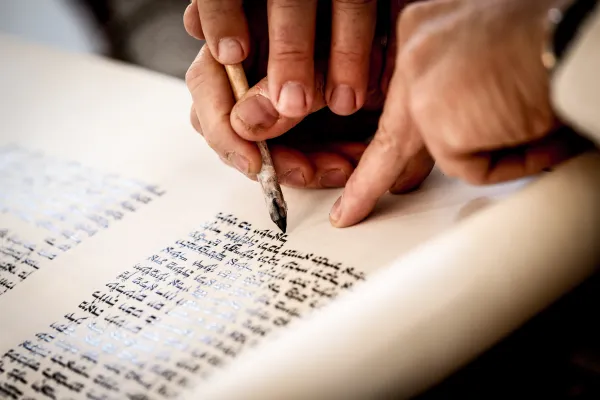
Numbers covers the forty years of desert wandering — a turbulent period of rebellion, punishment, and gradual transformation.
Census and Organization (Chapters 1-10). The book opens with a census (hence the English name) and the organization of the camp around the Tabernacle. Each tribe has its assigned position.
Rebellions (Chapters 11-17). The people complain constantly — about food, about leadership, about the difficulty of the journey. Miriam and Aaron challenge Moses. The twelve spies scout the Promised Land but ten return with a terrifying report, causing the people to lose faith. As punishment, God decrees that the generation that left Egypt will not enter the land — they will wander for forty years.
Korach’s Rebellion (Chapter 16). A Levite named Korach leads a revolt against Moses and Aaron. The earth swallows the rebels.
The End of the Wilderness (Chapters 20-36). Miriam dies. Aaron dies. Moses strikes a rock in anger and is told he, too, will not enter the Promised Land. The new generation prepares for conquest. Balaam, a non-Israelite prophet hired to curse Israel, is compelled by God to bless them instead.
Book 5: Deuteronomy (Devarim) — “Words”
Deuteronomy is Moses’ farewell address. Standing on the plains of Moab, in sight of the Promised Land he will never enter, Moses reviews the law, retells the story, and urges the people to remain faithful.
Retelling (Chapters 1-11). Moses recaps the journey from Sinai to the present. He restates the Ten Commandments and delivers the Shema — “Hear, O Israel, the Lord our God, the Lord is One” (6:4) — the central statement of Jewish faith.
Laws Restated and Expanded (Chapters 12-26). A comprehensive legal code covering worship, justice, warfare, family, agriculture, and society. Many of Judaism’s most important ethical laws appear here: care for the poor, fair treatment of workers, compassion for animals.
Blessings and Curses (Chapters 27-28). Moses lays out the consequences: follow the law and be blessed; abandon it and be cursed. The curses are graphic and historically have been read as foreshadowing later Jewish suffering.
Moses’ Death (Chapter 34). Moses climbs Mount Nebo, sees the Promised Land from a distance, and dies. “There never arose in Israel a prophet like Moses, whom the Lord knew face to face.” Joshua takes over as leader.
The Big Themes
Across all five books, several themes recur:
- Covenant: God and the Jewish people are in a relationship with mutual obligations.
- Law: Torah means “instruction” — the commandments are not restrictions but a path for living.
- Justice: “Justice, justice you shall pursue” (Deuteronomy 16:20).
- Memory: “Remember that you were slaves in Egypt” — repeated dozens of times.
- Land: The Promised Land is both a physical destination and a spiritual aspiration.
- Human imperfection: Every major figure — Abraham, Moses, David — is flawed. The Torah does not create heroes; it creates humans.
Summing Up
The Torah is not easy to read. It jumps between narrative and law, between poetry and genealogy, between soaring theology and granular detail about skin rashes. But that is part of its genius — it insists that the sacred lives in the ordinary, that law and story are inseparable, and that the same God who created the universe also cares about how you treat your neighbor. That is what the Torah is about.
Frequently Asked Questions
Is the Torah the same as the Bible?
Not exactly. The Torah refers specifically to the first five books — Genesis, Exodus, Leviticus, Numbers, and Deuteronomy — also called the Pentateuch or the Five Books of Moses. The Hebrew Bible (Tanakh) is larger and includes the Prophets (Nevi'im) and Writings (Ketuvim) as well. Christians include the Hebrew Bible as their 'Old Testament' but add the New Testament. When Jews say 'Torah,' they sometimes mean just the five books and sometimes the entire body of Jewish teaching.
Who wrote the Torah?
Traditional Jewish belief holds that God dictated the Torah to Moses at Mount Sinai, and Moses wrote it down. This is called 'Torah from Heaven' (Torah min haShamayim). Academic scholars generally view the Torah as a composite document written and edited by multiple authors over centuries. Different Jewish denominations hold different views on this — Orthodoxy affirms divine authorship, while Conservative and Reform movements are more open to critical scholarship.
How long does it take to read the entire Torah?
In synagogue, the Torah is read in its entirety over the course of one year, with a different portion (parashah) each Shabbat. Reading the Torah cover to cover in English takes roughly 12-15 hours. The Torah contains 304,805 Hebrew letters, 79,847 words, and 5,845 verses. The annual reading cycle begins and ends on Simchat Torah, a joyful holiday celebrating the completion and restart of the Torah.
Sources & Further Reading
Related Articles
Orthodox, Conservative, and Reform: Understanding Jewish Denominations
Judaism is not monolithic — it encompasses diverse movements from Ultra-Orthodox to Reform, each with its own approach to tradition, law, and modern life.
Hebrew: The Language of the Torah and Israel
From an ancient sacred tongue to a modern spoken language — the remarkable story of Hebrew's revival.
Torah Portions: The Weekly Reading Cycle
Every week, Jewish communities worldwide read the same Torah portion. Explore the 54 parashot, the system of aliyot, the Haftarah connection, and the joyous restart on Simchat Torah.