Tzedakah: The Jewish Obligation of Justice and Giving
Tzedakah is not charity — it's justice. From Maimonides' eight levels to the humble pushke on the kitchen counter, Jewish giving is an obligation, not an option.
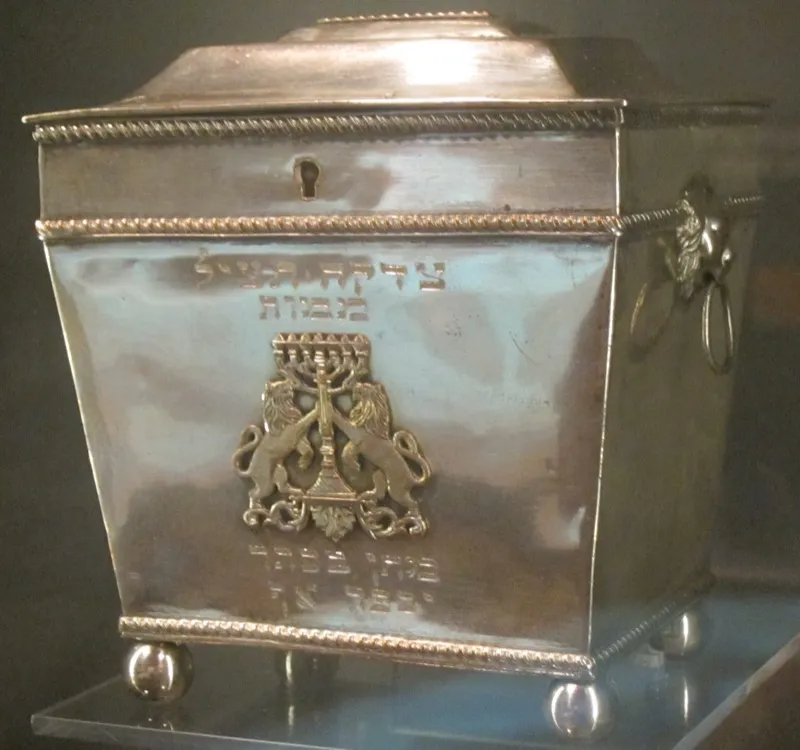
Not Charity — Justice
In the foyer of countless Jewish homes, somewhere near the front door, you will find a small box. It might be tin, painted blue and white. It might be ceramic, decorated with Stars of David. It might be a simple jar with a handwritten label. This is the pushke — the Yiddish word for the tzedakah box — and it is one of the most quietly powerful objects in Jewish life. Before Shabbat candles are lit on Friday evening, coins go into the pushke. Children learn to drop in pennies before they can read. The box is always there, always waiting, a constant reminder that giving is not something you do when the mood strikes. It is something you do because it is right.
The Hebrew word tzedakah is commonly translated as “charity,” but this translation misses the point entirely. “Charity” comes from the Latin caritas — love, generosity, the warmth of the heart. Tzedakah comes from tzedek — justice, righteousness, what is due. When you give tzedakah, you are not being generous. You are being just. You are fulfilling an obligation. You are restoring a balance that poverty has disrupted.
This distinction is not semantic hairsplitting. It reshapes the entire relationship between giver and receiver. If giving is an act of love, the giver is the hero. If giving is an act of justice, the giver is simply doing what is required — and the receiver is not an object of pity but a person whose dignity demands that society provide for them.
The Torah’s Command
The obligation of tzedakah is rooted in the Torah itself. Deuteronomy 15:7-8 states: “If there is a needy person among you… do not harden your heart and do not shut your hand against your needy brother. Rather, you shall surely open your hand to him.” The language is emphatic — the Hebrew uses doubled verbs (patoach tiftach, “you shall surely open”) to stress that this is not a suggestion.
Leviticus 19:9-10 commands farmers to leave the corners of their fields unharvested and to leave fallen grain for the poor and the stranger. This is not voluntary generosity — it is law. The produce in the corners of the field belongs to the poor. A farmer who harvests it all is not being ungenerous; he is stealing.
These agricultural laws could not survive the transition from an agrarian to an urban society, but the principle behind them endured. The rabbis of the Talmud translated field-corner obligations into a comprehensive system of communal welfare.

Maimonides’ Eight Levels
The most famous framework for understanding tzedakah comes from Maimonides (Rabbi Moses ben Maimon, 1138-1204), who organized giving into eight levels in his Mishneh Torah (Laws of Gifts to the Poor, 10:7-14). From lowest to highest:
Level 8 (Lowest): Giving reluctantly, with a sour face and a sense of resentment.
Level 7: Giving cheerfully, but less than one should.
Level 6: Giving an appropriate amount, but only after being asked.
Level 5: Giving before being asked — anticipating the need.
Level 4: The recipient knows who gave, but the giver does not know who received. (For example, donating to a fund that distributes anonymously.)
Level 3: The giver knows who received, but the recipient does not know who gave. (The classic anonymous donation.)
Level 2: Neither the giver nor the recipient knows the other’s identity. This is the highest form of direct giving — completely anonymous on both sides.
Level 1 (Highest): Helping a person become self-sufficient — through a loan, a business partnership, a job, or training. This is the greatest form of tzedakah because it eliminates the need for future dependence.
Maimonides’ hierarchy reveals a sophisticated understanding of human psychology and dignity. The lowest levels are about the giver’s feelings; the highest levels are about the recipient’s independence. The ultimate goal is not to create permanent dependence but to restore a person to self-sufficiency.
Ma’aser: The Tithe
How much should a person give? Jewish law establishes the practice of ma’aser — tithing one-tenth of one’s income for tzedakah. This figure comes from the biblical tithe and was codified by the rabbis as the standard expectation.
The Talmud (Ketubot 50a) sets both a floor and a ceiling: a person should give at least one-tenth and no more than one-fifth of their income. The upper limit is striking — it exists to prevent a person from giving so much that they themselves become dependent on others. Judaism values generosity but also financial responsibility. You cannot repair the world by impoverishing yourself.
Importantly, the obligation applies to everyone, not just the wealthy. The Talmud states that even a person who receives tzedakah must give tzedakah. This principle reinforces that giving is a matter of justice, not surplus. Every person, regardless of means, participates in the communal obligation.
The Tzedakah Box
The pushke (Yiddish) or kupat tzedakah (Hebrew) has been a fixture of Jewish homes for centuries. In Eastern European communities, every household had one — often several, designated for different causes. Children grew up watching their parents drop coins into the box before Shabbat, internalizing the habit long before they understood the theology.
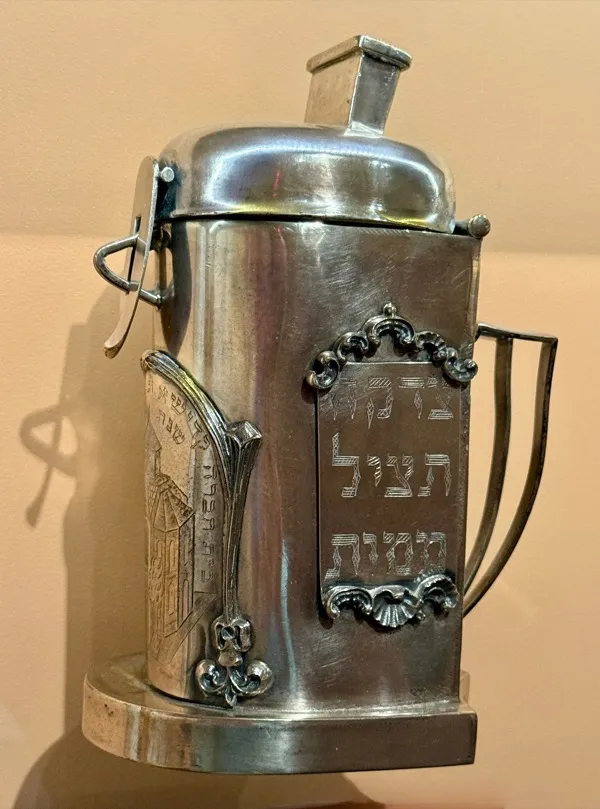
The physical presence of the box matters. It is a constant reminder — on the kitchen counter, by the front door, in the office — that giving is not an occasional event but a regular practice. Many families make it a custom to give tzedakah before lighting Shabbat candles, before traveling, and before prayer. The act of reaching into your pocket and placing a coin in the box creates a moment of connection between daily life and the larger project of justice.
Community Funds: The Kupah and the Tamchui
In the Talmudic period, every Jewish community maintained at least two communal funds:
- The Kupah (community chest) — collected weekly and distributed to the local poor, providing enough for fourteen meals (a week’s worth of food). Only long-term residents could receive from the kupah.
- The Tamchui (soup kitchen or daily plate) — collected daily and distributed to anyone in need, including travelers and newcomers.
These were not voluntary charities. They were communal obligations, enforced by the community’s leadership. A Jew who refused to contribute could be compelled by the court. The system was, in effect, a welfare state in miniature — funded by obligation, administered with attention to dignity, and available to everyone who needed it.
Anonymous Giving and Dignity
A recurring theme in the laws of tzedakah is the preservation of the recipient’s dignity. The Talmud tells of rabbis who would throw money through windows at night so that poor families would not know who had helped them. One sage would tie coins in his cloak and walk through the poor neighborhood, dragging the cloak behind him so that anyone could take what they needed without being seen.
The emphasis on anonymity is rooted in the prohibition against shaming others. Maimonides ruled that embarrassing a person in public is a graver sin than most physical injuries. Tzedakah given in a way that humiliates the recipient — the donor making a public show, the recipient forced to grovel — is still tzedakah, but it is the lowest form. True justice preserves the dignity of everyone involved.
Tzedakah and the Messianic Hope
The rabbis taught that tzedakah has the power to avert harsh decrees and hasten the redemption. “Great is tzedakah,” says the Talmud (Bava Batra 10a), “for it hastens the redemption.” This is not a transactional claim — put in a coin, get a miracle — but a theological one. A world in which people care for one another is a world moving toward completion. Every act of giving is an act of tikkun olam — repair.
The prophet Isaiah declared: “Zion shall be redeemed through justice (mishpat), and those who return to her, through righteousness (tzedakah)” (Isaiah 1:27). Tzedakah is not peripheral to Jewish hope. It is the mechanism through which that hope becomes real.
In the Jewish vision, the world is not yet what it should be. Poverty exists. Suffering exists. But these are not permanent conditions — they are problems to be solved, injustices to be corrected, gaps to be filled. And every Jew, from the wealthiest philanthropist to the child dropping a penny into a blue tin box, is called upon to participate in that work. Not because it feels good — though it may. Because it is just.
Frequently Asked Questions
What is the difference between tzedakah and charity?
The English word 'charity' comes from the Latin 'caritas,' meaning love or generosity — implying a voluntary act of kindness. Tzedakah comes from the Hebrew root 'tzedek,' meaning justice or righteousness. In Judaism, giving to those in need is not optional generosity; it is a legal obligation, a matter of justice. Even a poor person who receives tzedakah is obligated to give tzedakah to someone in greater need.
What are Maimonides' eight levels of tzedakah?
From lowest to highest: (1) giving reluctantly, (2) giving cheerfully but too little, (3) giving after being asked, (4) giving before being asked, (5) giving when the recipient knows the donor but the donor doesn't know the recipient, (6) giving when the donor knows the recipient but the recipient doesn't know the donor, (7) giving when neither party knows the other, (8) helping someone become self-sufficient through a loan, partnership, or job.
How much tzedakah should a person give?
Jewish law recommends giving ma'aser — one-tenth (a tithe) of one's income — as the standard measure of tzedakah. The Talmud sets a minimum of one-tenth and a maximum of one-fifth, the upper limit established to prevent a person from impoverishing themselves. Even those of modest means are obligated to give something, reinforcing that tzedakah is about justice, not wealth.
Sources & Further Reading
Related Articles
The 613 Commandments: The Framework of Jewish Life
Judaism identifies 613 commandments in the Torah — 248 positive and 365 negative — covering everything from prayer and charity to agriculture and justice.
Tikkun Olam: Repairing the World
From a mystical Kabbalistic concept about gathering divine sparks to a modern rallying cry for social justice, tikkun olam — repairing the world — is one of Judaism's most powerful ideas.
What Do Jews Believe? Core Beliefs, Values, and the Spirit of Debate
Jewish belief centers on one God, Torah, ethical action, and humanity's role in repairing the world — but within that framework, debate and diversity of opinion are not just tolerated but sacred.