Lilith: Demon, Legend, and Feminist Icon
She is not in the Torah. She may never have existed. But Lilith — Adam's legendary first wife turned night demon turned feminist symbol — has haunted Jewish imagination for two thousand years.
The Woman Who Said No
She is arguably the most famous figure in Jewish mythology who does not appear in the Torah. She has been called Adam’s first wife, a night demon, a child-killer, a seductress, and — in a remarkable modern reversal — a feminist hero. Her image has appeared on ancient Babylonian amulets and on the cover of a 21st-century magazine. She has terrified Jewish mothers for centuries and inspired Jewish women for decades.
Her name is Lilith. And her story — a tangle of ancient mythology, medieval legend, Kabbalistic speculation, folk superstition, and modern reinterpretation — tells us as much about the people who imagined her as it does about the figure herself.
The Biblical Non-Appearance
Let us begin with what the Torah does not say. The Torah does not mention Lilith. At all. The name appears exactly once in the entire Hebrew Bible, in a prophecy of Isaiah describing the desolation that will befall Edom:
“Wildcats shall meet hyenas, goat-demons shall greet each other; there too the lilith shall repose and find herself a resting place” (Isaiah 34:14).
The meaning of “lilith” in this verse is debated. It may refer to a night demon (from the Hebrew/Akkadian root lyl/lilitu, meaning night). It may be a screech owl or some other nocturnal creature. The early rabbinic translators and commentators were divided. What is clear is that in this single biblical mention, Lilith is a creature of desolation — associated with abandoned ruins and wild places.
The elaborate legend of Lilith as Adam’s wife? That comes later. Much later.
From Babylon to the Talmud
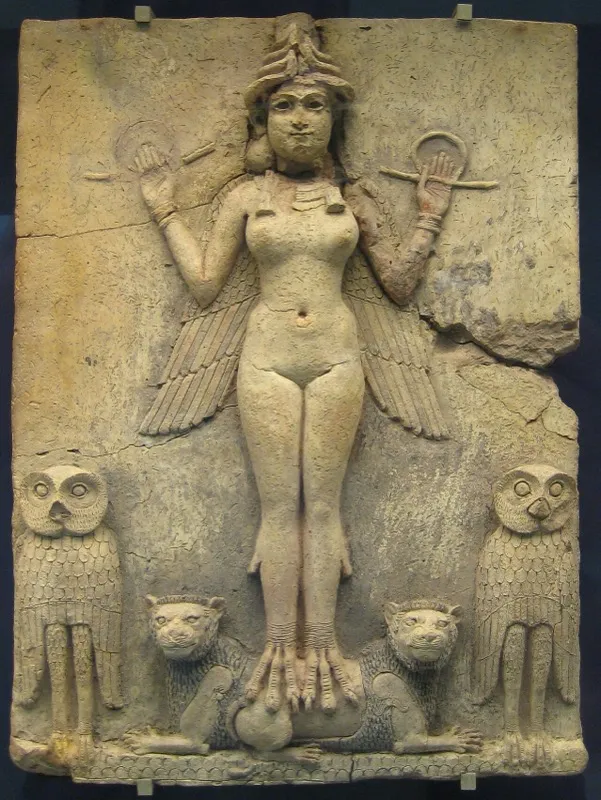
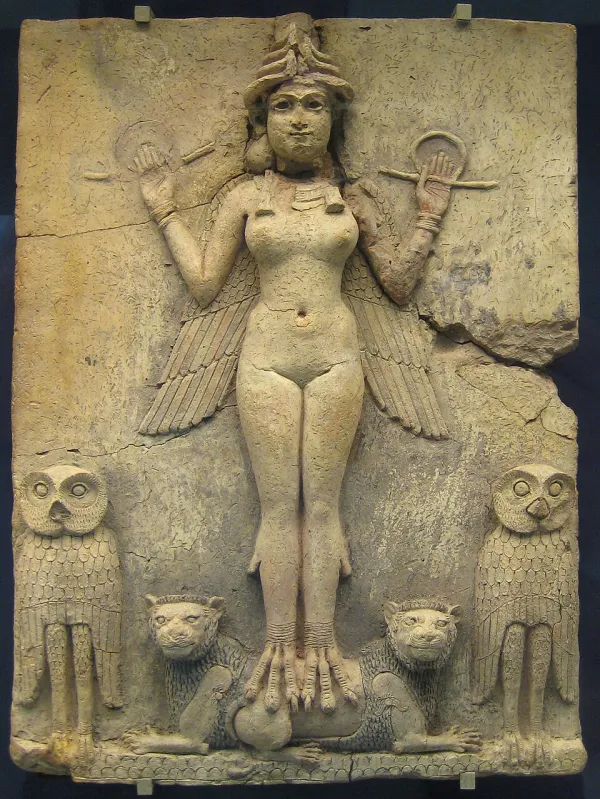
The roots of the Lilith tradition reach into Mesopotamian mythology. The Babylonians and Sumerians believed in female night demons — lilitu and ardat lili — who threatened pregnant women, newborns, and men sleeping alone. These demons were associated with wind, night, and dangerous sexuality.
Jewish contact with Babylonian culture during the exile (586 BCE onward) likely introduced these concepts into Jewish folk belief. By the time of the Talmud (3rd–6th centuries CE), Lilith had become a recognized figure in Jewish demonology.
The Talmud mentions Lilith several times, always as a demonic figure:
- “One should not sleep alone in a house, for Lilith seizes anyone who sleeps alone” (Shabbat 151b)
- She is described as having long hair and wings (Eruvin 100b, Niddah 24b)
- She is associated with nocturnal dangers and sexual temptation
At this stage, Lilith is simply a demon — not yet connected to the creation story or to Adam.
The Alphabet of Ben Sira: The Legend Takes Shape
The full-blown legend of Lilith as Adam’s first wife appears in the Alphabet of Ben Sira (Alef-Bet de-Ben Sira), a medieval text dated to somewhere between the 8th and 10th centuries CE. Its authorship is unknown, and its tone is often satirical — some scholars think parts of it are deliberately provocative or humorous.
The text addresses a contradiction in Genesis. In Genesis 1:27, God creates male and female simultaneously: “Male and female He created them.” In Genesis 2:21-22, God creates Eve from Adam’s rib. What happened to the woman created in chapter 1?
The Alphabet of Ben Sira answers: she was Lilith.
According to this text, God created Lilith from the same earth as Adam — making them equals. But when Adam demanded that Lilith lie beneath him during intercourse, she refused:
“We are both equal, for we were both created from the earth.”
Adam insisted on dominance. Lilith refused to submit. She uttered God’s ineffable Name (the most powerful word in existence), grew wings, and flew away — abandoning Eden, Adam, and God’s plan.
God sent three angels — Senoy, Sansenoy, and Semangelof — to bring her back. They found her at the Red Sea, consorting with demons and giving birth to demon offspring (said to number over a hundred daily). The angels threatened to kill her demon children. Lilith negotiated: she would not harm newborn children who were protected by amulets bearing the three angels’ names.
God then created Eve — from Adam’s rib this time, to ensure her subordination. And Lilith became a figure of darkness: a night demon who threatened pregnant women, stole infants, and seduced men in their sleep.
Amulets and Protection
The practical consequence of the Lilith legend was the widespread use of protective amulets in Jewish communities. For centuries — and in some communities, to this day — amulets were placed in the rooms of newborn babies, particularly during the first days of life when the infant was considered most vulnerable.
These amulets typically featured the names of the three angels (Senoy, Sansenoy, and Semangelof), along with prayers, psalms, and illustrations designed to ward off Lilith. Some included an image of Lilith herself, depicted as a bound or defeated figure. Others displayed the words “Out, Lilith!” (Chutz Lilith!) as a direct command.
The practice was especially common in Sephardic and Mizrachi Jewish communities, as well as in Kabbalistic circles. Amulets were hung on walls, placed under pillows, or tied to the infant’s crib. The belief that Lilith threatened newborns persisted well into the modern era, and remnants of the practice can still be found in some traditional communities today.
Lilith in Kabbalah
The Kabbalistic tradition developed Lilith into a far more complex figure than the simple demon of folk belief. In the Zohar (the central text of Jewish mysticism, 13th century), Lilith becomes a cosmic force — the feminine aspect of the Sitra Achra (the “Other Side,” the realm of impurity and evil).
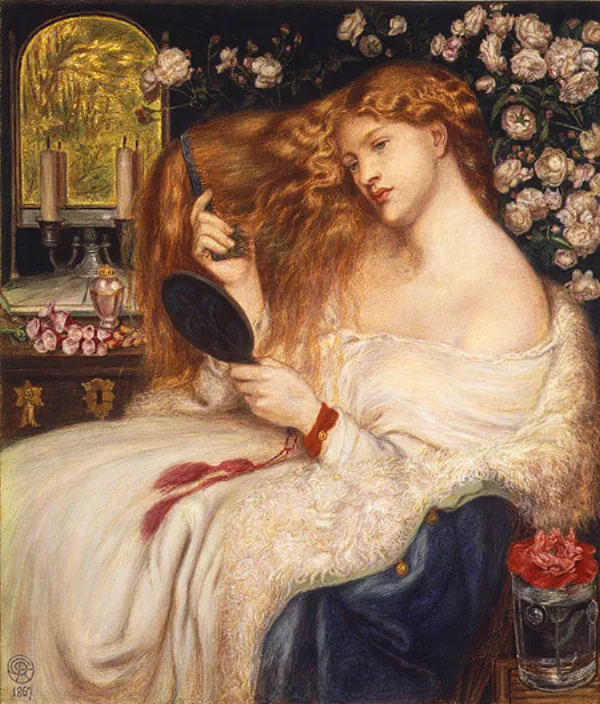
In Kabbalistic cosmology, Lilith is paired with Samael — the archangel of death and the chief figure of the Other Side. Together, they form a dark mirror of the divine masculine and feminine (which, in their holy form, are represented by God and the Shekhinah). Lilith represents feminine energy divorced from holiness — desire without connection, power without purpose.
The Kabbalistic Lilith is not merely a baby-snatching demon. She is a theological concept: the shadow side of the divine feminine, the consequence of cosmic imbalance, the embodiment of spiritual exile. When the Shekhinah is in exile (metaphorically separated from God due to human sin), Lilith’s power grows. The messianic redemption — when all things are restored to harmony — will include Lilith’s defeat or transformation.
The Feminist Reclamation
In the 1970s, something remarkable happened. Jewish feminists looked at the Lilith legend and saw not a demon but a hero — the first woman who refused to accept subordination.
Judith Plaskow, in her groundbreaking 1972 midrash “The Coming of Lilith,” reimagined the story. In her retelling, Lilith is not a villain but a woman who demanded equality and was punished for it. Eventually, Eve — curious about the mysterious woman beyond Eden’s walls — climbs the garden wall and meets Lilith. Together, they discover that they have been set against each other by a patriarchal system. They return to the garden hand in hand, ready to rebuild it together.
In 1976, the Jewish feminist magazine Lilith was founded — explicitly reclaiming the name as a symbol of female strength, independence, and the refusal to accept imposed inferiority. The magazine has published continuously for decades, covering issues of Jewish women’s lives, gender justice, and religious feminism.
The feminist Lilith is a complex symbol. She represents the way patriarchal systems demonize women who refuse to submit. She embodies the cost of female independence — exile, demonization, erasure from the official story. And she offers a counter-narrative: what if the woman who said “no” was not a monster but a pioneer?
A Figure for Our Time
Lilith occupies a unique space in Jewish thought. She is not canonical — the Torah does not know her as Adam’s wife. She is not required belief — most rabbinical authorities have treated the legend as folklore, not theology. She is not worshipped or venerated. And yet she will not go away.
She persists because she embodies tensions that Judaism — and humanity — has never fully resolved. The tension between equality and hierarchy. Between desire and control. Between the official story and the voices excluded from it. Between the woman in the garden and the woman who flew away.
Lilith is whatever each generation needs her to be: a warning, a demon, a cautionary tale, an inspiration, a protest, a prayer. She is the question that will not stop being asked: what happens to the woman who refuses to lie down?
Frequently Asked Questions
Is Lilith mentioned in the Torah?
No. Lilith does not appear in the Torah (the Five Books of Moses). The name 'Lilith' appears only once in the entire Hebrew Bible — in Isaiah 34:14, in a list of wild creatures that will inhabit a devastated land: 'Wildcats shall meet hyenas, goat-demons shall greet each other; there too the lilith shall repose and find herself a resting place.' The word may refer to a night demon or simply a nocturnal animal. The elaborate legend of Lilith as Adam's first wife developed in post-biblical literature, primarily in the medieval text known as the Alphabet of Ben Sira.
What is the Alphabet of Ben Sira and what does it say about Lilith?
The Alphabet of Ben Sira is a medieval Jewish text (8th-10th century CE) of uncertain authorship that contains the most developed version of the Lilith legend. It tells that God created Lilith from the same earth as Adam, making her his equal. When Adam demanded she be subordinate during intercourse, Lilith refused, saying 'We are both equal, for we were both created from the earth.' She spoke God's ineffable name, grew wings, and flew away to the Red Sea, where she consorted with demons and gave birth to demon children. Three angels — Senoy, Sansenoy, and Semangelof — were sent to retrieve her but failed, though they extracted a promise that she would not harm children protected by amulets bearing their names.
How has Lilith been reclaimed as a feminist symbol?
Beginning in the 1970s, Jewish feminists reclaimed Lilith as a symbol of female autonomy and resistance to patriarchy. The pioneering Jewish feminist magazine 'Lilith' (founded 1976) took her name deliberately, reframing Lilith not as a demon but as the first woman who refused to be subordinate. Writers like Judith Plaskow reimagined Lilith's story as one of courage rather than wickedness — a woman punished for demanding equality. Lilith has become a complex symbol in Jewish feminist thought: a figure who embodies the cost of female independence in patriarchal systems and the possibility of reclaiming demonized women's voices.
Sources & Further Reading
Related Articles
Jewish Feminism: A History
From the Talmudic sage Beruriah to Sally Priesand's historic ordination, Jewish feminism has transformed religious life — reshaping prayer, leadership, and the fight for women's rights within halakha.
Kabbalah: An Introduction to Jewish Mysticism
Beyond the law and the stories lies a hidden dimension of Judaism — Kabbalah, the mystical tradition that seeks to understand the nature of God, creation, and the human soul.
Midrash: The Stories Behind the Torah
Why did Abraham smash his father's idols? Why did Moses stutter? The Torah does not say — but the Midrash does. Explore Judaism's ancient tradition of creative biblical interpretation.