The Judges of Israel: Heroes, Warriors, and the Cycle of Faith
Before kings ruled Israel, judges rose in times of crisis — Deborah the prophetess, Gideon the reluctant warrior, Samson the flawed strongman. Their stories reveal a nation struggling between faith and temptation.
When Everyone Did What Was Right in Their Own Eyes
The Book of Judges ends with one of the most haunting sentences in the Hebrew Bible: “In those days there was no king in Israel; everyone did what was right in their own eyes” (Judges 21:25). It reads like an epitaph — and in a way, it is. The period of the judges was an era of freedom without structure, faith without consistency, heroism without institutions. It was thrilling, brutal, and ultimately unsustainable.
The judges were not judges in the modern legal sense. They were shoftim — a word that encompasses judging, leading, delivering, and governing. They were charismatic figures who arose in times of national crisis, rallied the tribes, defeated the enemy, and then faded back into ordinary life. They were the antibodies of Israelite society — activated by infection, dormant in health.
Their stories, recorded in the Book of Judges, span roughly two centuries (approximately 1200–1020 BCE) between the death of Joshua and the rise of King Saul. It was a period of tribal confederation, intermittent warfare, and a dizzying cycle of faithfulness and betrayal that reveals the raw, unvarnished reality of a people trying — and often failing — to live up to a covenant they had accepted at Sinai.
The Cycle
The Book of Judges has a structure so consistent it almost reads like a liturgy:
Sin → The Israelites abandon God and worship the Baals and Asherahs of their Canaanite neighbors. Punishment → God allows an enemy nation to oppress them. Cry → The people, suffering under oppression, cry out to God. Salvation → God raises up a judge who delivers them. Peace → The land has rest during the judge’s lifetime. Relapse → After the judge dies, the people return to idolatry, and the cycle begins again.
This cycle repeats roughly seven times, each iteration seeming to spiral slightly further downward. The judges themselves become progressively more morally compromised — from the righteous Othniel to the deeply flawed Samson. The book as a whole tells a story of gradual disintegration, making the case (whether intentionally or not) that Israel needed a more stable form of leadership.
Othniel: The Model Judge
Othniel son of Kenaz, Caleb’s younger brother, is the first judge and the template for all who follow. When the Israelites fell into idolatry and were subjugated by Cushan-Rishathaim, king of Aram-Naharaim, for eight years, they cried out to God. The Spirit of the Lord came upon Othniel; he went to war and prevailed. The land had rest for forty years.
Othniel’s story is told in just four verses (Judges 3:7-11). It establishes the pattern with elegant simplicity and presents the ideal: the judge as instrument of divine deliverance, with no personal drama, no moral complications, no ambiguity. Every subsequent judge will fall short of this template in one way or another.
Ehud: The Left-Handed Assassin
Ehud son of Gera was a Benjaminite — and he was left-handed. In a right-handed world, this was unusual enough to be noted. The Israelites were oppressed by Eglon, the very fat king of Moab. Ehud fashioned a short sword, strapped it to his right thigh (where guards wouldn’t check), and presented himself as a tribute-bearer to Eglon.
After delivering the tribute, Ehud told Eglon he had a secret message. The king dismissed his attendants. Ehud drew the sword with his left hand and thrust it into Eglon’s belly — and “the fat closed over the blade” (Judges 3:22). Ehud locked the doors and escaped. When the servants finally opened the doors, Eglon was dead. Ehud rallied the Israelites and defeated the Moabites. Eighty years of peace followed.
The story is graphic, darkly funny, and deliberately subversive. The hero is not a mighty warrior but a clever trickster who uses his unusual trait (left-handedness) as a tactical advantage. God works through the unexpected.
Deborah: The Prophetess Under the Palm
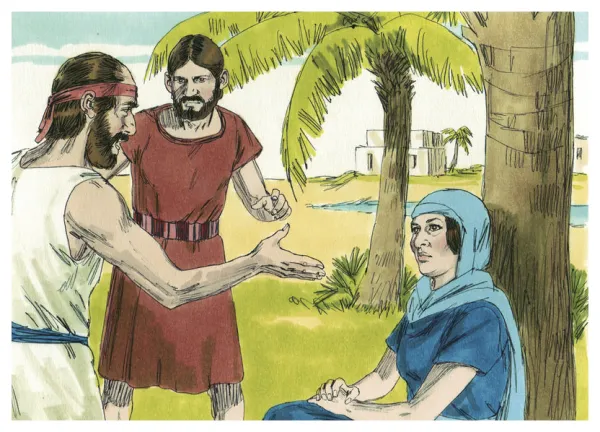
Deborah is unique among the judges — she is the only woman, and the only one described as already functioning as a judge before a military crisis. “Deborah, a prophetess, the wife of Lappidoth, was judging Israel at that time. She used to sit under the palm of Deborah between Ramah and Bethel in the hill country of Ephraim, and the Israelites came up to her for judgment” (Judges 4:4-5).
When the Canaanite king Jabin and his general Sisera — who possessed nine hundred iron chariots — oppressed Israel for twenty years, Deborah summoned the military commander Barak and told him God’s instructions: take ten thousand men to Mount Tabor; God will draw Sisera into a trap.
Barak’s response: “If you go with me, I will go. If you don’t go with me, I won’t go.” Deborah agreed but warned: “The road you are taking will not lead to your glory, for the Lord will deliver Sisera into the hands of a woman” (Judges 4:9).
The battle was a rout. Sisera’s chariots were rendered useless (a rainstorm turned the Kishon Valley into mud), and his army was destroyed. Sisera fled on foot to the tent of Jael, who offered him hospitality — milk and a place to rest — and then drove a tent peg through his temple while he slept.
Deborah’s Song (Judges 5) — a victory poem considered one of the oldest texts in the entire Bible — celebrates both the military victory and Jael’s act. It is fierce, triumphant, and unflinching.
Gideon: Three Hundred Men and Torches
When the Midianites oppressed Israel, God called Gideon — who was threshing wheat in a winepress to hide it from the raiders. The angel greeted him: “The Lord is with you, mighty warrior.” Gideon’s reply dripped with skepticism: “If the Lord is with us, why has all this happened to us?” (Judges 6:12-13).
Gideon required signs — not one but two, the famous test of the fleece (wet fleece on dry ground, then dry fleece on wet ground). God obliged. Then, in one of the most strategically bizarre episodes in military history, God reduced Gideon’s army from 32,000 to 300 — selecting only those who lapped water like dogs rather than kneeling to drink.
The three hundred attacked the Midianite camp at night with torches hidden inside clay jars and shofars. At Gideon’s signal, they smashed the jars, blew the shofars, and shouted. The Midianites panicked and turned on each other. The victory was total — and the message unmistakable: it was God’s victory, not Gideon’s.
Samson: Strength Without Wisdom
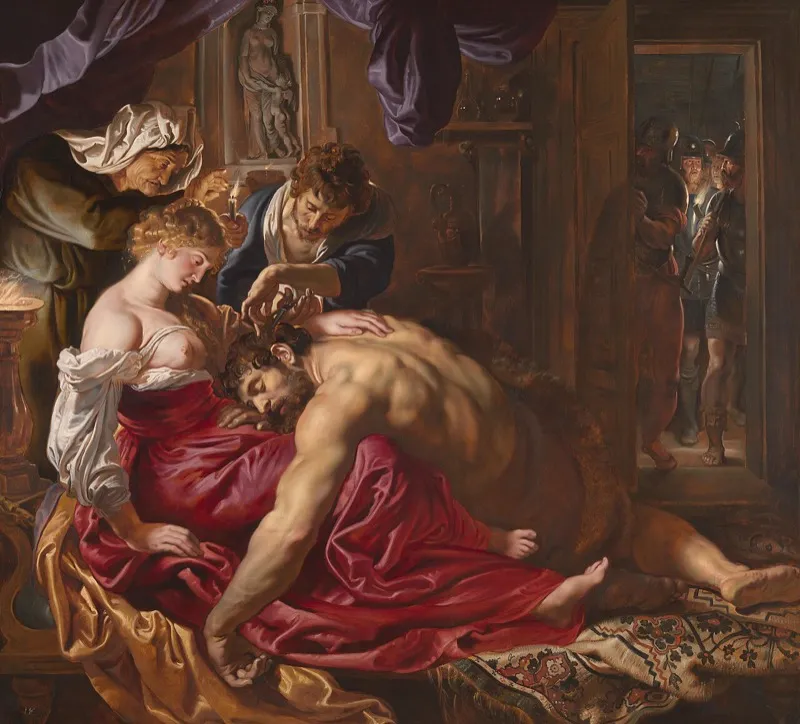
Samson is the most tragic of the judges — a man of superhuman strength and catastrophic weakness. Consecrated as a Nazirite from birth (forbidden to cut his hair, drink wine, or touch the dead), Samson was set apart for God’s service before he drew his first breath.
But Samson was a walking contradiction. He broke every Nazirite vow. He killed a lion and later ate honey from its carcass (contact with the dead). He attended drinking feasts. He consorted with Philistine women. His strength came from God, but his choices were entirely his own — and they were almost uniformly terrible.
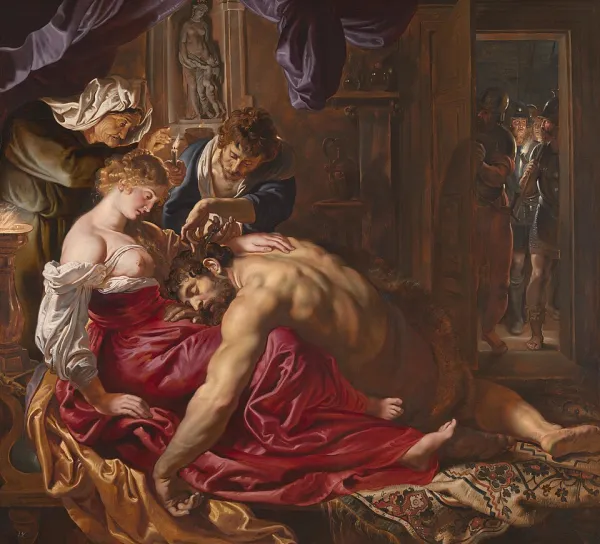
His love for Delilah was his undoing. Bribed by the Philistine lords, Delilah nagged him repeatedly for the secret of his strength. Three times he lied. The fourth time — in one of literature’s great moments of self-destruction — he told the truth: “No razor has ever come on my head, for I have been a Nazirite to God from my mother’s womb.” Delilah shaved his head as he slept. His strength left him.
The Philistines captured him, gouged out his eyes, and set him to grinding grain in prison. But his hair grew back. At a great festival in the temple of Dagon, the Philistines brought Samson out for entertainment. He asked the boy leading him to place his hands on the pillars. “Let me die with the Philistines,” he prayed. He pushed. The temple collapsed. Samson killed more in his death than in his life.
The Downward Spiral
After Samson, the Book of Judges descends into two appendices (chapters 17–21) that depict a society in freefall: idolatry, civil war, kidnapping, and the near-annihilation of the tribe of Benjamin. There are no heroes in these final chapters — only chaos.
The message is clear: without shared moral authority, freedom becomes anarchy. “Everyone did what was right in their own eyes” is not a celebration of individualism — it is a lament. The period of the judges, for all its heroism, demonstrated that charismatic leadership alone could not sustain a covenantal community. Israel would need something more.
That something would be the monarchy — which brought its own set of problems, its own glories and failures, and its own prophets to hold kings accountable. But the judges were the first leaders of the settled land, and their stories — messy, violent, inspiring, and cautionary — remain among the most vivid in all of scripture. They remind us that God works through imperfect people, that leadership is a burden as much as a gift, and that freedom without moral structure is not really freedom at all.
Frequently Asked Questions
What were the judges of Israel and how were they different from kings?
The judges (shoftim) were charismatic leaders who arose in times of crisis during the roughly 200-year period between Joshua's death and the establishment of the monarchy under Saul (approximately 1200–1020 BCE). Unlike kings, judges did not inherit their position, did not establish dynasties, had no standing army, and ruled only by personal authority and divine calling. They were military leaders, legal arbiters, and spiritual guides who emerged when Israel faced external threats and faded from leadership when the crisis passed.
What is the 'cycle of the judges' in the Book of Judges?
The Book of Judges follows a repeating pattern: (1) the Israelites abandon God and worship foreign idols; (2) God allows an enemy nation to oppress them; (3) the people cry out to God in distress; (4) God raises up a judge to deliver them; (5) the land has peace during the judge's lifetime; (6) after the judge dies, the people return to idolatry and the cycle begins again. This pattern appears roughly seven times in the book, illustrating the tension between faithfulness and temptation that defines the pre-monarchic period.
Was Deborah really a female leader in ancient Israel?
Yes. Deborah is described in Judges 4–5 as both a prophetess and a judge — she 'was judging Israel at that time' and people came to her for legal decisions under a palm tree between Ramah and Bethel. She summoned the military commander Barak to fight the Canaanite general Sisera, and when Barak insisted she accompany him into battle, she agreed but told him the glory would go to a woman. Her Song of Deborah (Judges 5) is considered one of the oldest texts in the Hebrew Bible.
Sources & Further Reading
Related Articles
Ancient Israel: From Abraham to the Kingdoms
The foundational story of the Jewish people — from the call of Abraham through the united monarchy of David and Solomon.
Deborah: Judge, Prophetess, and Warrior of Israel
Deborah — the only female judge in the Bible — held court under a palm tree, commanded an army, defeated a Canaanite general, and composed one of the oldest poems in scripture.
The Tanakh: A Complete Guide to the Hebrew Bible
The Tanakh — Torah, Nevi'im, and Ketuvim — is the foundational scripture of Judaism, containing 24 books of law, prophecy, and wisdom. Learn how it was formed and how it differs from the Christian Old Testament.