Dreams in Jewish Law and Lore: From Joseph to Freud
How Judaism views dreams — from Joseph the interpreter to Talmudic dream rules, the Hatavat Chalom ceremony, and the surprising connection to Freud.
The Night Speaks
In the book of Genesis, a young man sits in an Egyptian prison, forgotten by the world. Two of his fellow prisoners — Pharaoh’s cupbearer and baker — wake up troubled by dreams they cannot understand. The young man, Joseph, says: “Do not interpretations belong to God? Tell them to me.”
Joseph interprets the dreams correctly. The cupbearer is restored to his position; the baker is executed. And eventually, Joseph will interpret Pharaoh’s own dreams — seven fat cows devoured by seven lean ones — correctly predicting seven years of plenty followed by seven years of famine. His interpretive gift saves Egypt and, ultimately, his own family.
This story sits at the heart of the Jewish relationship with dreams. Judaism takes dreams seriously — not uncritically, but thoughtfully. Dreams are not dismissed as random neural firing, nor are they treated as guaranteed prophecy. They occupy a middle space: potentially meaningful, definitely worth paying attention to, but requiring interpretation to unlock.
Dreams in the Bible
The Hebrew Bible is saturated with dreams. Jacob dreams of a ladder reaching to heaven, with angels ascending and descending. God speaks to Solomon in a dream, offering him anything he desires. Daniel interprets the dreams of Babylonian kings. The prophet Joel promises: “Your old men shall dream dreams, your young men shall see visions.”
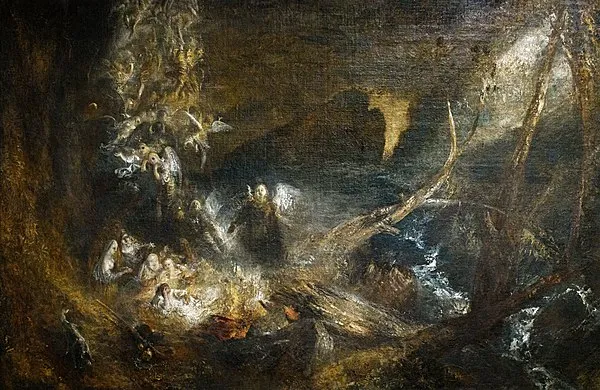
Biblical dreams fall into several categories. Some are direct messages from God — clear, unambiguous instructions. Others are symbolic — requiring an interpreter to decode images of cows, sheaves, and celestial bodies. And some seem to arise from the dreamer’s own anxieties and hopes, blurring the line between divine communication and human psychology.
What is notable about the biblical attitude is that dreams are never dismissed. Even when a dream seems bizarre or frightening, the text treats it as worthy of attention. Something is being communicated — the question is what, and by whom.
The Talmud on Dreams
The Talmud devotes an extraordinary amount of space to dreams, particularly in Tractate Berakhot (55a–57b). The rabbis approach dreams with a mixture of fascination, caution, and psychological insight that feels remarkably modern.
”A dream is one-sixtieth of prophecy” (Berakhot 57b)
This famous ratio captures the Talmudic view: a dream is not quite prophecy, but it contains a fraction of prophetic truth. It is not to be ignored, but neither should it be treated as the word of God.
”A dream that is not interpreted is like a letter that is not read” (Berakhot 55a)
This idea suggests that a dream carries a message, but the message only becomes real when it is engaged with. An unexamined dream has no effect — like a sealed envelope that gathers dust.
”A dream follows its interpretation” (Berakhot 55b)
Perhaps the most provocative Talmudic claim: the meaning of a dream is not fixed until it is interpreted. The interpretation itself shapes the outcome. This is why the Talmud records the story of a woman who went to two different dream interpreters — one optimistic, one pessimistic — and each interpretation came true for the elements they interpreted. A dream, in this view, is raw material that the interpreter shapes.
The Dream Catalog
The Talmud also provides an extensive catalog of dream symbols. Dreaming of a white horse is auspicious; a red horse less so. Dreaming of wheat means peace; barley means forgiveness. Dreaming of a river means peace; an elephant, a miracle. These catalogs resemble ancient dream interpretation manuals found in other cultures, but the Talmud adds a distinctive twist: each interpretation is supported by a biblical verse.
Fasting After a Bad Dream
Jewish law acknowledges the psychological power of bad dreams. The Talmud permits — and even encourages — fasting on the day after a particularly disturbing dream, even if that day is Shabbat. This is extraordinary, because fasting on Shabbat is otherwise prohibited. The rabbis reasoned that the anxiety caused by a bad dream is so intense that the fast itself brings relief and constitutes a kind of spiritual healing.
However, later authorities added a caveat: if you fast on Shabbat because of a dream, you must fast an additional day afterward as atonement for having fasted on Shabbat. Jewish law manages to be both compassionate about human anxiety and strict about Shabbat observance — simultaneously.
Hatavat Chalom: The Dream Amelioration Ceremony
For those who experience a disturbing dream and want more than a fast, Jewish tradition provides the Hatavat Chalom — literally, “making the dream good.” The dreamer gathers three friends and says: “I have dreamed a dream and do not know what it means.” The three friends respond with a formula that includes: “You have dreamed a good dream. It is good, and may it become good. May the Merciful One turn it to good.”
The ceremony typically concludes with the recitation of comforting biblical verses. The logic is consistent with the Talmudic principle that a dream follows its interpretation: by reinterpreting the dream positively, you reshape its potential effect.
Some communities perform a version of Hatavat Chalom during the Priestly Blessing in synagogue. During the drawn-out chanting of the blessing, congregants silently recite a prayer asking God to transform any troubling dreams into blessings.
Joseph and the Art of Interpretation
Joseph’s interpretive genius in the book of Genesis set the template for how Judaism approaches dreams. Several principles emerge from his story:
- Interpretation requires wisdom, not magic. Joseph does not use incantations or crystal balls. He listens carefully, notices patterns, and draws logical conclusions.
- Context matters. The same image — a vine, a basket, a cow — can mean different things depending on who dreams it and when.
- The interpreter bears responsibility. When Joseph tells the baker his dream means death, he does not flinch. Honest interpretation requires courage.
- Dreams can have practical implications. Pharaoh’s dream leads to a national food-storage program that saves millions from famine. Dreams, properly understood, can change policy.
Freud: A Descendant of the Tradition
When Sigmund Freud published The Interpretation of Dreams in 1899, he created a revolution in how the Western world understood the sleeping mind. Dreams, Freud argued, are not random — they are the “royal road to the unconscious,” disguised expressions of repressed desires that can be decoded through careful analysis.
Freud was a secular Jew who rarely acknowledged his Jewish roots in his scientific work. But scholars have noted striking parallels between Freudian dream theory and Talmudic ideas. Both traditions insist that dreams contain hidden meanings. Both believe that the interpreter’s skill determines what is found. Both take dreams seriously as psychological data rather than dismissing them as noise.
Freud’s father, Jakob, was a student of traditional Jewish texts. Whether the younger Freud absorbed Talmudic dream theory through his family or arrived at similar conclusions independently remains debated. But the resonance is undeniable: Freud was, in a sense, a modern Joseph — a Jewish interpreter of dreams working in a foreign court.
Dreams in Jewish Mysticism
The Kabbalists developed their own dream theology. The Zohar teaches that during sleep, the soul ascends through spiritual realms, encountering angels and receiving glimpses of the future. The quality of these visions depends on the dreamer’s spiritual state — a righteous person’s dreams are clearer and more trustworthy than those of someone whose soul is weighed down by sin.
Some Kabbalists practiced she’elat chalom — “dream questions” — a technique of formulating a specific question before sleep and seeking the answer in the resulting dream. This practice was used to resolve legal disputes, find lost objects, and receive spiritual guidance.
A Tradition of Taking Dreams Seriously
Judaism’s approach to dreams reflects its broader intellectual character: nothing is dismissed, but nothing is accepted uncritically. Dreams matter — they may contain truth, insight, or warning. But they require interpretation, context, and humility. A dream is not a command from God; it is a letter that needs reading, a text that needs study, a conversation between the conscious and the unconscious that, like all good conversations, yields meaning only when both parties are truly listening.
Frequently Asked Questions
What does the Talmud say about dreams?
The Talmud dedicates extensive sections (Berakhot 55a-57b) to dreams. It states that a dream is 'one-sixtieth of prophecy,' that a dream's meaning depends on its interpretation, and that an uninterpreted dream is like an unread letter. The Talmud also catalogs the meanings of common dream symbols.
What is Hatavat Chalom?
Hatavat Chalom ('amelioration of a dream') is a Jewish ceremony performed after a disturbing dream. The dreamer gathers three friends, who recite verses of comfort and declare: 'You have dreamed a good dream.' The ceremony reflects the Talmudic belief that a dream's impact depends partly on its interpretation.
Was Sigmund Freud influenced by Jewish dream traditions?
While Freud did not explicitly cite Talmudic sources, scholars have noted parallels between his dream theory and rabbinic ideas — particularly that dreams contain hidden meanings requiring interpretation, that the dreamer's daily experiences influence dream content, and that dreams reveal unconscious desires. Freud grew up in a Yiddish-speaking household and was familiar with Jewish textual traditions.
Sources & Further Reading
Related Articles
Dreams in Jewish Tradition: Prophecy, Interpretation, and the Unread Letter
From Joseph's prophetic visions to the Talmud's rules of dream interpretation to the Hatavat Chalom ceremony — Judaism has always taken dreams seriously as messages from beyond the waking mind.
The Joseph Saga: From Pit to Palace
Joseph's story is the Torah's great novella — sold by his brothers, imprisoned in Egypt, risen to power through dream interpretation, and ultimately forgiving the family that betrayed him.
The Talmud: A Beginner's Guide to Jewish Oral Law
The Talmud is the vast ocean of Jewish thought — centuries of rabbinic debate on law, ethics, storytelling, and the meaning of life, all compiled into one extraordinary work.