Dreams in Jewish Tradition: Prophecy, Interpretation, and the Unread Letter
From Joseph's prophetic visions to the Talmud's rules of dream interpretation to the Hatavat Chalom ceremony — Judaism has always taken dreams seriously as messages from beyond the waking mind.
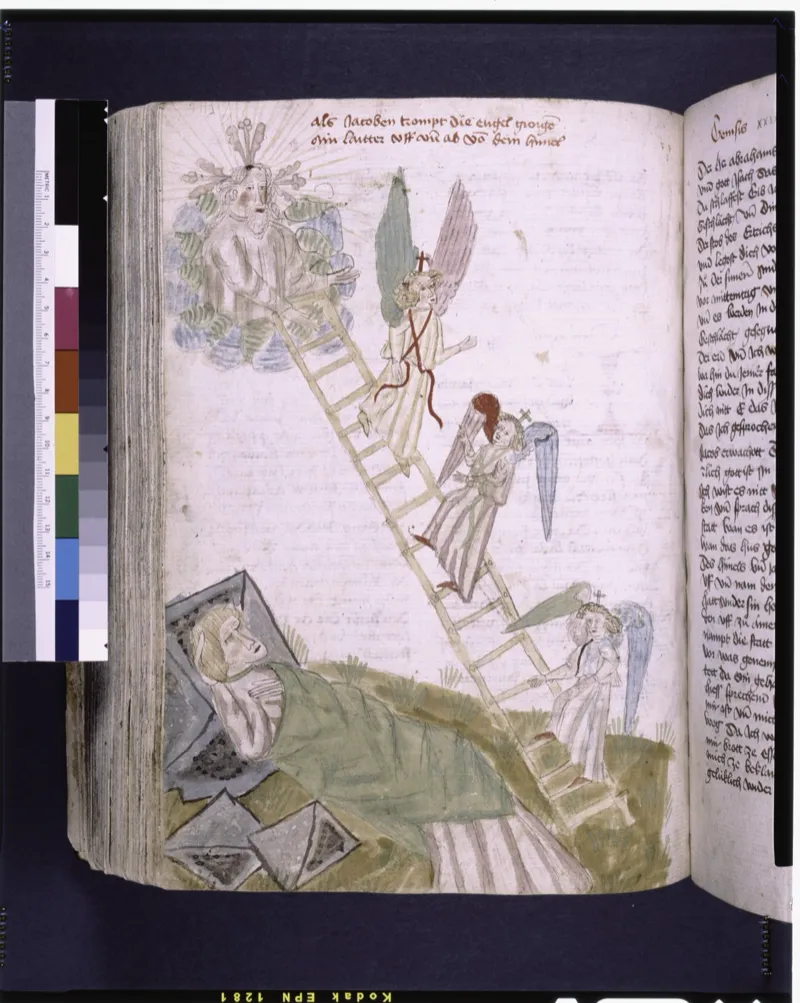
The Sixtieth Part of Prophecy
“A dream is one-sixtieth of prophecy.” This Talmudic statement (Berakhot 57b) sits at the heart of Judaism’s complex relationship with the nocturnal mind. It is a carefully calibrated claim — not that dreams are prophecy (that would be too much), but that they contain a trace of it (enough to take seriously). One-sixtieth is also the halachic threshold for significance in other contexts: one-sixtieth of a forbidden substance renders a food forbidden; one-sixtieth of an ingredient gives it flavor. A dream carries just enough prophecy to matter.
Judaism has never dismissed dreams. From Abraham’s covenant vision to Jacob’s ladder to Joseph’s grain sheaves to Daniel’s apocalyptic beasts, the Hebrew Bible is saturated with dreams that carry divine messages. The Talmud devotes an entire, sprawling section of Tractate Berakhot to dream theory and interpretation. The Zohar treats dreams as communications from higher spiritual realms. And Jewish law includes a specific ceremony — Hatavat Chalom — for dealing with bad dreams.
This is a tradition that takes the sleeping mind very seriously indeed.
Joseph: The Master Dreamer
The story of Joseph is the Bible’s most sustained engagement with dreams. Joseph’s story begins and ends with them — and dreams are the engine that drives the entire narrative.
As a seventeen-year-old, Joseph has two dreams. In the first, he and his brothers are binding sheaves in the field; his sheaf stands upright while theirs bow down. In the second, the sun, moon, and eleven stars bow to him. His brothers’ reaction is immediate and violent: “Would you indeed reign over us?” (Genesis 37:8). The dreams, combined with his father’s favoritism, lead his brothers to sell him into slavery.
In Egypt, imprisoned on false charges, Joseph encounters Pharaoh’s cupbearer and baker — each tormented by a dream they cannot understand. Joseph insists: “Interpretations belong to God” (Genesis 40:8) — and then proceeds to interpret both dreams with devastating accuracy. The cupbearer will be restored; the baker will be executed. Both predictions come true within three days.
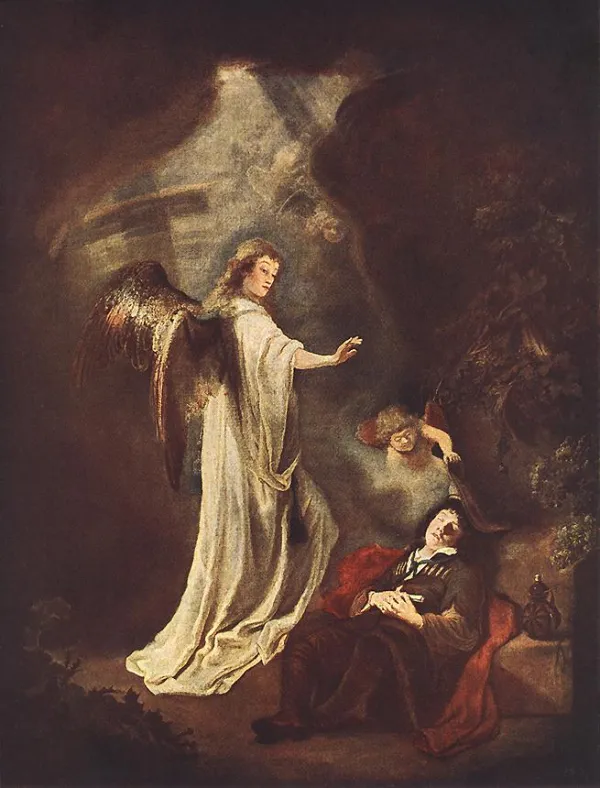
Two years later, Pharaoh himself dreams: seven fat cows devoured by seven thin cows; seven plump ears of grain swallowed by seven scorched ears. No one in Egypt can interpret them. The cupbearer remembers Joseph. Brought from prison, Joseph tells Pharaoh: seven years of plenty will be followed by seven years of famine. Pharaoh appoints Joseph viceroy of Egypt to manage the crisis.
Joseph’s dreams — both his own and those he interpreted — were not mere predictions. They were instruments of providence, driving the narrative toward the eventual descent of Jacob’s family to Egypt, the enslavement, the Exodus, and the giving of the Torah at Sinai. The entire Jewish story turns on a teenager’s dreams about sheaves of grain.
The Talmud’s Dream Manual
The Talmud’s discussion of dreams (Berakhot 55a–57b) is one of the most fascinating passages in all of rabbinic literature. It reads like a cross between a psychology textbook, a symbol dictionary, and a philosophical treatise.
Key Principles
“A dream that is not interpreted is like a letter that is not read” (Berakhot 55b). This principle suggests that dreams carry messages — but those messages have no effect until they are opened and read. An uninterpreted dream is harmless because its content remains dormant. This creates an interesting paradox: you might be better off not interpreting a bad dream.
“All dreams follow the mouth” — meaning dreams follow their interpretation (Berakhot 55b). The interpreter’s words have the power to determine what the dream means and therefore what it does. A skilled interpreter can turn a seemingly bad dream into a positive one. The Talmud illustrates this with the story of Bar Hedya, a dream interpreter who gave favorable interpretations to those who paid him and negative interpretations to those who didn’t — and both came true, because dreams follow the mouth.
“A person is shown in dreams only the thoughts of their own heart” (Berakhot 55b). This remarkably modern insight anticipates Freud by nearly two millennia. Dreams reflect the dreamer’s preoccupations, desires, and anxieties — they are not entirely external messages but arise from the dreamer’s own psyche.
“There is no dream without nonsensical content” (Berakhot 55a). Not every element of a dream is meaningful. Even prophetic dreams contain random, meaningless material. The challenge is distinguishing signal from noise.
The Symbol Dictionary
The Talmud provides extensive dream interpretation guidelines. Some examples:
- Seeing a river in a dream: peace (shalom, because “Behold, I extend peace to her like a river”)
- Seeing a goat: a good year ahead (ez sounds like et — time — and prosperity)
- Seeing wheat: peace (based on Psalm 147:14, “He makes peace in your borders; He fills you with the finest wheat”)
- Seeing grapes: if white, a good sign; if black (red), unfavorable
- Hearing a biblical verse in a dream: the verse itself is prophetic and should be taken literally
Fasting After Bad Dreams
Jewish law prescribes a remarkable response to disturbing dreams: fasting. The Talmud permits fasting even on Shabbat after a bad dream — an extraordinary exception, since fasting on Shabbat is otherwise prohibited. The logic: just as fire can be fought with fire, the spiritual disruption of a bad dream can be countered by the spiritual merit of fasting.
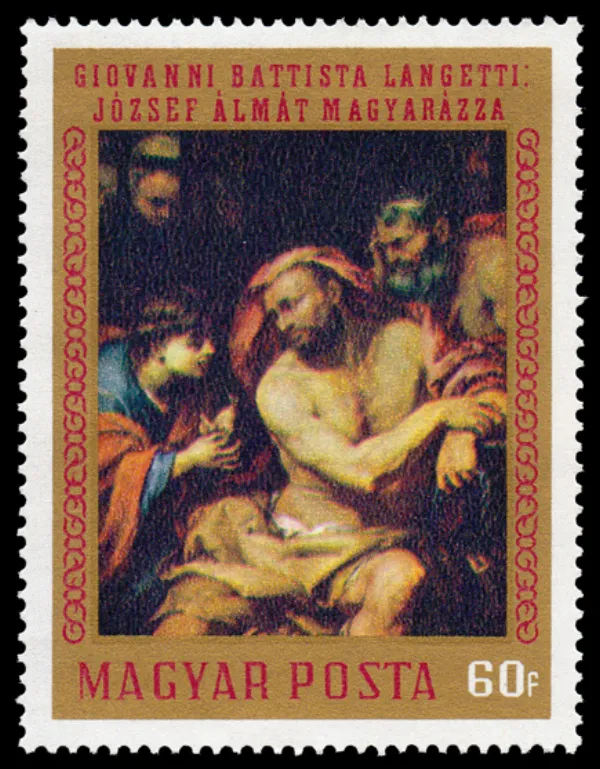
However, a person who fasts on Shabbat because of a bad dream must subsequently fast again on a weekday — as atonement for having diminished the joy of Shabbat. The dream justified breaking Shabbat joy, but the breaking still requires repair. This is characteristic Talmudic reasoning: two competing values are both honored, even when one must temporarily override the other.
Hatavat Chalom: Rewriting the Dream
The Hatavat Chalom (“amelioration of a dream”) ceremony is one of Judaism’s most psychologically sophisticated rituals. When a person has a disturbing dream, they gather three friends and perform the following exchange:
Dreamer: “I have seen a dream and I do not know what it means.” Friends: “It is a good dream.” Dreamer: “I have seen a good dream.” Friends (three times): “It is good, and may it be good. May the Merciful One transform it to good. May it be decreed from heaven seven times that it should be good, and may it be good.”
The ceremony then includes recitations of biblical verses about dreams being transformed from bad to good, and concludes with verses of blessing.
What is happening here? The friends are reinterpreting the dream — exercising the principle that “dreams follow the mouth.” By declaring the dream good, they make it good. It is a ritual of communal reassurance that harnesses the Talmud’s own dream theory: interpretation determines outcome.
Modern psychologists might call this reframing or cognitive restructuring. The Talmud would simply say: the mouth has power, and a dream, like a letter, says what you read into it.
Dreams in Kabbalah
The Kabbalistic tradition takes dreams to another level entirely. The Zohar teaches that during sleep, the neshamah (the highest level of soul) ascends to the heavenly realms and receives information — some true, some mixed with falsehood by lower spiritual beings. The quality of information depends on the dreamer’s spiritual level: righteous people receive clearer messages; ordinary people receive dreams mixed with distortion.
Rabbi Moses Cordovero (16th century) taught that dreams can serve as a form of minor prophecy — not the full, face-to-face prophecy of Moses but a whispered communication from higher realms, filtered through the dreamer’s imagination and experience.
The Hasidic tradition elevated dreams further. The Baal Shem Tov reportedly received spiritual guidance through dreams, and Hasidic stories are full of dreams that carry messages from deceased tzaddikim (righteous people), warn of danger, or reveal hidden truths.
Between Prophecy and Psychology
Judaism’s approach to dreams is remarkable for holding two seemingly contradictory ideas simultaneously: dreams may carry divine messages and they arise from the dreamer’s own thoughts. They are one-sixtieth prophecy and they contain meaningless nonsense. They have real power and that power depends on interpretation.
This is not confusion. It is wisdom. Dreams occupy a liminal space — between waking and sleeping, between the conscious and unconscious, between the human and the divine. Judaism’s refusal to reduce dreams to either pure revelation or pure neurology reflects a sophisticated understanding of the human mind and its relationship to the transcendent.
The unread letter still sits on the table. The dream, uninterpreted, still hovers in the morning air. Judaism says: open it carefully. What you find may be prophecy, may be anxiety, may be meaningless. But the act of paying attention — of taking the sleeping mind seriously — is itself a form of spiritual practice.
After all, the entire Jewish story began with a dreamer named Joseph, standing in a field of grain, watching sheaves bow.
Frequently Asked Questions
What does the Talmud say about dreams?
The Talmud devotes extensive discussion to dreams in Tractate Berakhot (55a-57b). Key teachings include: 'A dream is one-sixtieth of prophecy'; 'An uninterpreted dream is like an unread letter'; dreams follow their interpretation (meaning the interpretation itself has power); a person is shown in dreams only what arises from their own thoughts; and there is no dream without meaningless content. The Talmud provides detailed symbol interpretations — rivers, animals, fruits, and biblical verses seen in dreams each carry specific meanings.
What is the Hatavat Chalom ceremony?
Hatavat Chalom ('amelioration of a dream') is a ritual performed after a disturbing dream. The dreamer gathers three friends and declares: 'I have seen a good dream.' The friends respond three times: 'It is good, and may it be good. May the Merciful One make it good. May it be decreed upon you from heaven seven times that it be good, and may it be good.' The ceremony effectively reinterprets the dream as positive, drawing on the Talmudic principle that dreams follow their interpretation. Some authorities recommend fasting after a bad dream, even on Shabbat.
Why was Joseph called 'the dreamer' and what role did dreams play in his story?
Joseph (Yosef) is the Bible's most famous dreamer. As a teenager, he had two dreams predicting that his family would bow to him — sheaves of grain bowing and stars/sun/moon bowing — which enraged his brothers and led to his being sold into slavery. Later, in Egyptian prison, Joseph interpreted the dreams of Pharaoh's butler and baker, and then famously interpreted Pharaoh's dreams of seven fat and seven thin cows as predicting seven years of plenty followed by seven years of famine. Joseph's ability to interpret dreams elevated him from prisoner to viceroy of Egypt.
Sources & Further Reading
Related Articles
The Joseph Saga: From Pit to Palace
Joseph's story is the Torah's great novella — sold by his brothers, imprisoned in Egypt, risen to power through dream interpretation, and ultimately forgiving the family that betrayed him.
Kabbalah: An Introduction to Jewish Mysticism
Beyond the law and the stories lies a hidden dimension of Judaism — Kabbalah, the mystical tradition that seeks to understand the nature of God, creation, and the human soul.
The Talmud: A Beginner's Guide to Jewish Oral Law
The Talmud is the vast ocean of Jewish thought — centuries of rabbinic debate on law, ethics, storytelling, and the meaning of life, all compiled into one extraordinary work.