Jewish Mourning: The Complete Guide from Death to Yahrzeit
Judaism provides the world's most structured system for grief — from the moment of death through aninut, funeral, shiva, shloshim, the year of mourning, and yahrzeit. This complete guide covers every stage.
The Architecture of Grief
Judaism does not leave the bereaved alone with their grief. Over centuries, the tradition has developed the most structured, psychologically sophisticated system of mourning in the world — a system that acknowledges the enormity of loss, provides a framework for processing it, and gradually guides the mourner back to the community of the living.
This guide covers every stage of Jewish mourning. For detailed treatments of individual topics, follow the links throughout.
Stage 1: Aninut — Between Death and Burial
The period between death and burial is called aninut. The bereaved person during this period is an onen (plural: onenim). This is the most intense period of grief — the shock, the disbelief, the rawness. Jewish law acknowledges this by exempting the onen from all positive commandments. You do not pray. You do not say blessings. You do not study Torah. Your only obligation is to arrange the burial.
The body is treated with extraordinary respect. The chevra kadisha (holy burial society) washes and prepares the body according to precise ritual (tahara). The deceased is dressed in simple white shrouds (tachrichim) — the same for rich and poor, emphasizing equality in death. A shomer (guardian) stays with the body at all times, often reciting Psalms.
Jewish law requires burial as soon as possible, ideally within twenty-four hours. Cremation is traditionally prohibited. The body is placed in a simple wooden casket, without nails, to allow natural decomposition. For more details, see our guide to Jewish funerals.
Stage 2: The Funeral
The Jewish funeral is simple and dignified. Key elements include:
- Keriah — tearing a garment (or a ribbon) as an expression of grief
- Hesped — eulogies honoring the deceased
- Burial — lowering the casket and covering it with earth; traditionally, those present take turns shoveling dirt
- Kaddish — the mourner’s Kaddish is recited for the first time
The act of shoveling dirt onto the casket is considered one of the greatest acts of chesed shel emet (true kindness) — a kindness that cannot be repaid. For guidance on attending, see how to attend a Jewish funeral.
Stage 3: Shiva — Seven Days
After the funeral, the mourner enters shiva — seven days of intense mourning, typically observed at the home of the deceased or one of the mourners. The word shiva means “seven.”
During shiva, mourners traditionally:
- Sit on low chairs or cushions
- Cover mirrors in the house
- Do not wear leather shoes
- Do not bathe for pleasure
- Do not work
- Receive visitors who come to comfort them
The community’s role during shiva is crucial. Visitors bring food, sit with the mourners, and follow the mourner’s lead — speaking when spoken to, remaining silent when silence is needed. For practical guidance, see how to sit shiva and how to say condolences.
Stage 4: Shloshim — Thirty Days
After shiva ends, the mourner enters shloshim — the thirty-day period from burial. During shloshim, the mourner gradually returns to normal life but continues to observe certain restrictions:
- No haircuts or shaving
- No attending celebrations or parties
- No listening to live music
- Continued recitation of Kaddish
For more details, see our article on shloshim.
Stage 5: The Year of Mourning
For a deceased parent, mourning continues for twelve months from the date of death. During this year:
- Kaddish is recited daily for eleven months (not twelve, based on the belief that even the wicked are not judged for longer than twelve months)
- The mourner avoids celebrations, concerts, and festive events
- Gradually, restrictions ease as the mourner reintegrates into normal life
Stage 6: Yahrzeit — The Annual Anniversary
Every year on the anniversary of the death (according to the Hebrew calendar), the mourner observes yahrzeit:
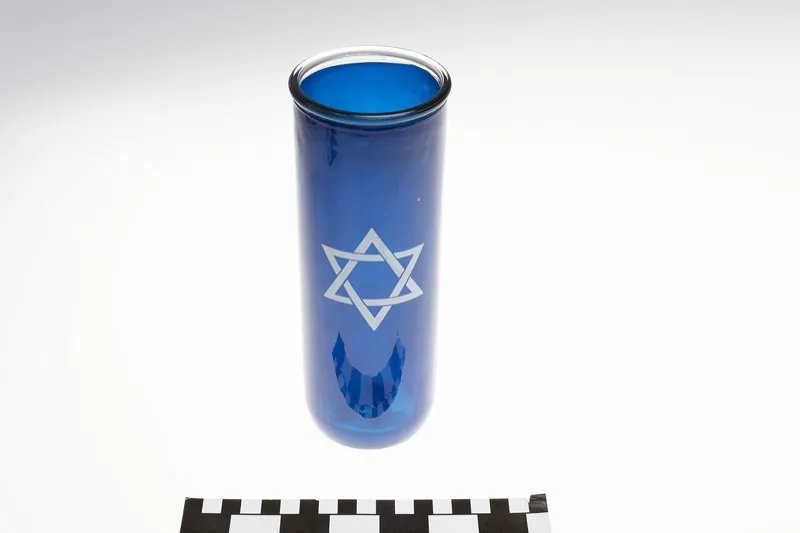
- A 24-hour memorial candle is lit
- Kaddish is recited in synagogue
- Some visit the cemetery
- Charity is given in the deceased’s memory
At the end of the first year, the tombstone is usually unveiled in a ceremony attended by family and friends.
The Wisdom of the System
What makes Jewish mourning remarkable is its psychological wisdom. Each stage is calibrated to the natural arc of grief:
- Aninut acknowledges shock and numbness
- Shiva provides a container for the most intense grief
- Shloshim begins the transition back to life
- The Year allows ongoing processing
- Yahrzeit ensures the deceased is never forgotten
The system understands that grief does not end — it changes. And it provides a structure that holds the mourner through every stage of that change, from the first terrible moment to the yearly remembrance that keeps love alive across the years.
Frequently Asked Questions
What are the stages of Jewish mourning?
Jewish mourning has five stages: (1) Aninut — from death to burial, (2) Shiva — seven days of intense mourning at home, (3) Shloshim — thirty days of diminished mourning, (4) The Year — twelve months for parents, and (5) Yahrzeit — the annual anniversary of death observed every year thereafter.
Who sits shiva in Judaism?
Seven categories of relatives sit shiva: father, mother, son, daughter, brother, sister, and spouse. These are the same relatives for whom one is obligated to mourn according to Jewish law. Others may participate in comforting the mourners but do not sit shiva themselves.
What is Kaddish and who says it?
Kaddish is a prayer praising God that mourners recite during the mourning period and on yahrzeit. Despite being associated with death, Kaddish never mentions death — it is an affirmation of faith. Traditionally, sons recite Kaddish for deceased parents for eleven months. Today, many communities encourage daughters to recite it as well.
Sources & Further Reading
- Maurice Lamm — The Jewish Way in Death and Mourning ↗
- Shulchan Aruch, Yoreh De'ah 335-403
- My Jewish Learning — Death and Mourning ↗
Related Articles
Jewish Funeral and Burial Customs: Honoring the Dead
Jewish funeral customs — from tahara and tachrichim to burial, kaddish, and shmirah — reflect a profound theology of dignity, equality, and community care.
Kaddish: The Mourner's Prayer That Never Mentions Death
The Kaddish — Judaism's most famous prayer — is not about death at all. Written in Aramaic, it is a bold declaration of God's greatness, spoken precisely when faith feels most difficult.
Sitting Shiva: The Jewish Practice of Mourning
Shiva — the seven-day Jewish mourning period — transforms a home into a sanctuary of grief, where community gathers to comfort the bereaved with presence, prayer, and food.