Judaism and LGBTQ+ Inclusion
How Jewish denominations approach LGBTQ+ inclusion — from Orthodox traditionalism to Reform celebration, including the history of gay rabbis, same-sex weddings, and organizations like Keshet working for change.
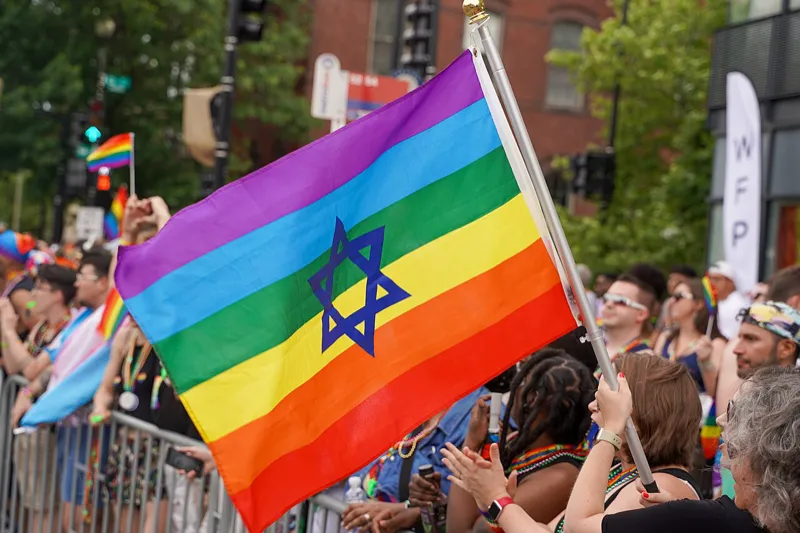
A Tradition in Conversation
Few topics have generated as much internal debate within Jewish communities over the past fifty years as the question of LGBTQ+ inclusion. The conversation touches the deepest questions of the tradition: How do we read sacred texts? Who has the authority to interpret them? And what happens when ancient law meets the lived experience of real people?
The answers vary enormously depending on whom you ask — and that diversity of opinion is itself profoundly Jewish. Judaism has always been a tradition of argument, and the debate over LGBTQ+ inclusion is one of the most consequential arguments of our time.
The Traditional Texts
The starting point for any Jewish discussion of homosexuality is Leviticus 18:22: “You shall not lie with a male as one lies with a woman; it is an abomination (to’evah).” Leviticus 20:13 prescribes capital punishment for the act. These verses have shaped Jewish attitudes for millennia.
But texts don’t interpret themselves. The rabbinic tradition has always understood that the Torah requires interpretation, and interpreters across the centuries have reached very different conclusions about what these verses mean, whom they address, and how they apply.
Traditional commentators generally understood the prohibition as applying to male-male sexual intercourse specifically. Lesbianism is not mentioned in the Torah at all — the Talmud addresses it briefly (Yevamot 76a) and treats it far less severely. Transgender identity is largely unaddressed in classical sources, though the Talmud recognizes several gender categories beyond male and female, including the androgynos (having both male and female characteristics) and the tumtum (whose sex is indeterminate).
Orthodox Positions
Most Orthodox authorities maintain that the Leviticus prohibition is binding and that same-sex sexual relations are forbidden. However, there is significant variation in how this position is expressed:
Traditional Orthodox rabbis generally uphold the prohibition without qualification, viewing it as a clear divine command. Some Orthodox communities have struggled with how to treat LGBTQ+ members — balancing the belief that the act is sinful with the Jewish obligation to treat every person with dignity (b’tselem Elohim — in the image of God).
In 2010, a landmark “Statement of Principles” signed by over 200 Modern Orthodox rabbis acknowledged that LGBTQ+ Jews “should be welcomed as full members of the synagogue” and that “embarrassing, harassing, or demeaning someone with a homosexual orientation” violates Jewish law. The statement stopped short of accepting same-sex relationships but represented a significant shift in tone.
Rabbi Steven Greenberg, an Orthodox rabbi who came out as gay in 1999, has argued that the Leviticus prohibition can be reinterpreted to apply specifically to exploitative or degrading sexual acts rather than to loving, committed same-sex relationships. His 2004 book Wrestling with God and Men offers a detailed Orthodox argument for inclusion — though most Orthodox authorities reject his reading.
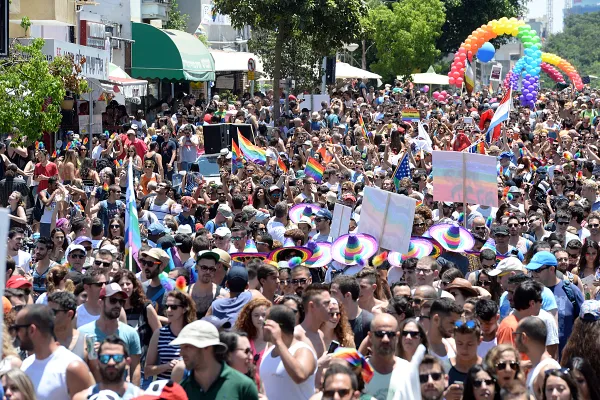
Conservative Judaism’s Evolution
The Conservative movement’s journey on LGBTQ+ inclusion has been gradual and deliberate, reflecting its commitment to both halakha and evolving ethical understanding.
For decades, the movement’s Committee on Jewish Law and Standards (CJLS) upheld the traditional prohibition. But in December 2006, the CJLS made a historic decision: it simultaneously approved multiple teshuvot (legal opinions) on homosexuality, reflecting genuine disagreement within the movement.
The most consequential opinion, written by Rabbis Elliot Dorff, Daniel Nevins, and Avram Reisner, argued that while the specific act described in Leviticus remains prohibited, the broader prohibition against same-sex relationships was a rabbinic extension that could be overturned. The opinion permitted the ordination of openly gay and lesbian rabbis and allowed rabbis to perform same-sex commitment ceremonies.
The Jewish Theological Seminary began admitting openly LGBTQ+ students to its rabbinical program in 2007. In 2012, the Rabbinical Assembly officially endorsed same-sex marriage. Today, many Conservative synagogues are fully welcoming to LGBTQ+ families, though individual rabbis retain the right to follow their own conscience on performing same-sex weddings.
Reform and Reconstructionist Leadership
The Reform movement has been at the forefront of LGBTQ+ inclusion in Jewish life. In 1977, the Union of American Hebrew Congregations (now the Union for Reform Judaism) called for decriminalizing homosexuality — years before most American institutions took such positions.
Key milestones include:
- 1990: The Central Conference of American Rabbis (CCAR) accepted openly gay and lesbian rabbis.
- 1996: The CCAR supported civil marriage for same-sex couples.
- 2000: The CCAR officially permitted Reform rabbis to officiate at same-sex weddings.
- 2003: The URJ adopted a resolution supporting civil marriage equality.
- 2015: The Reform movement celebrated the U.S. Supreme Court’s Obergefell v. Hodges decision legalizing same-sex marriage nationwide.
Today, same-sex weddings in Reform synagogues often incorporate the same beloved traditions as heterosexual weddings — the chuppah, the breaking of the glass, the sheva brachot — adapted to reflect the couple’s relationship.
The Reconstructionist movement was even earlier: the Reconstructionist Rabbinical College began accepting openly LGBTQ+ students in 1984, and the movement has been consistently affirming ever since.
Keshet and Organizational Change
Keshet (Hebrew for “rainbow”) was founded in Boston in 1996 by Idit Klein, who saw the need for an organization specifically focused on LGBTQ+ equality within Jewish institutions. Keshet’s approach is practical: rather than focusing solely on theological arguments, the organization works directly with synagogues, schools, camps, and community organizations to create inclusive environments.
Keshet’s programs include training for Jewish educators, consulting for congregations developing welcoming policies, and advocacy for LGBTQ+ inclusion in Jewish communal institutions. Their annual LGBTQ+ and Ally Teen Shabbaton brings together young people from across the Jewish spectrum.
Other organizations have also played crucial roles: Eshel serves LGBTQ+ Orthodox Jews and their families, providing support in a community where coming out can mean losing one’s entire social world. JQ International (now JQY) focuses on LGBTQ+ Jews from Orthodox and Sephardic backgrounds.
Transgender Inclusion
Transgender inclusion has become an increasingly prominent conversation in Jewish communities. In 2003, the Reform movement’s CCAR issued a teshuvah affirming the Jewish identity of transgender individuals. The Conservative movement followed in 2017 with a resolution supporting the rights of transgender and non-binary individuals.
Jewish tradition offers unexpected resources for thinking about gender diversity. The Talmud recognizes at least six gender categories: zachar (male), nekevah (female), androgynos, tumtum, ay’lonit (assigned female at birth but developing male characteristics at puberty), and saris (assigned male at birth but developing female characteristics or who is castrated). While these categories don’t map directly onto modern understandings of gender identity, they demonstrate that the rabbis recognized gender as more complex than a simple binary.
The Ongoing Debate
The question of LGBTQ+ inclusion in Jewish life is not settled — and may never be fully settled across all denominations. Orthodox communities continue to wrestle with how to balance traditional law and compassion. Conservative congregations vary in their level of inclusion. Even within the affirming movements, questions arise about specific liturgical language, religious education, and family structures.
What is clear is that the conversation has shifted dramatically over the past fifty years. LGBTQ+ Jews today have more options for living openly within Jewish community than at any point in history. Organizations like Keshet, Eshel, and JQY continue to expand those options. And the fundamental Jewish commitment to ethical behavior — treating every person as created in the image of God — continues to push communities toward greater inclusion.
The debate itself, passionate and sometimes painful, is perhaps the most Jewish thing about it. As the Talmud teaches, arguments conducted for the sake of heaven — machloket l’shem shamayim — endure. This is one of those arguments.
Frequently Asked Questions
Does Judaism accept LGBTQ+ people?
It depends on the denomination. Reform and Reconstructionist Judaism fully affirm LGBTQ+ individuals, ordaining openly gay rabbis and performing same-sex marriages. Conservative Judaism has moved toward inclusion, permitting gay rabbis and same-sex unions since 2006. Orthodox Judaism generally maintains that same-sex relations are prohibited by Torah law, though a growing number of Modern Orthodox voices advocate for dignity and pastoral care for LGBTQ+ members.
Can a gay person be a rabbi?
Yes, in most non-Orthodox denominations. The Reform movement ordained its first openly gay rabbi, Stacy Offner, in 1988. The Reconstructionist Rabbinical College accepted openly LGBTQ+ students from 1984. The Conservative movement voted in 2006 to admit openly gay and lesbian students to its rabbinical seminary. In Orthodoxy, Rabbi Steven Greenberg came out as gay in 1999, though most Orthodox institutions do not ordain openly gay rabbis.
What is Keshet?
Keshet (Hebrew for 'rainbow') is a national organization working for full LGBTQ+ equality and inclusion in Jewish life. Founded in 1996, Keshet provides training, resources, and advocacy to Jewish communities, schools, and organizations, helping them become welcoming spaces for LGBTQ+ Jews and their families.
Key Terms
Sources & Further Reading
Related Articles
Orthodox, Conservative, and Reform: Understanding Jewish Denominations
Judaism is not monolithic — it encompasses diverse movements from Ultra-Orthodox to Reform, each with its own approach to tradition, law, and modern life.
Jewish Ethics: A Guide to Moral Living
From Hillel's golden rule to the Mussar movement, Jewish ethics offers a comprehensive framework for moral living — covering speech, the environment, labor rights, medical decisions, and the obligation to repair the world.
The Jewish Wedding: A Complete Guide to the Ceremony
Under the chuppah, surrounded by family and tradition, two lives become one — the Jewish wedding ceremony is a beautiful blend of ancient law, symbolism, and joy.