Attending a Jewish Wedding: A Complete Guide for Guests
Your complete guide to attending a Jewish wedding — from the chuppah ceremony and glass breaking to the hora dance and gift etiquette (hint: think multiples of 18).
The Short Answer
A Jewish wedding is joyful, emotional, often loud, and deeply welcoming to guests of every background. If you have been invited, you do not need to be Jewish, know Hebrew, or understand every ritual to have a wonderful time. You need to show up, dress nicely, wear a kippah if offered, and be ready to dance.
That said, knowing what to expect makes the experience richer. Jewish weddings follow a structure that is both ancient and surprisingly meaningful — and understanding the rituals will help you appreciate what you are witnessing.
Before the Ceremony
The Ketubah Signing
Before the ceremony itself, many Jewish weddings begin with a ketubah signing — a small gathering where the marriage contract is signed by the couple and witnesses. The ketubah is an ancient Aramaic document (often beautifully illustrated) that outlines the groom’s obligations to the bride. In modern egalitarian versions, both partners make commitments to each other.
You may or may not be invited to the ketubah signing — it is sometimes a private family moment, sometimes open to all guests.
The Bedeken (Veiling)
In traditional weddings, the groom places the veil over the bride’s face in a ceremony called bedeken. This recalls the biblical story of Jacob, who was tricked into marrying Leah instead of Rachel — the groom verifies that he is marrying the right person. It is usually an emotional moment, accompanied by blessings and sometimes tears.
The Ceremony
The Chuppah
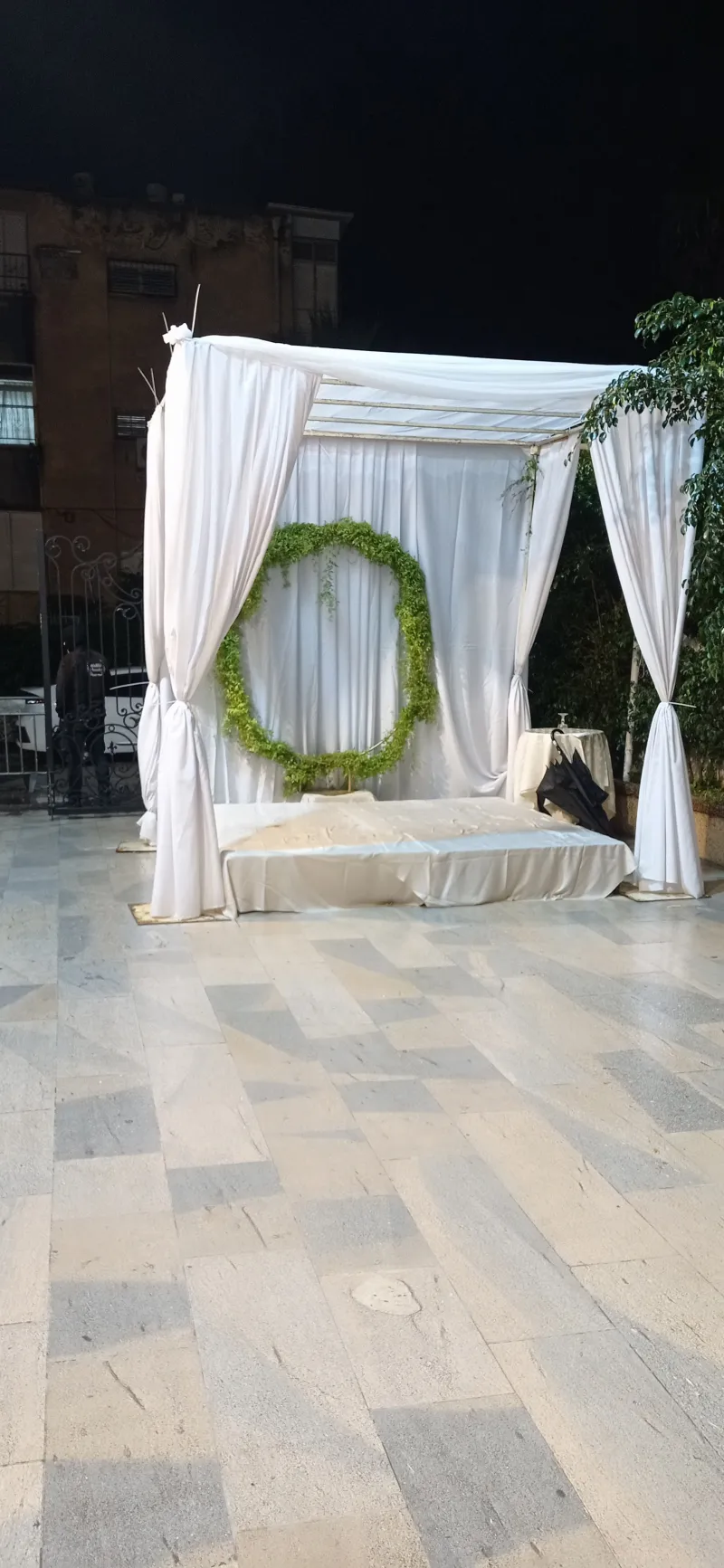
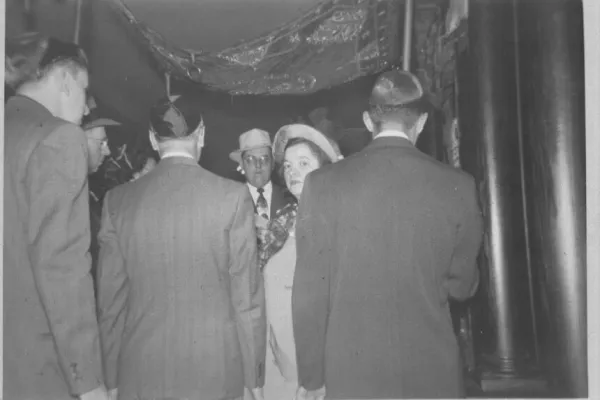
The Jewish wedding ceremony takes place under a chuppah — a canopy supported by four poles, symbolizing the home the couple will build together. The chuppah is open on all sides, representing hospitality — the couple’s home will always be open to others.
The chuppah can be simple (a tallit draped over four poles) or elaborate (a floral masterpiece). It can stand in a synagogue, a garden, a hotel ballroom, or a beach. The ceremony typically lasts 20–30 minutes.
The Processional
Both sets of parents typically walk their child down the aisle — not just the bride’s father. This reflects the Jewish value that marriage is a joining of families, not just individuals.
Seven Blessings (Sheva Brachot)
The rabbi (or sometimes multiple honored guests) recites seven blessings over wine. These blessings move from the universal (praising God who created the universe) to the specific (blessing this particular couple), ending with a prayer for joy, gladness, and love.
The Ring
The groom places a ring on the bride’s finger and recites: “Behold, you are consecrated to me with this ring, according to the law of Moses and Israel.” In egalitarian ceremonies, the bride also gives a ring and recites a similar declaration. The ring must be a simple band — no stones — in traditional ceremonies, symbolizing that the marriage is not based on material value.
Breaking the Glass
The ceremony ends with the groom (and sometimes the bride) stepping on a glass and shattering it. The room erupts in shouts of “Mazel Tov!” — and the party begins.
Why break a glass? The traditional explanation is that it commemorates the destruction of the Temple in Jerusalem — even at the moment of greatest personal joy, Jews remember communal sorrow. There are other interpretations too: that marriage is as irreversible as a shattered glass, that joy must always be tempered with awareness of life’s fragility. See our article on why Jews break a glass at weddings for the full story.
The Reception
The Hora
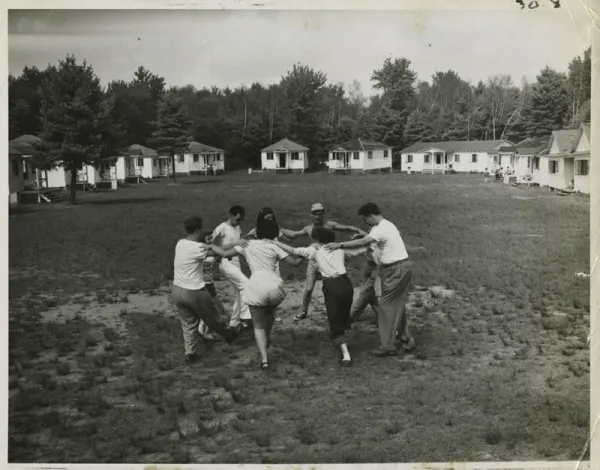
If you have never experienced a hora, prepare yourself. At some point during the reception, the band or DJ will strike up the hora — a traditional circle dance set to “Hava Nagila” or similar music. The couple is lifted on chairs above the crowd while guests dance in concentric circles around them. It is exuberant, chaotic, sweaty, and absolutely electric.
You are expected to join the circle. No dance skills are required — you grab the hand of the person next to you and move to the right. The steps are simple (step-cross-step-kick), but honestly, nobody is watching your feet. Just hold on and keep moving.
The Meal
Jewish weddings typically feature a full sit-down dinner. If the wedding is kosher, the menu will follow dietary laws — the food will be either meat or dairy, not both, and there will be no shellfish or pork. Kosher food is delicious; you will not miss anything.
At Orthodox weddings, there may be separate dancing — men on one side, women on the other, divided by a mechitza (partition). This is lively and fun on both sides.
Blessings After the Meal
The meal ends with Birkat Hamazon (Grace After Meals) and a repetition of the seven wedding blessings. Benchers (small booklets with the prayers) are usually provided. Feel free to follow along or simply listen.
What to Wear
Dress as you would for any semiformal to formal event. See our synagogue dress guide for specifics. Key points:
- Men: Suit or sport coat with dress pants. A kippah will be provided at the entrance — take one and wear it.
- Women: Cocktail dress, dressy separates, or a formal outfit. At Orthodox weddings, cover shoulders and knees.
- Avoid: White (that is the bride’s color), overly casual clothing, or anything too revealing.
Gift Etiquette
The Magic Number: 18
In Hebrew, the letters that spell chai (life) have a numerical value of 18. Because of this, Jewish gifts often come in multiples of 18: $36, $54, $72, $108, $180, $360. This tradition applies to wedding gifts, bar/bat mitzvah gifts, and other celebrations.
You are not obligated to give in multiples of 18 — any generous gift is appreciated. But if you want to show cultural awareness, it is a lovely touch.
Cash and checks are completely appropriate and often preferred. Many couples also have registries.
When to give: You can bring the gift to the wedding, send it to the couple’s home before or after the event, or contribute to their registry. There is no hard deadline, but within a few weeks of the wedding is customary.
What to Say
- “Mazel Tov!” — Congratulations! (Literally: “good luck/fortune.”) This is the phrase of the day. Say it to the couple, their parents, and anyone who looks happy.
- “What a beautiful wedding” — Always welcome.
- Avoid commenting on how “different” or “interesting” the rituals are. They are meaningful to the family — enjoy them with respect.
Relax and Enjoy
Jewish weddings are celebrations of life, love, and community. The couple invited you because they want you there. You do not need to understand every Hebrew word or know every custom. Be present, be joyful, eat the food, join the dancing, and shout “Mazel Tov!” when the glass breaks.
You will leave with sore feet from dancing, a full stomach, and a lasting memory. That is exactly the point.
Frequently Asked Questions
Do I need to be Jewish to attend a Jewish wedding?
Absolutely not. Jewish weddings warmly welcome guests of all backgrounds. You don't need to know Hebrew, be familiar with the rituals, or do anything special — just show up, participate when comfortable, and enjoy the celebration.
Why do they break a glass at a Jewish wedding?
The groom (and sometimes the bride) steps on a glass at the end of the ceremony, shattering it. This is traditionally done to remember the destruction of the Temple in Jerusalem — a reminder that even in moments of greatest joy, Jews remember historical sorrow. Everyone then shouts 'Mazel Tov!'
How much should I give as a wedding gift?
Jewish tradition associates the number 18 with 'chai' (life), so gifts in multiples of 18 ($36, $54, $72, $108, $180) are customary. The amount depends on your relationship to the couple and your financial means. Cash or checks are perfectly appropriate and often preferred.
Sources & Further Reading
Related Articles
The Jewish Wedding: A Complete Guide to the Ceremony
Under the chuppah, surrounded by family and tradition, two lives become one — the Jewish wedding ceremony is a beautiful blend of ancient law, symbolism, and joy.
The Synagogue: House of Prayer, Study, and Assembly
More than just a place of worship — the synagogue is the heart of Jewish community life, combining prayer, learning, and social gathering under one roof.
What to Wear to a Synagogue: A Practical Guest Guide
Visiting a synagogue? Dress modestly, expect a kippah, and relax — most congregations are welcoming and forgiving of newcomers who make an effort.