The Six-Day War: Six Days That Changed Everything
In June 1967, Israel fought a war that lasted six days and reshaped the Middle East forever — capturing the Sinai, Golan Heights, and West Bank, reunifying Jerusalem, and creating a reality that defines the Israeli-Palestinian conflict to this day.
The Waiting
In the spring of 1967, the Middle East hurtled toward war with the terrible momentum of a crisis that everyone could see but no one could stop. For Israelis, the three weeks between mid-May and June 5 — a period known as the hamtana, the waiting — were among the most terrifying in the young nation’s history.
Egyptian President Gamal Abdel Nasser had been escalating tensions for months. In May, he demanded the withdrawal of United Nations peacekeeping forces from the Sinai Peninsula — and, astonishingly, the UN complied. He then moved 100,000 Egyptian troops and nearly 1,000 tanks to the Israeli border. On May 22, he closed the Straits of Tiran to Israeli shipping — an act that Israel had long declared would be a casus belli.
Nasser’s rhetoric was unambiguous. “Our basic objective will be the destruction of Israel,” he declared. Radio Cairo broadcast threats of annihilation daily. Syria and Jordan signed mutual defense pacts with Egypt. Iraqi troops moved into Jordan. To Israelis — a nation of two and a half million, many of them Holocaust survivors — the nightmare seemed to be repeating itself, just twenty-two years after the liberation of Auschwitz.
Parks were prepared as mass graves. Gas masks were distributed. Rabbis consecrated public spaces as cemeteries. The world watched and did nothing.
June 5: The Preemptive Strike
On the morning of June 5, 1967, Israel launched Operation Moked — a devastating preemptive air strike that destroyed the Egyptian Air Force on the ground within hours. Nearly 300 Egyptian aircraft were destroyed in the first wave, most before they could take off. The Syrian and Jordanian air forces were hit the same day.
With air supremacy secured, Israeli ground forces swept into the Sinai Peninsula, engaging Egyptian forces in fierce tank battles and rapid desert advances. Within three days, Israeli forces had reached the Suez Canal, and the Egyptian army was in retreat.
On the Jordanian front, Israel had initially sent a message to King Hussein urging him to stay out of the war. Hussein, bound by his defense pact with Egypt and misled by false reports of Egyptian victories, opened fire on West Jerusalem. Israel responded with force, and within two days, Israeli forces had captured the entire West Bank and East Jerusalem.
On the Syrian front, Israel assaulted the heavily fortified Golan Heights on June 9. The plateau — from which Syrian forces had shelled Israeli communities in the Galilee below for years — fell after fierce fighting.
By June 10, when a ceasefire took effect, the war was over. Israel had tripled the territory under its control.
The Wall
Of all the moments of the Six-Day War, none resonated more deeply with Jews worldwide than the capture of the Old City of Jerusalem on June 7.
Israeli paratroopers fought through the narrow streets of the Old City and reached the Western Wall — the last remnant of the ancient Temple complex and the holiest accessible site in Judaism. For nineteen years, since Jordan captured East Jerusalem in 1948, Jews had been barred from the Wall. Jordanian forces had destroyed synagogues in the Jewish Quarter and used Jewish tombstones from the Mount of Olives as paving stones and latrine construction material.
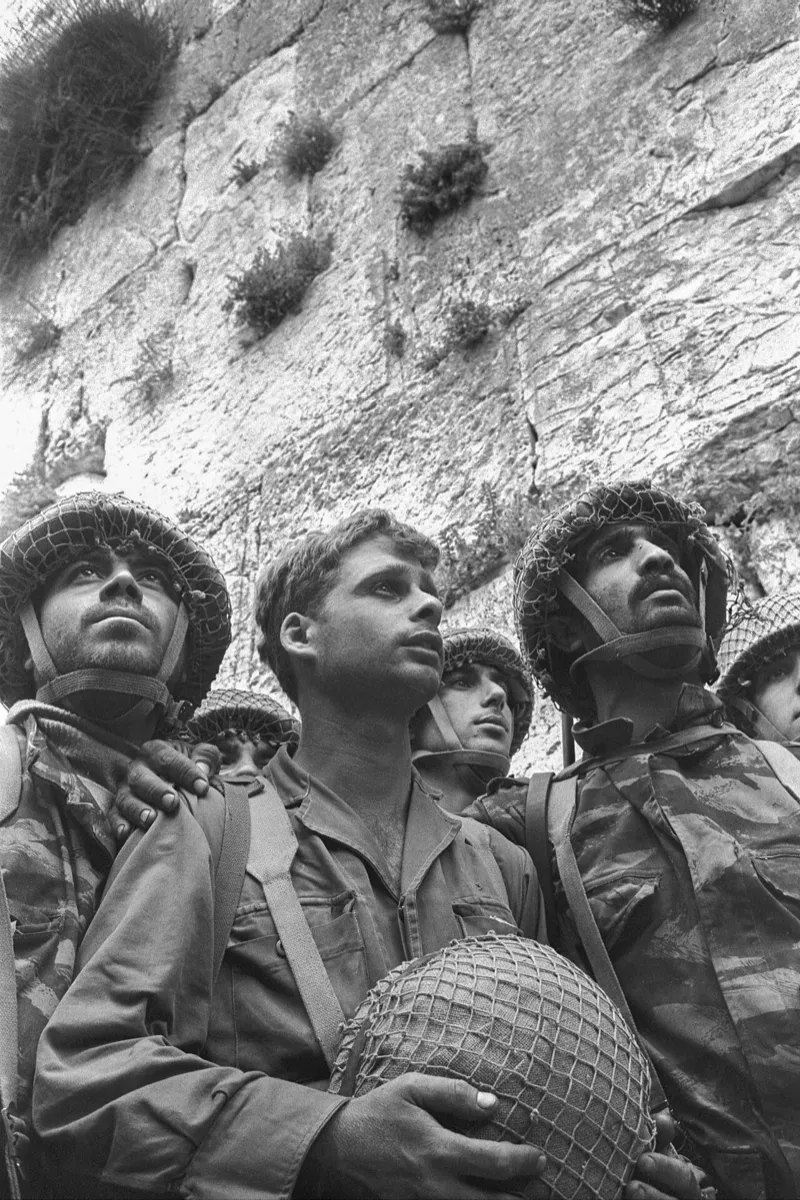
When the paratroopers reached the Wall, battle-hardened soldiers wept openly. The brigade’s chaplain, Rabbi Shlomo Goren, blew a shofar. The moment was broadcast on army radio, and across Israel, people stopped in the streets and cried.
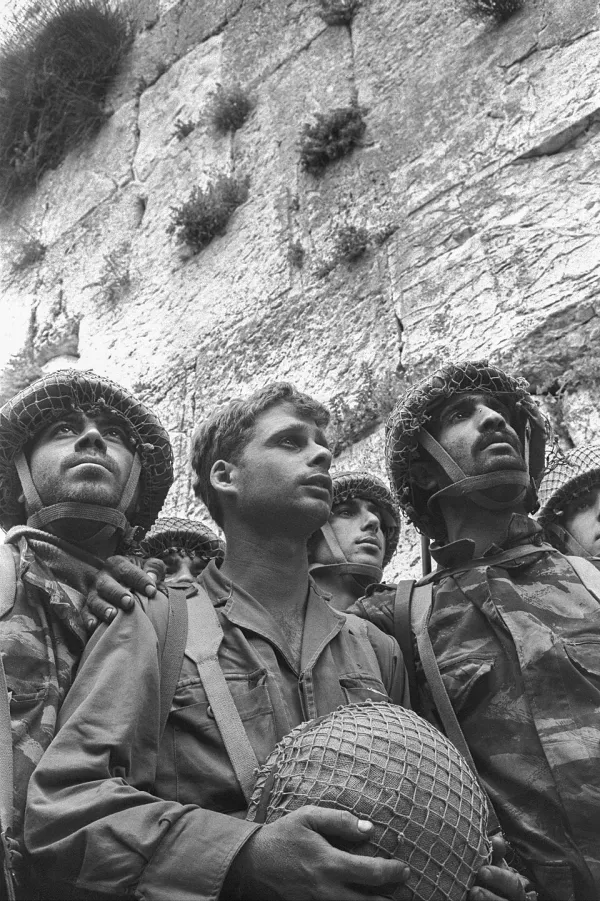
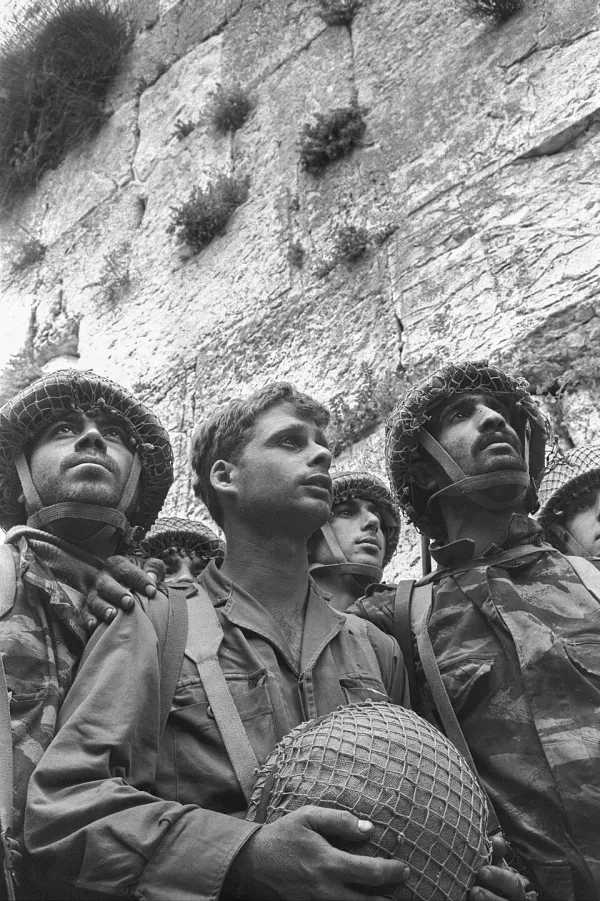
The photograph of the three paratroopers — Zion Karasenti, Yitzhak Yifat, and Haim Oshri — gazing upward at the Wall with expressions of awe became one of the most iconic images in Israeli history. For Jews worldwide, it symbolized something that had seemed impossible: the return to the heart of Jewish spiritual geography.
Consequences That Endure
The Six-Day War transformed the Middle East in ways that its participants could not have imagined — and that the world is still living with today.
Territory: Israel captured the Sinai Peninsula and Gaza Strip from Egypt, the West Bank and East Jerusalem from Jordan, and the Golan Heights from Syria. The Sinai was returned to Egypt in the 1979 peace treaty. The other territories remain contested.
Occupation: Israel’s control of the West Bank and Gaza — and the Palestinian population living there — created the political and moral dilemma that has defined Israeli society ever since. The settlement movement, which began almost immediately after the war, has placed over 700,000 Israeli Jews in the West Bank and East Jerusalem, creating facts on the ground that complicate any peace agreement.
Palestinian nationalism: The war galvanized Palestinian national consciousness. The Palestine Liberation Organization, founded in 1964, became the primary vehicle for Palestinian political aspirations. The occupation gave rise to resistance movements that would range from diplomatic activism to terrorism.
Jerusalem: Israel’s reunification of Jerusalem — and its subsequent annexation of East Jerusalem — remains one of the most contentious issues in the conflict. Israel considers united Jerusalem its eternal capital. Palestinians claim East Jerusalem as the capital of a future Palestinian state. The international community largely does not recognize Israeli sovereignty over East Jerusalem.
Jewish identity: The war had a profound impact on Jews worldwide. The days before the war — when Israel’s destruction seemed possible — awakened a sense of vulnerability that echoed the Holocaust. The swift victory produced euphoria and a surge of identification with Israel. For many diaspora Jews, the Six-Day War was the moment when support for Israel became central to their Jewish identity.
Religious Zionism: The capture of the West Bank — the biblical heartland of Judea and Samaria — electrified religious Zionists who saw in the victory the hand of God. The settlement movement that followed drew heavily on messianic theology, viewing the return to these ancient sites as the beginning of redemption.
The View From Here
The Six-Day War lasted 132 hours. Its consequences have lasted more than half a century and show no sign of resolution.
For Israelis, the war delivered security, strategic depth, and the return to Judaism’s holiest sites. It also burdened them with control over millions of Palestinians who do not want to be ruled by Israel — a situation that challenges Israel’s democratic values and its international standing.
For Palestinians, the war brought occupation, dispossession, and the expansion of settlements on land they consider their own. It also crystallized a national identity that has grown stronger with each passing decade.
For the broader Jewish world, the Six-Day War produced an image of Jewish strength that was intoxicating after millennia of powerlessness — but also raised uncomfortable questions about the exercise of power over others.
The paratroopers at the Wall. The refugees on the roads. The settlements on the hilltops. The checkpoints. The prayers. The conflict. All of it flows from those six days in June — six days that changed everything, and resolved nothing.
Frequently Asked Questions
What caused the Six-Day War?
The immediate triggers were Egyptian President Nasser's closure of the Straits of Tiran to Israeli shipping (an act of war under international law), his expulsion of UN peacekeepers from the Sinai, and the massing of Egyptian troops along the Israeli border — all accompanied by bellicose rhetoric threatening Israel's destruction. Israel launched a preemptive strike on June 5, 1967.
What did the paratroopers at the Western Wall mean to Jews?
When Israeli paratroopers reached the Western Wall on June 7, 1967, it was the first time Jews had access to their holiest accessible site in 19 years — Jordan had barred all Jewish access since 1948. The image of battle-hardened soldiers weeping at the ancient stones became iconic, symbolizing the reunification of the Jewish people with their most sacred place.
What is UN Resolution 242?
Adopted on November 22, 1967, UN Security Council Resolution 242 called for Israeli withdrawal from territories occupied in the war and the right of all states in the region to live in peace within secure borders. The deliberately ambiguous wording — 'withdrawal from territories' rather than 'from all territories' — has been debated ever since and remains the basis for peace negotiations.
Sources & Further Reading
Related Articles
Jerusalem: 3,000 Years of Faith, Conflict, and Hope
For three millennia, Jerusalem has been the spiritual heart of the Jewish people — and a city sacred to three faiths. Its story is one of devotion, destruction, and enduring hope.
The Birth of Modern Israel
From the rise of Zionism to the declaration of independence in 1948 — the story of how the Jewish homeland was reestablished.
The Western Wall (Kotel): Judaism's Holiest Place of Prayer
The Western Wall — the last remnant of the ancient Temple Mount — is where Jews have prayed, wept, and celebrated for centuries. It is a place of profound spiritual power.