Philip Roth: The Great American Jewish Novelist
Philip Roth spent fifty years excavating the tensions of Jewish-American identity in novels that were brilliant, scandalous, and impossible to ignore.
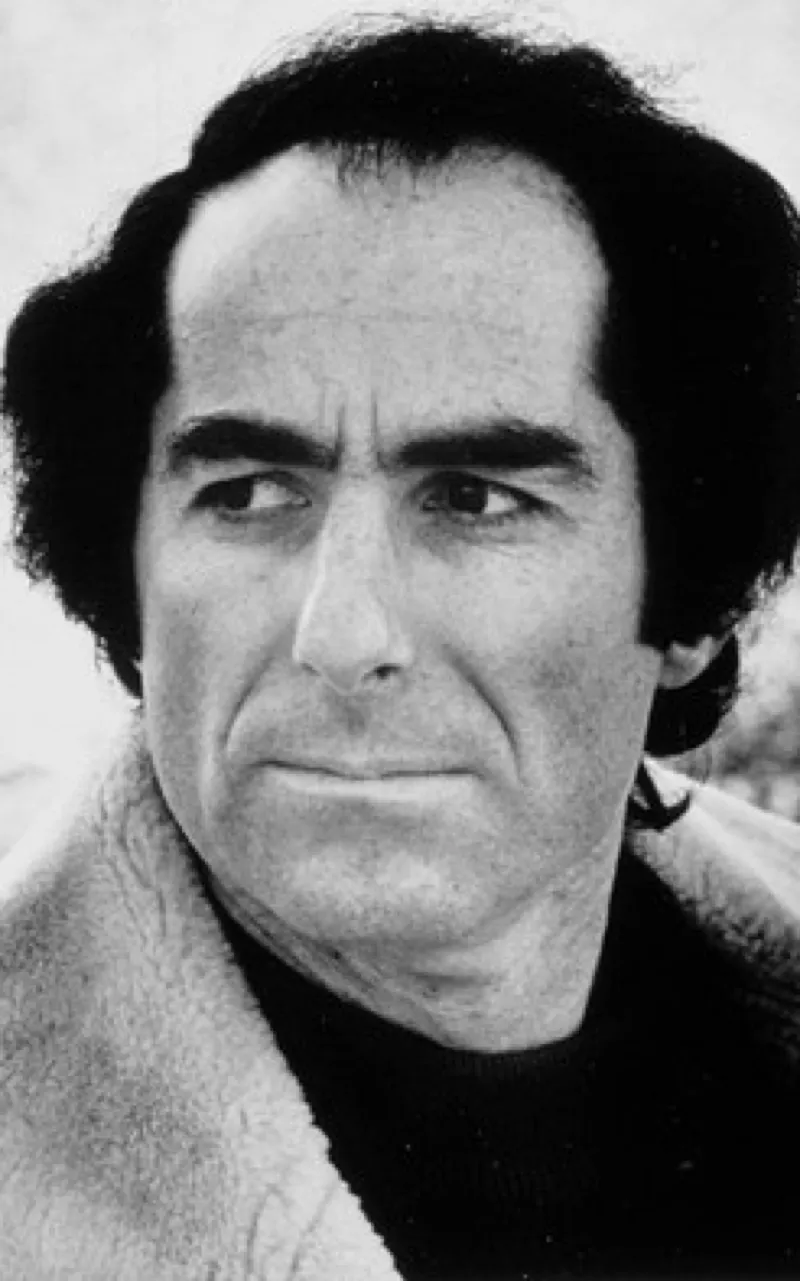
Newark’s Angry Son
Philip Milton Roth was born on March 19, 1933, in Newark, New Jersey, into a lower-middle-class Jewish family. His father, Herman Roth, sold insurance for Metropolitan Life. His mother, Bess Finkel, was a homemaker. They lived in the Weequahic neighborhood — a Jewish enclave that would become the landscape of Roth’s imagination, appearing in novel after novel as the lost Eden of Jewish-American life.
Roth’s childhood was thoroughly Jewish: Hebrew school, bar mitzvah, Passover seders, arguments about everything. Newark’s Jews were second-generation Americans — the children of immigrants who had made it out of the Lower East Side but hadn’t yet made it to the suburbs. They were striving, anxious, proud, and convinced that education was the ticket to the American dream. This was the world Roth would spend his career both celebrating and savagely dissecting.
The Scandal of Goodbye, Columbus
Roth’s first book, Goodbye, Columbus (1959), won the National Book Award and immediately made him a controversial figure. The novella — about a working-class Jewish boy’s affair with a wealthy Jewish girl — was praised by critics but attacked by Jewish community leaders who accused Roth of portraying Jews in an unflattering light. A rabbi in New York asked from the pulpit: “What is being done to silence this man?”
The controversy foreshadowed everything that would follow. Roth’s relationship with the Jewish community was turbulent, passionate, and mutually obsessive. He couldn’t stop writing about Jews, and Jews couldn’t stop arguing about what he wrote. It was, in its way, a perfectly Jewish relationship.
Portnoy and the Explosion
Then came Portnoy’s Complaint (1969), and everything exploded. The novel — a single, breathless monologue delivered by Alexander Portnoy to his psychoanalyst — was crude, hilarious, agonized, and brilliant. Portnoy raged against his Jewish mother, his guilt, his sexual compulsions, and his inability to be either a good Jew or a happy man. It sold millions of copies and made Roth famous, infamous, and wealthy.
The Jewish community’s reaction was volcanic. Rabbis denounced him. The book was banned in libraries. Roth was accused of self-hatred, of providing ammunition to antisemites, of betraying his people. He was unrepentant. “I write about Jews,” he said, “because I know them.”
The American Trilogy
Roth’s greatest work came late. In the 1990s, now in his sixties, he produced the American Trilogy — three novels that rank among the finest in American literature. American Pastoral (1997) tells the story of Seymour “the Swede” Levov, a Jewish-American golden boy whose daughter becomes a domestic terrorist during the Vietnam era. The novel won the Pulitzer Prize and is widely considered Roth’s masterpiece.
I Married a Communist (1998) explores McCarthyism through the lens of a Jewish radio actor’s downfall. The Human Stain (2000) tells the story of a light-skinned Black man who has been passing as Jewish — a stunning exploration of identity, race, and the impossibility of being fully known.
The Plot Against America (2004) imagined an alternate history in which Charles Lindbergh defeats FDR in 1940 and leads America toward fascism and antisemitism. Written before the Trump era, the novel proved eerily prophetic and was adapted into an HBO miniseries in 2020.
Retirement and Death
In 2012, Roth announced his retirement from writing. He had published thirty-one books over fifty-three years — a body of work unmatched in American literature for its sustained intensity and ambition. He told an interviewer he had taped a Post-it note above his desk: “The struggle with writing is over.”
Philip Roth died on May 22, 2018, at the age of eighty-five. He never won the Nobel Prize — a fact that many consider the Swedish Academy’s greatest oversight. But his influence on Jewish-American literature and on the American novel is permanent. He took the tensions of Jewish identity — the pull between tradition and assimilation, the guilt and the freedom, the love and the rage — and turned them into art that will outlast all of us.
Frequently Asked Questions
Why was Portnoy's Complaint controversial?
Published in 1969, Portnoy's Complaint was a monologue by Alexander Portnoy, a Jewish man telling his psychiatrist about his sexual obsessions, his overbearing mother, and his guilt-ridden relationship with Judaism. Its explicit sexual content and satirical portrayal of Jewish family life provoked outrage from many in the Jewish community, who accused Roth of antisemitic self-hatred.
Did Philip Roth win the Nobel Prize?
No. Despite being widely considered the greatest American novelist of his generation, Roth never received the Nobel Prize in Literature. He did win virtually every other major literary prize, including the Pulitzer Prize (for American Pastoral), the National Book Award, the Man Booker International Prize, and the National Humanities Medal.
What are Philip Roth's best novels?
Critics most frequently cite American Pastoral (1997), The Human Stain (2000), Sabbath's Theater (1995), Portnoy's Complaint (1969), and The Plot Against America (2004). His American Trilogy — American Pastoral, I Married a Communist, and The Human Stain — is considered his masterwork.
Key Terms
Sources & Further Reading
Related Articles
Franz Kafka: The Writer Who Made Alienation an Art Form
A quiet insurance clerk in Prague wrote stories so strange and unsettling that his name became an adjective. Franz Kafka explored alienation, absurdity, and the crushing weight of authority — and his Jewish identity haunted every page.
Jewish Literature: A Survey
Jewish literature spans three thousand years — from the Psalms and Song of Songs through medieval Hebrew poetry, Yiddish masters like Sholem Aleichem, and modern voices from Isaac Bashevis Singer to Amos Oz.
Saul Bellow: The Nobel Laureate of Jewish-American Life
Saul Bellow won the Nobel Prize in Literature for novels that captured the immigrant experience, Jewish intellectual life, and the comedy of being fully alive in twentieth-century America.