Jewish Literature: A Survey
Jewish literature spans three thousand years — from the Psalms and Song of Songs through medieval Hebrew poetry, Yiddish masters like Sholem Aleichem, and modern voices from Isaac Bashevis Singer to Amos Oz.
A People of Words
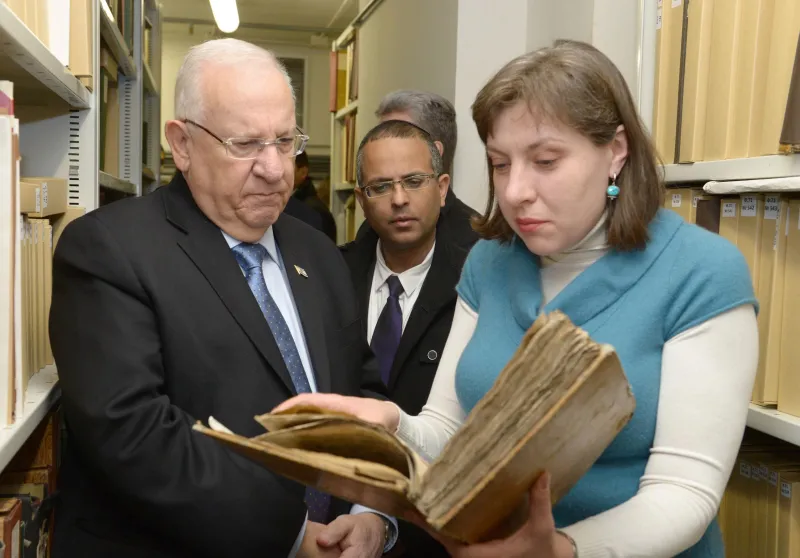
Long before they were the People of the Book, the Jews were a people of stories. The Torah itself is not primarily a legal code or a theological treatise — it is a narrative. It tells stories of families: parents and children, siblings and rivals, lovers and liars. From Genesis through the Prophets, the Hebrew Bible established a literary tradition of astonishing power and range.
That tradition has continued, unbroken, for three thousand years — through medieval poetry, Yiddish storytelling, modern Hebrew fiction, and the extraordinary contribution of Jewish writers to world literature. Here is a survey of a literature that could fill libraries.
The Bible as Literature
The Hebrew Bible is, among other things, one of the supreme achievements of world literature. Literary scholars — from Robert Alter to Harold Bloom — have argued that the Bible invented key narrative techniques that shaped all subsequent Western literature:
The Psalms: The 150 poems of Tehillim range from ecstatic praise (“The heavens declare the glory of God”) to anguished lament (“My God, my God, why have you forsaken me?”) to meditative wisdom. They established the emotional vocabulary of Western religious poetry.
Song of Songs: An erotic love poem so frank that rabbis debated whether it belonged in the canon. Rabbi Akiva settled the matter: “All the writings are holy, but Song of Songs is the holy of holies.” Read literally, it is about human love. Read allegorically, it is about God’s love for Israel. Both readings are magnificent.
Job: The Bible’s most sustained exploration of innocent suffering and the problem of evil. Job’s confrontation with God — and God’s answer from the whirlwind — remains one of the most powerful literary exchanges ever written.
Ecclesiastes (Kohelet): “Vanity of vanities, all is vanity.” The Bible’s most philosophical book — cynical, wise, and eerily modern in its existential questioning.
Medieval Hebrew Poetry
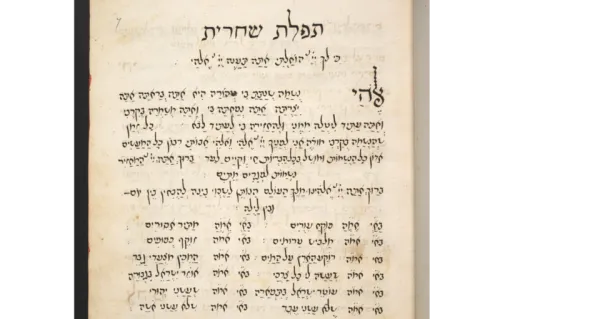
The medieval period produced Hebrew poetry of extraordinary beauty, particularly in the Golden Age of Spain (10th-12th centuries), when Jewish culture flourished under Muslim rule:
Yehuda Halevi (c. 1075-1141) is considered the greatest Hebrew poet after the biblical writers. His poems range from love lyrics to philosophical meditations to his famous poems of longing for Zion: “My heart is in the East, and I am at the edge of the West.” Halevi eventually left Spain to journey to the Land of Israel — legend says he was killed by a Crusader’s horse just as he reached Jerusalem’s gates.
Solomon ibn Gabirol (c. 1021-1058) wrote philosophical poetry of intellectual power and spiritual intensity. His liturgical poem Keter Malkhut (“Royal Crown”) is recited on Yom Kippur in many Sephardic communities.
Moses ibn Ezra (c. 1055-1138) was known as “the poet of penitence” for his powerful religious verse, and as a master of secular wine and garden poetry in the Arabic style.
The Yiddish Literary Revolution
The 19th century saw the birth of modern Yiddish literature — a literary tradition that would produce some of the most beloved writers in Jewish history.
Mendele Mocher Sforim (Sholem Yankev Abramovitsh, 1835-1917) is called the “grandfather of Yiddish literature.” His satirical novels depicted shtetl life with a sharp eye for social hypocrisy and a reformer’s desire for change.
Sholem Aleichem (Solomon Naumovich Rabinovich, 1859-1916) became the most beloved Yiddish writer of all time. His creation of Tevye the Dairyman — a poor milkman who delivers milk and argues with God about the injustice of life — captured the humor, warmth, and heartbreak of Eastern European Jewish life. Tevye’s monologues are masterpieces of voice — funny, philosophical, and deeply human. They became the basis for Fiddler on the Roof, one of the most successful musicals in Broadway history.
Sholem Aleichem’s death in 1916 drew over 100,000 mourners in New York. His will requested that he be remembered not with solemnity but with laughter — that his stories be read aloud on the anniversary of his death.
I.L. Peretz (1852-1915) brought European literary modernism to Yiddish writing. His stories — particularly the Hasidic tales like “If Not Higher” and “Bontshe the Silent” — combined folk material with sophisticated literary technique. Where Sholem Aleichem was warm and humorous, Peretz was sharp and socially conscious.
Singer and the Yiddish Nobel
Isaac Bashevis Singer (1902-1991) carried Yiddish literature into the 20th century and onto the world stage. Born in Poland, he emigrated to New York in 1935 and wrote prolifically in Yiddish for the Jewish Daily Forward newspaper.
Singer’s fiction drew on the world of Polish Jewry — demons, rabbis, shtetl marriages, Warsaw intellectuals — while addressing universal themes of desire, faith, doubt, and the mystery of evil. His novels (The Magician of Lublin, Enemies, A Love Story) and short stories (“Gimpel the Fool,” translated by Saul Bellow) earned him the Nobel Prize in Literature in 1978.
In his acceptance speech, Singer said: “Yiddish has not yet said its last word.” The statement was both defiant and elegiac — a celebration of a language and literature created by a people who were largely destroyed.
Modern Hebrew Literature
The revival of Hebrew as a spoken language created a new literary tradition. Key figures include:
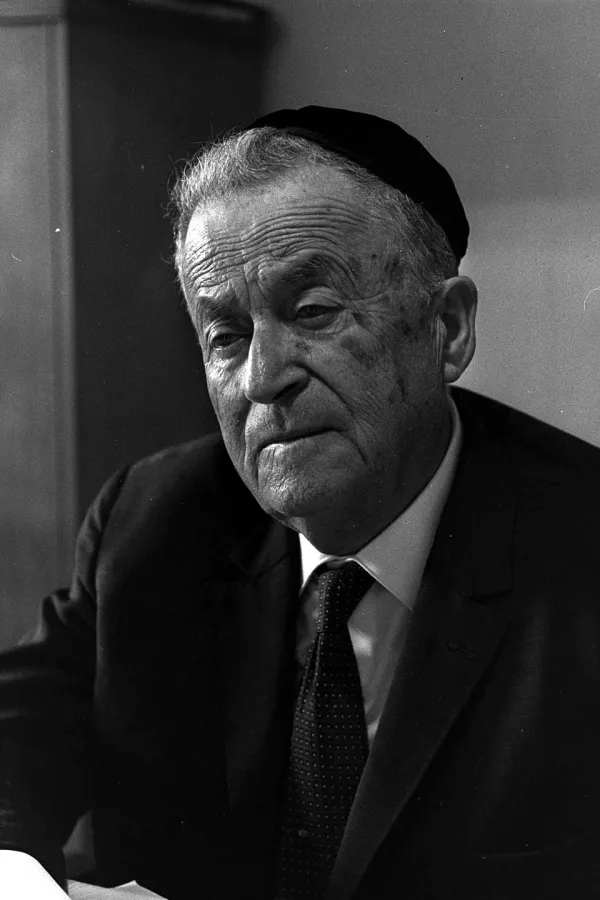
S.Y. Agnon (1888-1970) — the first Hebrew writer to win the Nobel Prize (1966). Agnon’s fiction combined rabbinic learning with modernist technique, creating works that are simultaneously deeply traditional and radically innovative. His novel Only Yesterday is considered the great novel of early Israeli life.
Amos Oz (1939-2018) — Israel’s most internationally famous novelist. His memoir A Tale of Love and Darkness chronicles his childhood in Jerusalem and his mother’s suicide against the backdrop of Israeli statehood. His novels (My Michael, Black Box) explore the private emotional lives of Israelis with psychological depth and political awareness.
David Grossman (b. 1954) — whose novels (See Under: Love, To the End of the Land) confront the Holocaust, the Israeli-Palestinian conflict, and the toll of perpetual war on ordinary families. His son Uri was killed in the 2006 Lebanon War, an event that deepened the moral urgency of his writing.
Etgar Keret (b. 1967) — master of the very short story, whose surreal, funny, and unexpectedly tender tales have made him one of the most popular Israeli writers of his generation.
Jewish Writers in English
The 20th century saw an explosion of Jewish writing in English, particularly in America:
- Saul Bellow (Nobel Prize, 1976): The Adventures of Augie March, Herzog, Humboldt’s Gift — novels that defined the American Jewish intellectual voice
- Philip Roth (1933-2018): From Portnoy’s Complaint to American Pastoral, Roth explored Jewish identity, sexuality, and the American experience with relentless honesty
- Bernard Malamud (1914-1986): The Fixer, The Natural — fables of moral testing and Jewish suffering
- Cynthia Ozick (b. 1928): Stories and essays that engage with Jewish tradition, the Holocaust, and the nature of imagination
- Grace Paley (1922-2007): Short stories capturing the voices of New York Jewish women with compression and humor
- Michael Chabon (b. 1963): The Amazing Adventures of Kavalier & Clay — Jewish imagination, comic books, and the American century
- Nicole Krauss (b. 1974): The History of Love — Holocaust memory, book culture, and the persistence of feeling
Why It Matters
Jewish literature matters not because it is exclusively Jewish but because it is universally human while being rooted in a specific experience. The themes that recur — exile and belonging, memory and forgetting, suffering and humor, tradition and rebellion, the relationship between the individual and the community — are themes that speak to everyone.
The tradition continues. New Jewish writers emerge every year, adding their voices to a conversation that began with the first storyteller who said: “In the beginning…”
Frequently Asked Questions
What are the most important works of Jewish literature?
Jewish literature spans millennia. Key works include the Hebrew Bible (Tanakh) — especially the Psalms, Song of Songs, Job, and Ecclesiastes; medieval poetry by Yehuda Halevi and Solomon ibn Gabirol; Yiddish classics by Sholem Aleichem, I.L. Peretz, and Isaac Bashevis Singer; and modern Hebrew literature by S.Y. Agnon, Amos Oz, and David Grossman. The Talmud itself is also a monumental literary achievement.
Who was Sholem Aleichem?
Sholem Aleichem (pen name of Solomon Naumovich Rabinovich, 1859-1916) is the most beloved writer in Yiddish literature. His stories of Tevye the Dairyman — about a poor milkman in the Pale of Settlement who argues with God about the injustice of life — inspired the musical Fiddler on the Roof. He captured the humor, warmth, and heartbreak of Eastern European Jewish life with such affection that his funeral in New York drew over 100,000 mourners.
Has a Jewish writer won the Nobel Prize in Literature?
Several Jewish writers have won the Nobel Prize in Literature, including S.Y. Agnon (1966, writing in Hebrew), Isaac Bashevis Singer (1978, writing in Yiddish), Saul Bellow (1976), Joseph Brodsky (1987), Nadine Gordimer (1991), Imre Kertész (2002), Patrick Modiano (2014), and Bob Dylan (2016). Agnon and Singer are particularly significant as laureates writing in specifically Jewish languages.
Sources & Further Reading
Related Articles
Hebrew: The Language of the Torah and Israel
From an ancient sacred tongue to a modern spoken language — the remarkable story of Hebrew's revival.
Jews in America: Four Centuries of History
From 23 refugees arriving in New Amsterdam in 1654 to a thriving community of nearly seven million, the story of Jews in America is a story of reinvention, contribution, and enduring identity.
Yiddish: The Language of the Ashkenazi Heart
A thousand years of humor, wisdom, and survival — Yiddish is far more than a language, it's a worldview.