The Kibbutz Movement
From Degania's founding in 1910 to today's privatized communities, the kibbutz movement transformed the land of Israel through collective living, shared labor, and a radical social experiment.
A Radical Idea
In 1910, a small group of young Jewish pioneers — idealistic, sunburned, and half-starving — established a farming community on the southern shore of the Sea of Galilee. They called it Degania. They had no private property. They ate in a communal dining hall. They made decisions by vote. They believed they were building a new kind of society.
They were right. The kibbutz (Hebrew for “gathering”) became one of the most remarkable social experiments of the 20th century — a movement that turned swampland into farmland, produced a disproportionate share of Israel’s military and political leaders, and attempted to answer a question that has haunted human civilization: Can people truly live as equals?
The Origins
The kibbutz movement grew from the intersection of two powerful 19th-century ideologies: Zionism and socialism. The early Zionist pioneers — the Second Aliyah (1904-1914) — were overwhelmingly young, secular, Eastern European Jews fleeing pogroms and oppression. Many had been influenced by Russian socialist movements and Tolstoyan ideals of agrarian labor.
They wanted to create a “new Jew” — one who worked the land with their own hands rather than being confined to the trades and professions of the Diaspora. Physical labor was not just economic necessity; it was ideology. A.D. Gordon, the movement’s philosopher, preached a “religion of labor” — the belief that working the soil of the Land of Israel would transform the Jewish spirit.
The practical reality was brutal. The land was malarial, rocky, and often hostile. The Ottoman authorities were suspicious. Arab neighbors were sometimes welcoming, sometimes not. The pioneers discovered that individual farming was nearly impossible under these conditions. Collective organization was a survival strategy as much as an ideology.
How a Kibbutz Worked
At its peak, the classic kibbutz operated on principles that would make a Wall Street banker faint:
- No private property: Everything belonged to the collective — the land, the machinery, even personal clothing was communally laundered and distributed
- Equal distribution: “From each according to their ability, to each according to their needs” — the Marxist principle, actually implemented
- Communal dining: All members ate together in the chadar ochel (dining hall), the social center of kibbutz life
- Shared child-rearing: Children slept in children’s houses (beit yeladim), raised collectively by trained caregivers. Parents visited during “love hours” in the afternoon
- Democratic governance: Major decisions were made by the general assembly (asifah klalit), where every member had one vote
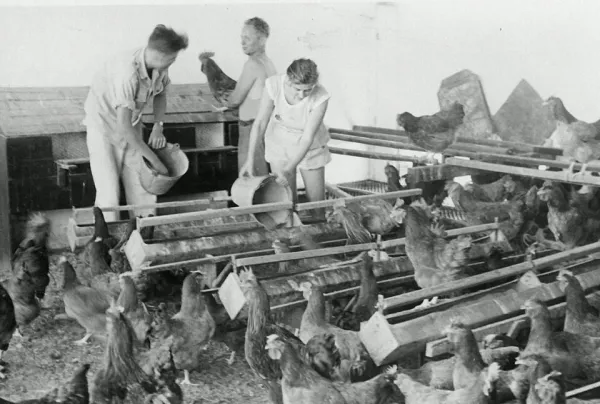
- Rotation of work: Members rotated through different jobs — farming one month, kitchen duty the next, factory work the following
The Golden Age
The kibbutz movement expanded rapidly during the British Mandate period (1920-1948) and the early decades of Israeli statehood. By the 1950s, there were over 200 kibbutzim across the country.
The movement’s contributions to Israel were staggering relative to its size. Kibbutz members never comprised more than about 7% of Israel’s population, yet they produced:
- A disproportionate share of military officers: Kibbutzniks were vastly overrepresented in elite combat units and the officer corps
- Political leaders: Including prime ministers Levi Eshkol, Golda Meir (briefly a kibbutz member), and Ehud Barak
- Agricultural innovation: Kibbutzim pioneered drip irrigation, greenhouse farming, and desert agriculture
- Cultural output: Kibbutz writers, artists, and musicians shaped Israeli culture
The kibbutz also became a powerful brand internationally. Kibbutz volunteering programs, launched in the 1960s, brought hundreds of thousands of young people from around the world to live and work on kibbutzim. For many, it was a transformative experience — and a formative introduction to Israel.
The Children’s House Debate
Perhaps the most controversial aspect of kibbutz life was communal child-rearing. In the classic model, infants as young as four days old moved to the children’s house, where they were cared for by metaplot (caregivers). Children lived, ate, and slept with their age group. Parents were devoted — but visiting time was limited.
Proponents argued that communal child-rearing liberated women from domestic servitude, socialized children effectively, and created deep peer bonds. Critics — including many former kibbutz children — described loneliness, nighttime fears, and the pain of separation from parents.
By the 1970s-80s, the tide turned. One kibbutz after another abandoned children’s houses, allowing children to sleep at home. Today, virtually no kibbutz practices communal sleeping arrangements. The experiment ended — but its psychological legacy remains a subject of research and memoir.
Crisis and Privatization
The kibbutz ideal began to crack in the 1980s. A severe economic crisis — caused by hyperinflation, bad investments, and the collapse of kibbutz-owned industries — left many kibbutzim deeply in debt. The government bailout that followed came with conditions that forced structural changes.
But the crisis was also philosophical. The founding generation’s idealism had faded. Younger members, raised in relative comfort, questioned why they should earn the same as everyone else regardless of effort or skill. Talented professionals left for the city, where they could earn market salaries. The kibbutz brain drain accelerated.
Beginning in the 1990s, most kibbutzim underwent privatization (shinui):
- Differential salaries replaced equal distribution
- Members could own their homes and personal property
- The communal dining hall became optional or closed entirely
- Kibbutzim hired outside workers and admitted non-member residents
The Kibbutz Today
Today, approximately 270 kibbutzim exist in Israel with around 170,000 members. The Israeli government classifies them into two categories:
- Kibbutz shitufi (“communal kibbutz”): Maintains traditional collective economics — about 65 kibbutzim
- Kibbutz mithadesh (“renewing kibbutz”): Has adopted differential salaries and private ownership — the majority
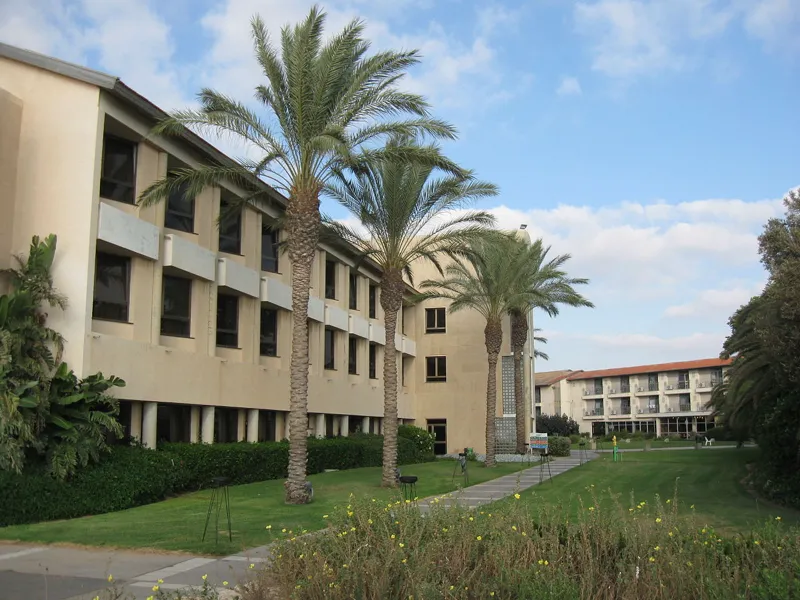
Many privatized kibbutzim have thrived economically. Some have become technology hubs, hosting startups and factories. Others have developed tourism — guest houses, nature parks, and agricultural experiences. Kibbutz-owned companies account for a significant share of Israeli industrial output.
The social fabric has changed. New members can often “buy in” by purchasing a home on the kibbutz. The dining hall, once the beating heart of communal life, has been replaced by private kitchens. The ideological passion of the founding generation has given way to a more pragmatic community model.
Legacy
Was the kibbutz a success or a failure? The answer depends on your criteria.
As a utopian experiment in radical equality, it largely failed. Human nature — the desire for individual achievement, personal space, and differential reward — proved more powerful than ideology.
As a nation-building project, it was spectacularly successful. The kibbutzim settled the land, built agricultural infrastructure, defended the borders, and contributed to Israeli society far beyond their numbers.
As a community model, it endures in modified form. Even privatized kibbutzim offer something rare in modern life: walkable communities where neighbors know each other, children play freely, and a sense of mutual obligation persists.
The kibbutz story is, in many ways, a Jewish story — idealistic, argumentative, adaptive, and stubbornly resilient. The pioneers of Degania would barely recognize today’s kibbutzim. But the impulse that drove them — the belief that Jews could build something new and better in their ancient homeland — lives on.
Frequently Asked Questions
What is a kibbutz?
A kibbutz (plural: kibbutzim) is a communal settlement in Israel based on principles of collective ownership, shared labor, and mutual responsibility. Originally agricultural, kibbutzim were founded on socialist-Zionist ideology where members worked together, ate together, and shared all property. Today, most kibbutzim have undergone privatization, though they retain elements of communal life.
Do kibbutzim still exist?
Yes, there are approximately 270 kibbutzim in Israel today with about 170,000 members. However, most have undergone significant privatization since the 1980s-90s economic crisis. Members now typically receive differential salaries, own their own homes, and eat meals privately. Some kibbutzim have become essentially suburban communities, while others maintain more traditional communal elements.
Can foreigners volunteer on a kibbutz?
Yes, kibbutz volunteering has been a popular program since the 1960s. Volunteers typically work 6-8 hours per day in agriculture, kitchen, or other kibbutz operations in exchange for room, board, and a small stipend. While the number of volunteer programs has decreased with privatization, several organizations still arrange kibbutz volunteering experiences, particularly for young adults.
Sources & Further Reading
Related Articles
Jews in America: Four Centuries of History
From 23 refugees arriving in New Amsterdam in 1654 to a thriving community of nearly seven million, the story of Jews in America is a story of reinvention, contribution, and enduring identity.
The Birth of Modern Israel
From the rise of Zionism to the declaration of independence in 1948 — the story of how the Jewish homeland was reestablished.
Zionism: The Movement That Built a Nation
Zionism — the movement for Jewish self-determination in the ancestral homeland — transformed from a radical 19th-century idea into the founding ideology of the State of Israel.