Jews of Poland: The Heart of European Jewry
For centuries, Poland was home to the largest and most vibrant Jewish community in the world. From the 'paradisus Judaeorum' to the devastation of the Holocaust, this is a story of extraordinary creativity and unimaginable loss.
The Jewish Paradise
There is an old saying that the Hebrew word for Poland — Polin — can be read as two Hebrew words: po lin, meaning “rest here.” According to legend, when Jews fleeing persecution in Western Europe arrived in Poland, they found a note on a tree bearing these words — a divine message that this would be their home.
Whether or not this etymology is accurate (it is not), it captures something true. For centuries, Poland was the most important center of Jewish life in the world. By the eve of the Second World War, 3.3 million Jews lived in Poland — roughly ten percent of the country’s population and approximately one-third of all the Jews in Europe.
Jewish settlement in Poland began in earnest in the thirteenth century, when Polish rulers — seeking to develop their economy — invited Jews from German lands with promises of protection. The Statute of Kalisz, issued by Prince Bolesław the Pious in 1264, granted Jews freedom of trade, protection of their persons and property, and autonomy in religious affairs. As antisemitism intensified in Western Europe — with Crusade massacres, blood libels, and mass expulsions — Jews migrated eastward to Poland in ever greater numbers.
The Council of Four Lands
Polish Jewry developed an astonishingly sophisticated system of self-governance. From the sixteenth to eighteenth centuries, the Va’ad Arba Aratzot (Council of Four Lands) served as a kind of Jewish parliament, meeting twice a year at the great fairs of Lublin and Jarosław. Rabbinical and lay leaders from across Poland gathered to adjudicate legal disputes, levy taxes, regulate commerce, and set communal policy.
Nothing like it existed anywhere else in the Jewish world. The Council demonstrated that Jewish communities could govern themselves with remarkable efficiency, maintaining courts, schools, charitable institutions, and diplomatic relations with Polish authorities — all within the framework of Jewish law.
Yeshivot, Hasidism, and Cultural Explosion
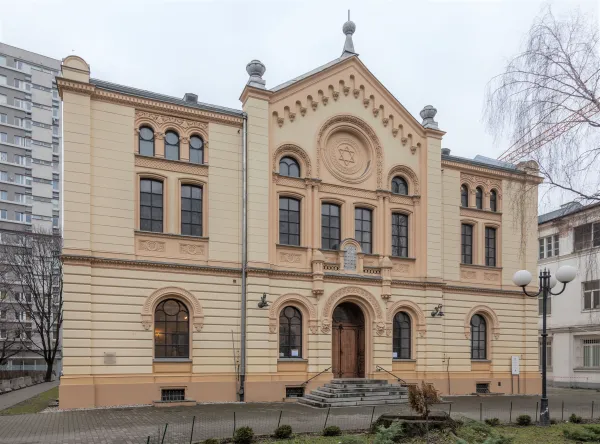
Poland became the intellectual engine of the Jewish world. The great yeshivot (rabbinical academies) of Lublin, Kraków, and Volozhin attracted scholars from across Europe. Rabbi Moses Isserles (the Rema) of Kraków, whose annotations to the Shulchan Aruch made Ashkenazi practice authoritative, worked in a synagogue that still stands today.
In the eighteenth century, Poland gave birth to one of Judaism’s most transformative movements: Hasidism. Founded by Rabbi Israel ben Eliezer — the Baal Shem Tov — in the small towns of southeastern Poland, Hasidism taught that God could be reached not only through scholarly study but through joyful prayer, storytelling, song, and emotional devotion. The movement spread like wildfire through shtetl communities, establishing dynasties of charismatic rebbes whose followers numbered in the tens of thousands.
At the same time, the Haskalah (Jewish Enlightenment) brought new ideas about secular education, political emancipation, and cultural modernization. Yiddish literature flourished — writers like I.L. Peretz, Sholem Aleichem, and later Isaac Bashevis Singer captured the texture of Polish Jewish life with humor, pathos, and unflinching honesty.
By the early twentieth century, Polish Jewry was an entire civilization: political parties from Zionist to Bundist, Yiddish theater and press, Hebrew schools, sports clubs, welfare organizations, and an intellectual life of breathtaking range. Warsaw alone had more Jewish newspapers than most countries had total publications.
The Catastrophe
And then it was annihilated.
The German invasion of Poland in September 1939 began the destruction of European Jewry. Poland’s Jews were herded into ghettos — Warsaw, Łódź, Kraków, and hundreds of others — where starvation, disease, and random murder became daily realities. Beginning in 1942, the Nazis implemented the “Final Solution” with industrial efficiency, constructing death camps on Polish soil: Auschwitz-Birkenau, Treblinka, Sobibor, Majdanek, Chelmno, Belzec.
Approximately three million Polish Jews — ninety percent of the pre-war community — were murdered. Entire towns were erased. Families that had lived in Poland for twenty generations were extinguished in a matter of months. The cultural wealth of a millennium — the yeshivot, the libraries, the Yiddish press, the Hasidic courts, the synagogues, the melodies, the recipes, the jokes — was destroyed with a thoroughness that defies comprehension.
The Polish response was complicated. Some Poles risked their lives to hide Jews — Poland has more “Righteous Among the Nations” honorees at Yad Vashem than any other country. Others collaborated with the Nazis, betrayed Jewish neighbors, or participated in massacres. Post-war pogroms, including the Kielce pogrom of 1946, drove many Holocaust survivors to leave Poland entirely.
Revival and Memory
Under communism, Jewish life in Poland was suppressed. An antisemitic campaign in 1968 drove out most of the remaining Jews. But after 1989, something unexpected began: a revival.
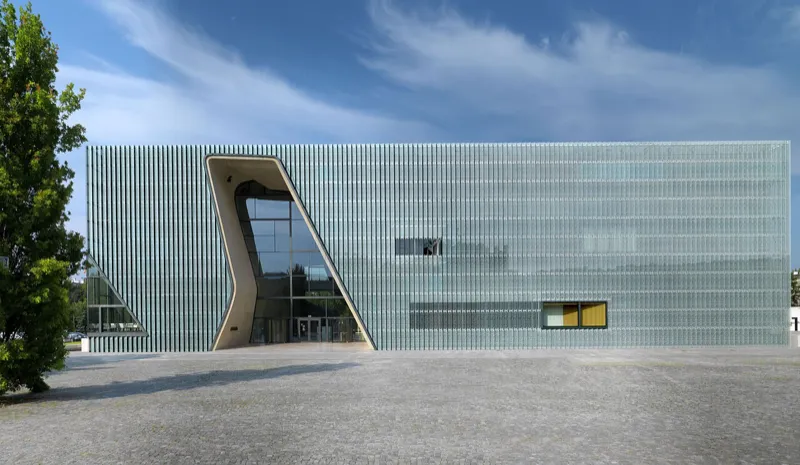
Poles of Jewish ancestry — many of whom had not known of their heritage — began to explore their roots. Jewish cultural festivals, particularly the annual Jewish Culture Festival in Kraków, drew enormous crowds. The POLIN Museum of the History of Polish Jews opened in Warsaw in 2014, built on the site of the former ghetto, telling the thousand-year story of Polish Jewry with nuance and power.
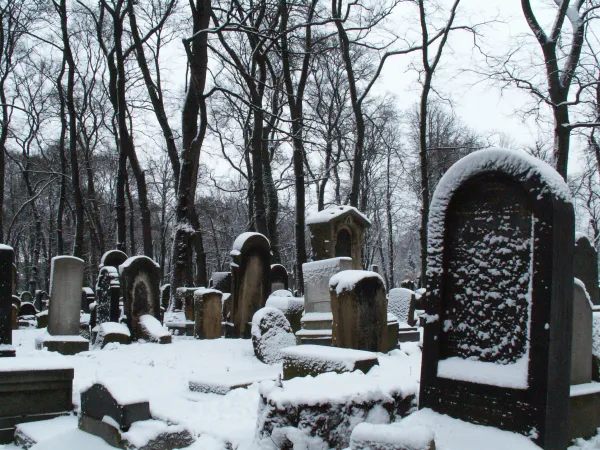
Today, the relationship between Poland and its Jewish memory is fraught with complexity. The country struggles with how to remember — how to honor the victims, acknowledge complicity, celebrate the heritage, and reckon with the fact that the greatest civilization in the history of the Jewish diaspora was destroyed on its soil. The empty synagogues, the overgrown cemeteries, the streets where Yiddish was once spoken — they stand as testimony to what was lost, and as a reminder of what hatred can destroy.
Frequently Asked Questions
Why did so many Jews live in Poland?
Medieval Polish rulers actively invited Jews to settle in Poland, granting them charters of protection and economic rights. The Statute of Kalisz (1264) guaranteed Jewish liberties. As Jews faced persecution elsewhere in Europe, Poland became a refuge — earning the nickname 'paradisus Judaeorum' (paradise of the Jews).
How many Polish Jews were killed in the Holocaust?
Approximately 3 million Polish Jews — roughly 90% of the pre-war Jewish population — were murdered during the Holocaust. Poland was home to the largest Jewish community in Europe, and the Nazis established their most lethal death camps on Polish soil, including Auschwitz-Birkenau, Treblinka, and Sobibor.
Is there a Jewish community in Poland today?
Yes. While the community is small (estimated 10,000-20,000, many of mixed heritage), there has been a remarkable revival since the fall of communism in 1989. The POLIN Museum in Warsaw, restored synagogues, Jewish cultural festivals, and growing interest in Jewish heritage are all part of this renewal.
Sources & Further Reading
Related Articles
Haskalah: The Jewish Enlightenment That Changed Everything
The Haskalah — the Jewish Enlightenment of the 18th and 19th centuries — transformed Jewish life, sparking debates about tradition, modernity, and identity that continue to this day.
The Holocaust: Remembering the Six Million
The systematic murder of six million Jews during World War II — the darkest chapter in human history and its lasting impact on Jewish identity.
Life in the Shtetl: Eastern European Jewish Towns
For centuries, millions of Jews lived in small towns across Eastern Europe — communities rich in tradition, learning, and culture that shaped modern Jewish identity.