Sephardi vs Ashkenazi: Two Streams of Jewish Life
Sephardi and Ashkenazi Jews share the same Torah but developed distinct languages, liturgies, foods, and customs across centuries of separation — two rivers from one source.
One Torah, Many Tables
Invite an Ashkenazi grandmother and a Sephardi grandmother to prepare a Passover seder, and you will witness a fascinating contradiction. Both women will tell you they are following the ancient, authentic tradition. Both will insist their food is the real food. And the two tables will look almost nothing alike.
The Ashkenazi table will feature gefilte fish, matzo ball soup, brisket, and — most importantly — no rice, no corn, no beans. The Sephardi table will feature lamb, rice with pine nuts, stuffed grape leaves, and a dozen dishes that would make the Ashkenazi grandmother gasp: “You eat that on Pesach?”
Both are right. Both are authentically Jewish. And the story of how one people, following one Torah, developed two such different ways of life is one of the most fascinating chapters in Jewish history.
Origins: Two Great Branches
Ashkenazi: Northern and Eastern Europe
The term Ashkenaz originally referred to Germany in medieval Hebrew. Ashkenazi Jews are those whose ancestors settled in the Rhineland (modern Germany and northern France) during the early medieval period and later spread across Poland, Lithuania, Russia, Ukraine, Hungary, and Romania.
Ashkenazi Jews developed:
- Yiddish — a language blending German, Hebrew, and Slavic elements
- Distinctive prayer melodies and liturgical traditions (Nusach Ashkenaz)
- The shtetl culture of Eastern Europe
- Major rabbinic traditions, including the commentary of Rashi (France, 11th century) and the great yeshivot of Lithuania
- Foods like gefilte fish, challah, cholent, kugel, and borscht
By the twentieth century, Ashkenazi Jews constituted roughly 90 percent of world Jewry — a proportion drastically reduced by the Holocaust, which annihilated most of European Jewry.
Sephardi: Spain, Portugal, and the Mediterranean
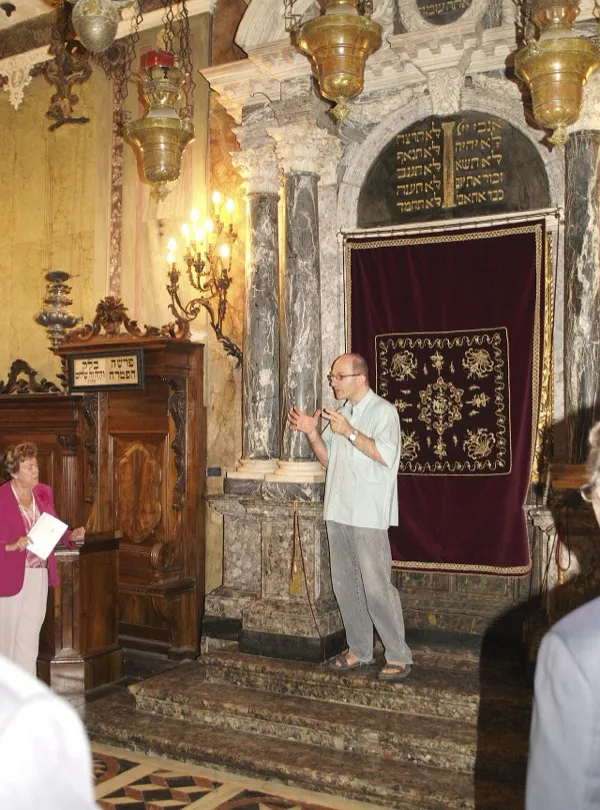
The term Sepharad refers to Spain in Hebrew. Sephardi Jews are descendants of the Jewish communities of the Iberian Peninsula, who experienced a golden age of culture and scholarship under Muslim rule and were expelled in 1492 by Ferdinand and Isabella.
After the expulsion, Sephardic Jews settled across the Ottoman Empire (Turkey, Greece, the Balkans, North Africa), the Netherlands, Italy, and the Americas. They developed:
- Ladino (Judeo-Spanish) — a language based on medieval Castilian Spanish, written in Hebrew characters
- Distinctive liturgy (Nusach Sepharad or Nusach Edot HaMizrach)
- A rich culinary tradition featuring lamb, rice, stuffed vegetables, and phyllo pastries
- Rabbinic traditions centered on the Shulchan Aruch of Rabbi Joseph Karo
Language: Yiddish vs Ladino
The linguistic divide between Ashkenazi and Sephardi communities is one of the most striking markers of difference.
Yiddish, spoken by Ashkenazi Jews for nearly a thousand years, is a Germanic language infused with Hebrew, Aramaic, and Slavic vocabulary. It produced an extraordinary literature — Sholem Aleichem, Isaac Bashevis Singer, the poetry of Abraham Sutzkever — and a vibrant theater tradition. At its peak, Yiddish was spoken by approximately 11 million people. The Holocaust destroyed most of the Yiddish-speaking world, though it survives today in Hasidic communities and among scholars and enthusiasts.
Ladino (also called Judezmo or Judeo-Spanish) preserves the sound of fifteenth-century Castilian Spanish, enriched with Hebrew, Turkish, Greek, and Arabic loanwords. Sephardic Jews carried Ladino across the Ottoman Empire, singing romances and ballads that preserved medieval Spanish poetry long after it had been forgotten in Spain itself. Ladino is now critically endangered, spoken fluently by perhaps 100,000 people, mostly elderly.
Both languages served the same function: they were the language of the home, the market, and the heart, while Hebrew remained the language of prayer and study.
Pronunciation: How Hebrew Sounds
One of the most immediately noticeable differences between Sephardi and Ashkenazi Jews is how they pronounce Hebrew. A few examples:
| Hebrew Letter | Ashkenazi | Sephardi |
|---|---|---|
| Tav (without dagesh) | “S" | "T” |
| Kamatz | ”AW” (as in “saw”) | “AH” (as in “father”) |
| Shabbat | ”Shabbos" | "Shabbat” |
| Torah | ”TOY-rah" | "Toh-RAH” |
When modern Hebrew was standardized for the State of Israel, the Sephardi pronunciation was chosen as the basis for Israeli Hebrew — a decision that reflected the influence of Eliezer Ben-Yehuda (who favored Sephardi pronunciation as closer to the ancient original) and the Labor Zionist establishment’s desire to distance the new nation from the Yiddish-speaking diaspora.
Liturgy: Different Melodies, Same Prayers
Ashkenazi and Sephardi synagogues use fundamentally the same prayers — the Shema, the Amidah, the Torah readings — but the melodies, the order of certain prayers, and some liturgical poems (piyyutim) differ significantly.
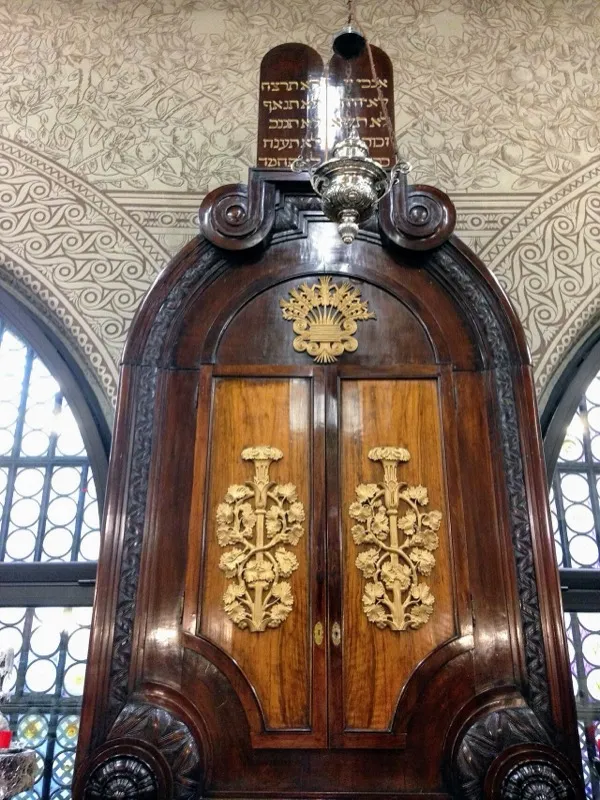
Sephardic liturgy tends to be more melodic and participatory, with the congregation singing along. Ashkenazi liturgy, particularly in the Lithuanian tradition, is often more solemn and formal. Hasidic prayer, which is Ashkenazi in origin but adopted many Sephardic liturgical elements (through the influence of Kabbalah), represents yet another stream.
The Sephardic Torah scroll is housed in a rigid cylindrical case (tik) and read while standing upright. The Ashkenazi Torah scroll is covered with a mantle and laid flat on the reading table. Both contain the identical text.
Food: The Delicious Divide
Perhaps nowhere is the Sephardi-Ashkenazi divide more vivid — or more delicious — than in the kitchen.
Ashkenazi cuisine reflects the cold climates and limited ingredients of Eastern Europe: chicken soup, gefilte fish, kugel (noodle or potato pudding), brisket, cholent (slow-cooked Shabbat stew), and blintzes. It is hearty, heavy, and designed to sustain families through long winters.
Sephardic cuisine reflects the Mediterranean and Middle Eastern world: lamb, rice, couscous, stuffed grape leaves, bourekas (phyllo pastries), and dishes rich with cumin, saffron, and preserved lemons. Sephardic Shabbat foods include hamin (the Sephardic equivalent of cholent) and a variety of salads and dips.
The most famous food-related halakhic dispute concerns kitniyot — legumes, rice, corn, and beans — during Passover. Ashkenazi tradition prohibits kitniyot during Pesach (based on a medieval custom, not a biblical law). Sephardic tradition permits them. In 2015, the Conservative movement’s Committee on Jewish Law and Standards ruled that Ashkenazi Jews may also eat kitniyot on Passover — a decision that traditionalists found controversial and progressives found liberating.
Rabbinic Authorities: Karo and the Rema
The authoritative code of Jewish law for both communities is the Shulchan Aruch, written by the Sephardic Rabbi Joseph Karo in Safed in the sixteenth century. Karo’s rulings generally followed Sephardic practice.
Rabbi Moses Isserles (known as the Rema), an Ashkenazi scholar from Krakow, wrote glosses on the Shulchan Aruch, noting where Ashkenazi practice differed. The combined work — Karo’s text with the Rema’s additions — became the standard legal code for all of Jewry, with each community following its own rulings where they diverged.
Mizrahi: The Third Stream
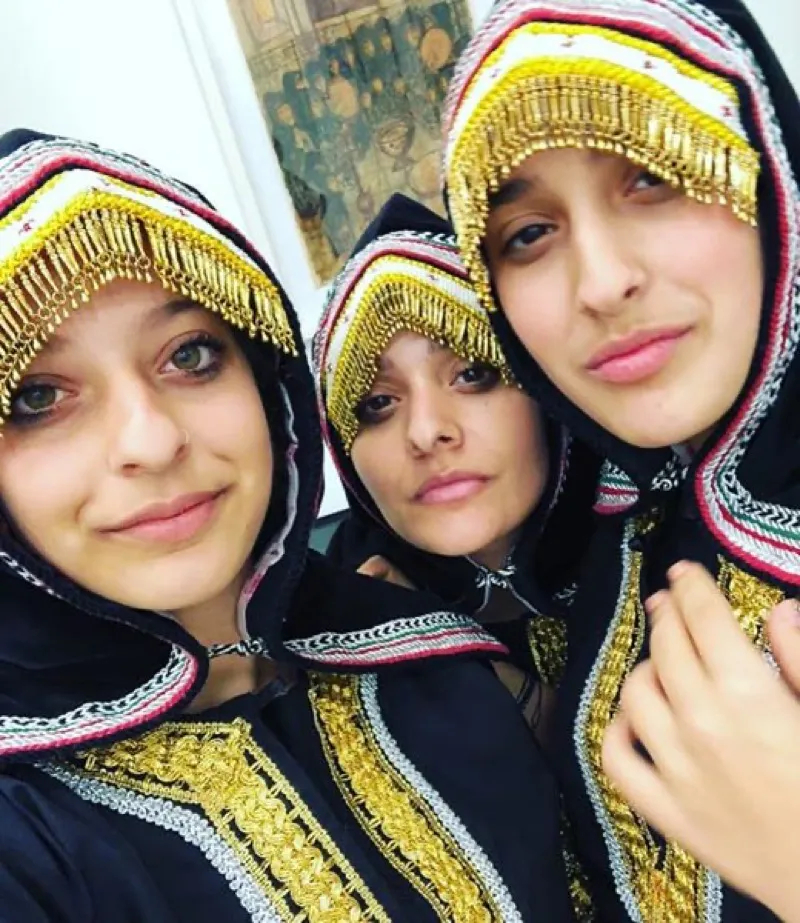
The Sephardi-Ashkenazi binary leaves out a major part of the Jewish world: Mizrahi (“Eastern”) Jews. These are Jews from Iraq, Iran, Yemen, Kurdistan, Afghanistan, India, and elsewhere in the Middle East and Central Asia. Their communities often predate both the Sephardic and Ashkenazi categories — Iraqi Jews trace their roots to the Babylonian exile of 586 BCE, making their community over 2,500 years old.
Mizrahi Jews are often grouped with Sephardim because they generally follow Sephardic liturgy and halakhic rulings. But their customs, foods, languages, and histories are distinct. Yemenite Jews, for example, have a unique pronunciation of Hebrew, distinctive liturgical poetry, and centuries-old traditions that developed in isolation from both the Sephardic and Ashkenazi worlds.
Modern Israel: Tension and Integration
The founding of Israel brought Sephardi, Ashkenazi, and Mizrahi Jews together in one country for the first time — and the integration was not always smooth. The Ashkenazi establishment that built the state’s institutions often marginalized Sephardi and Mizrahi immigrants. Mizrahi Jews from Iraq, Yemen, and Morocco were frequently settled in peripheral development towns, given less access to education and resources, and subjected to cultural condescension.
The resulting ethnic tensions shaped Israeli politics for decades. The rise of the Likud party in 1977, led by Menachem Begin, was partly driven by Mizrahi voters who felt neglected by the Ashkenazi-dominated Labor establishment. The Shas party, founded in 1984 by Rabbi Ovadia Yosef, became a powerful voice for Sephardic religious identity.
Today, Israeli society is increasingly mixed — intermarriage between Ashkenazi and Sephardi/Mizrahi Jews is common, and younger generations often identify simply as Israeli. But the cultural distinctions endure in food, music, liturgy, and family tradition. The diversity of the Jewish people — far from being a weakness — is one of its most remarkable features: one Torah, many tables, and a conversation that stretches across continents and centuries.
Frequently Asked Questions
What is the main difference between Sephardi and Ashkenazi Jews?
The main difference is geographic origin and the cultural traditions that developed from it. Ashkenazi Jews trace their ancestry to Germany and Eastern Europe and developed Yiddish language and culture. Sephardi Jews trace their ancestry to Spain, Portugal, and the Mediterranean, developing Ladino language and distinct customs. Both groups follow the same Torah but differ in liturgy, pronunciation, food, and legal rulings.
What are Mizrahi Jews?
Mizrahi ('Eastern') Jews are those from the Middle East and North Africa — Iraq, Iran, Yemen, Morocco, Tunisia, and other countries. They are often grouped with Sephardim because they follow Sephardic liturgy, but their history is distinct. Mizrahi communities have roots stretching back to the Babylonian exile (586 BCE), predating both the Sephardic and Ashkenazi categories.
Do Sephardi and Ashkenazi Jews follow different religious laws?
Both follow halakha (Jewish law), but they sometimes arrive at different conclusions. The most famous authority for Sephardim is Rabbi Joseph Karo (author of the Shulchan Aruch), while Ashkenazim follow Rabbi Moses Isserles (the Rema, who wrote glosses on the Shulchan Aruch). Differences include rules about kitniyot (legumes) on Passover, pronunciation of Hebrew, and certain marriage and mourning customs.
Sources & Further Reading
Related Articles
The Jewish Diaspora: 2,000 Years Across the Globe
How the destruction of the Second Temple scattered the Jewish people across continents, creating diverse communities united by faith.
The Golden Age of Jewish Spain
For centuries, Jews in Muslim and Christian Spain created an extraordinary civilization of poetry, philosophy, science, and interfaith dialogue.
Life in the Shtetl: Eastern European Jewish Towns
For centuries, millions of Jews lived in small towns across Eastern Europe — communities rich in tradition, learning, and culture that shaped modern Jewish identity.