Jews of Mexico: From Crypto-Jews to a Thriving Modern Community
Mexico's Jewish story begins with conversos fleeing the Inquisition, includes some of its most dramatic victims, and continues today with a vibrant community of over 40,000.
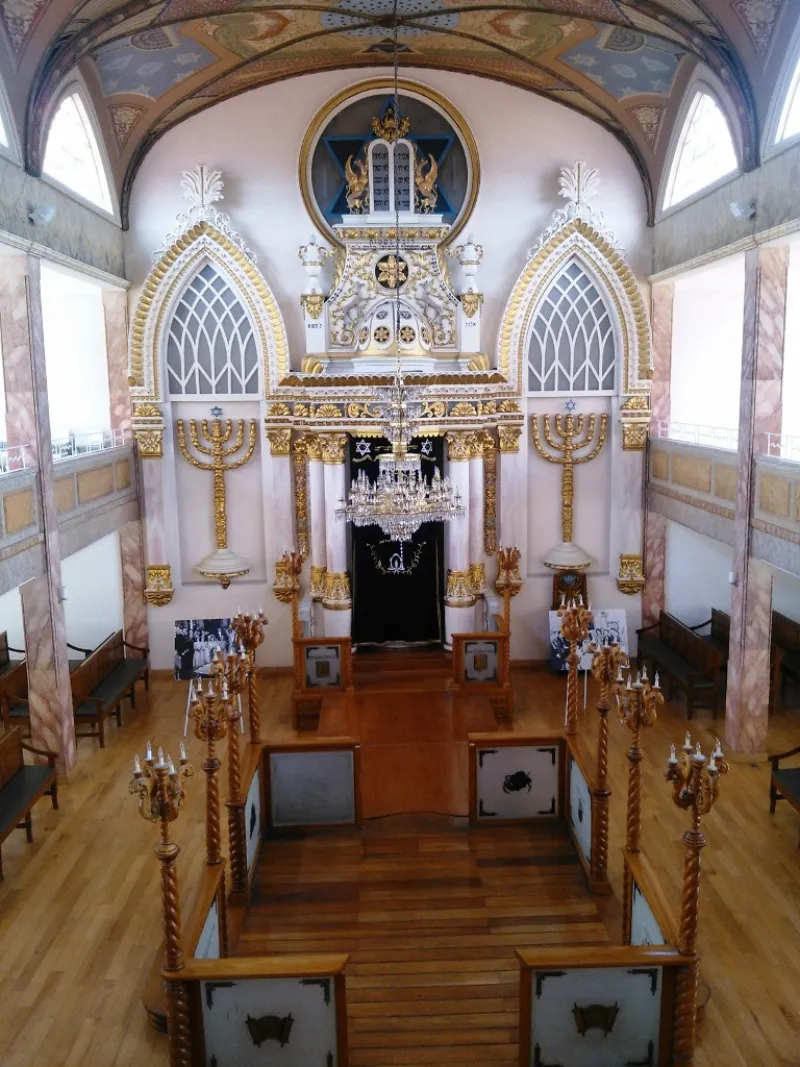
Hidden in Plain Sight
In the old quarter of Mexico City, there is a building that was once the headquarters of the Holy Office of the Inquisition. Today it houses a museum. If you walk its corridors, you can see the cells where prisoners were held, the chambers where they were interrogated, and the archives that document centuries of religious persecution. And among the names recorded in those archives — the names of people investigated, tortured, imprisoned, and sometimes executed — are the names of Jews.
Mexico’s Jewish story is one of the most dramatic in the Americas. It begins in secret, with conversos who crossed the Atlantic to escape the long arm of the Spanish Inquisition, only to find that the Inquisition had followed them. It continues through centuries of hidden identity, explosive moments of discovery and persecution, waves of immigration from across the globe, and the creation of a modern community that is one of the most organized and cohesive in the Jewish world.
The Converso Settlement
When Hernán Cortés conquered the Aztec Empire in 1521, conversos were among his companions. These were Jews who had converted to Christianity — some sincerely, many under duress — following the expulsion from Spain in 1492 and Portugal in 1497. New Spain, as Mexico was known, offered distance from the authorities, economic opportunity, and the hope of a fresh start.
Conversos spread throughout colonial Mexico, becoming merchants, miners, physicians, and landowners. Some abandoned Judaism entirely and became devout Catholics. Others maintained Jewish practices in secret — lighting candles on Friday evenings behind closed shutters, fasting on Yom Kippur while claiming illness, avoiding pork, observing some form of Sabbath rest.
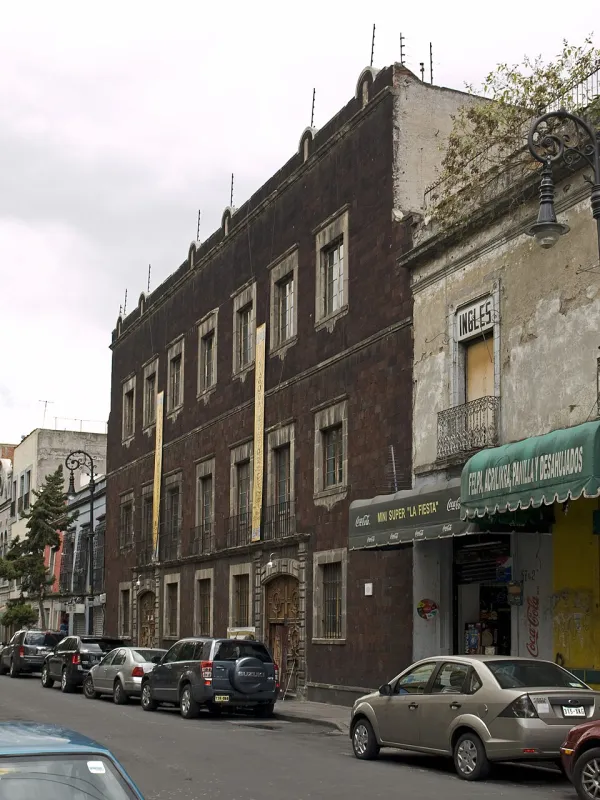
The most prominent converso family in Mexican history was the Carvajals. Luis de Carvajal the Elder was appointed governor of the vast northern province of Nuevo León in the 1580s — an extraordinary achievement for a man of Jewish descent. His nephew, Luis de Carvajal the Younger, was a passionate secret Jew who kept a diary of his religious life, wrote prayers, and attempted to live a fully Jewish existence under the Inquisition’s nose.
The family was eventually discovered. In 1596, Luis de Carvajal the Younger, his mother Francisca, and his sisters were burned at the stake in Mexico City’s central plaza in an auto-da-fé — a public ceremony of Inquisitorial justice. Luis went to his death reciting the Shema. His diary, discovered centuries later, is one of the most remarkable documents of crypto-Jewish life anywhere in the world.
The Inquisition’s Shadow
The Mexican Inquisition, formally established in 1571, was not as consistently active as its Spanish counterpart, but it had periods of intense persecution. The great auto-da-fé of 1649 saw more than a hundred people accused of Judaizing, with thirteen burned at the stake. These periodic crackdowns sent waves of terror through the converso community, driving many deeper underground.
Over time, most crypto-Jewish families in Mexico either assimilated completely into Catholic society or maintained only fragments of their heritage — customs whose origins they no longer understood. A family might avoid pork without knowing why. A grandmother might light candles on Friday nights and explain it as “an old tradition.” These traces persisted for centuries, quietly, in corners of Mexico that the outside world rarely noticed.
Modern Immigration Waves
The modern Jewish community of Mexico was built not by converso descendants but by immigrants who arrived openly as Jews, in several distinct waves:
Ottoman Sephardim came first, arriving from Syria, Turkey, and the Balkans in the early 1900s. They established themselves in commerce, particularly in the textile trade, and founded the first synagogues and community organizations. The Sephardic community remains a distinct and proud subgroup of Mexican Jewry to this day.
Eastern European Ashkenazim arrived in larger numbers in the 1920s and 1930s, fleeing pogroms, poverty, and the rising tide of European antisemitism. They settled primarily in Mexico City, establishing Yiddish-language institutions, schools, and cultural organizations. Like their counterparts in the United States, they started as peddlers and small shopkeepers and gradually moved into larger business enterprises.
German and Central European Jews arrived as refugees from Nazism in the 1930s and 1940s. Mexico accepted a modest number of Jewish refugees — fewer than some Latin American countries, more than many. The German Jewish community maintained its own distinct identity and institutions for decades.
Middle Eastern Jews — from Lebanon, Egypt, and other Arab countries — arrived throughout the 20th century, adding another layer to the community’s diversity.
The Community Today
Mexico City’s Jewish community is one of the most organized and institutionally complete in the world. With over 40,000 members, it supports:
- More than 20 synagogues representing Ashkenazi, Sephardic, and Mizrahi traditions
- An extensive day school system where approximately 90% of Jewish children attend Jewish schools — one of the highest rates anywhere in the diaspora
- A Jewish sports club (the Centro Deportivo Israelita) that is one of the largest Jewish recreational facilities in the Americas
- Multiple community centers, charitable organizations, and cultural institutions
- The Tuvie Maizel Jewish Museum, which tells the story of Jewish life in Mexico
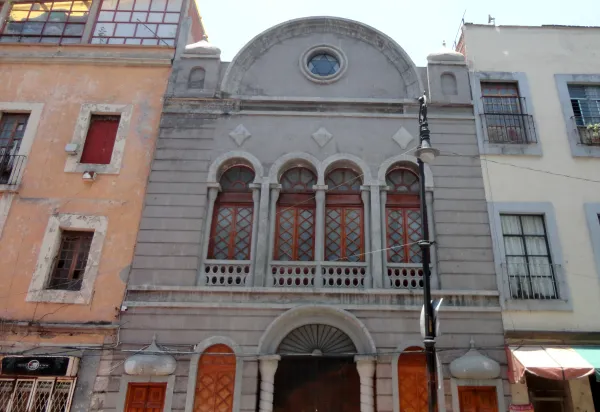
The community is notably cohesive — perhaps because of its relatively small size in a country of 130 million, Jewish Mexicans have maintained strong communal bonds. Intermarriage rates, while rising, remain lower than in the United States. The community is predominantly middle and upper-middle class, with significant representation in business, medicine, law, and the arts.
Politically, Mexican Jews navigate a complex landscape. Antisemitism exists — sometimes from the far left, sometimes from the far right, occasionally from mainstream figures who traffic in stereotypes. But Mexico has no tradition of state-sponsored antisemitism, and the Jewish community has generally maintained good relations with Mexican governments of various political orientations.
The Crypto-Jewish Revival
One of the most fascinating developments in recent decades has been the rediscovery of crypto-Jewish heritage in northern Mexico and the American Southwest. In communities from Monterrey to New Mexico, families have come forward with stories of secret Jewish practices maintained across generations — the Friday night candles, the aversion to pork, the custom of sweeping dirt toward the center of the room (an inversion of sweeping it out the door, believed to be a crypto-Jewish marker).
Some of these descendants have formally returned to Judaism, undergoing conversion and joining established Jewish communities. Others maintain their identity as a matter of cultural heritage without religious practice. Academic researchers, including scholars at the Jewish Museum of Mexico, continue to document and study this phenomenon.
The crypto-Jewish story adds a layer of depth to Mexican Jewish identity that few other communities possess. It is a reminder that the Jewish presence in Mexico is not merely a century old but stretches back five hundred years — hidden, persecuted, resilient, and now, at last, visible.
Looking Forward
Mexico’s Jewish community faces challenges familiar to diaspora communities everywhere: assimilation, the pull of emigration (particularly to the United States and Israel), and the need to remain relevant to younger generations. But its institutional strength, its high rate of Jewish education, and its deep communal bonds give it resources that many larger communities would envy.
In a country where ancient civilizations left their marks on every landscape, the Jewish presence is a small but indelible part of the story — from the conversos who prayed in secret to the community that prays openly today, from the ashes of the auto-da-fé to the light of Shabbat candles in Mexico City’s synagogues. It is a story of survival, and it is far from over.
Frequently Asked Questions
How many Jews live in Mexico today?
Mexico has approximately 40,000-50,000 Jews, making it the third-largest Jewish community in Latin America after Argentina and Brazil. The vast majority live in Mexico City, with smaller communities in Guadalajara, Monterrey, and other cities. The community supports an extensive network of synagogues, schools, cultural centers, and social service organizations.
What happened to crypto-Jews in Mexico?
Crypto-Jews (conversos) who settled in colonial Mexico lived under constant threat from the Inquisition, which operated in New Spain from 1571 to 1820. The most famous case is the Carvajal family — Luis de Carvajal the Younger and his mother and sisters were burned at the stake in Mexico City in 1596 for secretly practicing Judaism. Many crypto-Jewish families eventually assimilated, but some maintained hidden Jewish practices for centuries, and their descendants are still being discovered today.
Are there descendants of crypto-Jews in Mexico today?
Yes. In northern Mexico and the American Southwest, communities of people with crypto-Jewish ancestry have been identified — families who maintained practices like lighting Friday night candles, avoiding pork, and covering mirrors during mourning without always understanding the Jewish origins of these customs. Some have formally returned to Judaism; others maintain their identity as a cultural heritage.
Sources & Further Reading
Related Articles
Crypto-Jews: The Hidden Heritage of Secret Judaism
For five centuries, families descended from forced converts secretly maintained Jewish practices — lighting candles in cellars, avoiding pork, reciting half-remembered prayers. Now their descendants are coming home.
The Inquisition and the Jews: Conversos, Crypto-Jews, and Survival
The story of the Spanish and Portuguese Inquisitions — forced conversion, crypto-Judaism, auto-da-fé, and the remarkable survival of secret Jewish communities across five centuries.
Jews of Latin America: From Conversos to Community
From the secret Jews who fled the Inquisition to the vibrant communities of Buenos Aires, Sao Paulo, and Mexico City, Latin American Jewry is a story of reinvention, resilience, and cultural richness.