Crypto-Jews: The Hidden Heritage of Secret Judaism
For five centuries, families descended from forced converts secretly maintained Jewish practices — lighting candles in cellars, avoiding pork, reciting half-remembered prayers. Now their descendants are coming home.
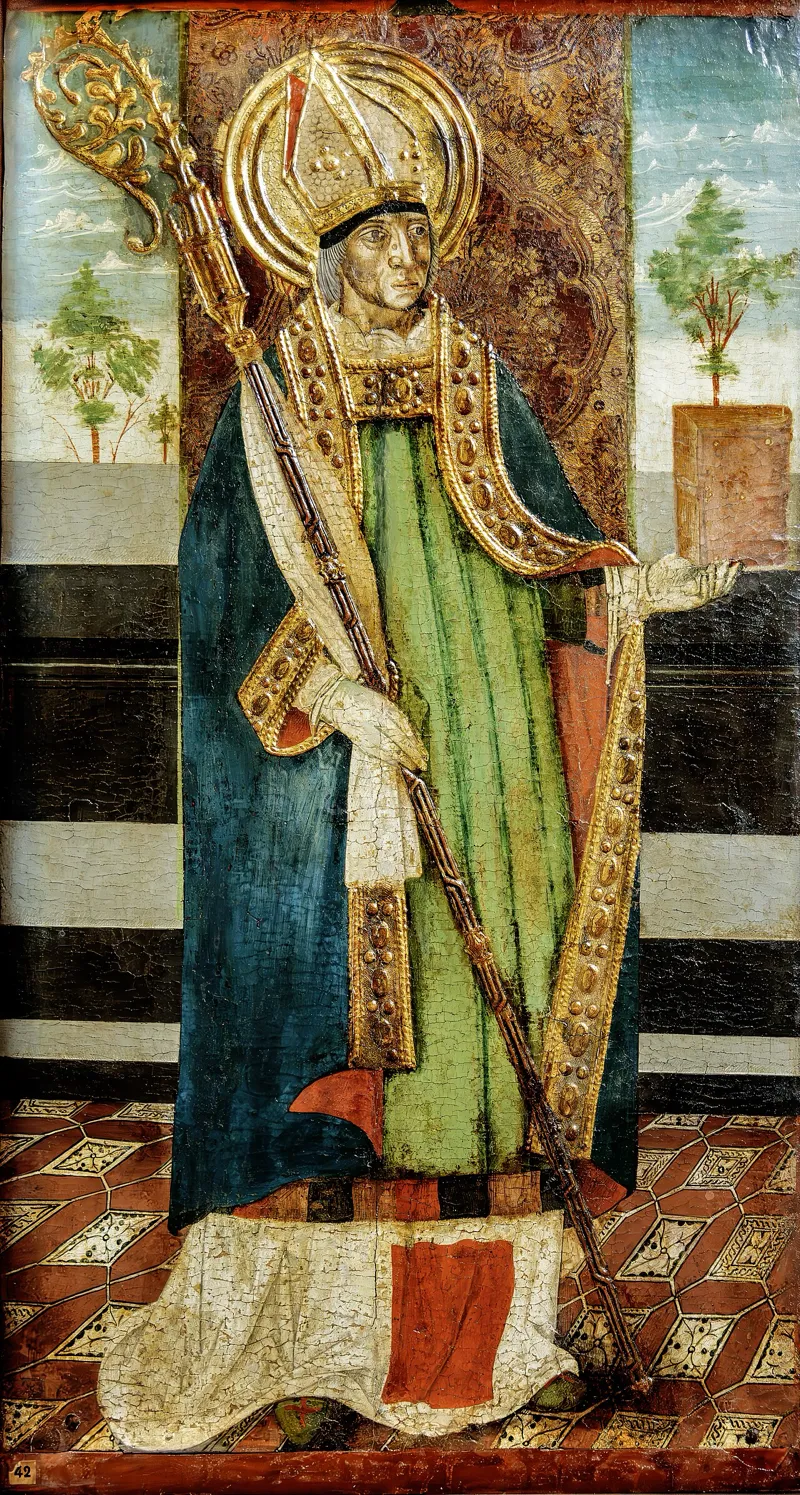
The Secret in the Cellar
Picture this: a family in a small village in northern New Mexico in the 1950s. Every Friday evening, the grandmother goes to the cellar, closes the door, and lights candles. The family never eats pork — they say it’s because of a family allergy. When someone dies, the body is washed, wrapped in a plain cloth, and buried quickly. There is a small carved stone on the doorframe of the old family house that no one can explain. The grandmother sometimes mutters words in a language the children do not recognize.
The family considers itself Catholic. They attend Mass. They display crucifixes. And yet these strange customs persist, generation after generation, their origins forgotten but their practice stubbornly maintained. It is only decades later, when a descendant begins researching genealogy, that the truth emerges: the family is descended from Jews who were forced to convert to Christianity five hundred years ago in Spain or Portugal — and who never fully stopped being Jewish.
This is the story of the crypto-Jews — one of the most extraordinary chapters in Jewish history, a story of forced conversion, secret faith, centuries of hiding, and a modern movement of return that is still unfolding.
The Forced Conversions
The story begins in 1391, when anti-Jewish riots swept across Spain, destroying Jewish communities and forcing tens of thousands to convert to Christianity. Unlike earlier persecutions, where Jews were expelled or killed, this wave demanded conversion — and many Jews, facing death, chose baptism.
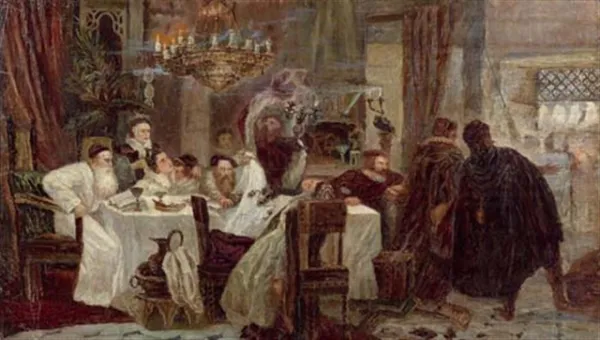
These converts — called conversos — were now officially Christian. But the sincerity of their conversion was immediately suspect. Many continued to practice Judaism in secret: lighting Shabbat candles, observing dietary laws, fasting on Yom Kippur, circumcising their sons. Outwardly they attended church; inwardly they remained Jews.
The crisis deepened in 1478 when Ferdinand and Isabella established the Spanish Inquisition, specifically tasked with identifying and punishing conversos who secretly practiced Judaism. Inquisitors investigated reports of converso families who refused to eat pork, who changed their linens on Friday, who bathed before holidays, or who turned their faces to the wall when dying (a Jewish custom).
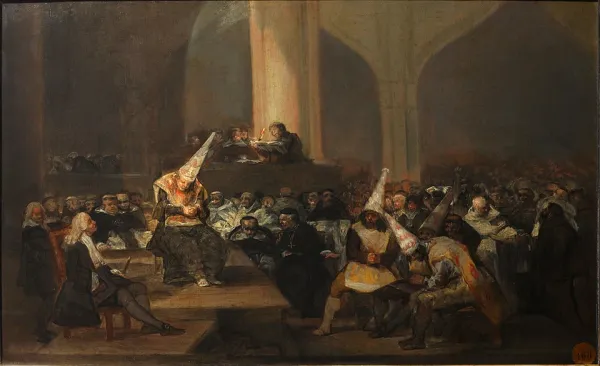
The punishments were severe: public humiliation, imprisonment, confiscation of property, and for the unrepentant, burning at the stake in public ceremonies called autos-da-fé (“acts of faith”). Between 1478 and 1834, the Spanish Inquisition prosecuted tens of thousands of conversos.
In 1492, Ferdinand and Isabella issued the Alhambra Decree, expelling all remaining practicing Jews from Spain. Those who did not convert were forced to leave — perhaps 100,000-200,000 people. Many went to Portugal, only to face forced mass conversion there in 1497, when King Manuel I ordered all Jews baptized.
Five Centuries in Hiding
What happened next was remarkable. In homes throughout the Iberian Peninsula and its colonies, families that had been forcibly converted maintained Jewish practices in secret — for five hundred years.
The secret Judaism of the conversos was necessarily fragmented. Without rabbis, without synagogues, without access to Jewish texts, they could only preserve what could be transmitted within the family — whispered from mother to daughter, from grandmother to grandchild. Over the centuries, much was lost. Prayers were garbled. Holidays were shifted. Customs survived without their original explanations.
And yet survival was extraordinary. Common crypto-Jewish practices documented across centuries and continents include:
- Lighting candles on Friday evening — often in a cellar or closet, hidden from view
- Avoiding pork — explained as a family tradition or food allergy
- Fasting on a day in autumn — a remnant of Yom Kippur
- Eating unleavened bread in spring — echoing Passover
- Washing the dead and burying quickly — following Jewish burial customs
- Sweeping dust toward the center of the room — to avoid sweeping it across the threshold on Shabbat
- Slaughtering animals by cutting the throat — approximating shechita (kosher slaughter)
New Mexico: The New World Refuge
When Spain colonized the Americas, crypto-Jewish families saw an opportunity: the farther from Spain, the farther from the Inquisition. Many converso families joined colonial expeditions to Mexico, Peru, Colombia, and eventually the remote northern frontier that became New Mexico.
The expedition of Juan de Oñate in 1598, which established the first Spanish settlement in New Mexico, included individuals suspected of converso ancestry. The remote desert landscape — thousands of miles from Inquisitorial headquarters in Mexico City — offered relative safety.
In the villages of northern New Mexico — Taos, Santa Fe, Las Vegas (New Mexico), and tiny settlements in the mountains — crypto-Jewish practices survived into the 20th and even 21st centuries. Researchers beginning in the 1980s and 1990s documented families with unmistakable crypto-Jewish customs:
Grandmothers who lit candles secretly on Friday. Families who never ate pork. Homes with mysterious marks on doorposts. Deathbed confessions: “Mijo, we are Jews.”
The discovery hit these families like an earthquake. People who had always considered themselves Catholic — who had attended Mass their entire lives — suddenly learned that their identity was something far more complicated.
Belmonte: The Portuguese Miracle
The most famous crypto-Jewish community in the world is Belmonte, a small town in northeastern Portugal. In 1917, a mining engineer named Samuel Schwarz discovered that the women of Belmonte were still practicing a form of Judaism — lighting candles, observing a version of Shabbat, fasting on what they called “the great day” (Yom Kippur) — after four hundred years of hiding.
The Belmonte community’s Judaism had been maintained almost exclusively by women — mothers passing the secret to daughters, who guarded it with their lives. The prayers had been corrupted over centuries but retained recognizable Hebrew fragments. The calendar had shifted — they observed a Christian calendar with Jewish practices overlaid onto it. But the core identity survived.
In the 1990s, the Belmonte community formally returned to Judaism. A synagogue was built. Community members underwent formal conversion (or recognition of their existing Jewish status, depending on the rabbinical authority). Today, Belmonte has an active Jewish community — the culmination of a five-century story of hidden faith.
DNA and Discovery
Modern genetics has added a startling dimension to the crypto-Jewish story. Studies of populations in the American Southwest, Latin America, and Iberia have found elevated frequencies of genetic markers associated with Jewish ancestry — including Cohen Modal Haplotype markers (associated with the priestly lineage) in populations that identify as Hispanic Catholic.
A landmark 2018 study found that approximately 25% of Hispanics and Latinos in the Americas carry DNA indicating Sephardic Jewish ancestry — a genetic echo of the mass conversions of the 15th century. For many people, a DNA test has been the first clue that their family’s unusual customs were not mere eccentricity but the remnants of a hidden Jewish identity.
The Bnei Anusim Movement
Today, a growing movement of Bnei Anusim (“Children of the Forced”) — descendants of crypto-Jews who wish to reclaim their Jewish identity — is reshaping the Jewish world’s understanding of who belongs. Organizations like Shavei Israel actively seek out crypto-Jewish communities in Spain, Portugal, Latin America, and the American Southwest, offering education, support, and pathways back to Judaism.
The halakhic (Jewish legal) status of Bnei Anusim is complex. Some authorities hold that since their ancestors’ conversions were forced (and therefore invalid under Jewish law), they remain Jews who simply need to be welcomed back. Others require formal conversion. In practice, many rabbinical courts offer a compassionate, streamlined process — recognizing that these families have maintained a Jewish identity, however fragmentary, against impossible odds.
The return is not simple. People who grew up Catholic, who were baptized and confirmed, who ate shellfish and attended Easter Mass, now find themselves learning to keep Shabbat, to read Hebrew, to wrap tefillin. The transition is wrenching and beautiful, a bridge across five centuries of silence.
A Light That Would Not Go Out
The crypto-Jewish story is, ultimately, a story about the stubbornness of identity. For five hundred years, in cellars and closed rooms, in whispered prayers and inexplicable customs, families held onto a spark of something they could not fully name. Grandmothers who could not read Hebrew lit candles anyway. Mothers who had never seen a Torah taught their daughters to avoid pork. The light was dim, but it never went entirely out.
Now, in the 21st century, descendants are finding their way back — drawn by DNA tests, family stories, a feeling that never quite fit, and a heritage that refused to die. The crypto-Jewish return is one of the most extraordinary Jewish stories of our time — proof that five centuries of Inquisition, forced conversion, and silence were not enough to extinguish the Jewish spark.
Some lights, it turns out, cannot be put out.
Frequently Asked Questions
What is a crypto-Jew?
A crypto-Jew is someone who secretly practices Judaism while publicly professing another religion — typically Christianity. The term most commonly refers to the descendants of Iberian Jews (from Spain and Portugal) who were forcibly converted to Christianity during the 14th and 15th centuries but continued to observe Jewish practices in secret. They are also known as conversos (converts), Marranos (a controversial term possibly meaning 'swine'), or Bnei Anusim ('children of the forced'). Some families maintained secret Jewish practices for over five hundred years.
Are there crypto-Jews in the American Southwest?
Yes. When Spanish colonists settled in what is now New Mexico, Colorado, and Texas in the 16th and 17th centuries, some were crypto-Jewish families fleeing the Inquisition. For generations, families in the Southwest maintained inexplicable customs: lighting candles on Friday evening, avoiding pork, sweeping dust toward the center of the room (so it wouldn't cross the threshold on Shabbat), and burying their dead within 24 hours. Many descendants discovered their Jewish heritage only recently, often after a grandparent's deathbed confession.
Can descendants of crypto-Jews return to Judaism?
This is an active area of halakhic (Jewish legal) debate. Some rabbinical authorities — particularly Sephardic poskim — rule that Bnei Anusim are Jews who never lost their Jewish status, since conversion under duress is not considered valid in Jewish law. Others require formal conversion (giur), treating crypto-Jewish descendants like any other convert. In practice, many rabbinical courts offer a streamlined conversion process for Bnei Anusim, recognizing their unique status. Organizations like Shavei Israel actively reach out to crypto-Jewish communities worldwide.
Sources & Further Reading
Related Articles
Converting to Judaism: A Thoughtful Guide to Joining the Jewish People
Converting to Judaism is a serious, transformative journey involving study, mentorship, and ritual — welcomed by tradition yet approached with care across all denominations.
The Inquisition and the Jews: Conversos, Crypto-Jews, and Survival
The story of the Spanish and Portuguese Inquisitions — forced conversion, crypto-Judaism, auto-da-fé, and the remarkable survival of secret Jewish communities across five centuries.
Jews of Latin America: From Conversos to Community
From the secret Jews who fled the Inquisition to the vibrant communities of Buenos Aires, Sao Paulo, and Mexico City, Latin American Jewry is a story of reinvention, resilience, and cultural richness.