Jews of Iraq: The Oldest Diaspora Community
Iraqi Jews trace their roots to the Babylonian Exile 2,600 years ago. They produced the Babylonian Talmud, thrived in Baghdad's golden age, and suffered the Farhud before their mass exodus to Israel.
The River of Babylon
By the rivers of Babylon, we sat and wept when we remembered Zion. These words from Psalm 137 are among the most famous in all of scripture — and they describe the birth of a community that would endure for twenty-six centuries, produce one of Judaism’s most important texts, and vanish almost entirely within a single generation.
The story of Iraqi Jewry begins in 586 BCE, when King Nebuchadnezzar of Babylon conquered Jerusalem, destroyed Solomon’s Temple, and deported the Jewish elite to Mesopotamia. This was the Babylonian Exile — an event that could have ended the Jewish story entirely. Instead, it transformed it. Cut off from the Temple, the exiles developed new forms of worship centered on prayer, study, and community gathering. The seeds of the synagogue were planted in Babylonian soil.
When the Persian king Cyrus conquered Babylon in 539 BCE and permitted the Jews to return to Jerusalem, many chose to stay. Babylon had become home. The community grew and prospered, and by the rabbinic period it had become the intellectual rival of the Land of Israel itself.
The Babylonian Talmud
The greatest achievement of Iraqi Jewry — and arguably one of the greatest achievements in all of Jewish history — is the Babylonian Talmud. Compiled between the third and sixth centuries CE in the great academies of Sura and Pumbedita, the Babylonian Talmud is a vast ocean of law, ethics, storytelling, philosophy, and debate that became the authoritative guide for Jewish life worldwide.
The rabbis of Babylon — figures like Rav, Shmuel, Abaye, and Rava — debated every aspect of human existence with a rigor and creativity that still astonishes. The Talmud does not merely state the law; it records the arguments, the minority opinions, the tangents, and the unresolved questions. It teaches not just what to think, but how to think.
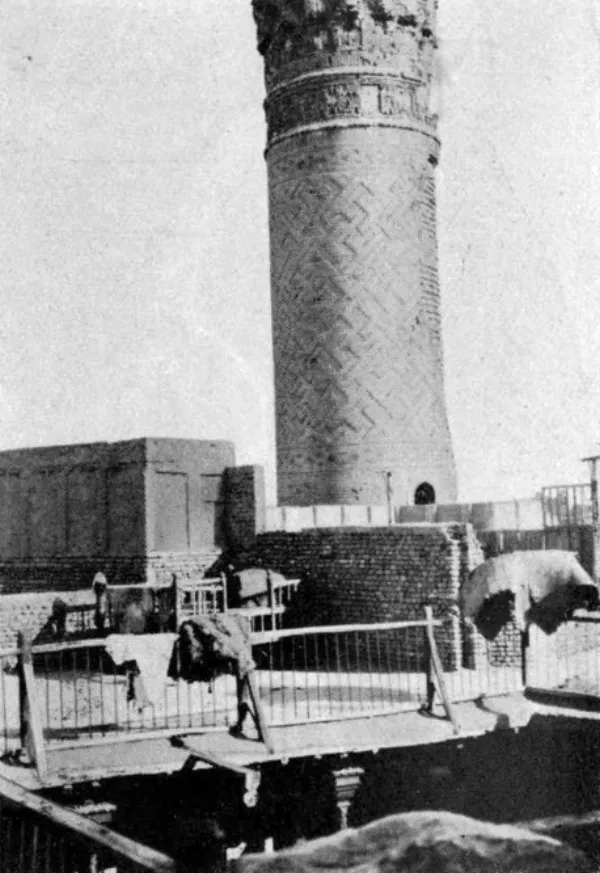
For centuries after the Talmud’s completion, the heads of the Babylonian academies — known as the Geonim — served as the supreme religious authorities for Jews throughout the world. Jewish communities from Spain to India sent their legal questions to Baghdad, and the responses shaped Jewish practice for generations.
Baghdad’s Golden Age
Under the Abbasid Caliphate, Baghdad became one of the most cosmopolitan cities on earth, and its Jews shared in the prosperity. Jewish merchants traded silk, spices, and precious stones along routes stretching from China to Europe. Jewish bankers, physicians, and scholars held prominent positions.
The community developed a distinctive culture — a blend of Arabic literary sophistication and Jewish religious devotion. Iraqi Jews spoke Judeo-Arabic, wrote poetry in Arabic script, and participated fully in the intellectual life of the Islamic world while maintaining their own religious identity.
By the early twentieth century, Jews constituted roughly a third of Baghdad’s population. They dominated certain professions — banking, trade, civil service — and were deeply integrated into Iraqi society. Jewish musicians helped create modern Iraqi music. Jewish writers contributed to Arabic literature. The Sassoon family, originally from Baghdad, became one of the wealthiest families in the British Empire.
The Farhud and the Unraveling
The twentieth century brought catastrophe. Rising Arab nationalism, influenced by Nazi propaganda broadcast throughout the Middle East, turned increasingly hostile toward Jews. In April 1941, a pro-Nazi coup led by Rashid Ali al-Gaylani briefly seized power in Iraq.
On June 1-2, 1941 — the Jewish holiday of Shavuot — mobs rampaged through Jewish neighborhoods in Baghdad in what became known as the Farhud. Approximately 180 Jews were murdered, hundreds were injured, and nearly a thousand Jewish homes and businesses were looted and destroyed. British forces stationed nearby did not intervene.
The Farhud shattered something that could not be repaired. For the first time, Iraqi Jews understood that their place in Iraqi society — built over twenty-six centuries — could be erased in a single weekend.
Operation Ezra and Nehemiah
After the establishment of Israel in 1948, conditions for Iraqi Jews deteriorated rapidly. Anti-Jewish laws were enacted: Jews were dismissed from government positions, their assets were frozen, and Zionism was declared a capital crime.
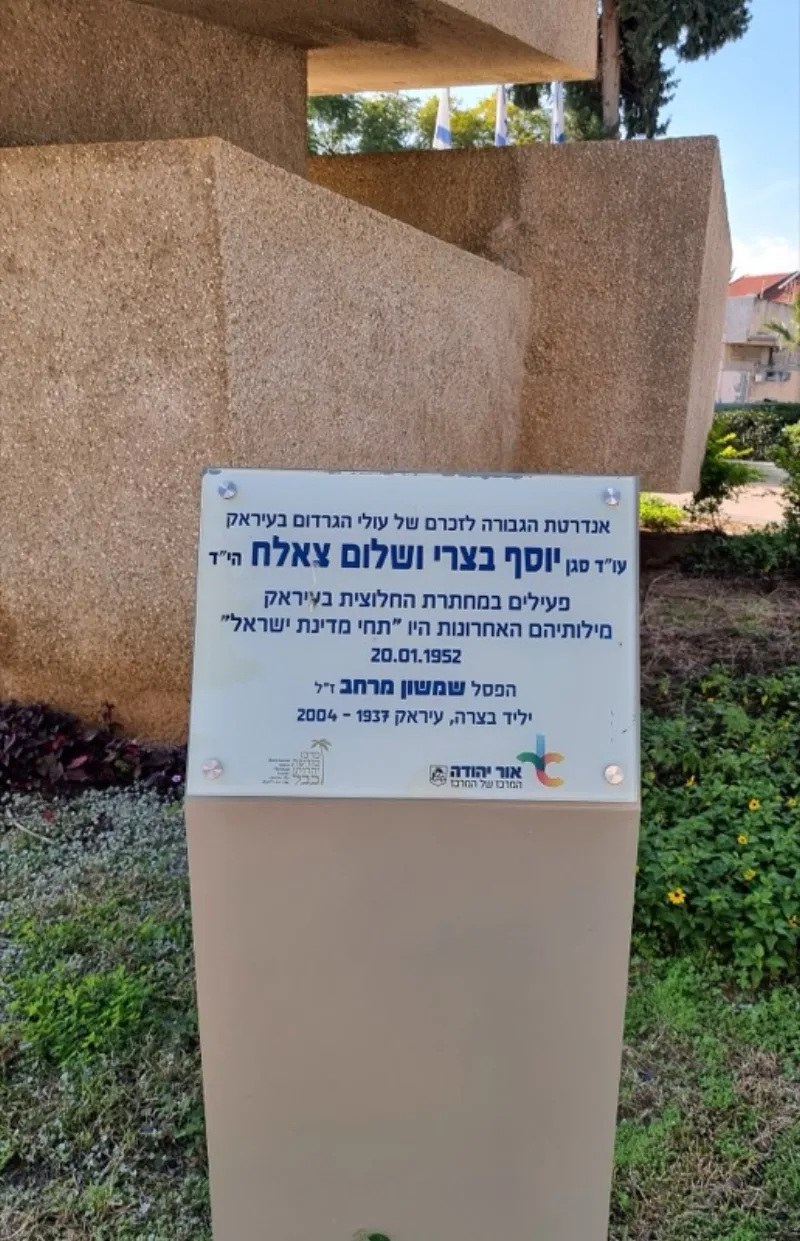
In 1950-1951, the Iraqi government offered Jews a deal — they could leave, but they had to renounce their citizenship and their property. In a mass exodus known as Operation Ezra and Nehemiah (named for the biblical leaders who brought Jews back from Babylon), approximately 120,000 Iraqi Jews were airlifted to Israel.
They arrived with almost nothing. The Iraqi government confiscated their property, businesses, and bank accounts — wealth accumulated over generations was seized overnight. In Israel, Iraqi Jews faced discrimination from the European-dominated establishment, were sent to transit camps, and were often treated as culturally inferior. The pain of this double displacement — rejected by Iraq, marginalized in Israel — remains a deep wound in the community’s collective memory.
A Vanished Civilization
A few thousand Jews remained in Iraq after the mass exodus, but their numbers dwindled steadily. The Baathist regime of the 1960s and 1970s subjected the remaining Jews to surveillance, imprisonment, and public executions — nine Jews were hanged in Baghdad’s Liberation Square in 1969 as alleged spies, their bodies displayed for cheering crowds. By the time of the American invasion in 2003, fewer than thirty-five Jews remained in all of Iraq.
Today, the number is virtually zero.
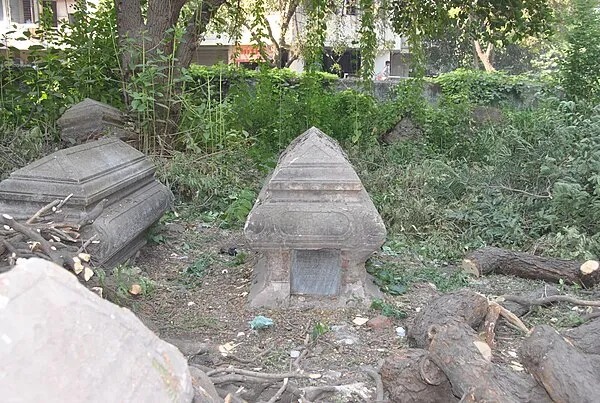
The disappearance of Iraqi Jewry is one of the great cultural tragedies of the twentieth century. A community that produced the Talmud, that helped build Baghdad, that contributed to Iraqi culture for more than two and a half millennia — gone within a single generation. The ancient synagogues of Baghdad have been converted or demolished. The Jewish cemetery is neglected. The shrines of Ezekiel, Ezra, and Jonah — pilgrimage sites for Iraqi Jews for thousands of years — are inaccessible.
In Israel, more than 600,000 citizens trace their roots to Iraq. They brought with them a distinctive liturgy, cuisine, and cultural sensibility. Iraqi Jewish musicians like Salima Murad and Daoud al-Kuwaiti are remembered as pioneers of modern Iraqi music. The community’s scholars continue to study the Babylonian Talmud — the text their ancestors created in the same land they were forced to leave.
By the rivers of Babylon, we sat and wept. Twenty-six centuries later, the weeping has a new dimension — not for a Temple destroyed, but for a civilization uprooted and scattered, leaving behind only echoes in the dusty streets of a city that was once, in every meaningful sense, home.
Frequently Asked Questions
How old is the Iraqi Jewish community?
The Jewish community in Iraq traces its origins to the Babylonian Exile of 586 BCE — over 2,600 years ago. This makes it one of the oldest continuous diaspora communities in Jewish history, predating most other diaspora settlements by centuries.
What was the Farhud?
The Farhud was a violent pogrom against the Jews of Baghdad on June 1-2, 1941, during the Jewish holiday of Shavuot. Mobs murdered approximately 180 Jews, injured hundreds more, and looted Jewish homes and businesses. It was a turning point that shattered Iraqi Jews' sense of security.
Are there any Jews left in Iraq?
Virtually none. From a population of roughly 150,000 in 1948, the community was reduced to single digits by the 2000s. The last known Jews in Iraq number fewer than five individuals.
Sources & Further Reading
Related Articles
Ancient Israel: From Abraham to the Kingdoms
The foundational story of the Jewish people — from the call of Abraham through the united monarchy of David and Solomon.
The Jewish Diaspora: 2,000 Years Across the Globe
How the destruction of the Second Temple scattered the Jewish people across continents, creating diverse communities united by faith.
The Talmud: A Beginner's Guide to Jewish Oral Law
The Talmud is the vast ocean of Jewish thought — centuries of rabbinic debate on law, ethics, storytelling, and the meaning of life, all compiled into one extraordinary work.