Jews of India: Three Communities, One Remarkable Story
India's Jewish story encompasses three distinct communities — the Bene Israel, the Cochin Jews, and the Baghdadi Jews — each with its own origin story, traditions, and remarkable experience of living without antisemitism.

A Land Without Hatred
India holds a unique place in the long story of the Jewish diaspora. In a history marked by expulsions, inquisitions, pogroms, and genocide, India stands apart — a civilization where Jews lived for centuries, sometimes millennia, without experiencing the systematic hatred that defined Jewish life in Europe and much of the Middle East. This remarkable fact makes the Indian Jewish experience not just interesting but important: it demonstrates that antisemitism is not an inevitable response to Jewish difference, but a specific historical phenomenon rooted in particular religious and political contexts.
Three distinct Jewish communities developed in India, each with its own origin story, each occupying a different social niche, and each contributing to the rich tapestry of Indian religious pluralism.
The Bene Israel of Maharashtra
The largest Jewish community in India, the Bene Israel, lived primarily along the Konkan coast of Maharashtra, south of Mumbai (then Bombay). Their origin story is dramatic: they claim descent from a group of Jews who fled persecution in the Land of Israel around 175 BCE. According to tradition, their ship was wrecked off the Indian coast and only seven couples survived, washing ashore near the village of Navgaon.
Cut off from the wider Jewish world for centuries, the Bene Israel gradually adopted local language (Marathi), dress, and some customs. They became known as the “Saturday oil-pressers” — Shanwar Telis — because they refused to work on Shabbat, distinguishing them from their Hindu neighbors. They maintained circumcision, observed dietary laws (though adapted to local food), and kept certain Jewish holidays, but they lost knowledge of Hebrew and much of the rabbinic tradition.
When contact with other Jewish communities was re-established in the eighteenth century — first through Cochin Jews and then through Baghdadi Jewish merchants — the Bene Israel underwent a religious revival. They built synagogues, established Hebrew schools, and reconnected with mainstream Jewish practice. By the twentieth century, the community numbered around 20,000 and had become well integrated into the professional life of Mumbai, producing notable lawyers, doctors, military officers, and civil servants.
The Bene Israel occupied a fascinating social position within the Indian caste system. They were generally regarded as a clean caste, which allowed them to interact freely with upper-caste Hindus. This social integration, combined with the absence of Christian-style antisemitism, meant that Bene Israel identity was about religious difference rather than social stigma.
The Cochin Jews of Kerala
The Cochin Jews of Kerala, on India’s southwestern coast, are perhaps the most ancient Jewish community in India, claiming origins dating to the time of King Solomon’s trade missions. Documentary evidence places them in Kerala by at least the fourth century CE, when a Hindu ruler granted the Jewish leader Joseph Rabban a set of copper plates conferring land and privileges — an extraordinary document that survives to this day.
The Cochin Jewish community itself was divided into subgroups: the Paradesi (“foreign”) Jews, who arrived later from the Middle East and Europe, and the Malabari Jews, who had been in India much longer. There were also the Meshuchrarim, descendants of converts and freed slaves. These internal distinctions, which sometimes echoed Indian caste boundaries, created tensions within the community.
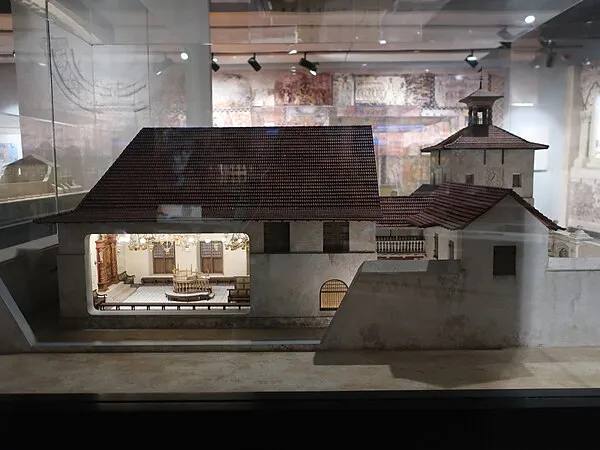
The Paradesi Synagogue in Kochi (Cochin), built in 1568 and rebuilt after Portuguese destruction, is the oldest active synagogue in the Commonwealth of Nations. Its hand-painted Chinese floor tiles and Belgian chandeliers reflect the community’s position at the crossroads of global trade routes. For centuries, Cochin Jews were prominent spice merchants, connected to trading networks that spanned the Indian Ocean.
The Baghdadi Jews
The third community, the Baghdadi Jews, arrived in India in the eighteenth and nineteenth centuries from Iraq, Syria, and other parts of the Ottoman Empire. Unlike the Bene Israel and Cochin Jews, they came as merchants and entrepreneurs, establishing themselves in the commercial centers of Bombay (Mumbai) and Calcutta (Kolkata).
The Baghdadi Jews became extraordinarily successful. The Sassoon family — “the Rothschilds of the East” — built a commercial empire spanning cotton, opium, banking, and real estate. David Sassoon’s textile mills employed thousands. The family constructed synagogues, schools, and hospitals that still stand. Other prominent Baghdadi families — the Kadoories, the Ezras — played similar roles in building modern Mumbai and Kolkata.
The Baghdadi community maintained strong connections to the Sephardi world, using Arabic and later English rather than local Indian languages. They sometimes looked down on the Bene Israel, questioning their Jewish authenticity — a painful dynamic that echoed the hierarchies found in Jewish communities worldwide.
Emigration and What Remains
The establishment of Israel in 1948 drew the majority of Indian Jews to the new state. The Cochin Jewish community emigrated almost entirely — from roughly 2,500 in the 1940s to barely a handful today. The Bene Israel migrated in large numbers but more gradually, with many going to Israel in the 1950s and 1960s. The Baghdadi Jews scattered to Israel, Britain, Australia, and elsewhere.
In Israel, Indian Jews faced the same discrimination that greeted other non-European immigrants. The Bene Israel endured a particularly painful episode in the 1960s when the Israeli rabbinate questioned their Jewish status, suggesting they might need to undergo conversion. Massive protests by the Bene Israel community eventually forced the rabbinate to recognize their Jewishness unconditionally.
Today, approximately 4,000 to 5,000 Jews remain in India, mostly Bene Israel in Mumbai. The Paradesi Synagogue in Kochi attracts thousands of tourists annually but serves a congregation that can barely form a minyan. In Kolkata, the once-grand Baghdadi synagogues are maintained by a dwindling handful of elderly caretakers.
India’s Jewish story matters because it challenges assumptions. It proves that coexistence is possible, that Jewish communities can thrive without persecution, and that diversity does not inevitably produce hatred. The memory of Indian Jewish life — peaceful, productive, and dignified — offers something rare in Jewish history: a chapter without villains.
Frequently Asked Questions
Did Jews in India experience antisemitism?
Remarkably, India is one of the few places in the world where Jews lived for centuries without experiencing significant antisemitism. Hindu and Muslim rulers generally tolerated or welcomed Jewish communities, and Jews integrated into Indian society while maintaining their religious identity.
Who are the Bene Israel?
The Bene Israel are the largest of India's Jewish communities, historically centered in Maharashtra (particularly Mumbai and the Konkan coast). They claim descent from Jews who fled the Land of Israel around 175 BCE. Over centuries of isolation, they adopted local customs while preserving core Jewish practices like Shabbat observance and circumcision.
Are there still Jews in India?
Yes, though the community has shrunk dramatically. From a peak of roughly 30,000 in the 1940s, most Indian Jews emigrated to Israel after 1948. Today approximately 4,000-5,000 Jews remain in India, mostly Bene Israel in Mumbai.
Sources & Further Reading
Related Articles
Converting to Judaism: A Thoughtful Guide to Joining the Jewish People
Converting to Judaism is a serious, transformative journey involving study, mentorship, and ritual — welcomed by tradition yet approached with care across all denominations.
The Jewish Diaspora: 2,000 Years Across the Globe
How the destruction of the Second Temple scattered the Jewish people across continents, creating diverse communities united by faith.
Sephardi vs Ashkenazi: Two Streams of Jewish Life
Sephardi and Ashkenazi Jews share the same Torah but developed distinct languages, liturgies, foods, and customs across centuries of separation — two rivers from one source.