Romaniote Jews: Greece's Ancient Jewish Community
The Romaniote Jews of Greece are among the oldest Jewish communities in Europe — predating Ashkenazi and Sephardi traditions by centuries. Their devastating losses in the Holocaust and fragile survival tell a story most have never heard.
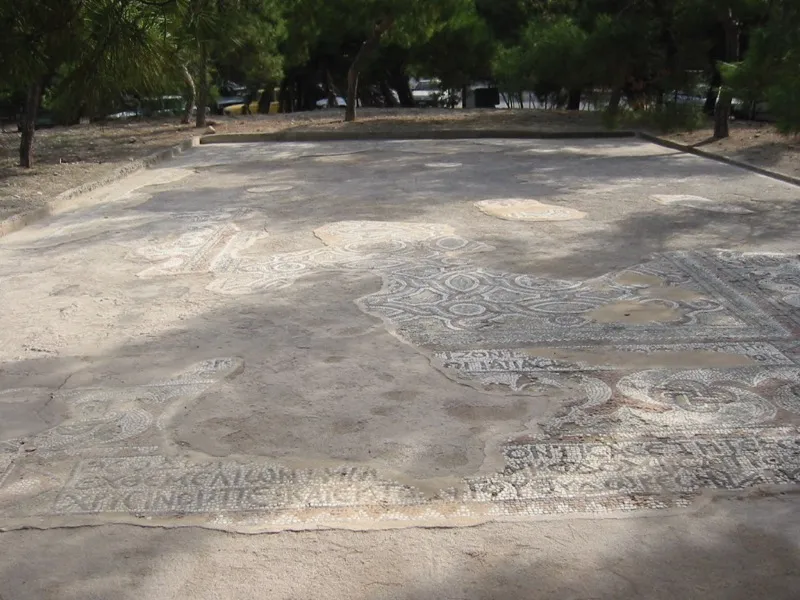
Europe’s Forgotten Jews
When people think of European Jewry, they picture the shtetls of Poland and Russia, the ghettos of Italy, the synagogues of Amsterdam and Prague. Almost nobody thinks of Greece. And yet Greece is home to one of the oldest Jewish communities in all of Europe — a community whose roots predate the destruction of the Second Temple, predate the rise of Christianity, predate even the Roman Empire’s encounter with Judea.
The Romaniote Jews of Greece have been continuously present on European soil for over 2,300 years. They are not Ashkenazi. They are not Sephardi. They are something older than both — a Jewish tradition that developed in the Greek-speaking world, absorbed elements of Hellenistic culture while maintaining fierce Jewish loyalty, and survived everything that two millennia of European history could throw at them.
Almost everything, that is. The Holocaust destroyed 87% of Greek Jewry — one of the highest proportional losses of any country. The community that remains is fragile, aging, and fighting to preserve a heritage that most Jews, let alone most non-Jews, have never heard of.
Ancient Roots
Jews arrived in Greece in the Hellenistic period, likely as early as the 4th or 3rd century BCE. The apostle Paul found established Jewish communities throughout Greece during his travels in the first century CE — in Thessaloniki, Corinth, Athens, and elsewhere. These communities predated Christianity by centuries.
The Romaniote Jews — named for the Roman (Byzantine) Empire in which they lived — developed their own distinct identity. They spoke Yevanic (Judeo-Greek), a Greek dialect written in Hebrew characters. They followed their own liturgical traditions, which differed from both the Ashkenazi and Sephardi rites. Their synagogues had their own architectural style, their melodies were their own, their customs were shaped by centuries of interaction with Greek culture.
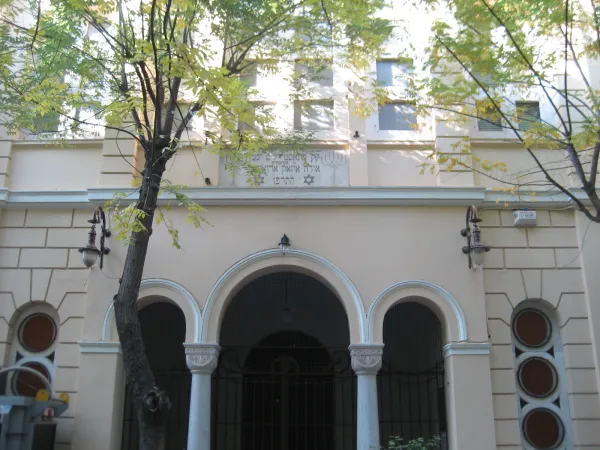
The Romaniote community centered on cities like Ioannina (in northwestern Greece), Thebes, Patras, Corfu, and Kastoria. In Ioannina, the community was especially prominent — Jews lived in the old fortified city (the Kastro), maintaining synagogues, schools, and a vibrant communal life for centuries.
Thessaloniki: The Jerusalem of the Balkans
The story of Greek Jewry took a dramatic turn in 1492, when Ferdinand and Isabella expelled the Jews from Spain. Tens of thousands of Sephardi Jews found refuge in the Ottoman Empire, and many settled in Thessaloniki (Salonika), which was under Ottoman control.
Thessaloniki became the most Jewish city in the world outside of the land of Israel. By the 16th century, Jews were the majority of the city’s population — the only major European city where this was the case. The port bustled with Jewish stevedores. The marketplace closed on Saturday. Jewish printers produced Hebrew books that circulated throughout the Ottoman world. Ladino (Judeo-Spanish) became the city’s dominant language.
The city had dozens of synagogues, each serving a congregation that traced its origins to a specific Spanish or Portuguese city of origin. There were synagogues of the Castilians, the Aragonese, the Portuguese, and the Italians — each maintaining the customs of their ancestral homeland. The Romaniote Jews, the original Greek Jewish community, found themselves outnumbered but maintained their distinct identity alongside the Sephardi newcomers.
Thessaloniki’s Jewish golden age lasted centuries. The city produced rabbis, poets, merchants, and craftsmen. Its Jewish community was so vibrant, so central to the city’s identity, that Thessaloniki earned the name “The Jerusalem of the Balkans.”
The 20th Century: From Majority to Memory
Greece’s acquisition of Thessaloniki from the Ottoman Empire in 1912 began a period of upheaval for the Jewish community. The great fire of 1917 destroyed much of the Jewish quarter. Greek nationalization policies favored the ethnic Greek population. Many Jews emigrated — to Palestine, France, the United States.
By 1940, Thessaloniki’s Jewish population had declined from its peak but still numbered about 50,000. Greece as a whole had approximately 77,000 Jews. No one imagined what was coming.
The Holocaust in Greece
Germany occupied Greece in April 1941 (with Italian and Bulgarian zones). The destruction of Greek Jewry was methodical and nearly total.
In Thessaloniki, the process was chillingly efficient. In February 1943, Jews were ordered to wear the yellow star and move into ghettos. Beginning in March, deportation trains began running to Auschwitz-Birkenau — a journey of over 1,100 miles that took up to eleven days in sealed cattle cars. Between March and August 1943, nearly the entire Jewish population of Thessaloniki — approximately 49,000 people — was deported and murdered. The city that had been majority Jewish for centuries was emptied of Jews in less than six months.
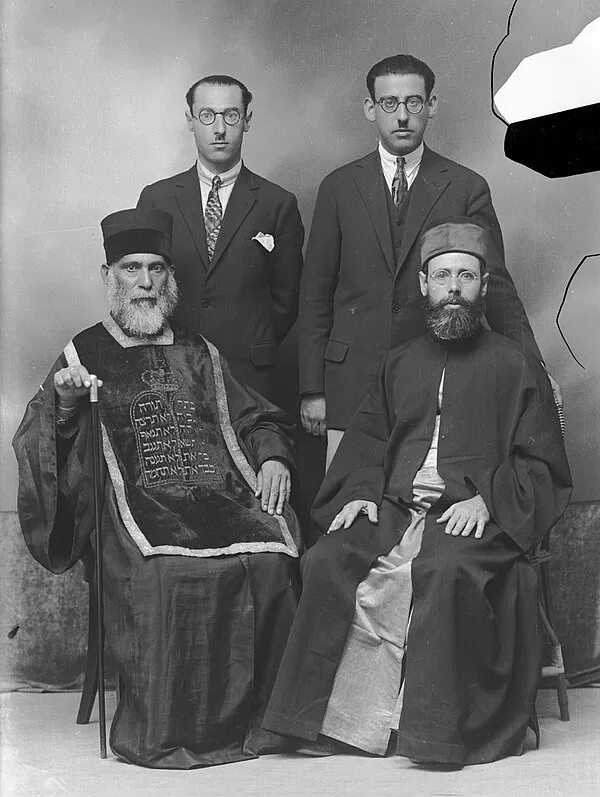
The Romaniote communities suffered similarly. In Ioannina, the Germans arrived in September 1943 and deported the entire Jewish community — approximately 1,870 people — to Auschwitz in March 1944. Only about 100 survived.
On some islands, remarkable rescues occurred. On Zakynthos, the mayor and the bishop refused to hand over a list of Jewish residents, and the entire Jewish population — 275 people — was hidden by their Christian neighbors. Similar rescue efforts occurred on other islands. But these were exceptions in an otherwise catastrophic story.
In total, approximately 67,000 Greek Jews — 87% of the pre-war population — were murdered. It was one of the highest proportional losses of any country in the Holocaust.
What Remains
Today, approximately 5,000-6,000 Jews live in Greece. The largest community is in Athens, which was ironically not a major Jewish center before the war but became the default gathering point for survivors. Thessaloniki maintains a small Jewish community — a ghostly remnant of a city that was once majority Jewish. The Jewish museum, the few surviving synagogues, and the memorial at the old deportation site stand as testimony.
In Ioannina, a handful of families maintain the last Romaniote synagogue in the city — Kahal Kadosh Yashan, founded in the early 19th century. Services are held on major holidays, often with visitors from the Ioannina diaspora in New York (a Romaniote congregation, Kehila Kedosha Janina, operates on the Lower East Side of Manhattan and maintains a small museum).
The Romaniote liturgical tradition — with its unique melodies, its Greek-influenced Hebrew pronunciation, and its distinctive customs — survives in these scattered communities and in academic archives. Scholars have recorded elderly Romaniote Jews chanting prayers in melodies that may be over a thousand years old.
A Heritage Worth Knowing
The story of Greek Jewry matters because it expands our understanding of what Jewish life has been. The Jews of Greece were not a footnote to Ashkenazi or Sephardi history — they were a separate stream, flowing from the same ancient source but carving their own channel through twenty-three centuries of European history.
Their near-destruction in the Holocaust is one of the least-known chapters of that catastrophe. And their fragile survival — a few thousand people maintaining an ancient tradition in a country that has largely forgotten they exist — is both heartbreaking and inspiring.
The Romaniote Jews remind us that Jewish diversity is not a modern invention. It is as old as the diaspora itself — as old as the first Jewish merchants who sailed to Greek ports, spoke Greek in the marketplace and Hebrew in the synagogue, and made a home in a land that was never quite their own but was never entirely foreign either.
Frequently Asked Questions
Who are the Romaniote Jews?
The Romaniote Jews are the original Greek-speaking Jewish community of Greece and the broader Byzantine Empire. Their presence in Greece dates back at least 2,300 years — making them one of the oldest Jewish communities in Europe, predating both the Ashkenazi and Sephardi traditions. They spoke Judeo-Greek (Yevanic), maintained their own distinct liturgical traditions, and lived in cities throughout Greece, particularly Ioannina, Patras, Corfu, and Thebes. They are distinct from the Sephardi Jews who arrived in Greece after the 1492 Spanish expulsion.
What happened to Greek Jews during the Holocaust?
The Holocaust devastated Greek Jewry. Approximately 87% of Greece's Jewish population — around 67,000 out of 77,000 — was murdered, primarily at Auschwitz-Birkenau. The destruction of Thessaloniki's Jewish community was particularly catastrophic: nearly 49,000 of the city's 50,000 Jews were deported and killed in a matter of months in 1943. The deportations of Greek Jews to Auschwitz involved some of the longest transport distances of the Holocaust, with journeys lasting up to eleven days in sealed cattle cars.
Are there still Jews in Greece today?
Yes, but the community is tiny. Approximately 5,000-6,000 Jews live in Greece today, down from about 77,000 before the Holocaust. The largest community is in Athens, followed by Thessaloniki. A handful of families maintain communities in Ioannina, Larissa, Volos, and Corfu. Several historic synagogues have been preserved as museums or continue to hold occasional services. The community faces the ongoing challenge of maintaining Jewish life with an aging and shrinking population.
Sources & Further Reading
Related Articles
The Jewish Diaspora: 2,000 Years Across the Globe
How the destruction of the Second Temple scattered the Jewish people across continents, creating diverse communities united by faith.
The Holocaust: Remembering the Six Million
The systematic murder of six million Jews during World War II — the darkest chapter in human history and its lasting impact on Jewish identity.
Sephardi vs Ashkenazi: Two Streams of Jewish Life
Sephardi and Ashkenazi Jews share the same Torah but developed distinct languages, liturgies, foods, and customs across centuries of separation — two rivers from one source.