Jews of Modern Egypt: Cosmopolitan Cairo and the End of an Era
The story of modern Egyptian Jewry — cosmopolitan life in Cairo and Alexandria, the Suez Crisis expulsion of 1956, the Nasser era, and a community reduced to virtually zero.
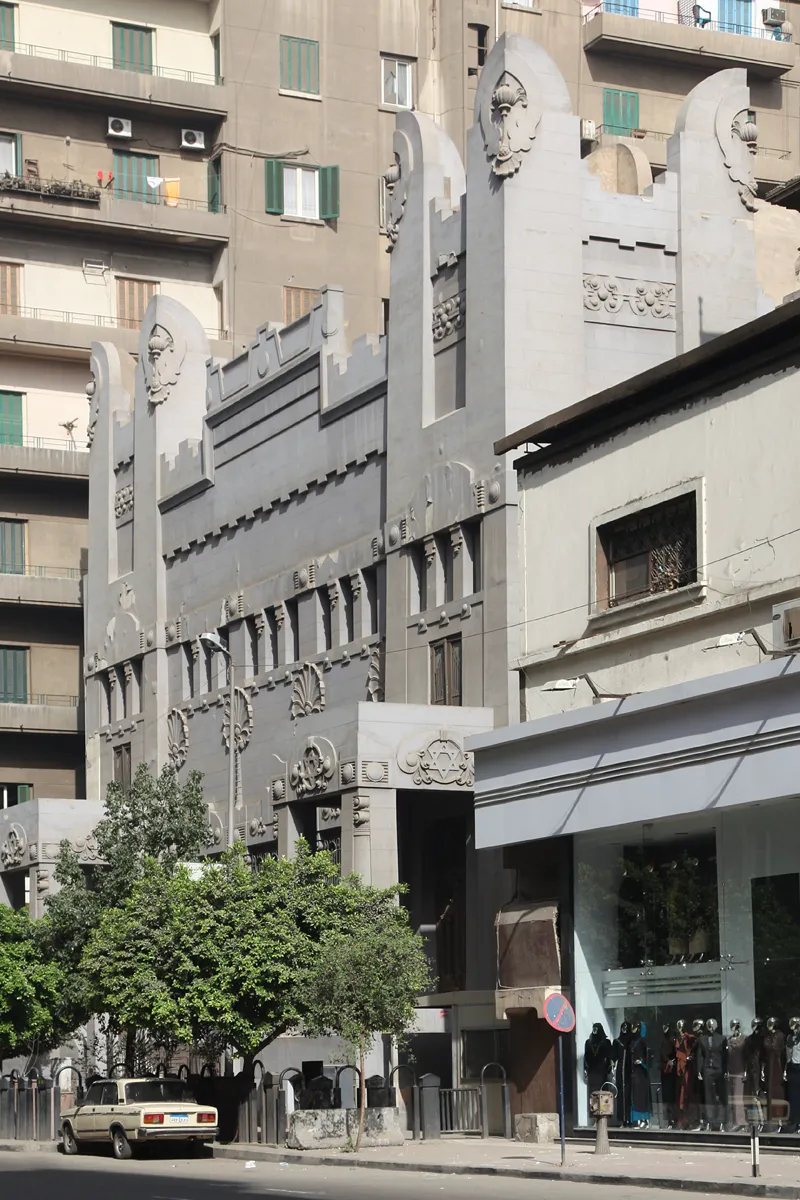
The Last Jews of Cairo
In the 1940s, if you walked through the Mouski quarter of Cairo or along the Corniche in Alexandria, you would have encountered a Jewish community unlike any other in the Middle East. Egyptian Jews spoke French, Arabic, Italian, English, and Ladino — sometimes all in the same conversation. They ran department stores and cotton trading firms. They attended the opera. They published newspapers in multiple languages. They were, in every sense, cosmopolitan.
By the 1970s, they were gone.
The disappearance of Egyptian Jewry is one of the great vanishing acts of modern history. A community of approximately 80,000 people — rooted in Egypt for centuries, integrated into its economic and cultural life, and remarkably diverse in origin — was dismantled in barely two decades.
A Cosmopolitan Community
Modern Egyptian Jewry was extraordinarily diverse. It included:
- Musta’arabim — Arabic-speaking Jews whose families had lived in Egypt for centuries
- Sephardim — descendants of Spanish exiles who arrived via the Ottoman Empire
- Italian and Greek Jews — who came during the 19th century
- Ashkenazi Jews — who arrived from Russia and Eastern Europe in the early 20th century
- Karaite Jews — a distinct group that follows the Bible but not the Talmud, with a centuries-old presence in Cairo
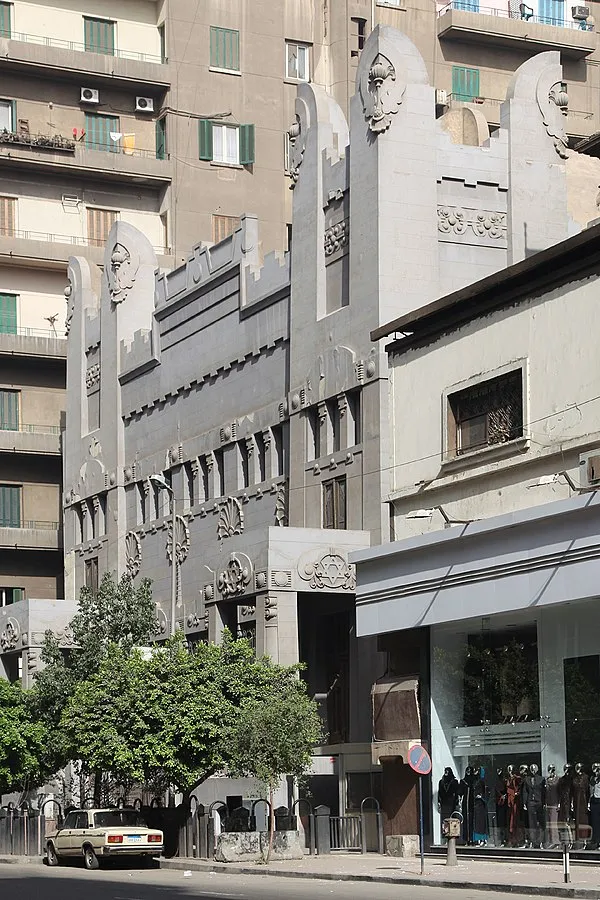
This diversity was reflected in the community’s languages, synagogues, and social clubs. Cairo alone had dozens of synagogues — Sephardi, Ashkenazi, and Karaite — along with Jewish schools, hospitals, clubs, and charitable organizations.
Egyptian Jews were disproportionately represented in the country’s economic elite. The Cattaui, Mosseri, and Suares families were major figures in Egyptian banking and industry. The Cicurel family owned Egypt’s most famous department store. Jewish professionals — doctors, lawyers, engineers, architects — were prominent in Cairo and Alexandria.
Yet the community was not exclusively wealthy. Haret al-Yahud, Cairo’s old Jewish quarter, was home to working-class and poor Jews who lived alongside their Muslim and Christian neighbors in the crowded streets of medieval Cairo.
The Beginning of the End
The creation of the State of Israel in 1948 set in motion the forces that would destroy Egyptian Jewry. In the months surrounding the 1948 war, bomb attacks struck the Jewish quarter of Cairo, killing dozens. The government arrested hundreds of Jews on suspicion of Zionist sympathies. Property was confiscated, businesses were boycotted, and a climate of fear settled over the community.
Still, most Egyptian Jews stayed. Many were not Zionists — they considered themselves Egyptians of Jewish faith, loyal citizens of the country they had known for generations. Some were active in Egyptian political and cultural life, including several who were socialists or communists.
The Suez Crisis: 1956
The turning point came in 1956, when Britain, France, and Israel invaded Egypt in response to President Gamal Abdel Nasser’s nationalization of the Suez Canal. Nasser declared Jews — along with British and French nationals — “enemies of the state.” Jewish property was sequestered. Hundreds of Jews were arrested or interned. Approximately 25,000 Jews were expelled or pressured to leave, forced to sign declarations that they were “voluntarily” departing and would not return.
Those who left were allowed to take almost nothing. Bank accounts were frozen. Businesses were confiscated. Homes were seized. Families that had lived in Egypt for generations departed with suitcases and the clothes on their backs.
Most went to Israel, France, Brazil, or the United States. The community that remained — perhaps 15,000–20,000 — lived under increasing restrictions.
The Nasser Era
Nasser’s Egypt was not a safe place for Jews. Even those who had stayed, who had Egyptian nationality, who had never expressed Zionist sympathies, were treated as suspect. Jewish communal institutions were shut down. Schools were nationalized. Synagogues were monitored.
The Six-Day War of 1967 delivered the final blow. Hundreds of Jewish men were arrested and interned, held for months or years in prison camps. The remaining Jews were expelled or left voluntarily under unbearable conditions. By the early 1970s, Egypt’s Jewish population had dwindled to a few hundred elderly individuals.
Nostalgia and Restoration
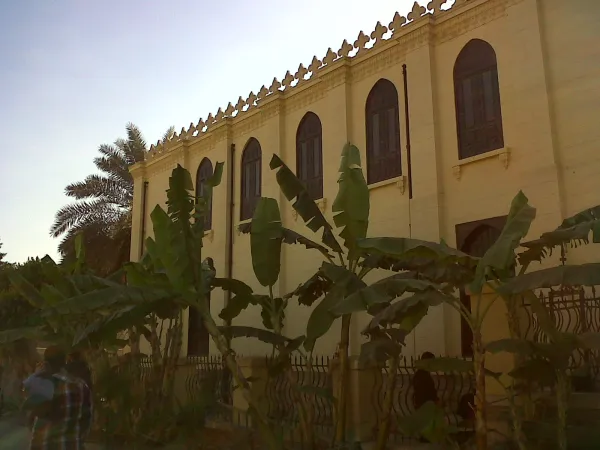
In recent decades, the Egyptian government has undertaken restoration of several historic Jewish sites, including the Ben Ezra Synagogue in Old Cairo (famous for its medieval Genizah, a repository of documents that transformed the study of medieval Jewish and Islamic history) and the Eliyahu Hanavi Synagogue in Alexandria.
These restorations are significant as acts of cultural preservation. But they serve tourists and scholars, not worshippers. The synagogues are museums now — beautiful, empty, and silent.
A genre of nostalgic memoir has emerged from the Egyptian Jewish diaspora — books, films, and oral histories that recall the sweetness of Alexandrian summers, the bustle of Cairo’s Jewish quarter, the polyglot conversations at family dinners. Authors like André Aciman (Out of Egypt) and Lucette Lagnado (The Man in the White Sharkskin Suit) have brought Egyptian Jewish memory to a wider audience.
A Wound That Does Not Close
The story of Egyptian Jewry is particularly poignant because the community was so deeply integrated into Egyptian life. These were not recent immigrants or colonial settlers — they were Egyptians, embedded in the country’s economy, culture, and social fabric for centuries. Their departure was not the result of ancient hatred but of modern nationalism, Cold War politics, and the Arab-Israeli conflict.
Today, a handful of elderly Jews remain in Cairo. They tend the synagogues. They maintain what they can. And they represent the last living thread of a community that once numbered in the tens of thousands — a community that was cosmopolitan, creative, and profoundly Egyptian, and that was swept away by forces larger than any individual could resist.
Frequently Asked Questions
How many Jews lived in Egypt before 1948?
At its peak in the 1940s, Egypt's Jewish community numbered approximately 75,000–80,000 people. They were concentrated in Cairo and Alexandria and included Sephardi, Mizrachi, Ashkenazi, and Karaite Jews. The community was cosmopolitan, multilingual, and prominent in business, finance, and the arts.
What caused the Jewish exodus from Egypt?
The exodus occurred in waves. The 1948 Arab-Israeli war brought anti-Jewish riots and the first departures. The 1956 Suez Crisis led to mass expulsions — President Nasser declared Jews 'enemies of the state,' confiscated property, and expelled thousands. The 1967 Six-Day War prompted the imprisonment of hundreds of Jewish men and further expulsions. By the 1970s, virtually no Jews remained.
Is there any Jewish life in Egypt today?
A handful of elderly Jews remain in Cairo. The Egyptian government has undertaken some restoration of historic synagogues, including the Ben Ezra Synagogue and the Eliyahu Hanavi Synagogue in Alexandria. These restorations are motivated by cultural heritage and tourism rather than serving an active community. Egypt's Jewish chapter is essentially closed.
Sources & Further Reading
Related Articles
The Jewish Diaspora: 2,000 Years Across the Globe
How the destruction of the Second Temple scattered the Jewish people across continents, creating diverse communities united by faith.
Sephardi vs Ashkenazi: Two Streams of Jewish Life
Sephardi and Ashkenazi Jews share the same Torah but developed distinct languages, liturgies, foods, and customs across centuries of separation — two rivers from one source.
The Six-Day War: Six Days That Changed Everything
In June 1967, Israel fought a war that lasted six days and reshaped the Middle East forever — capturing the Sinai, Golan Heights, and West Bank, reunifying Jerusalem, and creating a reality that defines the Israeli-Palestinian conflict to this day.