Jews of Britain: A Thousand-Year Journey
From William the Conqueror to the Kindertransport, the story of British Jewry encompasses medieval massacres, centuries of exile, readmission under Cromwell, and a community that helped shape the modern Jewish world.
Arrival and Catastrophe
The story of Jews in Britain begins with conquest. When William the Conqueror crossed the English Channel in 1066, he brought Jewish merchants and financiers from Normandy to help develop the economy of his new realm. These earliest English Jews settled in London, York, Lincoln, Norwich, and other cities, forming a small but economically significant community under direct royal protection.
Royal protection, however, was a double-edged sword. English Jews were classified as the property of the Crown — useful when the king needed funds, vulnerable when he did not. Jews served as financiers and moneylenders (Christians being prohibited from charging interest), which made them essential to the economy and simultaneously the objects of popular resentment.
The twelfth century brought escalating violence. In 1190, the Jewish community of York was trapped in Clifford’s Tower by a mob whipped into frenzy by a combination of Crusading zeal, debt resentment, and religious hatred. Rather than face forced conversion or murder, approximately 150 Jews chose mass suicide — one of the most horrifying episodes in medieval English history.
Blood libels — the monstrous accusation that Jews murdered Christian children for ritual purposes — found fertile ground in England. The case of William of Norwich in 1144 is considered the first recorded blood libel in history, and the death of Hugh of Lincoln in 1255 led to the execution of eighteen Jews and became embedded in English literature and folklore.
Expulsion and the Long Absence
In 1290, King Edward I expelled all Jews from England — approximately 3,000 people. It was the first expulsion of an entire Jewish community from a European nation, predating the more famous Spanish expulsion by two centuries. The exiles scattered to France, the Low Countries, and elsewhere. England would have no official Jewish presence for 366 years.
The absence was not complete. A small community of crypto-Jews — outwardly Christian, secretly Jewish — existed in London during the Tudor period. Some were merchants from Spain and Portugal who had been forcibly converted but maintained Jewish practices in private.
Cromwell and Readmission
The formal readmission of Jews to England came in 1656 under Oliver Cromwell. The motivations were mixed: Cromwell harbored millenarian beliefs that the return of Jews to England was necessary for the Second Coming of Christ, and he also recognized the economic benefits Jewish merchants could bring. Rabbi Menasseh ben Israel of Amsterdam petitioned Cromwell directly, arguing for Jewish readmission on both religious and practical grounds.
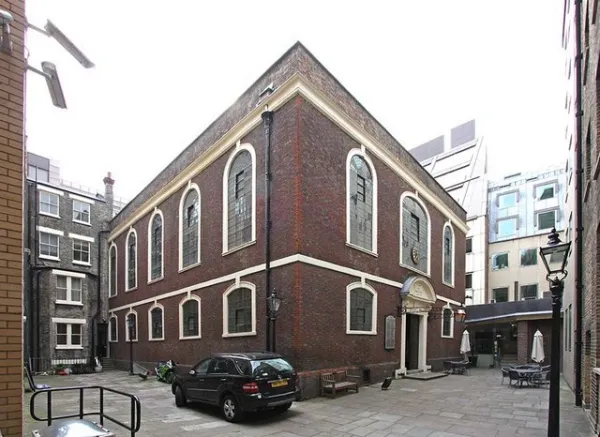
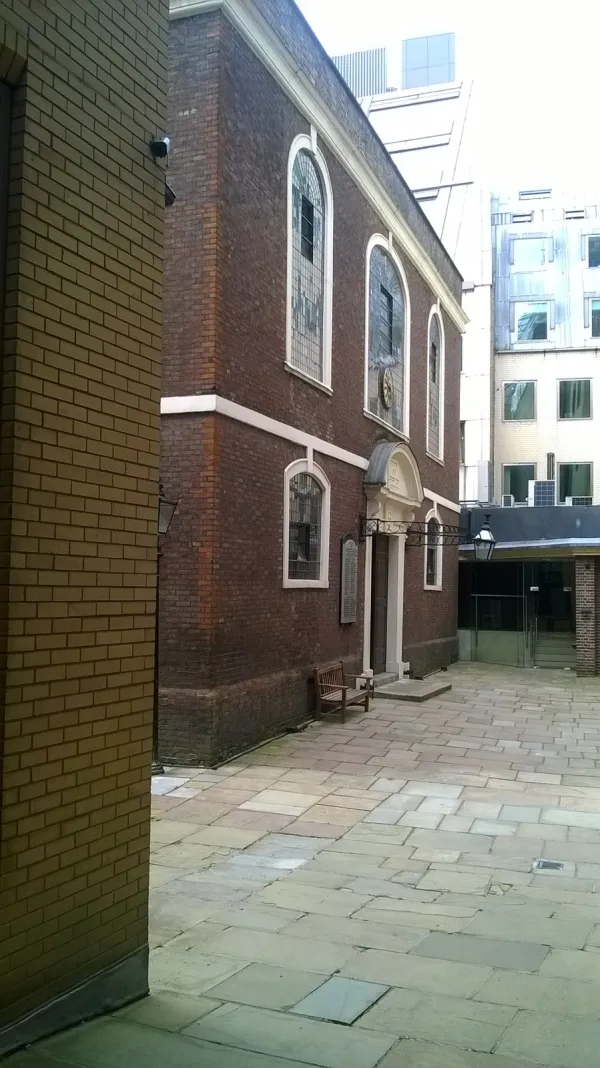
There was no grand decree of readmission. Rather, Cromwell quietly allowed Jews to settle, worship, and trade. The first synagogue of the newly returned community was established by Sephardi Jews from the Netherlands and Portugal. In 1701, they built Bevis Marks Synagogue in London — a beautiful building that has held continuous services for over three centuries and remains the oldest synagogue in Britain.
Ashkenazi Jews from Central and Eastern Europe followed, arriving in increasing numbers during the eighteenth and nineteenth centuries. The two communities developed separate institutions, traditions, and social hierarchies that persisted for generations.
Emancipation and Empire
Jewish emancipation in Britain was a gradual process. Jews gained the right to be naturalized in 1753 (though the act was quickly repealed amid public outcry). Full political emancipation came in stages: Jews were admitted to Parliament in 1858 when Lionel de Rothschild took his seat after an eleven-year battle over the Christian oath of office.
Benjamin Disraeli — born Jewish but baptized as a child — served as Prime Minister in 1868 and again from 1874 to 1880. His Jewish heritage was both a source of fascination and a target for antisemitic caricature. Herbert Samuel became the first practicing Jew to serve in the British Cabinet in 1909.
The Balfour Declaration and the Mandate
The most consequential intersection of British and Jewish history came during World War I. On November 2, 1917, Foreign Secretary Arthur Balfour wrote to Lord Rothschild expressing British support for “the establishment in Palestine of a national home for the Jewish people.”
The Balfour Declaration — just 67 words — set in motion the chain of events that led to the establishment of the State of Israel. Chaim Weizmann, a chemist at the University of Manchester and a Zionist leader, had cultivated relationships with British politicians for years and played a crucial role in securing the declaration.
Britain subsequently governed Palestine under a League of Nations mandate from 1920 to 1948 — a period marked by escalating Arab-Jewish violence, British attempts to restrict Jewish immigration (most painfully during the Holocaust, when ships carrying refugees were turned away), and ultimately British withdrawal in 1948.
The Kindertransport and World War II
Between December 1938 and September 1939, Britain admitted approximately 10,000 Jewish children from Germany, Austria, Czechoslovakia, and Poland in what became known as the Kindertransport. The children arrived by train and ship, many carrying a single suitcase, most never to see their parents again.
The Kindertransport saved thousands of lives and represents one of the most humane acts of the era. Yet it also reflected the limits of British compassion — adults were largely excluded, and proposals to admit more refugees were rejected. Britain’s wartime record on Jewish rescue is a subject of ongoing debate, with critics pointing to the strict enforcement of immigration quotas to Palestine even as the scale of the Holocaust became known.
British Jewry Today
Today, approximately 280,000 Jews live in Britain, concentrated in London, Manchester, Leeds, and Glasgow. The community spans the full religious spectrum, from the large Haredi communities of Stamford Hill and Gateshead to progressive and secular Jews.
British Jewry has produced remarkable figures: from the philanthropic Rothschild family to the philosophers Isaiah Berlin and Karl Popper, from the playwrights Harold Pinter and Tom Stoppard to the Nobel laureates who studied in British universities. The Chief Rabbinate, a uniquely British institution, has served as a focal point for communal leadership since 1704.
The community faces familiar challenges — assimilation, intermarriage, and periodic surges of antisemitism — but also demonstrates remarkable vitality. Jewish schools, charitable organizations, and cultural institutions thrive. The annual commemoration of the Kindertransport at Liverpool Street Station, where a bronze statue of a young girl with a suitcase stands amid the rush of commuters, serves as a reminder of what Britain offered — and what it might have offered more of — in the darkest hour.
A thousand years of history. Massacre and sanctuary, expulsion and return, empire and conscience. The story of Jews in Britain is not simple, but it is deeply human — a record of a small community navigating the currents of a great nation, contributing far beyond its numbers, and carrying within it the memory of every chapter, dark and luminous alike.
Frequently Asked Questions
When were Jews expelled from England?
King Edward I expelled all Jews from England in 1290. It was the first mass expulsion of Jews from a European nation. Jews were not formally readmitted until 1656 under Oliver Cromwell, meaning England was without an official Jewish community for 366 years.
What was the Balfour Declaration?
On November 2, 1917, British Foreign Secretary Arthur James Balfour issued a letter declaring British support for 'the establishment in Palestine of a national home for the Jewish people.' The Balfour Declaration, influenced by Zionist leaders like Chaim Weizmann, became a cornerstone of the movement for Jewish statehood.
What was the Kindertransport?
The Kindertransport was a rescue mission between December 1938 and September 1939 that brought approximately 10,000 Jewish children from Nazi-controlled territories to Britain. Most never saw their parents again. Many Kindertransport survivors went on to make significant contributions to British society.
Sources & Further Reading
Related Articles
The Jewish Diaspora: 2,000 Years Across the Globe
How the destruction of the Second Temple scattered the Jewish people across continents, creating diverse communities united by faith.
The Holocaust: Remembering the Six Million
The systematic murder of six million Jews during World War II — the darkest chapter in human history and its lasting impact on Jewish identity.
Zionism: The Movement That Built a Nation
Zionism — the movement for Jewish self-determination in the ancestral homeland — transformed from a radical 19th-century idea into the founding ideology of the State of Israel.