Jewish Theater: From the Yiddish Stage to Broadway's Brightest Lights
Jewish theater began in the shtetls of Eastern Europe and traveled to New York's Second Avenue before conquering Broadway. From Goldfaden to Sondheim, the Jewish contribution to the stage is immense.
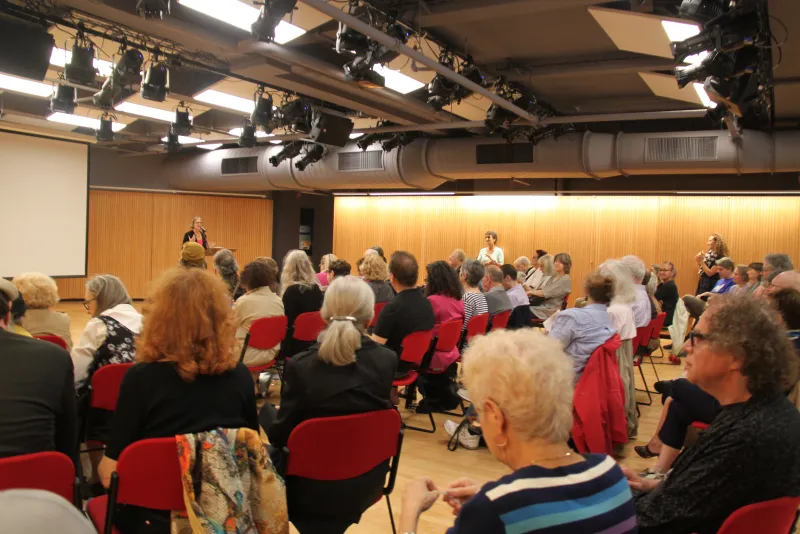
All the World’s a Stage (Especially Second Avenue)
There is a story — possibly true, definitely telling — that when the great Yiddish actor Jacob Adler performed King Lear on the Yiddish stage in New York, a woman in the audience stood up during the storm scene and shouted at the ungrateful daughters: “Leave him alone! He’s an old man!”
That’s Jewish theater in a nutshell: the audience is part of the show, the emotions are enormous, and the boundary between art and life is paper-thin.
The story of Jewish theater is a story of invention, immigration, and transformation. It begins in the taverns and market squares of Eastern Europe, travels through the electric Yiddish stage of New York’s Lower East Side, and culminates in a Jewish contribution to Broadway so vast that American musical theater is, in significant part, a Jewish art form.
The Birth of Yiddish Theater
Before the modern era, Jewish performance was limited to Purimshpils — amateur comic skits performed during the holiday of Purim, usually retelling the story of Esther with considerable improvisation and local humor. Professional theater was viewed with suspicion by religious authorities, who associated it with gentile culture and moral looseness.
That changed with Abraham Goldfaden (1840–1908), a Ukrainian-born poet, playwright, and composer who is universally credited as the father of modern Yiddish theater. In 1876, in a wine garden in Iasi, Romania, Goldfaden assembled a troupe of singers and comedians and staged the first professional Yiddish theatrical performance.
Goldfaden wrote plays that combined music, comedy, and drama — operettas, historical dramas, and comedies that drew on Jewish folklore, biblical stories, and the realities of Eastern European Jewish life. His works — Shulamith, The Two Kuni-Lemls, Bar Kokhba — became the foundation of a repertoire that would sustain Yiddish theater for decades.

The Yiddish theater spread rapidly through Eastern Europe. By the 1880s, troupes were performing in Russia, Poland, Romania, and beyond. The Tsarist government banned Yiddish theater in Russia in 1883, driving performers underground or abroad — many to America.
Second Avenue: The Yiddish Broadway
When the great wave of Eastern European Jewish immigration brought over two million Jews to America between 1880 and 1924, they brought Yiddish theater with them.
New York’s Lower East Side became the world capital of Yiddish theater. Playhouses on and around Second Avenue — nicknamed the “Yiddish Broadway” or the “Yiddish Rialto” — drew audiences of thousands every night. At its peak in the 1920s, there were over a dozen active Yiddish theaters in New York.
The stars of the Yiddish stage were celebrities of enormous stature within the immigrant community:
- Jacob Adler and Boris Thomashefsky: Rival leading men who played every role from biblical patriarchs to Hamlet (in Yiddish, naturally)
- Molly Picon: The beloved comedienne who brought physical comedy and sweetness to the Yiddish stage
- Maurice Schwartz: Founder of the Yiddish Art Theatre, who tried to elevate Yiddish theater from melodrama to art
The Yiddish theater served as much more than entertainment. For immigrants struggling with a new language, a new culture, and the dislocation of immigration, the theater was a mirror, a meeting place, and an emotional release. Audiences laughed, wept, argued with the actors, and brought their own snacks.
The decline of Yiddish theater was driven by the same forces that diminished Yiddish itself: assimilation, the shift to English, the Holocaust’s destruction of Yiddish-speaking communities in Europe, and the passage of the immigrant generation. By the mid-20th century, the great theaters on Second Avenue had mostly closed. Today, a handful of Yiddish theater companies keep the tradition alive, including the National Yiddish Theatre Folksbiene in New York, which staged a remarkably successful Yiddish-language production of Fiddler on the Roof in 2018.
Broadway: The Jewish Invasion
The transition from Second Avenue to Broadway was less a journey than a migration. As Jewish performers, writers, and composers moved into the English-language mainstream, they didn’t leave their sensibility behind — they transformed American theater with it.
The Songwriters and Composers
The American musical theater canon is overwhelmingly the work of Jewish creators:
- Irving Berlin (born Israel Beilin in Belarus): Annie Get Your Gun, White Christmas, God Bless America — a Jewish immigrant wrote America’s unofficial anthems
- George and Ira Gershwin: Porgy and Bess, An American in Paris
- Richard Rodgers and Oscar Hammerstein II: Oklahoma!, South Pacific, The King and I, The Sound of Music, Carousel — they virtually invented the modern musical
- Leonard Bernstein: West Side Story, On the Town
- Stephen Sondheim: Sweeney Todd, Into the Woods, Company, Sunday in the Park with George — the most intellectually ambitious composer-lyricist in Broadway history
- Jerry Bock and Sheldon Harnick: Fiddler on the Roof
- John Kander and Fred Ebb: Cabaret, Chicago
The Producers and Directors
Jewish producers and directors built Broadway as an institution:
- The Shubert brothers: Controlled a vast network of theaters
- David Merrick: “The Abominable Showman,” producer of Hello, Dolly! and dozens more
- Harold Prince: Legendary director-producer of West Side Story, Fiddler, Cabaret, Sweeney Todd, and Phantom of the Opera
Fiddler on the Roof: The Bridge
Fiddler on the Roof (1964) is the great bridge between Yiddish theater and Broadway. Based on Sholem Aleichem’s Yiddish stories, with music by Jerry Bock, lyrics by Sheldon Harnick, and book by Joseph Stein, Fiddler told a specifically Jewish story — life in a shtetl under threat of pogroms — and made it universal.

The original production, directed by Jerome Robbins (born Jerome Wilson Rabinowitz) and starring Zero Mostel as Tevye, ran for 3,242 performances — a record at the time. Fiddler has since been produced in virtually every country and language, including a memorable production in Tokyo that led its Japanese director to tell the creators: “It’s so Japanese!”
That universality — the ability of a Jewish story to speak to everyone’s experience of tradition, change, and loss — is both Fiddler’s genius and, for some Jewish critics, its limitation. By making the shtetl accessible, did it also sanitize it?
Israeli Theater: Habima and Beyond
Jewish theater’s story doesn’t end on Broadway. Israel has a vibrant theatrical tradition:
- Habima (“The Stage”): Founded in Moscow in 1917 as a Hebrew-language theater, Habima moved to Palestine in 1928 and became Israel’s national theater in 1958. Its landmark early production of The Dybbuk (1922), directed by Yevgeny Vakhtangov, is considered one of the greatest theatrical productions of the 20th century.
- The Cameri Theater: Tel Aviv’s municipal theater, known for contemporary Israeli and international plays
- Gesher Theater: Founded by Russian immigrant actors, performing in both Hebrew and Russian
- Israeli theater grapples with political themes — the Israeli-Palestinian conflict, religious-secular tensions, military service — with an intensity that reflects the country’s reality
The Band’s Visit: A New Chapter
The Band’s Visit (2017) represents a new chapter in Jewish theater on Broadway. Based on an Israeli film, this quiet, gentle musical about an Egyptian police band stranded in a small Israeli desert town won ten Tony Awards, including Best Musical. Its story of unexpected human connection across cultural divides, told without spectacle or sentimentality, felt like a new kind of Jewish story on the Broadway stage — intimate, melancholic, and deeply humane.
A Living Tradition
From a wine garden in Romania to the lights of Broadway to the stages of Tel Aviv, Jewish theater has never stopped reinventing itself. It absorbs new influences, crosses languages and borders, and keeps doing what it has done since Goldfaden’s first troupe gathered in Iasi: telling stories that make people laugh, cry, think, and feel less alone.
The woman who shouted at King Lear’s daughters in that Yiddish theater understood something fundamental: theater isn’t something that happens to you. It’s something that happens with you. Jewish theater, at its best, has always known this — that the audience matters as much as the stage, and that every story is really about the people in the room.
Frequently Asked Questions
Who founded Yiddish theater?
Abraham Goldfaden (1840-1908), born in Ukraine, is considered the father of modern Yiddish theater. In 1876, he formed the first professional Yiddish theater troupe in Iasi, Romania, staging musical plays that combined comedy, drama, and song. His works — including Shulamith and The Two Kuni-Lemls — became beloved classics. Before Goldfaden, Jewish performance existed as folk entertainment (Purimshpils), but he created Yiddish theater as a professional art form.
How did Jews influence Broadway?
Jewish composers, lyricists, writers, producers, and performers have been central to Broadway from its earliest days. Irving Berlin, the Gershwin brothers, Rodgers and Hammerstein, Leonard Bernstein, Stephen Sondheim, Kander and Ebb, and many others created the American musical theater canon. Beyond the creative side, Jewish theater owners and producers (the Shubert brothers, David Merrick, Harold Prince) built Broadway as an institution.
What is Habima?
Habima (Hebrew for 'the stage') is Israel's national theater, founded in Moscow in 1917 as a Hebrew-language theater company. Under the direction of Konstantin Stanislavski's student Yevgeny Vakhtangov, Habima produced a legendary staging of The Dybbuk. The company moved to Palestine in 1928 and became Israel's national theater in 1958. Habima continues to produce plays in Hebrew from its home in Tel Aviv.
Key Terms
Sources & Further Reading
Related Articles
Jewish Literature: A Survey
Jewish literature spans three thousand years — from the Psalms and Song of Songs through medieval Hebrew poetry, Yiddish masters like Sholem Aleichem, and modern voices from Isaac Bashevis Singer to Amos Oz.
Jews in America: Four Centuries of History
From 23 refugees arriving in New Amsterdam in 1654 to a thriving community of nearly seven million, the story of Jews in America is a story of reinvention, contribution, and enduring identity.
Yiddish: The Language of the Ashkenazi Heart
A thousand years of humor, wisdom, and survival — Yiddish is far more than a language, it's a worldview.