Jewish Museums Around the World: Memory, Identity, and Discovery
From Yad Vashem in Jerusalem to the Jewish Museum in Berlin, Jewish museums around the world preserve the memory of catastrophe and celebrate the creativity, resilience, and diversity of Jewish civilization across four millennia.
Why Museums Matter
There is a passage in Deuteronomy that commands: “Remember the days of old; consider the years of many generations. Ask your father, and he will tell you; your elders, and they will recount it to you” (32:7). Judaism is a tradition built on memory. And museums are where memory is made visible.
Jewish museums serve a dual purpose that few other cultural institutions share. They must preserve the memory of catastrophe — above all, the Holocaust — without reducing Jewish identity to victimhood. And they must celebrate the extraordinary creativity, diversity, and resilience of a civilization that spans four thousand years and six continents, without minimizing the suffering that is also part of the story.
The best Jewish museums do both. They make you weep and think and marvel, often in the same visit.
Yad Vashem, Jerusalem
Yad Vashem is not just a museum. It is an act of national will — Israel’s declaration that the six million will not be forgotten. Established in 1953, the complex sprawls across the Mount of Remembrance in western Jerusalem, encompassing museums, memorials, gardens, archives, and research institutes.
The Holocaust History Museum, designed by architect Moshe Safdie and opened in 2005, is a 180-meter-long prism cut into the mountainside. Visitors enter through a triangular corridor and move through a chronological narrative of the Holocaust — from pre-war Jewish life through the rise of Nazism, the ghettos, the camps, the resistance, and liberation. The museum’s design is deliberately disorienting: the floor slopes, the walls angle, and natural light appears only at the end, where the museum opens onto a panoramic view of Jerusalem. The message is architectural: the path through darkness leads to light and landscape and life.
The Hall of Names is Yad Vashem’s emotional core. A cone-shaped room rising ten meters, its ceiling covered with photographs and Pages of Testimony — biographical records of individual victims submitted by survivors and family members. The hall contains testimonies for approximately 4.8 million of the six million killed. The remaining 1.2 million are represented by a dark, reflective pool at the room’s base, reminding visitors that some names have been lost forever.
The Children’s Memorial, designed by Ori Schwarz, is a darkened underground chamber where five candles are reflected infinitely by mirrors, creating a universe of flickering lights — each one representing one of the 1.5 million children murdered in the Holocaust. A recording reads the names, ages, and countries of origin of the children, one by one, continuously. It takes approximately three months to read through all the names before the recording starts again.
United States Holocaust Memorial Museum, Washington, DC
Located on the National Mall — within sight of the Washington Monument and the Jefferson Memorial — the USHMM places the Holocaust in the context of American values and American failure. The museum asks not only “How did this happen?” but “Why didn’t America do more?”
The permanent exhibition begins with American soldiers liberating the concentration camps — the moment Americans first confronted the Holocaust’s reality. Visitors receive an identity card of a real Holocaust victim and follow that person’s story through the exhibition. The use of personal narrative transforms statistics into individuals.
The museum’s Tower of Faces is one of the most powerful installations in any museum anywhere. It is a three-story chimney lined floor-to-ceiling with photographs from the town of Eishishok (now Eišiškės, Lithuania) — a Jewish community that thrived for nine centuries and was destroyed in two days in September 1941. The faces look out at you: families, weddings, children, rabbis, shopkeepers. They are alive in these photographs, and they are all dead.

The Jewish Museum, New York
The Jewish Museum on Manhattan’s Fifth Avenue occupies the former Warburg Mansion, a French Gothic chateau that is itself a work of art. But unlike the Holocaust-focused institutions, this museum’s mandate is broad: the full sweep of Jewish art, culture, and history from antiquity to the present.
The permanent collection includes over 30,000 objects: archaeological artifacts from ancient Israel, illuminated medieval manuscripts, ceremonial objects from around the diaspora, and contemporary art by Jewish and non-Jewish artists exploring Jewish themes. Temporary exhibitions have covered everything from Modigliani to Barbra Streisand to the art of the Hebrew letter.
The museum’s strength is its refusal to limit “Jewish art” to a narrow definition. A Hanukkah lamp from 18th-century Poland sits alongside a video installation by a contemporary Israeli artist. The message is continuity: Jewish creativity did not stop at some arbitrary historical boundary. It is alive, evolving, and still producing work of astonishing beauty and complexity.
The Jewish Museum Berlin
Daniel Libeskind’s Jewish Museum Berlin is one of the most important works of architecture built in the late 20th century — and it would be significant even if it contained no exhibits at all. The building is a zigzag of zinc-clad walls, slashed by angular windows that suggest the fractures and disruptions of German Jewish history. The building’s footprint, seen from above, resembles a deconstructed Star of David.
Three axes organize the visitor’s experience: the Axis of Exile (leading to a disorienting outdoor garden of tilted concrete pillars), the Axis of the Holocaust (ending at a tall, dark, empty tower), and the Axis of Continuity (leading upward to the permanent exhibition). The architecture makes you feel the history before you read a single label.
The permanent exhibition covers two thousand years of Jewish life in Germany — not just the Holocaust, but the rich cultural history that preceded it and the complex rebuilding that followed. The museum argues, through its design and content, that Jewish history in Germany is not a story that ended in 1945. It is ongoing.
ANU — Museum of the Jewish People, Tel Aviv
Formerly known as Beit Hatfutsot (Museum of the Diaspora), ANU was completely reimagined and reopened in 2021 as a state-of-the-art museum exploring the full diversity of Jewish civilization. The name — ANU — means “We” in Hebrew, and the museum’s central question is: who are we?
The answer is deliberately pluralistic. ANU covers Jewish communities from Ethiopia to China, from India to Argentina, from ancient Babylon to modern Brooklyn. Interactive exhibits use technology — touchscreens, multimedia installations, virtual reality — to bring distant communities to life. Visitors can explore their own family histories through the museum’s genealogical databases.
The museum’s approach is notable for its inclusiveness. It does not privilege one Jewish experience over another. Ashkenazi and Sephardi, Orthodox and secular, Israeli and diaspora — all are presented as authentic expressions of Jewish identity. In a world that often reduces Jewishness to a single narrative, ANU insists on the full, messy, magnificent complexity.
Museum of Jewish Heritage, New York
Located at the southern tip of Manhattan, overlooking the Statue of Liberty (a deliberate siting), the Museum of Jewish Heritage subtitles itself “A Living Memorial to the Holocaust.” Its three floors are organized around three themes: Jewish life before, during, and after the Holocaust.
The museum’s power lies in its emphasis on the “before” and “after.” By showing the richness of pre-war Jewish life — the communities, the humor, the art, the daily routines — the museum makes the loss tangible. By showing the rebuilding — in Israel, in America, in communities around the world — it refuses to let the story end with destruction.

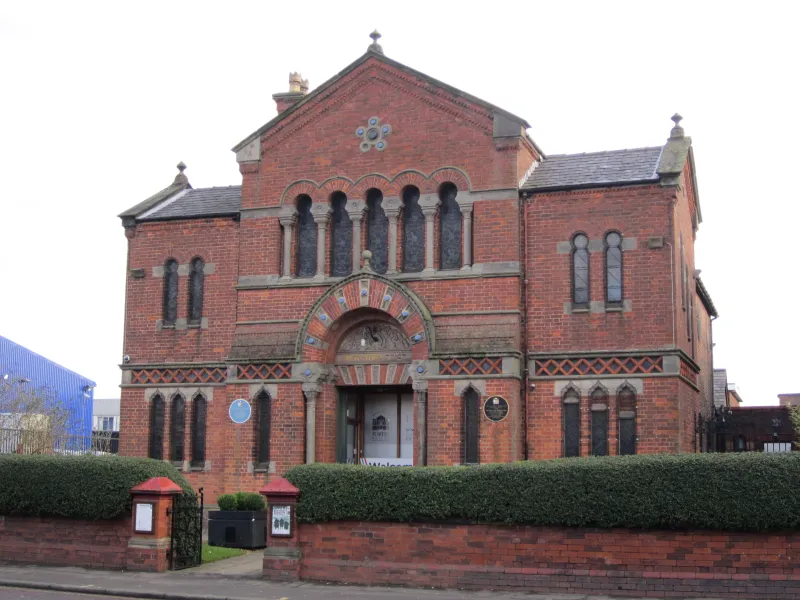
The Jewish Museum London
Nestled in Camden Town, the Jewish Museum London tells the story of Jewish life in Britain from 1066 (when William the Conqueror invited Jews to England) to the present. Its collections include a stunning medieval mikveh ritual bath discovered in the City of London, ceremonial objects from across the British Jewish world, and exhibitions exploring immigration, identity, and diversity.
The museum’s Holocaust Gallery uses the testimony of Leon Greenman — a British Jew who survived Auschwitz — as its narrative thread, personalizing the vast historical catastrophe through a single life.
Visiting These Museums
A few practical notes for visitors:
Plan for time. Yad Vashem requires at least three hours and ideally a full day. The USHMM needs three to four hours. Smaller museums can be covered in one to two hours.
Prepare emotionally. Holocaust museums are emotionally demanding. Some visitors, especially those with personal connections to the Holocaust, find the experience overwhelming. It is completely acceptable to take breaks, step outside, or leave early.
Bring young people. Most of these museums have age-appropriate programming for children and teenagers. Yad Vashem recommends a minimum age of 10 for the Holocaust History Museum. The Jewish Museum in New York and ANU in Tel Aviv are suitable for all ages.
Support the institutions. These museums rely on a combination of government funding, endowments, and individual donations. Many offer membership programs. Consider supporting the ones that move you.
Memory as Obligation
Judaism commands remembrance — zakhor, remember. The Jewish museums of the world are where that commandment takes physical form. They hold the artifacts, the testimonies, the art, and the stories that connect the living to the dead and the present to the past.
Visit them. Not as a tourist checking off landmarks, but as a person seeking to understand. Stand in the Hall of Names and say a name out loud. Look at the faces in the Tower of Faces and hold their gaze. Touch the ancient mezuzah behind the glass and think about the hand that hung it. These museums are not about the past. They are about what we choose to carry forward.
Frequently Asked Questions
What is Yad Vashem?
Yad Vashem is Israel's official Holocaust memorial and museum, located on the Mount of Remembrance in Jerusalem. Established in 1953, it includes the Holocaust History Museum, the Hall of Names (containing pages of testimony for millions of victims), the Children's Memorial, the Garden of the Righteous Among the Nations, and extensive archives. The name comes from Isaiah 56:5 — 'I will give them a monument (yad) and a name (shem) that shall not perish.' It is the most visited site in Israel after the Western Wall.
Are Jewish museums only about the Holocaust?
No. While many Jewish museums include Holocaust-related content, the field is far broader. Museums like ANU (formerly Beit Hatfutsot) in Tel Aviv, the Jewish Museum in New York, and others focus on Jewish art, culture, history, innovation, and daily life across 4,000 years. The trend in recent decades has been toward museums that celebrate Jewish civilization's diversity and creativity alongside remembering its tragedies.
Which Jewish museum should I visit first?
It depends on your interests. For Holocaust history, Yad Vashem (Jerusalem) and the US Holocaust Memorial Museum (Washington, DC) are unmatched. For Jewish art and culture, the Jewish Museum in New York is exceptional. For the full sweep of Jewish civilization, ANU in Tel Aviv offers an interactive, technology-driven experience. For architectural impact, the Jewish Museum Berlin — designed by Daniel Libeskind — is breathtaking. All are worth visiting.
Key Terms
Sources & Further Reading
Related Articles
The Jewish Diaspora: 2,000 Years Across the Globe
How the destruction of the Second Temple scattered the Jewish people across continents, creating diverse communities united by faith.
The Holocaust: Remembering the Six Million
The systematic murder of six million Jews during World War II — the darkest chapter in human history and its lasting impact on Jewish identity.
Jewish Art Through the Ages
Jewish art has navigated the tension between the Second Commandment's prohibition on graven images and the human desire for beauty — from ancient mosaics to Chagall's soaring canvases.