Bukharan Jews: Silk Road Heritage and Living Tradition
For over 2,500 years, Bukharan Jews thrived along the Silk Road — preserving unique customs, vibrant music, and a distinctive identity that survived Persian empires, Soviet oppression, and mass emigration.
The Farthest Diaspora
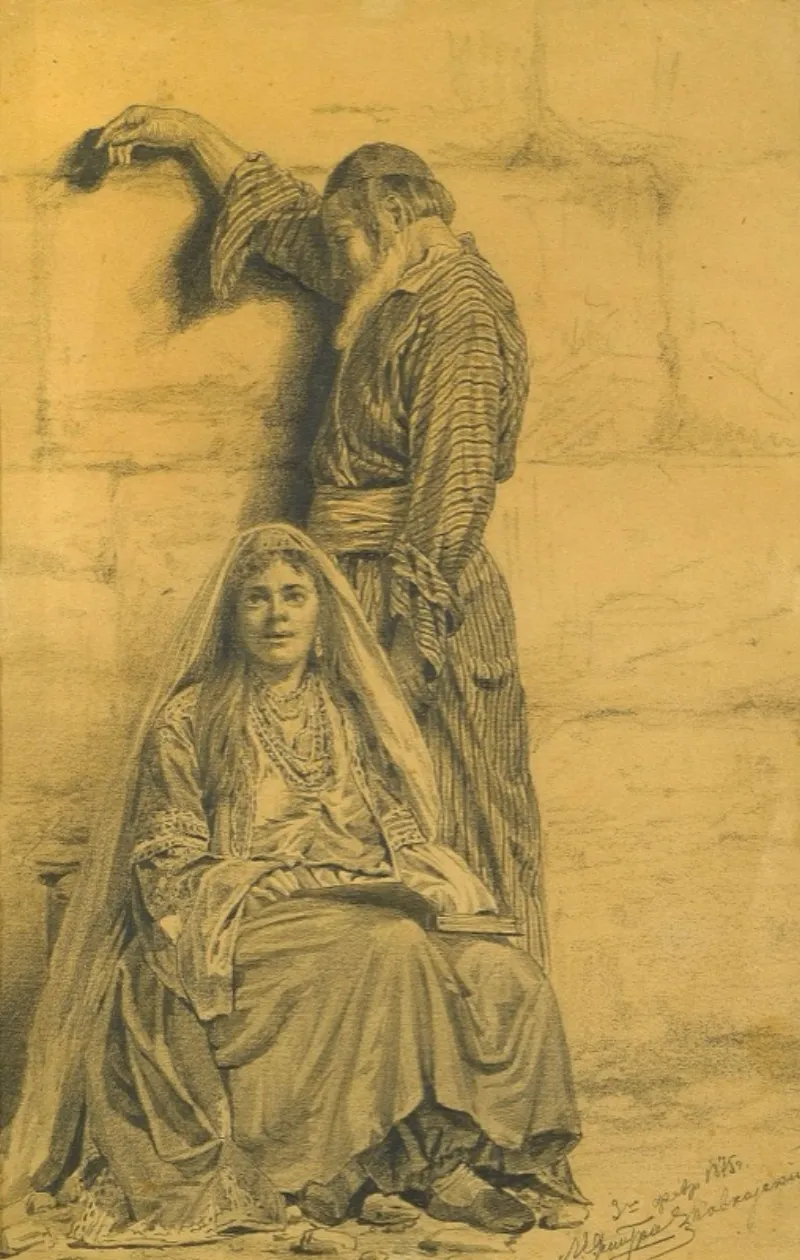
When most people think of Jewish communities around the world, they picture the shtetls of Eastern Europe, the synagogues of Spain and Morocco, perhaps the ancient communities of Iraq and Yemen. Almost no one thinks of Uzbekistan. And yet, in the ancient Silk Road cities of Bukhara, Samarkand, and Tashkent, a Jewish community flourished for more than two and a half millennia — longer than most European Jewish communities existed, longer than the entire history of Ashkenazi Jewry.
The Bukharan Jews are one of the world’s oldest and most distinctive Jewish communities. Their story weaves through Persian empires and Mongol invasions, Silk Road commerce and Soviet repression, isolation and resilience. It is a story that challenges every assumption about what Jewish life looks like — and proves that the Jewish experience is far more diverse than most people realize.
Origins: Lost in Antiquity
The origins of the Bukharan Jewish community are genuinely ancient, though the precise details are debated. Tradition holds that they descend from the ten tribes exiled by the Assyrians in 722 BCE, or from Jews deported to Persia and Central Asia during the Babylonian exile of 586 BCE. What is certain is that Jewish communities existed in the region by the Persian period — Central Asia was part of the vast Persian Empire, and Jews lived throughout its territories.
The city of Bukhara — located in present-day Uzbekistan — became the community’s spiritual and cultural center. One of the great Silk Road trading cities, Bukhara sat at the crossroads of commerce between China, India, Persia, and the Mediterranean. Jewish merchants were active participants in this trade, dealing in silk, dyes, cotton, and precious stones.
The community’s geographic isolation from other major Jewish centers shaped its development. Cut off from the great rabbinic academies of Babylon and later from the Jewish intellectual centers of Spain, North Africa, and Europe, Bukharan Jews developed their own customs, liturgical traditions, and legal practices — sometimes preserving ancient forms that other communities had long since abandoned.
Language and Culture
Bukharan Jews spoke Bukhori (also called Judeo-Tajik) — a dialect of Persian (Tajik) written in Hebrew characters and incorporating Hebrew and Aramaic words. This linguistic pattern parallels other Jewish diaspora languages: Yiddish (German + Hebrew), Ladino (Spanish + Hebrew), and Judeo-Arabic (Arabic + Hebrew). Each Jewish community created its own language, a hybrid that reflected both their host culture and their Jewish identity.
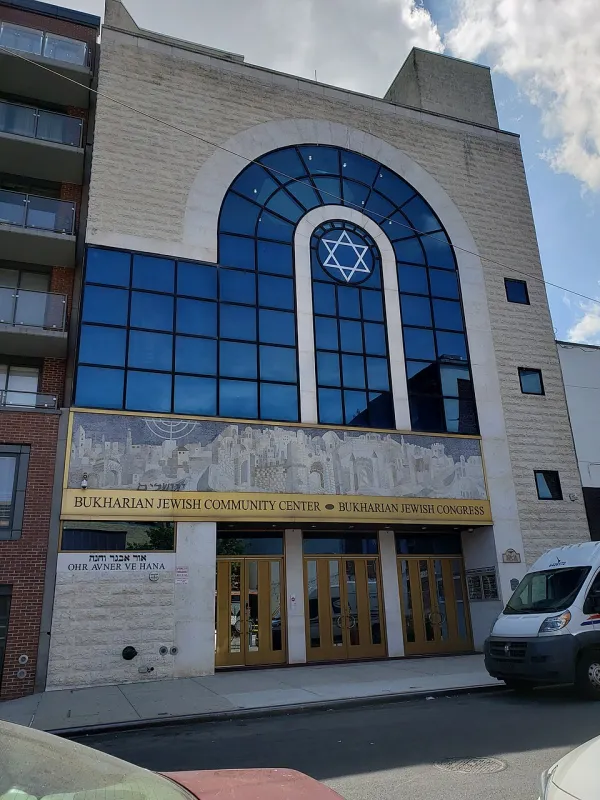
Bukharan Jewish culture was visually stunning. Unlike the somber black clothing associated with Eastern European Jews, Bukharan Jews wore brilliantly colored silk robes (chapan), embroidered caps (kippah in their distinctive style), and elaborate jewelry. Their festive clothing was a riot of color — turquoise, crimson, gold — reflecting the aesthetic of Central Asian culture.
Their cuisine blended Jewish dietary laws with Central Asian flavors: osh (pilaf with lamb), bakhsh (a Sabbath stew similar to cholent but seasoned with cumin and coriander), sambusa (stuffed pastries), and elaborate preparations for holidays that combined Persian, Uzbek, and Jewish culinary traditions.
Shashmaqam: The Crown of Bukharan Music
The most celebrated Bukharan Jewish cultural contribution is their role in preserving and performing Shashmaqam — the classical music of Central Asia. Shash means six; maqam refers to musical modes. The tradition encompasses six major modes, each containing dozens of compositions that combine sophisticated poetry with complex melodic and rhythmic patterns.
Bukharan Jewish musicians were among the foremost performers of Shashmaqam. In the Muslim-majority societies of Central Asia, professional musicians were sometimes viewed with ambivalence by the religious establishment, creating space for Jewish performers to excel. Families like the Babakhanovs and Mullokandovs became dynasties of master musicians, passing the tradition from father to son across generations.
Jewish performers often set Hebrew liturgical texts to Shashmaqam melodies, creating a fusion that was utterly unique in the Jewish world. A piyyut (liturgical poem) sung to a Central Asian classical melody in a Bukharan synagogue sounded like nothing else in Judaism — and yet was unmistakably Jewish.
UNESCO recognized Shashmaqam as an Intangible Cultural Heritage of Humanity in 2003 — a testament to its artistic significance and to the community that helped keep it alive.
Isolation and Revival
For centuries, the Bukharan Jewish community was largely cut off from the wider Jewish world. This isolation deepened under various rulers who imposed restrictions on Jews — special clothing requirements, designated neighborhoods (mahalla), limitations on economic activities, and periodic persecution.
A transformative moment came in the late 18th century when Rabbi Yosef Maman Maghribi, a Moroccan-born rabbi traveling through Central Asia, arrived in Bukhara. He was shocked by how isolated the community had become and how much their religious practice had diverged from mainstream halakha (Jewish law). Rabbi Maman stayed and devoted himself to religious education, revitalizing Torah study and reconnecting Bukharan Jews with the broader Jewish legal and spiritual tradition.
His impact was profound. Bukharan Jews began sending students to other Jewish centers, importing religious texts, and aligning their practices more closely with Sephardic norms. The community’s self-understanding shifted: they were no longer an isolated outpost but a branch of a larger Jewish tree.
The Soviet Era
The Russian Empire’s conquest of Central Asia in the 19th century, and the subsequent Soviet takeover, brought dramatic changes. Initially, some Bukharan Jews welcomed Russian rule as an improvement over local oppression. But the Soviet period proved devastating in different ways.
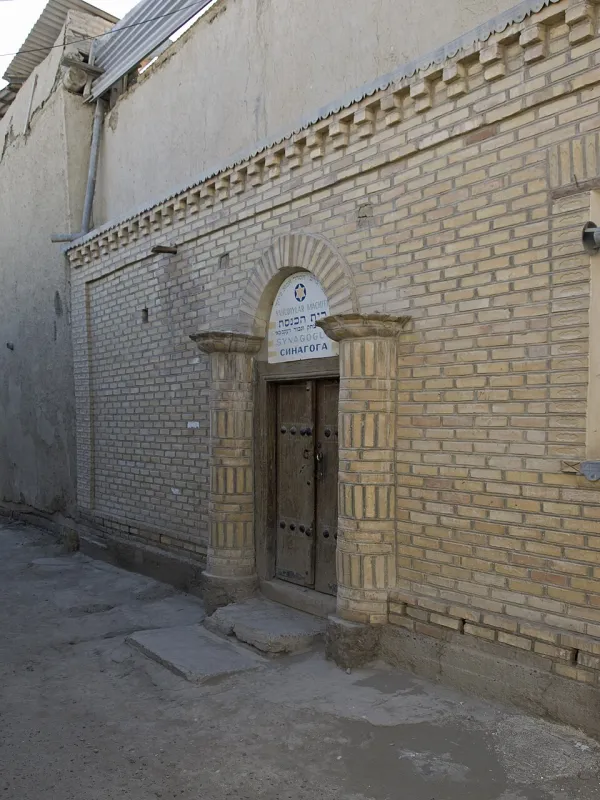
The Soviet regime systematically attacked religious life. Synagogues were closed or converted to secular uses. Religious education was banned. Hebrew was prohibited. Community leaders were arrested. The Bukhori language was forcibly converted from Hebrew to Latin (and later Cyrillic) script, severing a linguistic connection to Jewish identity.
And yet the community survived — as Jewish communities so often do. Families practiced Judaism in secret. Circumcisions were performed quietly. Passover seders continued behind closed doors. Elderly women maintained the dietary laws. The community’s resilience during the Soviet era echoed the crypto-Jewish experience of Inquisition-era Spain — public conformity concealing private faithfulness.
The Great Emigration
The collapse of the Soviet Union in 1991 triggered a massive emigration. Rising nationalism in the newly independent Central Asian states, combined with economic instability and the sudden possibility of leaving, emptied the Bukharan Jewish communities within a decade.
Most emigrated to Israel, where they joined a Bukharan Jewish community that had been established since the late 19th century. The neighborhood of Bukharan Quarter (Shchunat HaBukhariim) in Jerusalem — founded in 1892 — had been built by wealthy Bukharan Jews with grand houses and wide streets, and it became a cultural anchor for new arrivals.
A substantial community established itself in Queens, New York — particularly in Forest Hills and Rego Park. Today, the Queens Bukharan community is one of the largest and most vibrant in the world, with its own synagogues, restaurants, cultural organizations, and media. Walking down 108th Street in Forest Hills, you can hear Bukhori, eat osh at a Bukharan restaurant, and attend services at a Bukharan synagogue — a slice of Silk Road Jewish life transplanted to New York City.
A Living Heritage
The Bukharan Jewish story matters because it shatters narrow assumptions about Jewish identity. Judaism is not only Ashkenazi. Jewish music is not only klezmer. Jewish food is not only bagels and gefilte fish. The Jewish diaspora reached into places most people never imagine — into the heart of Central Asia, along the ancient trade routes, into cities whose very names evoke a vanished world of caravans, silk, and spice.
Today, Bukharan Jews face the challenge every diaspora community faces: how to preserve a distinctive identity in new surroundings. The older generation remembers Bukhara and Samarkand. Their children grow up in Queens or Ashdod, navigating between their parents’ traditions and the cultures around them. The music is being recorded and archived. The recipes are being written down. The stories are being told.
The Silk Road is long gone. But its Jewish travelers left behind something that silk and spice could not: a community that carries its heritage in song, in prayer, and in memory — from the minarets of Bukhara to the skyscrapers of New York.
Frequently Asked Questions
Who are the Bukharan Jews?
Bukharan Jews are a Jewish community from Central Asia — primarily Uzbekistan and Tajikistan — whose roots stretch back over 2,500 years. The name comes from the city of Bukhara, a major Silk Road trading center. They spoke Bukhori (Judeo-Tajik), maintained distinctive religious customs, and developed one of the most vibrant musical traditions in the Jewish world. Most Bukharan Jews emigrated to Israel and the United States (especially Queens, New York) following the Soviet Union's collapse.
What is Shashmaqam and why is it important?
Shashmaqam ('six maqams') is a classical Central Asian musical tradition that Bukharan Jews helped preserve and develop. It consists of six major musical modes, each containing multiple compositions combining poetry, melody, and complex rhythmic patterns. Bukharan Jewish musicians were among the foremost performers and preservers of this tradition, and Shashmaqam was recognized by UNESCO as an Intangible Cultural Heritage. Jewish performers often set Hebrew liturgical texts to Shashmaqam melodies, creating a unique fusion of Jewish and Central Asian culture.
Where do Bukharan Jews live today?
The vast majority of Bukharan Jews emigrated from Central Asia during and after the Soviet era. Today, approximately 50,000-70,000 live in Israel, about 50,000 in the United States (concentrated in Forest Hills and Rego Park in Queens, New York), and smaller communities exist in Europe and Australia. Only a few hundred remain in Uzbekistan and Tajikistan, down from an estimated 50,000 before World War II. The Queens community has built synagogues, cultural centers, and restaurants that preserve Bukharan traditions.
Sources & Further Reading
Related Articles
The Jewish Diaspora: 2,000 Years Across the Globe
How the destruction of the Second Temple scattered the Jewish people across continents, creating diverse communities united by faith.
Jews of Iran: 2,700 Years of Persian Heritage
Iranian Jews are among the world's oldest diaspora communities, tracing their roots to the era of Cyrus the Great. From the story of Esther to life under the Islamic Republic, their journey is remarkable.
Sephardi vs Ashkenazi: Two Streams of Jewish Life
Sephardi and Ashkenazi Jews share the same Torah but developed distinct languages, liturgies, foods, and customs across centuries of separation — two rivers from one source.