Jews of Iran: 2,700 Years of Persian Heritage
Iranian Jews are among the world's oldest diaspora communities, tracing their roots to the era of Cyrus the Great. From the story of Esther to life under the Islamic Republic, their journey is remarkable.
Children of Cyrus
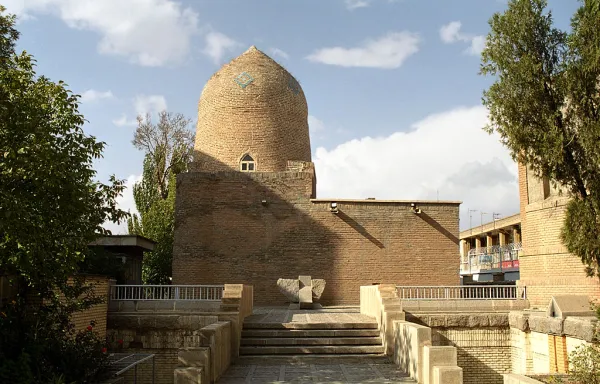
In the heart of Hamadan, one of the oldest continuously inhabited cities on earth, stands a modest brick structure with a conical dome. Inside, two stone sarcophagi are draped in Hebrew-inscribed cloth. This is the Tomb of Esther and Mordechai — or so tradition holds — and for Iranian Jews, it is one of the most sacred sites in the world. Whether or not the biblical queen and her cousin actually rest here, the tomb represents something real: the extraordinary depth of Jewish roots in Persian soil.
The Jewish presence in Persia stretches back approximately 2,700 years, making it one of the oldest diaspora communities in existence. Jews arrived in the region following the Assyrian conquest of the Northern Kingdom of Israel in 722 BCE and in greater numbers after the Babylonian destruction of the First Temple in 586 BCE.
The pivotal moment came in 539 BCE, when Cyrus the Great conquered Babylon and issued his famous decree permitting the Jews to return to Jerusalem and rebuild the Temple. The Hebrew Bible calls Cyrus God’s “anointed” (mashiach) — a remarkable title for a non-Jewish king. Many Jews returned to the Land of Israel, but many others remained in Persia, establishing communities that would endure for millennia.
Esther, Mordechai, and Purim
The most famous story connecting Jews and Persia is the Book of Esther, read every year on Purim. Set in the court of King Ahasuerus (often identified with Xerxes I), the story tells of a plot by the vizier Haman to exterminate all Jews in the Persian Empire — and its foiling by Queen Esther and her cousin Mordechai.
For Iranian Jews, the Purim story is not ancient history — it is a living narrative that takes place in their homeland. The Tomb of Esther in Hamadan is visited year-round, and Iranian Jews celebrate Purim with particular fervor. The story reminds them that their community has faced existential threats before and survived.
Historians debate whether the Book of Esther records historical events or is a literary composition. What is not debated is that Jews have lived in the cities mentioned in the text — Susa, Hamadan, Isfahan — for thousands of years.
Centuries of Persian Jewish Life
Under various Persian empires — Achaemenid, Parthian, and Sassanid — Jewish communities generally flourished. The Sassanid period (224-651 CE) saw the great academies of Babylonia (which was then part of the Persian Empire) produce the Babylonian Talmud. Persian Jews developed their own religious traditions, spoke Judeo-Persian, and created a distinctive literary culture.
The Islamic conquest in the seventh century brought new challenges. Like Jews elsewhere in the Muslim world, Persian Jews became dhimmis — protected but subordinate. They faced periodic persecution, forced conversions, and humiliating regulations. The Safavid dynasty (1501-1736) was particularly harsh, imposing forced conversions on entire communities. Some Jews converted outwardly while practicing Judaism in secret — a phenomenon echoing the Marranos of Spain.
Yet the community persisted. In Isfahan, where the Safavid shahs established their capital, a Jewish quarter thrived alongside Armenian Christian neighborhoods. Jewish artisans became renowned for their goldwork, weaving, and dyeing. Jewish physicians served at court. The community developed a rich tradition of Judeo-Persian poetry and religious literature.
The Modern Era: From Constitutional Revolution to Revolution
The late nineteenth and twentieth centuries brought dramatic changes. The Constitutional Revolution of 1906 granted Jews (along with other minorities) representation in the Iranian parliament — a reserved seat they hold to this day. Under the Pahlavi dynasty (1925-1979), Jews experienced a golden age of sorts. Reza Shah’s modernization policies and his son Mohammad Reza Shah’s Western orientation created opportunities for Jews in education, commerce, and the professions.
By the 1970s, approximately 80,000 to 100,000 Jews lived in Iran, concentrated in Tehran, Isfahan, Shiraz, and Hamadan. Many were wealthy and well-connected. Some held prominent positions in business, medicine, and academia. Iran and Israel maintained close diplomatic relations.
The Islamic Revolution of 1979 upended everything. Ayatollah Khomeini’s new government was hostile to Israel but drew a theoretical distinction between Zionism and Judaism. The community’s most prominent leader, Habib Elghanian — a philanthropist and industrialist — was executed on charges of “spying for Israel,” sending shockwaves through the Jewish community.
Approximately 60,000 to 70,000 Jews fled Iran in the years following the revolution, most to the United States (particularly Los Angeles, which became home to the largest Iranian Jewish community outside Iran), Israel, and Europe.
The Community Today
Approximately 8,000 to 10,000 Jews remain in Iran — the largest Jewish community in the Middle East outside Israel. They maintain synagogues, Jewish schools, a Jewish hospital, and a kosher butcher. They have their designated parliamentary seat and can practice their religion openly.
But the picture is complicated. Iranian Jews cannot serve in senior government or military positions. They live under a government whose official rhetoric calls for Israel’s destruction, creating an uncomfortable tension. Many Iranian Jews are careful to publicly distance themselves from Zionism while privately maintaining family connections to relatives in Israel. The community walks a tightrope between loyalty to their homeland and the reality of a government that views their natural sympathies with suspicion.
What strikes many visitors is the depth of Iranian Jewish identity. These are not people clinging to a fading heritage — they are maintaining a living tradition that has been continuously practiced on this soil for twenty-seven centuries. Their synagogues echo with melodies found nowhere else in the Jewish world. Their Passover seders include Persian customs unknown in Brooklyn or Tel Aviv. Their Judeo-Persian poems and prayers carry the cadences of a civilization that predates Islam by over a millennium.
The Jews of Iran are living proof that Jewish identity cannot be reduced to a single geography, language, or political alignment. For nearly three thousand years, they have called Persia home. Whatever the future holds, that history — from Cyrus to the present — belongs to them, and to the larger story of a people that has found ways to survive in the most unlikely places.
Frequently Asked Questions
How many Jews live in Iran today?
Approximately 8,000 to 10,000 Jews live in Iran today, primarily in Tehran, Isfahan, and Shiraz. This makes Iran home to the largest Jewish community in the Middle East outside of Israel.
Is the Tomb of Esther and Mordechai real?
The Tomb of Esther and Mordechai in Hamadan, Iran, is a pilgrimage site venerated by Iranian Jews for centuries. While historians cannot verify whether the biblical Esther and Mordechai are actually buried there, the site holds deep religious and cultural significance.
Do Iranian Jews face persecution?
Iranian Jews have a designated seat in parliament and can practice their religion. However, they face restrictions — they cannot hold senior government positions, are subject to Islamic law in some matters, and live under a government whose rhetoric toward Israel creates tension. Many describe their situation as tolerated but constrained.
Sources & Further Reading
Related Articles
The Jewish Diaspora: 2,000 Years Across the Globe
How the destruction of the Second Temple scattered the Jewish people across continents, creating diverse communities united by faith.
Jews of Iraq: The Oldest Diaspora Community
Iraqi Jews trace their roots to the Babylonian Exile 2,600 years ago. They produced the Babylonian Talmud, thrived in Baghdad's golden age, and suffered the Farhud before their mass exodus to Israel.
Purim: The Festival of Joy
Costumes, noisemakers, gifts of food, and the dramatic reading of the Megillah — Purim is the most festive and fun holiday in the Jewish calendar.