The 1948 War: Israel's War of Independence
The 1948 war — Israel's War of Independence to Jews, the Nakba (catastrophe) to Palestinians — was the defining conflict of the modern Middle East, creating a state, displacing hundreds of thousands, and leaving a legacy that shapes the region today.
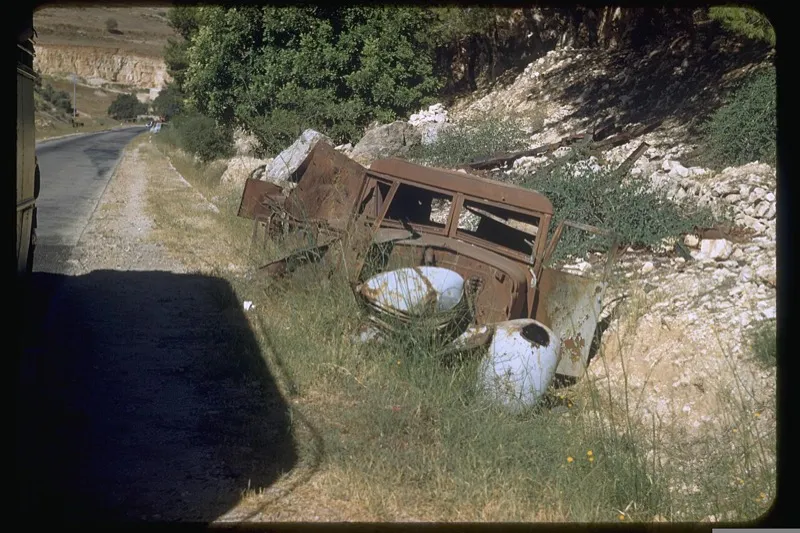
Two Narratives, One War
No event in modern Jewish history is more celebrated — or more contested — than the war of 1948. For Israelis and Jews worldwide, it is the War of Independence: the miraculous birth of a Jewish state from the ashes of the Holocaust, a tiny nation surviving the invasion of five Arab armies. For Palestinians, it is al-Nakba — the catastrophe: the destruction of Palestinian society, the displacement of hundreds of thousands, and the beginning of a conflict that has defined their lives for generations.
Both narratives contain truth. Both are incomplete. Understanding 1948 requires holding multiple realities at once — and recognizing that the war’s consequences are still unfolding.
The Path to Partition
The roots of the conflict lay in the competing nationalisms that developed in Palestine under British rule. Since the Balfour Declaration of 1917, Britain had attempted to balance its promise of a Jewish “national home” with the rights of Palestine’s Arab majority. The result was a three-way conflict — Arab, Jewish, and British — that grew increasingly violent through the 1920s and 1930s.
After World War II and the Holocaust, the question became urgent. Hundreds of thousands of Jewish survivors in displaced persons camps had nowhere to go. The British, exhausted by war and unable to manage the conflict, turned the problem over to the newly formed United Nations.
On November 29, 1947, the UN General Assembly voted 33-13 (with 10 abstentions) to partition Palestine into a Jewish state, an Arab state, and an international zone around Jerusalem. The Zionist leadership, represented by David Ben-Gurion, accepted the plan — even though it granted Jews only a portion of the territory they claimed. The Arab Higher Committee and neighboring Arab states rejected it categorically, arguing that the UN had no right to divide a land where Arabs were the majority.
In Jewish communities worldwide, the vote was greeted with euphoria. In Palestine’s Arab communities, it was received with fury and despair.
Civil War: November 1947 – May 1948
The day after the UN vote, violence erupted. The period from November 1947 to May 1948 saw a civil war between the Jewish and Arab communities of Palestine, with British forces gradually withdrawing.
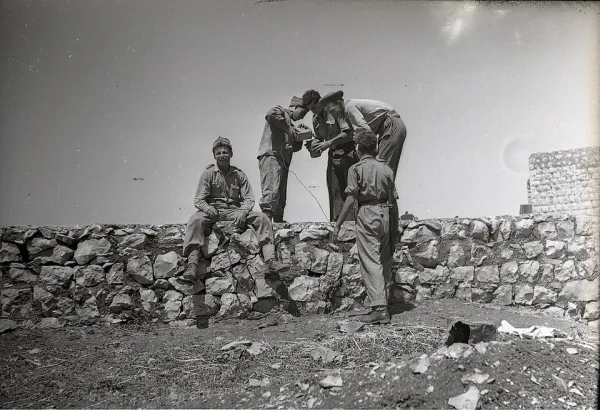
Both sides committed acts of violence against civilians. The massacre at Deir Yassin in April 1948 — in which Jewish fighters from the Irgun and Lehi groups killed over 100 Palestinian villagers — became a symbol of Jewish atrocities and spread panic among the Arab population, contributing to the flight of Palestinians from their homes. Palestinian forces responded with massacres of their own, including the ambush of a medical convoy to Hadassah Hospital in which 78 Jewish doctors, nurses, and patients were killed.
By April 1948, the tide of the civil war had turned in favor of the better-organized Jewish forces. Haifa, Jaffa, and other mixed cities saw large-scale Arab flight.
Independence and Invasion
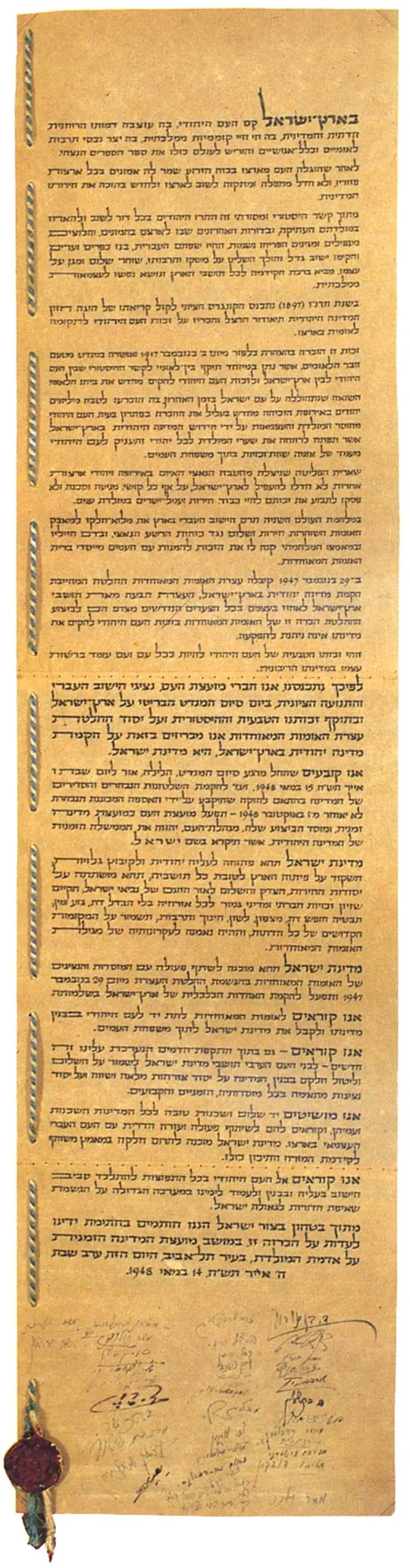
On May 14, 1948, as the last British High Commissioner sailed from Haifa, David Ben-Gurion stood beneath a portrait of Theodor Herzl in the Tel Aviv Museum and read Israel’s Declaration of Independence. The declaration proclaimed the establishment of a Jewish state, guaranteed equal rights to all inhabitants regardless of religion or ethnicity, and appealed to neighboring states for peace.
Within hours, the United States and the Soviet Union recognized the new state. And within hours, five Arab armies — Egypt, Transjordan, Syria, Iraq, and Lebanon — invaded.
The invasion nearly succeeded. Israel’s forces were outnumbered and outgunned. The Egyptian army advanced to within 20 miles of Tel Aviv. The Jordanian Arab Legion — the best-trained force in the region — captured the Old City of Jerusalem, including the Western Wall and the Jewish Quarter. Hundreds of Jewish residents were expelled.
But Israel survived. Through a combination of desperate fighting, arms shipments from Czechoslovakia, internal lines of communication, and the disunity of the Arab forces, the fledgling state held its ground and gradually went on the offensive.
Armistice and Its Aftermath
By early 1949, Israel had not only survived but expanded its territory significantly beyond the UN partition lines. Armistice agreements were signed with Egypt, Jordan, Lebanon, and Syria between February and July 1949. These were explicitly not peace treaties — they established ceasefire lines, not recognized borders.
The war’s toll was devastating for all sides:
- Israel lost approximately 6,000 people — about 1% of its Jewish population — including 4,000 soldiers and 2,000 civilians.
- Arab armies suffered an estimated 10,000-15,000 casualties.
- Palestinian Arabs experienced a catastrophe of displacement. Approximately 700,000-750,000 Palestinians fled or were expelled from areas that became Israel. The causes were multiple and remain bitterly debated: some fled war zones, some were expelled by Israeli forces, some left at the urging of Arab leaders, and some were driven out by fear after massacres like Deir Yassin. Hundreds of Arab villages were subsequently destroyed.
- Jews in Arab countries faced a parallel displacement. In the years following 1948, approximately 850,000 Jews were expelled or forced to flee from Arab and Muslim countries — from Iraq and Yemen to Morocco and Libya. Most came to Israel with nothing.
Jordan annexed the West Bank and East Jerusalem. Egypt occupied the Gaza Strip. No Palestinian state was established.
Competing Memories
The 1948 war is remembered through radically different lenses:
For Israeli Jews, it is a foundational miracle — the realization of the two-thousand-year dream of return, the answer to the Holocaust, the proof that the Jewish people could defend themselves after centuries of powerlessness. Independence Day (Yom Ha’atzmaut) is celebrated every year with joy and gratitude.
For Palestinians, it is the defining catastrophe — the destruction of their society, the loss of their homeland, and the beginning of a displacement that continues into the third generation. Nakba Day is commemorated every year with mourning and protest.
For Arab nations, the defeat was a humiliation that sparked revolutionary upheavals across the region, toppling governments in Egypt, Syria, and Iraq.
These narratives are not easily reconciled. But understanding the 1948 war requires at least acknowledging that it produced both a nation’s birth and a people’s dispossession — and that both truths must be reckoned with if there is ever to be peace.
The armistice lines of 1949 — the “Green Line” — were supposed to be temporary. Seventy-five years later, they remain the most contested boundaries in the world. The refugees of 1948 — Palestinian and Jewish alike — have shaped the identities and politics of the entire Middle East. And the questions that the war left unanswered — borders, Jerusalem, refugees, security, self-determination — remain as urgent and unresolved as they were on the day the last gun fell silent.
Frequently Asked Questions
What was the UN Partition Plan?
On November 29, 1947, the United Nations General Assembly voted (Resolution 181) to partition British Mandatory Palestine into two states — one Jewish and one Arab — with Jerusalem under international administration. The Jewish leadership accepted the plan; the Arab leadership and neighboring Arab states rejected it.
How many refugees did the 1948 war create?
The war created two refugee populations. Approximately 700,000 to 750,000 Palestinian Arabs fled or were expelled from areas that became Israel. Simultaneously, approximately 850,000 Jews from Arab countries were expelled or fled to Israel over the following decades. Both refugee populations and their descendants remain central to the Israeli-Palestinian conflict.
Why is the 1948 war called the Nakba?
Palestinians call the 1948 war 'al-Nakba' — the catastrophe. For Palestinians, the war resulted in the displacement of hundreds of thousands from their homes and the destruction of hundreds of Arab villages. The Nakba is the central trauma of Palestinian national identity, much as the Holocaust is for Jews.
Sources & Further Reading
Related Articles
Jerusalem: 3,000 Years of Faith, Conflict, and Hope
For three millennia, Jerusalem has been the spiritual heart of the Jewish people — and a city sacred to three faiths. Its story is one of devotion, destruction, and enduring hope.
The Birth of Modern Israel
From the rise of Zionism to the declaration of independence in 1948 — the story of how the Jewish homeland was reestablished.
Zionism: The Movement That Built a Nation
Zionism — the movement for Jewish self-determination in the ancestral homeland — transformed from a radical 19th-century idea into the founding ideology of the State of Israel.