How to Wear a Tallit: Step-by-Step Guide to the Jewish Prayer Shawl
A step-by-step guide to wearing a tallit — from the blessing to the wrapping — plus when to wear it, who wears it, and the meaning behind the fringes.
Wrapping Yourself in a Commandment
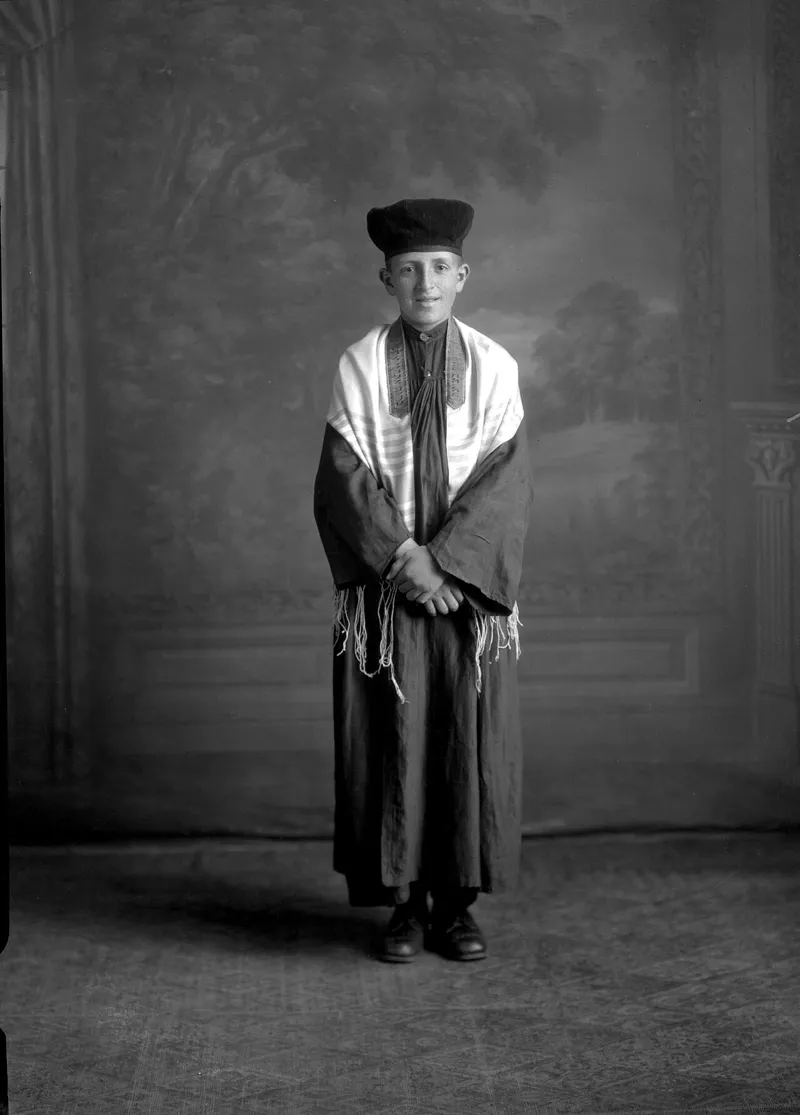
The tallit — the Jewish prayer shawl — is one of the most visual expressions of Jewish worship. Walk into any synagogue on a Shabbat morning and you will see rows of people draped in white shawls, fringes hanging at their sides, a community wrapped in prayer. It is beautiful, it is ancient, and it is simpler than you think.
The tallit is not magic. It is cloth with fringes. But those fringes — the tzitzit — carry a biblical commandment: “Speak to the Israelite people and instruct them to make fringes on the corners of their garments… Look at it and recall all the commandments of the Lord and observe them” (Numbers 15:38-39). The tallit is, in a sense, a wearable reminder system — a physical prompt to be mindful of God’s commandments.
Here is how to put it on, step by step.
What You Need
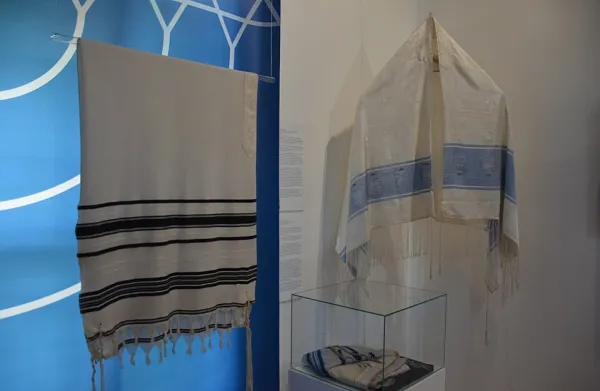
A tallit gadol (large tallit) — a rectangular shawl, usually white with blue or black stripes, with tzitzit tied on each of the four corners. Sizes vary from narrow scarves to full-body wraps. Most people use one that drapes comfortably over the shoulders.
The tallit has:
- An atarah (crown) — a decorative neckband, often embroidered, that marks the top edge. This goes around the back of your neck.
- Tzitzit on all four corners — knotted fringes, each with a specific pattern of windings and knots.
Step-by-Step Instructions
Step 1: Unfold and Hold Open
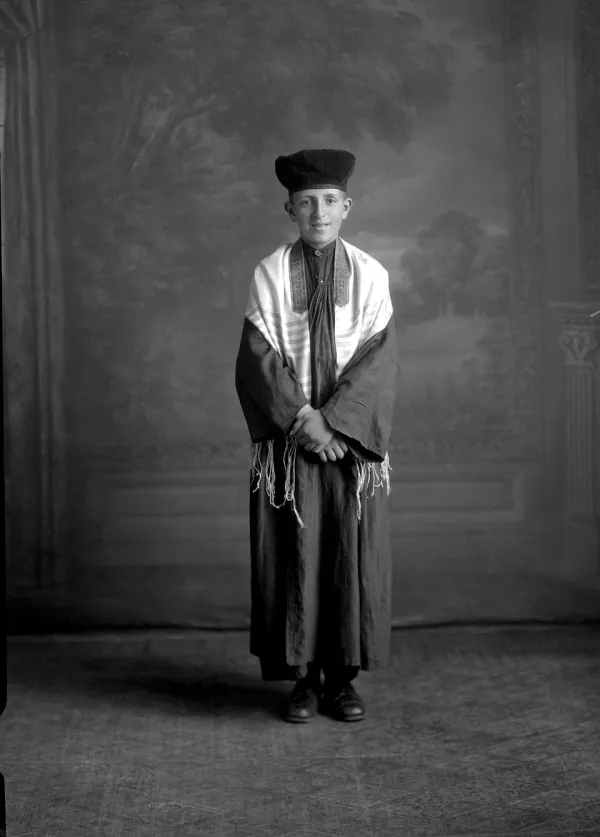
Hold the tallit open in front of you with the atarah (decorative band) facing up and toward you. The atarah should be at the top, ready to go across the back of your neck.
Step 2: Inspect the Tzitzit
Before putting on the tallit, it is customary to briefly check the tzitzit to make sure none of the strings are broken or tangled. This takes a second — just glance at each corner. If a string is broken, the tallit may need repair (consult a rabbi for the specific rules about when tzitzit become invalid).
Step 3: Say the Blessing
While holding the tallit open, recite the blessing:
Baruch atah Adonai, Eloheinu melech ha-olam, asher kid’shanu b’mitzvotav v’tzivanu l’hit’atef ba-tzitzit.
“Blessed are You, Lord our God, King of the universe, who has sanctified us with His commandments and commanded us to wrap ourselves in tzitzit.”
Some people recite an additional meditation beforehand (printed inside many tallitot): “How precious is Your lovingkindness, O God…”
Step 4: Wrap Over Your Head
Immediately after saying the blessing, bring the tallit up and over your head so it covers your head and face momentarily. This creates a brief private space — a cocoon of prayer. Many people pause here for a few seconds of quiet meditation.
Step 5: Drape Over Your Shoulders
Let the tallit slide back so the atarah rests across the back of your neck and the tallit drapes over your shoulders and back. Two corners with tzitzit hang in front; two hang behind.
Some people wear the tallit with both sides hanging evenly. Others throw one side over the left shoulder for a more wrapped look. In some Sephardic traditions, the tallit covers the head for the entire service. Ashkenazi custom generally has it draped over the shoulders with the head uncovered (except during specific prayers).
Step 6: Adjust
Make sure the tallit is comfortable and secure. It should not be so loose that it slides off during prayer or so tight that it restricts movement. The tzitzit should hang freely.
That is it. You are wearing a tallit.
When to Wear It
The General Rule
The tallit gadol is worn during morning (Shacharit) services — both on weekdays and Shabbat. The commandment of tzitzit is connected to seeing (“look at it and recall”), which is linked to daylight hours.
Exceptions
- Yom Kippur: The tallit is worn for all services, including the evening Kol Nidre service — the only time a tallit is worn at night.
- The prayer leader (shaliach tzibur) may wear a tallit during afternoon and evening services as well.
- Torah reading: Those called to the Torah for an aliyah typically wear a tallit.
Who Wears It
- Orthodox: Men wear the tallit gadol. In many Ashkenazi communities, only married men wear it. In Sephardic communities, boys begin wearing it from bar mitzvah (or even younger). Women do not wear the tallit gadol in Orthodox settings.
- Conservative: Both men and women are welcome to wear the tallit. It is increasingly common for women to do so.
- Reform/Reconstructionist: All genders are welcome. Many Reform congregations provide tallitot at the entrance for anyone who wants one.
The Tallit Katan: The Everyday Version
The tallit gadol is for prayer services. But many observant Jewish men also wear a tallit katan (small tallit) — an undergarment with four corners and tzitzit — throughout the day, under their shirt. This fulfills the commandment of tzitzit on a daily basis, not just during prayer.
The tzitzit strings typically hang out from under the shirt, visible at the waistline. In some communities, they are tucked in; in others, they are displayed proudly.
The Meaning of the Tzitzit
The tzitzit are not random strings. They are tied with a specific pattern of windings and knots:
- 7 windings, double knot, 8 windings, double knot, 11 windings, double knot, 13 windings, double knot.
- The numerical values (7+8+11+13 = 39) correspond to the gematria (numerical value) of “Hashem Echad” — “God is One.”
- Alternatively: the Hebrew word “tzitzit” has a numerical value of 600. Add 8 strings and 5 knots = 613, the total number of commandments in the Torah.
One string in each corner is traditionally dyed tekhelet — a blue dye from a sea creature. The identity of the creature (chilazon) was lost for centuries, and most tzitzit today are entirely white. However, some communities have revived the practice of including a blue thread, based on recent identification of the murex snail as the likely source.
Buying Your First Tallit
- Basic wool or acrylic tallit: $25-60. White with blue or black stripes. Practical and traditional.
- Hand-woven or silk tallit: $100-500+. Often colorful and artistic. Popular as bar/bat mitzvah or wedding gifts.
- Women’s tallit: Designed with different patterns, sometimes more delicate or colorful. The halachic requirements (four corners with tzitzit) are the same.
- Tallit bag: A matching pouch to store and carry the tallit. Usually included with purchase or sold separately.
Summing Up
Wearing a tallit is one of those Jewish practices that sounds complicated until you do it once. Unfold, bless, wrap, drape — done. The experience of being enveloped in a prayer shawl, with the fringes reminding you of a 3,000-year-old commandment, adds a physical dimension to prayer that words alone cannot provide. It is cloth, thread, and intention — and it transforms how you stand before God.
Frequently Asked Questions
Can women wear a tallit?
In Orthodox communities, women traditionally do not wear a tallit, as it is considered a time-bound positive commandment from which women are exempt. However, in Conservative, Reform, and Reconstructionist communities, women are fully welcome and encouraged to wear a tallit. Many women's tallitot are now designed with colors and patterns that reflect this growing tradition. The decision is personal, communal, and denominational.
When do you NOT wear a tallit?
A tallit gadol (large prayer shawl) is worn during morning services (Shacharit) but generally not during afternoon (Mincha) or evening (Ma'ariv) services. The exception is Yom Kippur, when a tallit is worn for all services, including Kol Nidre on the evening of Yom Kippur — the only evening service where a tallit is worn. Some communities have additional customs about when to wear it.
Do I need a special tallit or can I use any shawl?
A tallit must have kosher tzitzit (fringes) tied on its four corners — that is what makes it a tallit. The garment itself can be wool, cotton, silk, or synthetic. You can buy a simple tallit for under $30 or an elaborate handwoven one for hundreds. What matters is the tzitzit, not the fabric. Pre-made tallitot from Judaica stores come with tzitzit already attached.
Test Your Knowledge
Think you know this topic? Try our quiz!
Take the Jewish Clothing & Symbols Quiz →Sources & Further Reading
Related Articles
Orthodox, Conservative, and Reform: Understanding Jewish Denominations
Judaism is not monolithic — it encompasses diverse movements from Ultra-Orthodox to Reform, each with its own approach to tradition, law, and modern life.
Hebrew: The Language of the Torah and Israel
From an ancient sacred tongue to a modern spoken language — the remarkable story of Hebrew's revival.
The Synagogue: House of Prayer, Study, and Assembly
More than just a place of worship — the synagogue is the heart of Jewish community life, combining prayer, learning, and social gathering under one roof.