Jewish Table Manners: The Customs and Blessings of the Jewish Meal
Wash your hands before bread, tear the challah (don't cut it), salt it, and remove the knife before grace. Jewish table customs transform every meal into something sacred.
More Than Manners
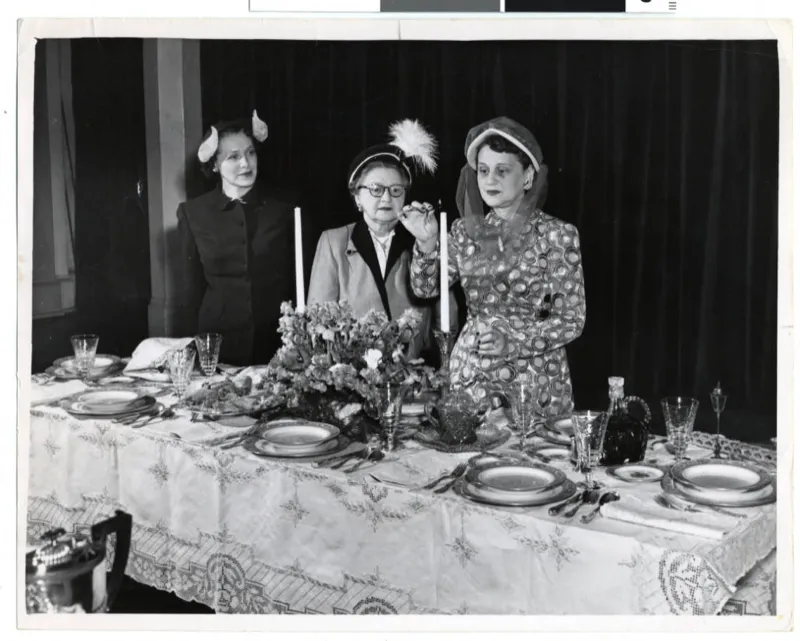
In most cultures, table manners are about politeness — which fork to use, elbows off the table, don’t talk with your mouth full. In Judaism, the customs surrounding a meal are about something deeper. They transform eating from a biological necessity into a spiritual practice. The table, the rabbis taught, is a mizbeach — an altar. And every meal, approached with the right intention, is a form of worship.
This does not mean that Jewish meals are solemn or silent. Anyone who has been to a Shabbat dinner knows that the volume level tends to increase with each course, that opinions about politics and Torah portions flow as freely as the wine, and that getting everyone to stop talking long enough to say grace after meals is a genuine achievement. But beneath the warmth and the chaos, there is a structure — a set of customs, blessings, and practices that frame the meal and give it meaning.
Here is what you need to know.
Before the Meal
Washing Hands (Netilat Yadayim)
Before eating bread — and in Jewish law, a “meal” is defined by the presence of bread — you wash your hands ritually. This is not about hygiene (though it doesn’t hurt). It is about sanctification.
The process:
- Fill a two-handled washing cup (natla) with water
- Pour water over your right hand two or three times
- Pour water over your left hand two or three times
- Recite the blessing: “Baruch atah Adonai, Eloheinu melech ha-olam, asher kidshanu b’mitzvotav v’tzivanu al netilat yadayim.” (Blessed are You, Lord our God, King of the universe, who has sanctified us with His commandments and commanded us concerning the washing of hands.)
- Do not speak between the hand washing and eating the bread. Silence maintains the connection between the two blessings.
This ritual echoes the practice of the priests who washed their hands before eating the terumah (priestly portion) in the Temple. By washing before eating, every Jew acts as a priest, and every table becomes an altar.
The Blessing Over Bread (Hamotzi)
Once hands are washed (and everyone has gathered, which in a large family can take a while), the blessing over bread is recited:
“Baruch atah Adonai, Eloheinu melech ha-olam, hamotzi lechem min ha-aretz.” (Blessed are You, Lord our God, King of the universe, who brings forth bread from the earth.)
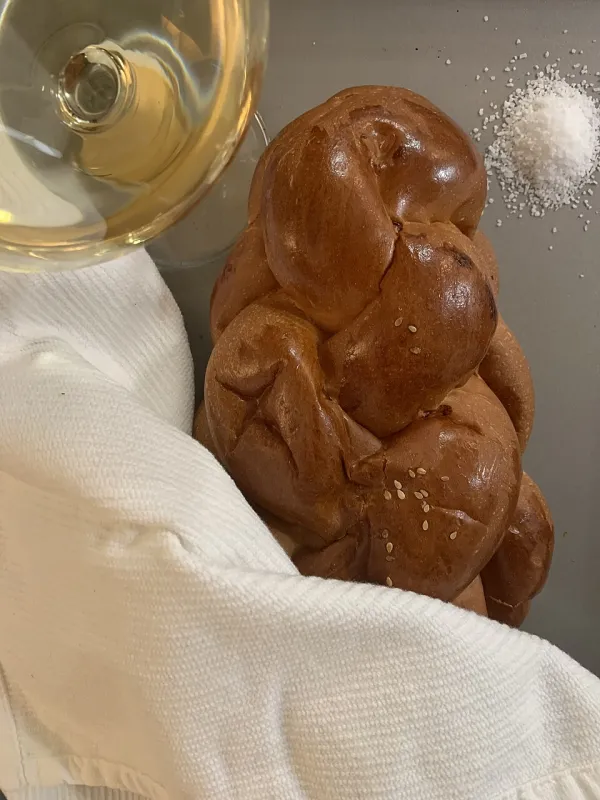
On Shabbat and holidays, this blessing is recited over two whole challahs — representing the double portion of manna that fell on Fridays in the wilderness. The challahs are covered with a cloth, traditionally explained as protecting them from “embarrassment” at not being blessed first (the blessing over wine comes before the blessing over bread on Shabbat).
Salt on the Bread
After the hamotzi, the bread is dipped in or sprinkled with salt. This custom also connects the table to the Temple, where every sacrifice was offered with salt (Leviticus 2:13). The salt reminds us that the simple act of eating bread carries the echo of sacred offering.
Tearing, Not Cutting
Many communities have the custom of tearing the challah rather than cutting it with a knife. The reasoning: the table is compared to the altar, and a knife is a weapon. The Torah prohibits using iron tools to build the altar (Exodus 20:22), because iron shortens life while the altar extends it. Similarly, a knife — an instrument of violence — should not dominate the table, an instrument of peace.
In practice, many families score the challah lightly with a knife and then tear it by hand. Others cut it normally. Both customs are valid, and arguing about which is correct is, of course, the most Jewish response possible.
During the Meal
Conversation at the Table
The Talmud teaches that a table at which words of Torah are spoken is like a table before God, while a table without Torah is “like the altars of the dead” (Pirkei Avot 3:3). This doesn’t mean every meal needs a lecture. It means that the conversation should, at some point, include something meaningful — a thought on the weekly Torah portion, a lesson learned, a discussion about values.
In practice, Shabbat meals often include singing (zemirot), divrei Torah (brief Torah commentaries shared by family members or guests), and the kind of table talk that ranges from deeply spiritual to deeply silly, sometimes in the same sentence.
Not Eating Alone
Judaism discourages eating alone when it can be avoided. The concept of hachnasat orchim (hospitality — literally, “bringing in guests”) is a major mitzvah. Inviting someone to share your meal — especially someone who might otherwise eat alone — is one of the most valued acts in Jewish life. Abraham and Sarah, the tradition teaches, kept their tent open on all four sides so that guests could enter from any direction.
After the Meal
Removing the Knife
Before saying birkat hamazon (grace after meals), many have the custom of removing or covering the knife from the table. The same reasoning applies as with tearing the challah: the grace blesses peace, and a weapon of violence does not belong alongside it. Some also cite the story of a man who became so distraught while reciting grace (which includes a passage about the destruction of Jerusalem) that he stabbed himself with a table knife — a dramatic origin story for a sensible custom.
Zimun: The Communal Invitation
When three or more Jewish adults have eaten bread together, they say grace collectively, beginning with zimun — a formal invitation to bless. The leader says: “Rabotai, n’vareich” (Gentlemen, let us bless) or “Chaveirai, n’vareich” (Friends, let us bless), and the group responds.
When ten or more adults are present, God’s name is added to the zimun formula, elevating it further.
Zimun transforms an individual obligation into a communal experience. It is a reminder that eating together is not just social — it is sacred.
Birkat Hamazon (Grace After Meals)
The full grace after meals is a substantial prayer — four blessings plus additional sections for Shabbat, holidays, and special occasions. It thanks God for food, for the land of Israel, for Jerusalem, and for divine goodness.
The obligation to say grace after meals is one of the few commandments derived directly from the Torah: “And you shall eat and be satisfied and bless the Lord your God” (Deuteronomy 8:10). The rabbis noted that the commandment is to bless after eating, when you are satisfied — suggesting that it is easy to be grateful when hungry but the true test of gratitude comes when your needs have been met.
At a Mourner’s Table
There are specific customs for eating at the table of someone in mourning:
- The meal of consolation (seudat havra’ah) — the first meal after a funeral — is prepared by friends, not by the mourners themselves. It traditionally includes round foods (eggs, lentils) symbolizing the cycle of life.
- No singing at a mourner’s table
- Visitors eat with the mourners, keeping them company and ensuring they do not skip meals in their grief
The Table as Teacher
Jewish table customs are not arbitrary. Each one carries a meaning — connecting the act of eating to the Temple service, to gratitude, to community, to memory. The hand washing connects you to the priests. The salt connects you to the altar. The two challahs connect you to the wilderness. The zimun connects you to every Jew who has ever eaten bread and given thanks.
The next time you sit down to eat, you might try it: wash your hands, say a blessing, tear the bread, pass the salt, and before you eat, pause for just a moment to notice that you are about to do something that Jews have done, with these same words and gestures, for thousands of years.
That is not a small thing. That is a table set for eternity.
Frequently Asked Questions
Why do Jews wash hands before eating bread?
The ritual hand washing (netilat yadayim) before eating bread is a rabbinical enactment that mirrors the hand washing performed by priests before eating their portion of Temple offerings. A special two-handled cup is used to pour water over each hand, followed by a blessing. Between the hand washing and eating the bread, it is customary to remain silent — maintaining the connection between the blessing over washing and the blessing over bread.
Why is challah torn instead of cut?
Many communities have the custom of tearing challah rather than cutting it, because a knife — a weapon — is considered inappropriate at the table, which is compared to an altar. Some communities do cut challah, particularly on Shabbat, but the custom of tearing is widespread. On Shabbat and holidays, the challah is first scored or marked with the knife, then torn by hand.
What is zimun?
Zimun is the formal 'invitation' to say birkat hamazon (grace after meals) when three or more Jewish adults have eaten bread together. One person leads the group by saying 'Let us bless the One from whose food we have eaten,' and the others respond. When ten or more adults are present, God's name is included in the formula. The zimun transforms an individual obligation into a communal act.
Test Your Knowledge
Think you know this topic? Try our quiz!
Take the Jewish Holidays: Advanced Quiz →Sources & Further Reading
Related Articles
Birkat Hamazon: The Complete Guide to Grace After Meals
Birkat Hamazon — Grace After Meals — is the Torah-mandated practice of thanking God after eating bread. Learn the four blessings, when to say it, the zimmun invitation for three or more, and the shorter alternatives for other foods.
Jewish Blessings (Brachot): Sanctifying Every Moment
Judaism has a blessing for everything — from bread to thunder, from waking up to seeing a rainbow. Learn about brachot, the system of blessings that turns daily life into sacred practice.
Shabbat: The Weekly Day of Rest
Every week, Jewish life pauses for 25 hours of rest, reflection, and togetherness — discover the beauty of Shabbat.