Sports on Shabbat: The Great Jewish Debate
When Sandy Koufax refused to pitch on Yom Kippur and Hank Greenberg sat out on Rosh Hashanah, they ignited a debate that continues today — can you play sports on Shabbat?
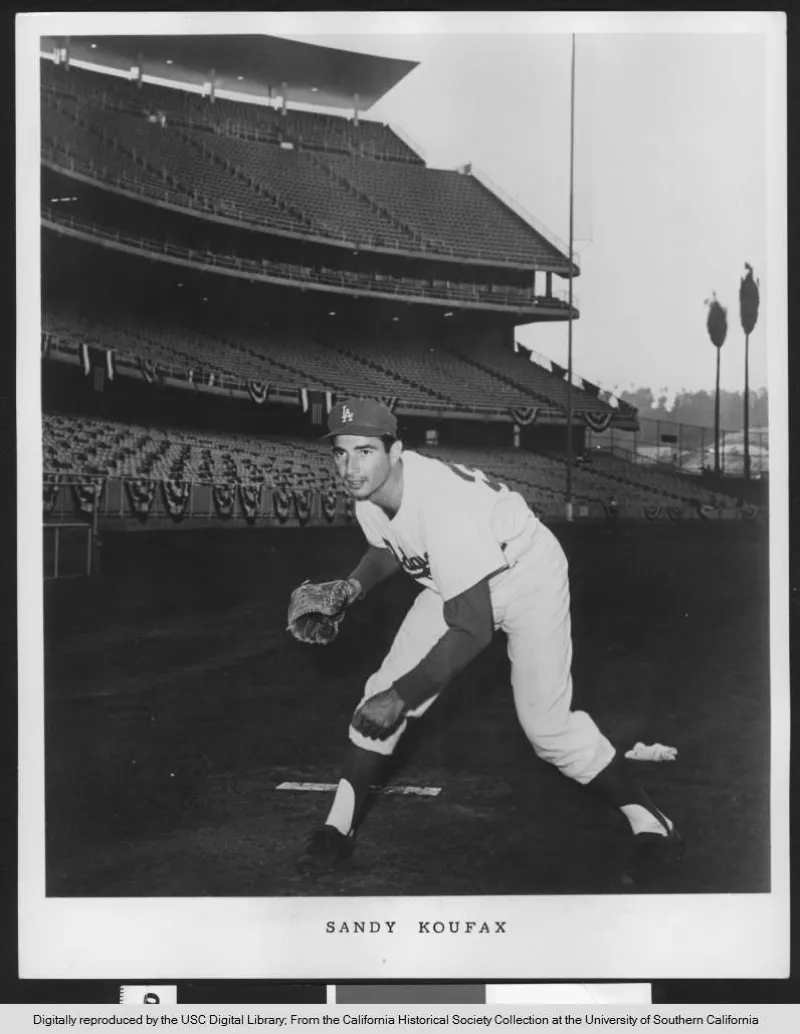
The Koufax Moment
October 6, 1965. Game 1 of the World Series. The Los Angeles Dodgers versus the Minnesota Twins. And the greatest pitcher in baseball was nowhere to be found.
Sandy Koufax — who would finish his career with a 0.95 ERA in the World Series — was not at Metropolitan Stadium that day. He was at his hotel. It was Yom Kippur, the holiest day of the Jewish calendar. He did not pitch.
The Dodgers lost Game 1. Koufax came back to pitch Games 5 and 7, winning both. The Dodgers won the Series. But the image that endured was not Koufax on the mound — it was Koufax not on the mound. A Jewish athlete, at the peak of his profession, choosing his heritage over his career.
Hank Greenberg’s Dilemma
Three decades earlier, Hank Greenberg — “Hammerin’ Hank,” the first Jewish superstar in American sports — faced an even more agonizing version of the same dilemma. In September 1934, the Detroit Tigers were in a tight pennant race, and both Rosh Hashanah and Yom Kippur fell during crucial games.
Greenberg consulted a rabbi, who told him that Rosh Hashanah was a day of celebration and that playing would be permissible. Greenberg played — and hit two home runs to win the game 2-1. The crowd went wild. Jews across America celebrated.
But ten days later, on Yom Kippur — the day of fasting and atonement — Greenberg sat out. He went to synagogue instead. The Detroit Free Press ran a front-page headline in Yiddish. Edgar Guest wrote a poem: “We shall miss him on the infield and shall miss him at the bat / But he’s true to his religion — and I honor him for that.”
The Halakhic Questions
For Orthodox Jews, the question of sports on Shabbat is not really a debate — competitive sports are generally prohibited. The specific halakhic issues include:
Carrying: In most cases, you would need to carry a ball, bat, racket, or other equipment through a public domain, which violates Shabbat law unless there is an eruv.
Exertion: Some authorities distinguish between light exercise (permitted by many) and competitive sports that cause excessive sweating and exertion.
Writing and record-keeping: Scoring a game involves writing, which is prohibited on Shabbat. Even mental scorekeeping is discouraged by some authorities.
Uvda d’chol: This rabbinic principle prohibits “weekday activities” on Shabbat. Organized sports — with teams, rules, referees — certainly feel like a weekday activity.
Travel: Getting to a game or sports facility often requires driving, which is prohibited on Shabbat in Orthodox practice.
The Other Side
Reform and many Conservative Jews take a different approach. They argue that:
- Shabbat is about rest and joy — and for many people, playing sports is restful and joyful
- Community building — team sports bring people together, which is a Shabbat value
- Physical health — caring for the body is a Jewish obligation
- Spirit of the law — the prohibition against “work” on Shabbat refers to creative labor, not physical exercise
Many non-Orthodox Jewish families play sports on Saturday mornings — soccer leagues, basketball games, tennis matches — without any sense that they are violating Shabbat.
Modern Orthodox Athletes
The debate continues in modern professional and amateur sports. Orthodox Jewish athletes have found creative solutions:
- Walking to games instead of driving
- Negotiating with teams about Shabbat scheduling
- Playing in leagues that don’t schedule Saturday games
- The Maccabiah Games (the “Jewish Olympics”) schedules around Shabbat
What Would Koufax Do?
The beauty of the Koufax story is not that he provided a definitive answer. He didn’t go to synagogue on Yom Kippur 1965. He wasn’t particularly observant. What he did was draw a line — this far and no further. On the day when every Jew, no matter how secular, feels the pull of something ancient and non-negotiable, he honored that pull.
The sports-on-Shabbat debate, like so many Jewish debates, has no single right answer. What it has is a tradition of taking the question seriously — of wrestling with competing values, of honoring both the body and the soul, and of recognizing that sometimes the most Jewish thing you can do is to sit one out.
Frequently Asked Questions
Why did Sandy Koufax refuse to pitch on Yom Kippur?
On October 6, 1965, Sandy Koufax — the greatest pitcher in baseball — refused to pitch Game 1 of the World Series because it fell on Yom Kippur. He didn't go to synagogue that day (he wasn't particularly observant), but he felt that pitching on the holiest day of the Jewish calendar would dishonor his heritage. Don Drysdale pitched instead and lost. Koufax came back to win Games 5 and 7.
Did Hank Greenberg play on the Jewish holidays?
In 1934, Hank Greenberg — then the best hitter in baseball — faced a dilemma when Rosh Hashanah and Yom Kippur fell during a pennant race. He played on Rosh Hashanah (hitting two home runs to win the game) but sat out on Yom Kippur. The Detroit Free Press ran a Hebrew headline on their front page praising his decision.
Is playing sports on Shabbat prohibited?
It depends on the denomination. Orthodox authorities generally prohibit competitive sports on Shabbat, particularly team sports that involve carrying, writing scores, or traveling. Reform and Conservative Jews have varying practices. The debate centers on whether sports constitute 'rest' or 'work,' and whether they honor or violate the spirit of Shabbat.
Test Your Knowledge
Think you know this topic? Try our quiz!
Take the Jewish Holidays: Advanced Quiz →Sources & Further Reading
Related Articles
Jewish Athletes: From Sandy Koufax to the Maccabiah Games
Jewish athletes have excelled in baseball, swimming, gymnastics, basketball, and more — often navigating their identity in the spotlight. From Sandy Koufax's Yom Kippur decision to the Maccabiah Games, the story of Jews in sports.
Jews in Sports: From Sandy Koufax to the Maccabiah Games
Sandy Koufax refused to pitch on Yom Kippur. Hank Greenberg wrestled with the same dilemma a generation earlier. Mark Spitz won seven gold medals. Aly Raisman performed to 'Hava Nagila.' Jewish athletes have shaped sports history — often while navigating what it means to be Jewish in public.
Shabbat Laws: Understanding the 39 Melakhot
The 39 categories of work forbidden on Shabbat — the melakhot — are derived from the construction of the Tabernacle. Learn what they are, how they apply to modern life, and why different Jewish communities approach them differently.