Jews in Sports: From Sandy Koufax to the Maccabiah Games
Sandy Koufax refused to pitch on Yom Kippur. Hank Greenberg wrestled with the same dilemma a generation earlier. Mark Spitz won seven gold medals. Aly Raisman performed to 'Hava Nagila.' Jewish athletes have shaped sports history — often while navigating what it means to be Jewish in public.
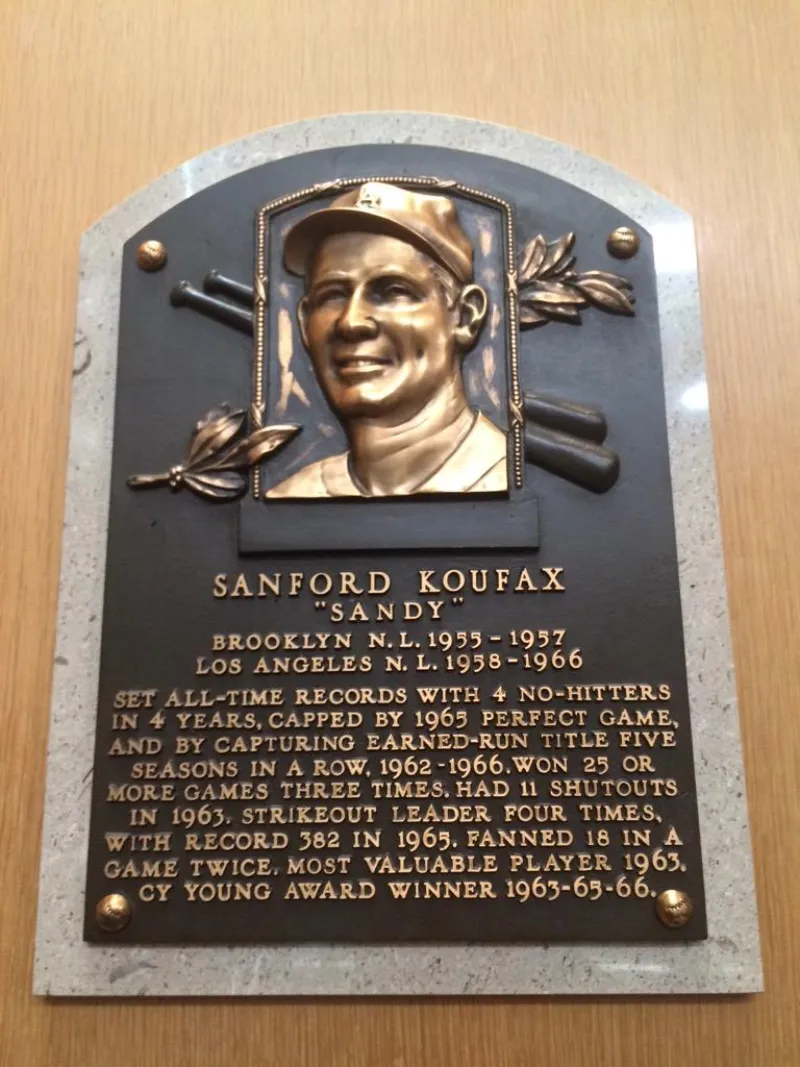
The Yom Kippur Decision
October 6, 1965. Game 1 of the World Series. The Los Angeles Dodgers versus the Minnesota Twins. The Dodgers have the best pitcher in baseball — maybe the best left-hander who ever lived. His name is Sandy Koufax. He will not pitch today.
It is Yom Kippur.
Koufax was not particularly observant. He did not keep kosher or attend synagogue regularly. But when the holiest day of the Jewish calendar collided with the biggest game of his career, he made a choice that would define him forever. He sat out. Don Drysdale pitched instead and got hammered — he reportedly told manager Walter Alston: “I bet right now you wish I was Jewish too.”
Koufax came back to pitch Game 5 (a shutout) and Game 7 (another shutout, on two days’ rest), and the Dodgers won the Series. But it is Game 1 — the game he did not pitch — that lives in Jewish memory. Not because it was a great baseball moment, but because it was a great Jewish moment: a man at the peak of his profession choosing his identity over his ambition.
Hank Greenberg: The First Jewish Superstar
Before Koufax, there was Hank Greenberg — and Greenberg faced the same dilemma with even higher stakes. In 1934, Greenberg was the slugging first baseman for the Detroit Tigers, chasing the pennant in a season that mattered desperately to a Depression-era city. Rosh Hashanah fell during the pennant race.
Greenberg agonized. He consulted a rabbi, who pointed out that Rosh Hashanah is a day of celebration, not fasting. Greenberg played — and hit two home runs, winning the game. The Detroit Free Press ran a headline in Yiddish and English. But when Yom Kippur came ten days later, Greenberg sat out. The Tigers lost.
Greenberg endured vicious antisemitic abuse throughout his career — from opposing players, from fans, and even from some of his own teammates. He faced what Jewish athletes have always faced: the pressure to be invisible, to blend in, to not make a fuss about being different. He refused. He hit 58 home runs in 1938, just two short of Babe Ruth’s record. He served four years in World War II, returning to baseball at age 34. He is in the Hall of Fame, and he belongs there.
Mark Spitz: Seven Golds
At the 1972 Munich Olympics, Mark Spitz won seven gold medals in swimming — every one in world-record time. It was the greatest individual Olympic performance in history (until Michael Phelps surpassed it in 2008). Spitz, the son of a Jewish steel company executive, became one of the most famous athletes on earth.
Then the Munich massacre happened. On September 5, 1972, Palestinian terrorists from Black September took eleven Israeli athletes and coaches hostage. All eleven were killed. Spitz, because of his high profile and Jewish identity, was whisked out of Munich by security officials who feared he could be a target.
The juxtaposition — supreme athletic triumph and horrific tragedy, in the same Games, involving the same people — became one of the defining stories of modern Olympic history. Spitz carried both his medals and his community’s grief.

Aly Raisman: Hava Nagila on the World Stage
At the 2012 London Olympics, American gymnast Aly Raisman performed her floor exercise to “Hava Nagila” — the iconic Jewish celebration song. She was the first gymnast to use the tune in Olympic competition. She won gold.
The choice was deliberate. Raisman, the daughter of a Jewish family from Needham, Massachusetts, wanted to honor the eleven Israeli athletes killed at the 1972 Munich Olympics — exactly forty years earlier. She was eighteen years old, performing on the world’s biggest stage, and she chose to make a statement about Jewish identity and memory.
Four years later, at the 2016 Rio Olympics, Raisman was named captain of the U.S. women’s gymnastics team. She won more medals. She later became a prominent advocate for survivors of sexual abuse, testifying against Larry Nassar. Her courage off the mat matched her brilliance on it.
The Maccabiah Games
The Maccabiah Games — sometimes called the “Jewish Olympics” — have been held in Israel every four years since 1932 (with interruptions for war). They are the third-largest multi-sport event in the world, after the Olympics and the Asian Games. Over 10,000 athletes from 80+ countries compete in more than 40 sports.
The Games are named after Judah Maccabee, the 2nd-century BCE Jewish warrior who led the revolt against the Seleucid Empire — the story commemorated at Hanukkah. The connection between ancient military heroism and modern athletic competition is intentional: the Games celebrate Jewish physical prowess, countering centuries of stereotypes about Jewish weakness and bookishness.
The Maccabiah has produced remarkable athletes. Many have gone on to compete in the Olympics. Several — including Spitz, who competed in the 1965 Maccabiah as a teenager — used the Games as a springboard to international careers. But the Maccabiah is more than a competition. For many Jewish athletes from the diaspora, it is the first time they are surrounded by thousands of other Jewish athletes. The experience is, by many accounts, transformative.
Breaking Barriers
Jewish athletes have a long history of breaking barriers and confronting discrimination:
Barney Ross (born Dov-Ber Rasofsky) was the son of a rabbi and became one of the greatest boxers of the 1930s, holding titles in three weight classes. He explicitly fought as a Jewish champion during the rise of Nazism, and he later earned a Silver Star in World War II.
Dolph Schayes dominated professional basketball in the 1950s, making 12 All-Star teams and winning an NBA championship. He was among the best players of his era.
Red Auerbach coached the Boston Celtics to nine NBA championships, including eight consecutive titles. He also made Bill Russell the first Black head coach in major American professional sports.
Kerri Strug landed the vault that clinched team gold for the U.S. women’s gymnastics team at the 1996 Atlanta Olympics — on an injured ankle.
Sue Bird, one of the greatest players in WNBA history, has Jewish heritage through her mother and has spoken about her connection to Jewish identity.

The Koufax Standard
Jewish athletes face a question that non-Jewish athletes rarely confront: what do you do when your sport and your identity collide? When the game falls on the holiday? When the crowd shouts slurs? When your success makes you visible in a way that draws both admiration and hostility?
Sandy Koufax established the standard. You show up. You excel. You do not apologize for who you are. And when the moment comes — when you must choose between the world’s expectations and your own conscience — you choose your conscience. The world will catch up.
Koufax said very little about his Yom Kippur decision. He did not make speeches. He did not write an essay. He simply did not show up to the ballpark. The silence was the statement. And sixty years later, every Jewish athlete who faces a similar choice — every kid who misses a Saturday game for Shabbat, every college player who sits out on Rosh Hashanah, every professional who navigates the calendar — stands in Sandy Koufax’s shadow. It is a good shadow to stand in.
Frequently Asked Questions
Why did Sandy Koufax refuse to pitch on Yom Kippur?
On October 6, 1965, Sandy Koufax — the best pitcher in baseball — sat out Game 1 of the World Series because it fell on Yom Kippur, the holiest day of the Jewish calendar. Koufax was not particularly religious, but he felt it would be wrong to play on the Day of Atonement. His decision became one of the most iconic moments in American sports and Jewish identity. The Dodgers lost Game 1 but won the Series, with Koufax pitching a shutout in Game 7.
What are the Maccabiah Games?
The Maccabiah Games are an international multi-sport event held every four years in Israel, often called the 'Jewish Olympics.' Founded in 1932, they are open to Jewish athletes from around the world and to all Israeli citizens. The Games include over 40 sports and attract thousands of athletes from 80+ countries. They are named after Judah Maccabee, the hero of the Hanukkah story, and serve as both an athletic competition and a celebration of Jewish identity.
Who are some famous Jewish athletes today?
Notable modern Jewish athletes include Aly Raisman (Olympic gymnastics), Ryan Braun (baseball), Julian Edelman (football), Jason Lezak (Olympic swimming), and Deni Avdija (basketball, NBA). In Israeli sports, Omri Casspi became the first Israeli in the NBA, and Yael Arad won Israel's first Olympic medal (judo, 1992). The number of Jewish athletes at the highest levels continues to grow across all sports.
Key Terms
Sources & Further Reading
- Jewish Sports Hall of Fame — International Jewish Sports Hall of Fame ↗
- Jane Leavy — Sandy Koufax: A Lefty's Legacy
- Jewish Virtual Library — Jews in Sports ↗
Related Articles
Jewish Diversity: Race, Ethnicity, and the Many Faces of the Jewish People
From Ethiopian Beta Israel to Indian Bene Israel to Chinese Kaifeng Jews, the Jewish people span every continent and complexion — challenging assumptions about what a Jew looks like.
Jews in America: Four Centuries of History
From 23 refugees arriving in New Amsterdam in 1654 to a thriving community of nearly seven million, the story of Jews in America is a story of reinvention, contribution, and enduring identity.
Yom Kippur: The Day of Atonement
The holiest day in the Jewish calendar — a 25-hour fast devoted to prayer, repentance, and spiritual renewal.