All Jewish Holidays: A Complete Guide and Calendar
The definitive guide to every Jewish holiday — from the weekly Shabbat to the High Holy Days, pilgrimage festivals, and minor observances, with dates, greetings, customs, and foods for each.
A Year of Sacred Time
The Jewish calendar is not just a way to track dates — it is an architecture of meaning. Every month brings a holiday, every week brings Shabbat, and the rhythm of celebration and commemoration gives shape to Jewish life in a way that has remained remarkably consistent for thousands of years.
Whether you are new to Judaism, raising Jewish children, or simply trying to understand what your Jewish neighbors are doing and why, this guide covers every significant Jewish holiday — what it is, when it falls, what you say, what you do, and what you eat.
Quick Reference: Holiday Calendar
| Holiday | Hebrew Date | Typical Gregorian | Greeting | Key Customs | Traditional Foods |
|---|---|---|---|---|---|
| Shabbat | Every 7th day | Friday sunset–Saturday night | Shabbat Shalom | Candle-lighting, kiddush, rest | Challah, wine, cholent |
| Rosh Hashanah | 1-2 Tishrei | Sept–Oct | Shanah Tovah | Shofar, tashlich, reflection | Apples & honey, round challah, pomegranate |
| Yom Kippur | 10 Tishrei | Sept–Oct | G’mar Chatimah Tovah | 25-hour fast, prayer, repentance | Pre-fast meal; break-fast with bagels & lox |
| Sukkot | 15-21 Tishrei | Sept–Oct | Chag Sameach | Sukkah, lulav & etrog | Stuffed foods, harvest dishes |
| Shmini Atzeret | 22 Tishrei | Oct | Chag Sameach | Prayer for rain | Festive meal |
| Simchat Torah | 23 Tishrei | Oct | Chag Sameach | Dancing with Torah scrolls | Festive meal, candy for children |
| Hanukkah | 25 Kislev–2 Tevet | Nov–Dec | Chag Hanukkah Sameach | Menorah lighting, dreidel | Latkes, sufganiyot |
| Tu BiShvat | 15 Shevat | Jan–Feb | Chag Sameach | Tree planting, fruit seder | Fruits, especially 7 species of Israel |
| Purim | 14 Adar | Feb–Mar | Chag Purim Sameach | Megillah reading, costumes, gifts | Hamantaschen, festive meal |
| Passover | 15-22 Nisan | Mar–Apr | Chag Pesach Sameach | Seder, matzah, no chametz | Matzah, charoset, matzah ball soup |
| Yom HaShoah | 27 Nisan | Apr–May | — | Holocaust remembrance, candle-lighting | — |
| Yom HaZikaron | 4 Iyar | Apr–May | — | Memorial for fallen soldiers | — |
| Yom HaAtzmaut | 5 Iyar | Apr–May | Chag Atzmaut Sameach | Celebrations, Israeli flag | Israeli BBQ, falafel |
| Lag BaOmer | 18 Iyar | May | Chag Sameach | Bonfires, haircuts, weddings | BBQ, picnic foods |
| Shavuot | 6-7 Sivan | May–Jun | Chag Sameach | Torah study all night, dairy | Cheesecake, blintzes, dairy |
| Tisha B’Av | 9 Av | Jul–Aug | — (day of mourning) | Fasting, reading Lamentations | Pre-fast meal with egg |
The High Holy Days (Yamim Noraim)
The Jewish year begins with its most intense period: ten days of reflection, repentance, and renewal stretching from Rosh Hashanah through Yom Kippur.
Rosh Hashanah (New Year) is not a party — it is a day of deep introspection, marked by the sounding of the shofar, the eating of symbolic foods (apples dipped in honey for a sweet new year), and the beginning of a ten-day period of soul-searching. Services are long and the liturgy is majestic.
Yom Kippur (Day of Atonement) is the holiest day of the Jewish year. A 25-hour fast from food and water, a full day in synagogue, and the only day when the High Priest entered the Holy of Holies in the ancient Temple. Even Jews who attend synagogue no other time of year often come for Yom Kippur. It ends with a single, long blast of the shofar and the declaration: “Next year in Jerusalem!”
The Pilgrimage Festivals (Shalosh Regalim)
Three holidays — Sukkot, Passover, and Shavuot — were historically marked by pilgrimage to the Temple in Jerusalem. Each combines agricultural celebration with historical commemoration.
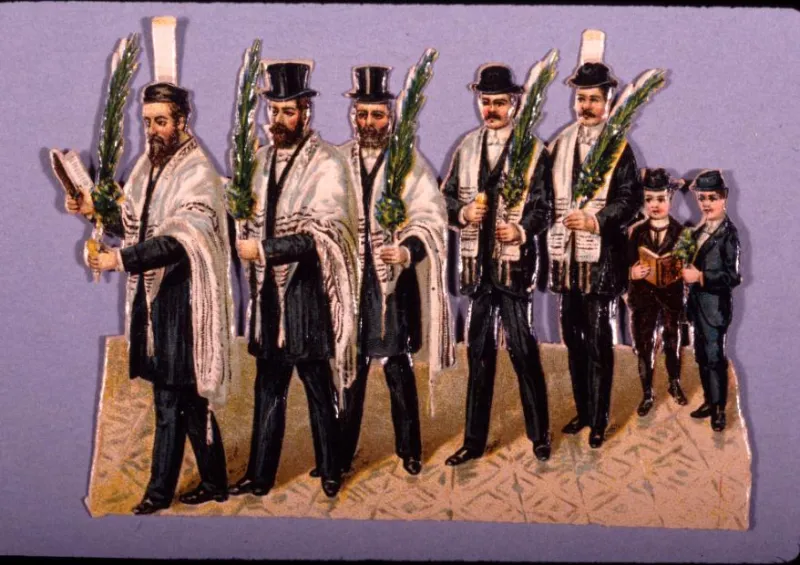
Sukkot (Tabernacles) celebrates the fall harvest and commemorates the Israelites’ 40-year desert journey. Families build and eat in temporary huts (sukkahs) and wave the Four Species (lulav, etrog, hadassim, aravot). It is called zman simchateinu — the season of our joy — and it is the most festive holiday on the calendar.
Passover (Pesach) commemorates the Exodus from Egypt. The week-long holiday centers on the seder — a ritual meal that tells the story of liberation through food, text, and tradition. No leavened bread is eaten for the entire week.
Shavuot marks the giving of the Torah at Mount Sinai, 50 days after Passover. It is celebrated with all-night Torah study sessions, dairy foods, and the reading of the Book of Ruth.
The Joyful Holidays
Hanukkah (8 days) commemorates the Maccabean revolt and the miracle of the Temple oil. Celebrated with menorah-lighting, gift-giving, dreidel games, and fried foods. Despite its cultural prominence, it is a minor holiday in religious terms.
Purim celebrates the salvation of the Jews in ancient Persia, as told in the Book of Esther. It is the most raucous day on the Jewish calendar — costumes, noisemakers, drinking, and the obligation to give food gifts and charity.
Lag BaOmer falls on the 33rd day of the Omer count between Passover and Shavuot. Bonfires, outdoor celebrations, weddings (which are restricted during the rest of the Omer period), and children’s activities.
Tu BiShvat is the New Year of the Trees. It is celebrated by eating fruits — especially those associated with the Land of Israel — and tree planting.
Days of Commemoration
Yom HaShoah (Holocaust Remembrance Day) marks the murder of six million Jews with memorial ceremonies, survivor testimony, and the lighting of six candles.
Yom HaZikaron (Memorial Day) honors Israeli soldiers and terror victims. In Israel, a siren sounds and the entire country stops for two minutes of silence.
Yom HaAtzmaut (Independence Day) celebrates the founding of the State of Israel in 1948. In Israel, celebrations follow immediately after the solemn Yom HaZikaron — the juxtaposition of mourning and joy is intentional and powerful.
Tisha B’Av is the saddest day on the Jewish calendar, commemorating the destruction of both Temples and numerous other tragedies. A full-day fast, reading the Book of Lamentations, and sitting on low chairs mark this day of communal mourning.
The Weekly Holiday: Shabbat
Shabbat is not listed alongside the annual holidays, but it is the most important one. It arrives every week — every single week — a 25-hour island of rest that begins with candle-lighting Friday evening and ends with the havdalah ceremony Saturday night. Shabbat is mentioned more often in the Torah than any other holiday, and its observance is one of the Ten Commandments.
Living by the Calendar
The Jewish holiday cycle is brilliantly designed. It moves through seasons of solemnity and joy, remembrance and celebration, fasting and feasting. It never lets you go too long without marking something — without pausing to acknowledge that time itself is sacred.
You do not need to observe every holiday fully to benefit from the rhythm. Start with Shabbat. Add Rosh Hashanah and Passover. Build from there. The calendar will meet you where you are and invite you further in, one holiday at a time.
Frequently Asked Questions
Why do Jewish holidays start at night?
Jewish days begin at sunset, following Genesis 1:5 — 'And there was evening and there was morning, one day.' Evening comes first. So Shabbat begins Friday at sunset and ends Saturday at sunset. Rosh Hashanah begins the evening before the calendar date. This is why holiday celebrations start with evening meals and candle-lighting.
Why do Jewish holiday dates change every year?
The Jewish calendar is lunisolar — months follow the moon cycle (29-30 days each), while a leap month is added 7 times in every 19-year cycle to keep the calendar aligned with the solar seasons. This means Jewish holidays fall on the same Hebrew date every year but shift on the Gregorian calendar. Passover always falls in spring, but the exact Western date varies.
What is the difference between a major and minor holiday?
Major holidays (Yom Tov) like Rosh Hashanah, Yom Kippur, Passover, Shavuot, and Sukkot carry Shabbat-like work restrictions — no driving, writing, or using electronics in Orthodox practice. Minor holidays like Hanukkah, Purim, and Tu BiShvat have no work restrictions. This distinction affects how observant Jews plan around the holidays.
Test Your Knowledge
Think you know this topic? Try our quiz!
Take the Jewish Holidays: Advanced Quiz →Sources & Further Reading
Related Articles
The Jewish Calendar: How an Ancient Lunar-Solar System Shapes Jewish Life
The Jewish calendar is a sophisticated lunar-solar system that has kept Jewish holidays, Shabbat, and lifecycle events anchored in their proper seasons for over two thousand years.
Rosh Hashanah: The Jewish New Year
The sound of the shofar marks the beginning of the Jewish New Year — a time of reflection, prayer, and hope for the year ahead.
Shabbat: The Weekly Day of Rest
Every week, Jewish life pauses for 25 hours of rest, reflection, and togetherness — discover the beauty of Shabbat.