The Greatest Stories of the Talmud: Tales That Shaped Jewish Thought
Fifteen famous Talmudic stories — from the Oven of Akhnai to Kamtza and Bar Kamtza — with context, meaning, and the surprising lessons hidden in each tale.
Stories That Argue Back
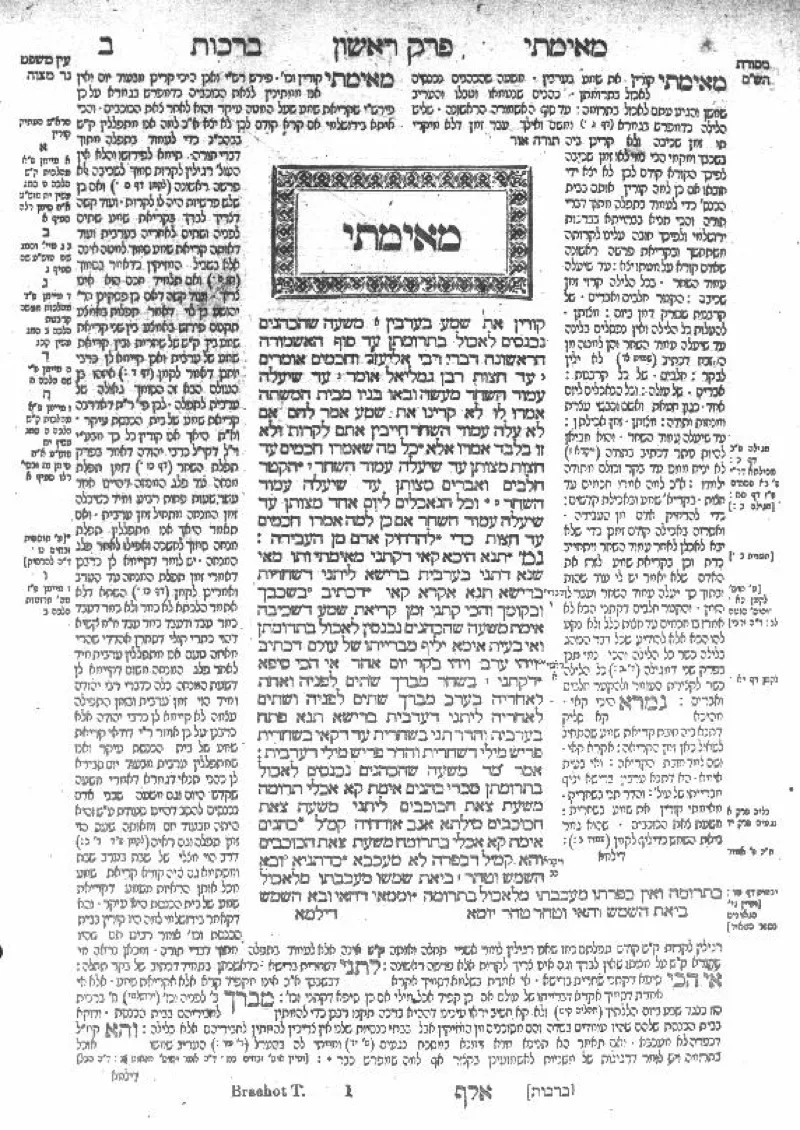
The Talmud is famous for its law — page after page of intricate legal debate. But scattered throughout those discussions are stories so vivid, so strange, and so psychologically penetrating that they have taken on lives of their own. These are the aggadot — the narrative passages that interrupt the legal discourse to tell a tale, draw a portrait, or deliver a punch to the gut.
Talmudic stories do not work like modern short fiction. They are compressed, sometimes cryptic, and almost always teaching something. Characters say exactly what they mean or exactly the wrong thing. Events unfold with the logic of parables rather than realism. And the endings — well, the endings often refuse to resolve neatly, leaving you to sit with the discomfort.
Here are fifteen of the greatest.
1. The Oven of Akhnai (Bava Metzia 59b)
This is arguably the most famous story in the entire Talmud. Rabbi Eliezer declared a particular oven ritually pure. Every other rabbi disagreed. To prove his point, Rabbi Eliezer called on miracles: a carob tree uprooted itself and flew a hundred cubits, a stream reversed its flow, the walls of the study hall began to cave in. Finally, a voice from Heaven itself declared, “The law follows Rabbi Eliezer!”
Rabbi Yehoshua stood up and quoted Deuteronomy: “It is not in Heaven.” The Torah, once given to human beings, is interpreted by human beings. God’s voice cannot overrule the majority of scholars. The Talmud then asks: what did God do in that moment? God laughed and said, “My children have defeated me.”
The lesson is stunning. Truth is not determined by authority — not even divine authority — but by reasoned debate and communal consensus. The Torah belongs to the people who study it.
2. Hillel on One Foot (Shabbat 31a)
A non-Jew approached Shammai and said, “Convert me on the condition that you teach me the entire Torah while I stand on one foot.” Shammai, irritated, chased him away with a builder’s ruler. The man went to Hillel, who converted him and said: “What is hateful to you, do not do to your neighbor. That is the whole Torah. The rest is commentary — now go and study.”
The genius of Hillel’s response is twofold: he reduces the entire Torah to an ethical principle, and then he adds “go and study” — because the principle alone is not enough. You need the details, the debates, the complexity. But the core must never be forgotten.
3. Kamtza and Bar Kamtza (Gittin 55b-56a)
A wealthy man in Jerusalem held a banquet and sent his servant to invite his friend Kamtza. The servant mistakenly invited his enemy, Bar Kamtza. When Bar Kamtza arrived, the host publicly humiliated him and threw him out — despite Bar Kamtza’s offers to pay for the entire feast. The rabbis present said nothing.
Humiliated, Bar Kamtza went to the Roman authorities and slandered the Jewish community, ultimately engineering the destruction of the Temple. The Talmud’s conclusion is devastating: “Because of Kamtza and Bar Kamtza, Jerusalem was destroyed.” Not because of military failure — because of a dinner party. Because of public humiliation and the silence of bystanders.
4. Rabbi Akiva and the Fox (Makkot 24b)
Four rabbis stood on the ruins of the Temple Mount. They saw a fox emerge from where the Holy of Holies had once stood. Three of the rabbis wept. Rabbi Akiva laughed.
“Why are you laughing?” they asked.
Rabbi Akiva replied: “The prophet Uriah foretold that Zion would be plowed like a field. The prophet Zechariah foretold that old men and women would again sit in the streets of Jerusalem. Until I saw Uriah’s prophecy fulfilled, I was uncertain about Zechariah’s. Now that destruction has come exactly as predicted, I know that the restoration will come as well.”
The other rabbis said: “Akiva, you have comforted us.”
5. Choni the Circle-Maker (Taanit 23a)
During a drought, the people asked Choni to pray for rain. He drew a circle on the ground, stood inside it, and declared: “Master of the Universe, I swear by Your great name that I will not move from this circle until You have mercy on Your children.” Rain began to drizzle. “Not this kind of rain!” Choni said. It poured violently. “Not this kind either!” Finally, it rained gently and steadily.
But the story continues in a haunting second act. Choni fell asleep for seventy years, like a Jewish Rip Van Winkle. When he awoke, no one recognized him. He went to the study hall, but the scholars would not accept his identity. Heartbroken, he prayed for death, and he died. The Talmud comments: “Either companionship or death.”
6. The Four Who Entered the Orchard (Chagigah 14b)
Four rabbis entered pardes — an orchard, understood as a metaphor for mystical contemplation. Ben Azzai gazed and died. Ben Zoma gazed and went mad. Elisha ben Avuyah (known as Acher, “the Other”) became a heretic. Only Rabbi Akiva entered in peace and departed in peace.
This brief, mysterious story became the foundation of Jewish mystical caution: spiritual exploration is dangerous, and not everyone who seeks transcendence survives the encounter.
7. The Patience of Hillel (Shabbat 31a)
A man wagered 400 zuz that he could make Hillel angry. On a Friday afternoon, while Hillel was bathing for Shabbat, the man came and asked ridiculous questions: “Why are the heads of Babylonians round? Why are the eyes of the people of Tadmor bleary?” Each time, Hillel wrapped himself in a robe, came out, and answered patiently. The man lost his bet.
Hillel’s response: “Better that you should lose four hundred zuz than that Hillel should lose his temper.”
8. Rabbi Yochanan and Reish Lakish (Bava Metzia 84a)
Rabbi Yochanan, known for his beauty, was bathing in the Jordan River. Reish Lakish, a bandit, leaped in after him. Yochanan said: “Your strength should be for Torah.” Reish Lakish agreed, became a scholar, and the two became study partners — and brothers-in-law.
Years later, during a legal debate, Rabbi Yochanan insulted Reish Lakish by referencing his bandit past. Reish Lakish fell ill and died. Rabbi Yochanan went mad with grief, wandering the streets, crying: “Where are you, son of Lakish?” The rabbis sent a replacement study partner, but every time the new scholar agreed with Yochanan, Yochanan wept: “Reish Lakish would have raised twenty objections!”
The story is about the irreplaceable value of a partner who challenges you.
9. The Stubbornness of Rabbi Eliezer (Sanhedrin 68a)
Rabbi Eliezer ben Hyrcanus was excommunicated after the Oven of Akhnai incident. When he was dying, his former colleagues came to visit. “Why have you come now?” he asked bitterly. They said, “To learn Torah.” Even on his deathbed, he taught them laws they had never heard. When he died, Rabbi Yehoshua lifted the ban, saying: “The decree is annulled.”
The tragedy is that it came too late. A great mind was silenced by communal politics.
10. Bruriah and the Thieves (Berakhot 10a)
Thugs in Rabbi Meir’s neighborhood were causing him suffering. He prayed for their death. His wife Bruriah corrected him: “The verse says ‘let sins cease from the earth’ — not sinners. Pray that they repent.” Rabbi Meir prayed for their repentance, and they did.
Bruriah, one of the few women whose opinions are cited in the Talmud, teaches a principle: hate the sin, not the sinner.
11. The Roman Matron and the Rabbi (Bereishit Rabbah 68:4)
A Roman noblewoman asked Rabbi Yose: “What has your God been doing since He finished creation?” Rabbi Yose answered: “He has been making matches — pairing husbands with wives.” The woman scoffed: “That’s easy! I can do that!” She lined up her slaves and paired them off overnight. By morning, they were all fighting, bruised, and miserable. She returned to Rabbi Yose and admitted: “Your God’s work is indeed remarkable.”
12. The Charity of King Monbaz (Bava Batra 11a)
King Monbaz gave away his family’s entire fortune during a famine. His relatives protested: “Your ancestors stored up treasures; you have squandered them!” Monbaz replied: “My ancestors stored up treasures below; I have stored up treasures above. They stored treasures that bear no fruit; I stored treasures that bear fruit.”
A perfect articulation of the Jewish view of tzedakah — that giving is not losing but investing in eternity.
13. The Death of Rabbi Akiva (Berakhot 61b)
The Romans executed Rabbi Akiva by raking his flesh with iron combs. As he died, he recited the Shema: “Hear, O Israel, the Lord our God, the Lord is One.” His students cried: “Even now, teacher?” He replied: “All my life I have loved God ‘with all my soul,’ and I wondered — when will I have the chance to fulfill this? Now that the chance has come, shall I not fulfill it?” He died with the word echad — “One” — on his lips.
14. Elisha ben Avuyah’s Heresy (Chagigah 15a-b)
Elisha ben Avuyah, once a great scholar, became a heretic after entering the “orchard.” His student, Rabbi Meir, continued to learn from him. When others asked how Meir could study with a heretic, he quoted a proverb: “He found a pomegranate; he ate the fruit and discarded the peel.” You can learn from someone even if you reject their conclusions.
15. The Destruction of the Temple — A Prophecy of Renewal
The Talmud in Makkot ends with Rabbi Akiva’s laughter at the foxes — but the broader narrative of destruction runs throughout tractate Gittin. The message is not despair. It is that destruction carries within it the seeds of renewal, and that Jewish survival depends not on buildings but on learning, community, and moral courage.
Why These Stories Matter
The legal passages of the Talmud tell Jews what to do. The stories tell them who to be. They hold up mirrors — sometimes flattering, sometimes brutal — and they refuse to simplify. Heroes have flaws. Villains have reasons. God laughs. Scholars weep. And the reader is left not with answers but with better questions.
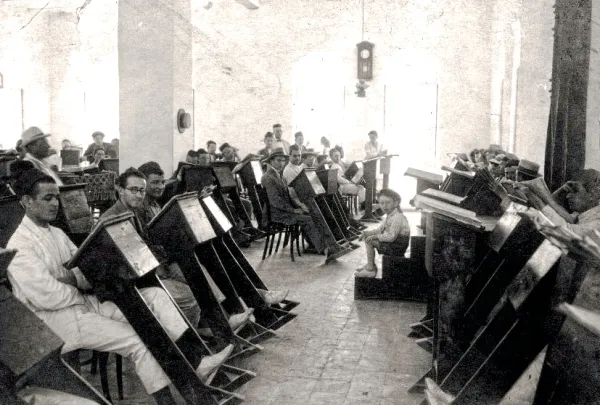
These stories have been retold for nearly two thousand years — in study halls, at Shabbat tables, in sermons, and in literature. They survive because they speak to something permanent in the human experience: the tension between law and mercy, the danger of silence, the cost of pride, and the stubborn, irrational, magnificent Jewish insistence that learning and love can outlast any empire.
Frequently Asked Questions
Are Talmudic stories meant to be taken literally?
Most scholars say no. Talmudic stories (aggadah) are teaching tools — they use narrative, exaggeration, and symbolism to convey moral and theological lessons. Even within the Talmud, rabbis debated how literally to read these tales. The stories are meant to provoke thought, not to serve as historical records.
What is the difference between halakha and aggadah in the Talmud?
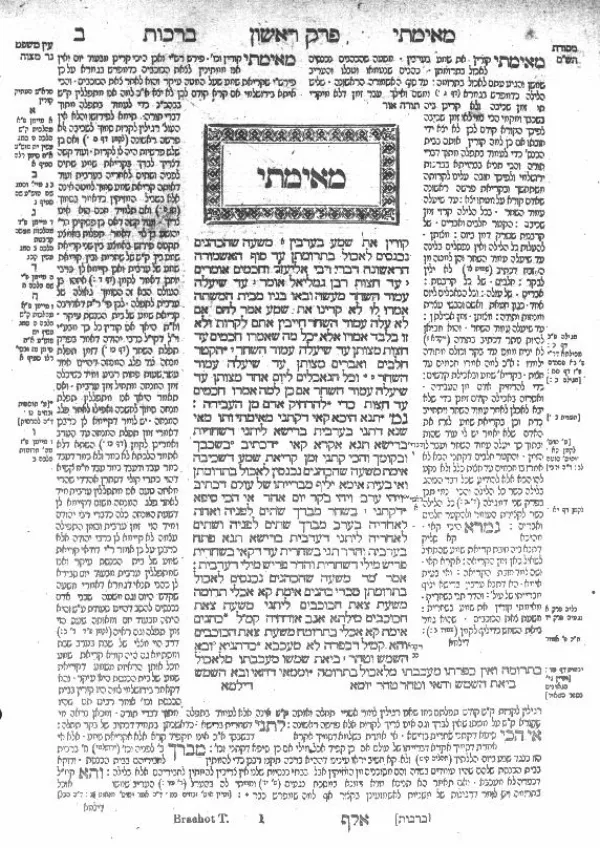
Halakha refers to the legal discussions — rulings on Shabbat, kashrut, civil law, and ritual. Aggadah encompasses the non-legal material: stories, parables, ethical teachings, folklore, and theological speculation. Both are interwoven throughout the Talmud, often on the same page.
Can non-Jews study Talmudic stories?
Absolutely. Talmudic stories deal with universal themes — justice, mercy, humility, the dangers of pride, and the complexity of human relationships. Many universities offer courses on Talmudic literature, and translations by scholars like Rabbi Adin Steinsaltz have made these stories accessible to a wide audience.
Sources & Further Reading
Related Articles
Hillel and Shammai: The Great Debate That Built Judaism
One was patient, the other exacting. One taught the Torah standing on one foot, the other turned the questioner away. Together, Hillel and Shammai created the template for how Jews argue — and why disagreement is sacred.
Rabbi Akiva: From Illiterate Shepherd to Judaism's Greatest Sage
He couldn't read until he was forty. His wife believed in him when no one else did. He became the greatest sage in the Talmud, supported a revolution, and died with God's name on his lips. Rabbi Akiva's story is the story of Judaism itself.
The Talmud: A Beginner's Guide to Jewish Oral Law
The Talmud is the vast ocean of Jewish thought — centuries of rabbinic debate on law, ethics, storytelling, and the meaning of life, all compiled into one extraordinary work.