Pikuach Nefesh: Saving a Life
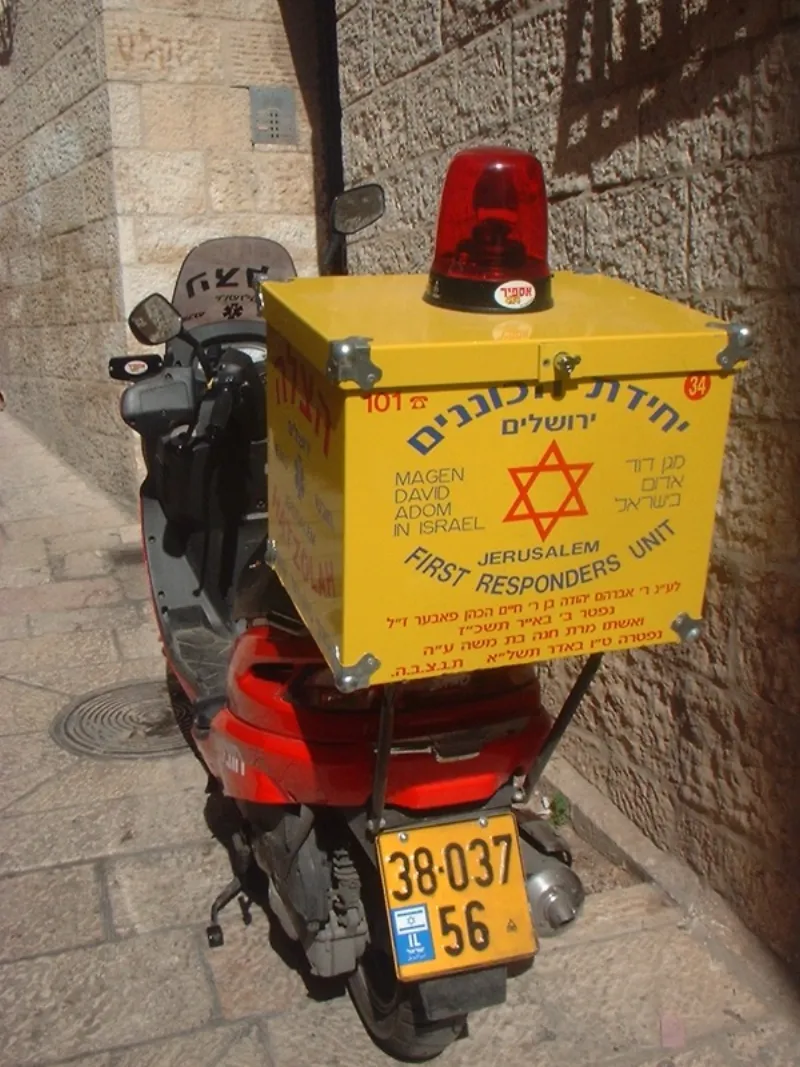
Pikuach nefesh — the obligation to save a life — is the most powerful principle in Jewish law, overriding nearly every commandment including Shabbat, Yom Kippur fasting, and kashrut.
The Supreme Commandment
There is one principle in Judaism that trumps almost everything else. It is not a holiday. It is not a prayer. It is not a dietary law. It is this: if a human life is in danger, you must do whatever it takes to save it.
This principle is called pikuach nefesh — literally “watching over a soul” — and it is the most powerful legal concept in all of Jewish law. It overrides Shabbat. It overrides Yom Kippur. It overrides kashrut. It overrides almost every one of the 613 commandments. In a legal system famous for its complexity and rigor, pikuach nefesh cuts through everything with stunning clarity: life comes first.
The Sources
The Talmud (Yoma 85a-b) records one of the most important legal discussions in all of rabbinic literature: What is the source for the principle that saving a life overrides Shabbat?
Multiple rabbis offer different scriptural proofs:
- Rabbi Yishmael cites Exodus 22:1, arguing that if a thief may be killed in self-defense on Shabbat, then certainly a life may be saved on Shabbat
- Rabbi Akiva cites the general principle that punishment cannot be administered on the basis of inference — thus, saving a life must take precedence
- Rabbi Yonatan ben Yosef cites Exodus 31:14: “You shall keep the Shabbat, for it is holy to you” — the rabbis read to you as meaning Shabbat is given for your benefit, not to cause your death
- Shmuel offers what became the most influential proof: Leviticus 18:5 — “You shall keep My statutes and My judgments, which a person shall do and live by them.” The emphasis is on live by them — not die by them
This last proof became the definitive source. The Torah’s commandments exist to enhance life. Any interpretation that leads to death is, by definition, a misinterpretation.
How It Works in Practice
Pikuach nefesh is not abstract theology. It has immediate, practical consequences:
On Shabbat, if someone has a heart attack, you must call an ambulance, drive to the hospital, perform surgery, operate machines — whatever is medically necessary. There is no waiting for Shabbat to end. There is no asking a non-Jew to do it instead (the common workaround for minor Shabbat needs). You do it yourself, immediately, without hesitation.
On Yom Kippur, if fasting endangers your health — if you are pregnant and experiencing complications, if you are diabetic, if you are ill — you must eat. Not “you may eat.” You must eat. A rabbi who tells a sick person to continue fasting when their life is at risk is, in the eyes of halakha, giving sinful advice.
Regarding kashrut, if the only available food is non-kosher and a person will die without eating, they must eat the non-kosher food. If a medication contains non-kosher ingredients and is medically necessary, it is permitted — and in life-threatening situations, required.
The key legal standard is important: pikuach nefesh applies even when the danger is uncertain. You do not need to be sure that the person will die without intervention. If there is a reasonable possibility of mortal danger — a safek pikuach nefesh — the principle applies in full. The rabbis ruled: “We do not deliberate in matters of pikuach nefesh” (Yoma 84b). When in doubt, save the life.
The Three Exceptions
Pikuach nefesh overrides all commandments — with exactly three exceptions. A person must accept death rather than commit:
-
Murder (shefichut damim): You may not kill an innocent person to save your own life. The Talmud’s reasoning: “Who says your blood is redder? Perhaps the blood of that person is redder” (Sanhedrin 74a). No person’s life has greater inherent value than another’s.
-
Sexual immorality (gilui arayot): Specifically, the most severe sexual prohibitions — incest and adultery. A person must accept death rather than commit these acts under coercion.
-
Idolatry (avodah zarah): The prohibition against worshipping other gods or denying God is so fundamental that it cannot be overridden even by the threat of death.
These three exceptions, called yehareg v’al ya’avor (“be killed rather than transgress”), define the absolute limits of Jewish ethics. Every other commandment bends before the imperative to save life. These three do not.
Medical Ethics
Pikuach nefesh is the foundation of Jewish medical ethics, a field that has become increasingly sophisticated and practically relevant:
Organ donation: Because organ transplantation saves lives, major halakhic authorities — including Israel’s former Chief Rabbinate — have endorsed organ donation. The debate centers on the definition of death: Is brain death sufficient, or must the heart stop? This question has enormous practical implications because organs must be harvested quickly to remain viable.
End-of-life care: The obligation to preserve life creates tension with the reality of terminal illness. Active euthanasia is prohibited — you may not directly cause death. But the tradition distinguishes between extending life and prolonging dying. The Talmud (Avodah Zarah 18a) tells of Rabbi Chanina ben Teradion, who was being burned alive by the Romans: when his students urged him to open his mouth and hasten death by inhaling the flames, he refused — but he did not object when others removed the wet wool sponges that were prolonging his agony. This distinction between active killing and removing impediments to a natural death informs modern end-of-life halakha.
Reproductive technology: IVF, fertility treatments, and genetic testing are generally permitted and encouraged under pikuach nefesh reasoning — the commandment to procreate is supported by medical intervention when necessary.
Pikuach Nefesh and the Pandemic
The COVID-19 pandemic brought pikuach nefesh into sharp public focus. Virtually every major halakhic authority — including ultra-Orthodox rabbis who are rarely in agreement with secular authorities — ruled that pikuach nefesh required:
- Closing synagogues and praying at home, even on Shabbat and holidays
- Receiving vaccinations, since the risk of COVID was considered a threat to life
- Wearing masks and maintaining social distance, even in religious settings
- Modifying mourning practices, including limiting attendance at funerals
These rulings were controversial in some communities. But the principle was clear and ancient: life comes first. A synagogue that puts its members in mortal danger by ignoring public health guidelines is violating, not fulfilling, Jewish law.

Mental Health
An important modern development is the extension of pikuach nefesh to mental health. Many contemporary authorities have ruled that severe depression, suicidal ideation, eating disorders, and acute psychiatric emergencies constitute life-threatening situations.
This means that a person experiencing a mental health crisis on Shabbat should call a therapist, drive to an emergency room, or take medication — just as they would for a physical emergency. The recognition that mental illness can be as dangerous as physical illness represents a significant evolution in how Jewish ethics engages with health.
The Deeper Teaching
Pikuach nefesh is more than a legal technicality. It expresses Judaism’s deepest conviction about the relationship between God and humanity: the commandments exist for us, not the other way around. A religion that lets people die in the name of observance has misunderstood its own purpose.
The Talmud puts it memorably: “Whoever saves a single life, it is as if they saved an entire world” (Sanhedrin 37a). This is not poetry. It is law. And it is, perhaps, the single most important thing Judaism has to say about what it means to be human: every life is worth breaking the rules for.
Frequently Asked Questions
What does pikuach nefesh override?
Pikuach nefesh overrides virtually every commandment in the Torah, including Shabbat restrictions, Yom Kippur fasting, kashrut laws, and nearly all other prohibitions. The only three commandments that cannot be violated even to save a life are the prohibitions against murder, sexual immorality (specifically incest and adultery), and idolatry. A person must accept death rather than commit these three.
Can you drive on Shabbat for a medical emergency?
Yes — not only is it permitted, it is required. If someone's life is in danger, Jewish law demands that you drive them to the hospital, call an ambulance, operate medical equipment, or do whatever is necessary to save them. A person who hesitates to violate Shabbat when a life is at stake is considered to be committing a sin. The principle applies even when it is uncertain whether the situation is truly life-threatening.
Does pikuach nefesh apply to mental health?
Many modern halakhic authorities have ruled that pikuach nefesh applies to mental health crises as well as physical ones. Severe depression, suicidal ideation, and acute psychiatric emergencies are considered life-threatening situations that justify violating Shabbat and other commandments. This represents a significant development in how Jewish law understands the relationship between mental and physical health.
Sources & Further Reading
Related Articles
The 613 Commandments: The Framework of Jewish Life
Judaism identifies 613 commandments in the Torah — 248 positive and 365 negative — covering everything from prayer and charity to agriculture and justice.
Halakha: The Jewish Path of Law
Halakha — literally 'the way of walking' — is the comprehensive system of Jewish law that governs everything from prayer and diet to business ethics and family life.
Jewish Ethics: A Guide to Moral Living
From Hillel's golden rule to the Mussar movement, Jewish ethics offers a comprehensive framework for moral living — covering speech, the environment, labor rights, medical decisions, and the obligation to repair the world.